
What Are Xiaomi Redmi 15 4G Specs & Price in 2026?
The Xiaomi Redmi 15 4G is one of the most relevant budget phones in Egypt's smartphone market as we move through 2026. Released in August 2025, it carries forward everything the Redmi series has become known for — rock-solid reliability, excellent battery endurance, a large smooth display, and dependable everyday performance — all packaged into an accessible price that makes it a genuine first choice for Egyptian buyers who want quality without overspending.
What makes the Xiaomi Redmi 15 4G particularly compelling in 2026 is the combination of features it delivers at its price point. A 7000mAh battery, a 6.9-inch FHD+ display with 144Hz refresh rate, a Snapdragon 685 processor on a 6nm process, a 50MP triple camera setup, IP64 dust and splash protection, and Android 15 with HyperOS 2 — these aren't features you typically expect under EGP 8,000. Yet the Redmi 15 4G manages to deliver all of them, making it one of the most competitively equipped affordable handsets in its segment.
For Egyptian students, professionals, families, and first-time smartphone buyers, the Xiaomi Redmi 15 4G checks practically every practical box. In a market where consumers are price-sensitive but quality-conscious, this Xiaomi smartphone strikes a balance that its competitors in the same price range consistently struggle to match. This article covers everything you need to know about the Xiaomi Redmi 15 4G — from its complete specs and camera capabilities to pricing in Egypt, real-world performance, and a thorough comparison with key rivals — so you can make a fully informed purchase decision.
What Are the Full Specifications of the Xiaomi Redmi 15 4G?
The Xiaomi Redmi 15 4G is built around a clear value proposition: pack the most meaningful features into a budget-friendly form. Here is the complete spec breakdown:
The phone runs on a Qualcomm Snapdragon 685 (6nm) processor with Adreno 610 GPU, available in 6GB+128GB and 8GB+256GB configurations using LPDDR4X RAM and UFS 2.2 storage. The display is a 6.9-inch IPS LCD panel with FHD+ resolution (1080×2340), 144Hz refresh rate, 700 nits typical brightness, 850 nits HBM, and TÜV Rheinland eye care certification. The rear camera system is a triple setup: 50MP main (f/1.8), 2MP depth sensor (f/2.4), and 0.3MP auxiliary. The front camera is 8MP with f/2.0 aperture. The battery is a 7000mAh unit with 33W fast charging support. The phone has IP64 dust and splash resistance, a side-mounted fingerprint sensor, NFC (region-dependent), IR blaster, Bluetooth 5.1, USB-C, dual-SIM (4G on both slots), and microSDXC expansion up to 2TB. Colors available: Titanium Gray, Midnight Black, and Purple. Dimensions are 171.1 × 82.1 × 8.6mm, weight 224g. It runs Android 15 with HyperOS 2.
What Processor Powers the Xiaomi Redmi 15 4G?
The Xiaomi Redmi 15 4G is powered by the Qualcomm Snapdragon 685 (SM6225), a processor built on a modern 6nm manufacturing process. This is an octa-core chip with four performance cores clocked at 2.8GHz (Cortex-A73 architecture) and four efficiency cores at 1.9GHz (Cortex-A53), paired with an Adreno 610 GPU. The 6nm process node is critical here — it means the chip runs cooler, consumes less power, and delivers better performance-per-watt efficiency compared to older 8nm or 12nm chips found in competing phones at similar prices.
For an affordable handset like the Xiaomi Redmi 15 4G, the Snapdragon 685 is a well-balanced choice. Its 2.8GHz performance cluster handles demanding applications and gaming without throttling under moderate loads, while the efficiency cluster manages lighter background tasks to preserve battery life. This is why the phone can sustain 2+ days of use on a single charge — the processor works in harmony with the massive battery to deliver both performance and endurance simultaneously.
The octa-core processor also brings LPDDR4X memory compatibility, UFS 2.2 storage support, and advanced imaging processing for the 50MP camera system. Its AnTuTu benchmark score of approximately 338,000 points places it firmly in the capable budget tier — strong enough for all everyday smartphone tasks and comfortable for casual-to-moderate gaming. The mobile performance delivered by this combination makes the Redmi 15 4G feel responsive and fluid in daily use.
How Does the Chipset Affect Everyday Performance?
In everyday use, the Snapdragon 685 inside the Xiaomi Redmi 15 4G makes the phone feel snappy and capable across all the tasks that matter most. Launching apps, scrolling through social media, browsing the web, streaming videos, switching between messaging apps — all of these feel smooth and immediate. HyperOS 2's intelligent memory management ensures frequently used apps stay preloaded in memory, meaning they open almost instantly rather than having to reload from storage every time you switch back to them.
The processor's power efficiency directly contributes to the phone's exceptional battery life. By scaling CPU and GPU resources based on workload — delivering full power when needed and stepping down during lighter use — the Snapdragon 685 prevents unnecessary battery drain during routine tasks. This makes the Xiaomi Redmi 15 4G one of those phones where the battery life you experience in practice consistently exceeds what you might expect purely from the battery capacity spec alone.
How Does It Compare to Other Processors in the Same Price Range?
At the price point of the Xiaomi Redmi 15 4G, competing processors in similarly priced phones include the MediaTek Helio G99, Helio G88, and Helio G85. The Snapdragon 685 competes with these chips on overall efficiency and thermal performance, with the 6nm process giving it an edge in power consumption compared to many Helio chips on older nodes. The Adreno 610 GPU is a reliable performer for budget gaming, while some MediaTek Helio G99 chips in slightly higher-priced phones may offer better GPU output. For everyday tasks, social media use, streaming, and casual gaming — which represent the real-world use cases of most Redmi 15 4G buyers — the Snapdragon 685 delivers a consistently smooth and reliable experience.
How Much RAM and Storage Does the Xiaomi Redmi 15 4G Offer?
The Xiaomi Redmi 15 4G is available in two RAM and storage configurations: 6GB RAM + 128GB storage and 8GB RAM + 256GB storage. Both variants use LPDDR4X RAM for fast data access and UFS 2.2 storage for quick app loading and file transfer. These are meaningful specifications for a budget phone — UFS 2.2 is significantly faster than older eMMC storage used in some competing devices at this price range, resulting in noticeably faster app launches and file operations.
The 8GB RAM variant additionally supports Xiaomi's Memory Extension feature, which converts up to 8GB of internal storage into virtual RAM, bringing the total accessible memory to 16GB. This is particularly helpful for users who keep many apps running simultaneously or use memory-intensive applications. For everyday users, both RAM variants handle typical smartphone tasks comfortably.
Is There a MicroSD Card Slot for Extra Storage?
Yes, the Xiaomi Redmi 15 4G supports storage expansion via a dedicated microSD card slot, with support for cards up to 2TB. This is a separate dedicated slot rather than a hybrid SIM/microSD configuration, meaning you can use both SIM cards simultaneously and still expand your storage — a practical advantage over phones that force you to choose between two SIMs and a memory card.
For buyers who take lots of photos and videos, store offline media, or use the phone as a primary media device, the ability to add up to 2TB of additional storage is a genuinely valuable feature. The 128GB base storage is sufficient for most users, but the dedicated microSD slot ensures you'll never be forced into difficult storage management decisions as your app library and media collection grow over time.
Which RAM Variant Should You Choose?
For Egyptian buyers deciding between the 6GB and 8GB variants of the Xiaomi Redmi 15 4G, the 8GB+256GB model is the better long-term investment if your budget allows for the modest price premium. The extra 2GB of RAM paired with Memory Extension gives you more headroom for multitasking, the 256GB storage reduces your dependence on the microSD card for everyday apps and data, and the overall experience feels more future-proof. For buyers on a tighter budget, the 6GB+128GB variant is entirely capable for typical daily use and represents excellent value on its own terms.
What Are the Display Specs of the Xiaomi Redmi 15 4G?
The Xiaomi Redmi 15 4G features a large 6.9-inch IPS LCD panel with FHD+ resolution (1080×2340 pixels), delivering a pixel density of 374 ppi — sharp enough for crisp text, detailed images, and smooth video playback. The display carries a TÜV Rheinland certification for eye comfort, which reduces harmful blue light exposure and makes extended screen use more comfortable, particularly important for students and users who spend many hours on their phone daily.
The large display at 6.9 inches makes the Xiaomi Redmi 15 4G a fantastic media consumption device — watching YouTube, Netflix, TikTok, and sports content on the generous screen size is genuinely immersive. The FHD+ resolution ensures that content looks sharp at normal viewing distances, and the wide aspect ratio (19.5:9) makes the phone feel cinematic for full-screen video.
What Is the Screen Refresh Rate and Does It Support 90Hz or 120Hz?
The Xiaomi Redmi 15 4G supports a 144Hz refresh rate — a premium specification typically found on much more expensive phones. This is notably higher than the 90Hz or 120Hz panels found on many competing budget devices in the same price range. The 144Hz refresh rate makes the display feel visually smooth and responsive across all interactions — scrolling through Instagram feels buttery smooth, gaming animations are more fluid, and navigating HyperOS 2's interface feels more fluid and immediate than on lower-refresh panels.
This is one of the display specifications that genuinely distinguishes the Xiaomi Redmi 15 4G from its competition. At this price point, 144Hz is unusual and represents a clear specification win that translates directly into daily visual enjoyment.
Is the Display Good for Outdoor Use in Egypt's Sunlight?
The display reaches 700 nits of typical brightness and 850 nits in High Brightness Mode (HBM), with automatic brightness adjustment based on ambient light detection. For Egyptian users who frequently use their phones outdoors — during commutes, at outdoor cafés, on university campuses, or at the beach — the display performs adequately in most daylight conditions. Direct intense Egyptian summer sunlight remains challenging for IPS LCD panels at this brightness level, but for typical outdoor use, the HD+ screen (FHD+ in this case) remains comfortably readable in most scenarios. The TÜV Rheinland certification also means the display is optimized for comfort, reducing eye fatigue during prolonged outdoor use.
What Are the Full Dimensions and Build Quality of the Xiaomi Redmi 15 4G?
The Xiaomi Redmi 15 4G measures 171.1 × 82.1 × 8.6mm and weighs 224 grams. This is a large phone by any measurement — the 6.9-inch display necessitates a significant footprint, and the 7000mAh battery adds meaningful weight. The build uses a polycarbonate (plastic) frame and back panel, with a matte textured finish that provides good grip and reduces fingerprint smudges. The durable design philosophy of the Redmi series is evident in the tight assembly, precise fit and finish, and IP64 certification that protects against dust and water splashing.
Is the Xiaomi Redmi 15 4G Lightweight Enough for Daily Use?
At 224 grams, the Xiaomi Redmi 15 4G is on the heavier side — this weight is a direct consequence of the large 7000mAh battery inside. Users coming from lighter, smaller phones may initially notice the weight. That said, the weight is distributed evenly across the phone's 171mm length, so it doesn't feel front-heavy or awkward in the hand. For most users who value battery endurance over featherweight portability, the trade-off is well worth making. With regular use across a full day of activities, most users report the weight becomes unremarkable within a few days of use.
Does It Have a Premium Feel Despite Its Budget Price?
The Xiaomi Redmi 15 4G has a level of fit and finish that exceeds typical expectations for its price class. The plastic build doesn't feel cheap — the back panel has a textured matte surface that looks and feels considered, and the frame is assembled with tight tolerances that prevent the flex and creaking sometimes found on entry-level devices. The IP64 certification adds a meaningful perception of quality, and the Gorilla Glass-equivalent front protection completes the sense that this is a phone built to last. For the price, the sleek body and build quality of the Redmi 15 4G leave buyers positively surprised.
What Camera System Does the Xiaomi Redmi 15 4G Feature?
The Xiaomi Redmi 15 4G comes with a triple rear camera setup and a single front-facing camera. The main rear camera is a 50MP wide-angle sensor with f/1.8 aperture, backed by a 2MP depth sensor (f/2.4) and a 0.3MP auxiliary lens. The front camera is 8MP with f/2.0 aperture. This dual camera setup — centered around the dominant 50MP primary shooter — is designed for practical everyday photography rather than professional-grade imaging, and within those parameters, it performs impressively for its price tier.
The photography features available through HyperOS 2's camera app include AI scene detection, Portrait Mode (using the depth sensor), Night Mode, Pro Mode with manual controls, Panorama, Slow Motion, and a range of AI enhancements. The camera system is well-rounded for social media use, family photography, and everyday documentation.
What Is the Main Camera Resolution on the Xiaomi Redmi 15 4G?
The primary camera on the Xiaomi Redmi 15 4G is a 50MP sensor with an f/1.8 wide aperture and Phase Detection Autofocus (PDAF). The combination of 50MP resolution and PDAF is notable for a budget phone — PDAF delivers fast, accurate focus on subjects, and the 50MP resolution allows for detailed, high-quality daylight photos that can be cropped without significant quality loss. By default, the camera outputs 12.5MP photos using pixel-binning (combining 4 pixels into 1 for better light gathering), with the option to shoot full 50MP images when maximum resolution is needed.
In daylight conditions, the Xiaomi Redmi 15 4G main camera produces sharp, vibrant, naturally colored images that perform well for social media sharing and everyday memory preservation. The f/1.8 aperture helps the sensor gather sufficient light in various conditions, and the AI scene detection ensures exposure and white balance are appropriately adjusted for different shooting scenarios.
Does It Support Night Mode Photography?
Yes, the Xiaomi Redmi 15 4G features a dedicated Night Mode in its camera app. Night Mode uses multi-frame exposure stacking — capturing multiple frames and combining them through AI processing — to produce brighter, cleaner images in low-light conditions than what standard auto mode can achieve. The result is noticeably more detail in shadows, reduced noise, and more natural-looking colors under artificial lighting. Night Mode requires the phone to be held steady for approximately 2–3 seconds during capture, but the improvement in image quality justifies the brief wait.
How Does the Main Camera Perform in Low Light?
In low-light conditions, the Xiaomi Redmi 15 4G delivers acceptable results that are better than many competing cameras in the same price range, though it doesn't match the low-light capabilities of phones with dedicated OIS or larger sensor systems. The f/1.8 aperture helps by admitting more light than narrower-aperture alternatives. In standard auto mode, dim indoor photos show increased noise and slightly softened detail. Activating Night Mode significantly improves results. The camera remains practical for typical low-light scenarios — indoor gatherings, evening restaurants, and outdoor nighttime settings — even if it doesn't produce flagship-quality nighttime photography.
Does the Xiaomi Redmi 15 4G Have an Ultra-Wide or Macro Lens?
The Xiaomi Redmi 15 4G does not feature a dedicated ultra-wide lens. The triple rear camera system consists of the 50MP primary sensor, a 2MP depth sensor for Portrait Mode bokeh effects, and a 0.3MP auxiliary lens. There is no separate ultra-wide or telephoto lens included in the hardware setup. This is a common constraint at this price level, where camera hardware budget is concentrated on making the primary shooter as capable as possible rather than spreading resources across multiple mediocre supplementary lenses.
How Many Camera Lenses Are on the Back?
The Xiaomi Redmi 15 4G has three camera lenses on the back: the main 50MP f/1.8 primary sensor, a 2MP depth sensor, and a 0.3MP auxiliary sensor. The functional photographic work is handled entirely by the 50MP primary camera — the depth sensor contributes to Portrait Mode calculations, and the auxiliary lens provides supplementary data for the AI processing pipeline. For buyers expecting an ultra-wide or telephoto capability, the Redmi 15 4G does not provide those, and a different device would be needed.
What Extra Camera Features Come Pre-Installed?
HyperOS 2's camera app on the Xiaomi Redmi 15 4G comes pre-loaded with a comprehensive set of shooting modes and features: AI Scene Detection (automatically optimizes settings for food, landscape, portrait, text, and more), Portrait Mode with AI background blur, Night Mode, Pro Mode (manual ISO, shutter speed, white balance, focus), Panorama, Short Video, Document Mode, Slow Motion, and Time-lapse. The AI beauty features for selfies and front camera are also available, along with watermark options. These photography features make the camera app feel feature-rich despite the modest hardware, giving users meaningful creative tools within an accessible interface.
What Is the Selfie Camera Quality on the Xiaomi Redmi 15 4G?
The Xiaomi Redmi 15 4G features an 8MP front-facing camera with f/2.0 aperture, housed in a punch-hole at the upper-left area of the display. In good lighting, the front camera produces clear, well-exposed selfies with accurate skin tone reproduction. The AI-powered beauty and enhancement features in HyperOS 2's camera app allow users to adjust skin smoothing, face contouring, and color tone for selfies destined for social media. For an affordable handset at this price level, the 8MP front camera performs reliably and consistently for its intended everyday use cases.
Does the Front Camera Support Portrait Mode?
Yes, the Xiaomi Redmi 15 4G's front camera supports Portrait Mode with AI-based background blur. The software uses face detection and edge segmentation algorithms to separate the subject from the background and apply a bokeh effect. Results are generally good for plain backgrounds and clean subject edges, with occasional imperfections at complex edges like hair or layered backgrounds — typical of software-based portrait processing at this price tier. For social media portraits and profile photos, the front camera Portrait Mode produces flattering, shareable images.
Is the Front Camera Good for Video Calls?
The Xiaomi Redmi 15 4G's 8MP front camera is entirely adequate for video calls on WhatsApp, Zoom, Google Meet, Microsoft Teams, and similar platforms. The f/2.0 aperture handles typical indoor and outdoor lighting conditions well, and the image quality is appreciably better than the 5MP cameras found on many competing budget devices. The phone's dual-band Wi-Fi, 4G connectivity, and Bluetooth 5.1 ensure a stable, high-quality connection during calls. For Egyptian students attending online classes, professionals in remote meetings, or families staying connected, the video call quality on the Redmi 15 4G is reliable and comfortable.
What Video Recording Capabilities Does the Xiaomi Redmi 15 4G Support?
The Xiaomi Redmi 15 4G records video at up to 1080p at 30fps from both the rear and front cameras. Slow-motion video is supported at higher frame rates through the camera app. Electronic Image Stabilization (EIS) is available for video recording to reduce camera shake. For everyday video — social media clips, family recordings, travel videos, and casual vlogging — 1080p@30fps provides clean, shareable footage that performs well across all major platforms.
Can It Record in 4K or Is It Limited to 1080p?
The Xiaomi Redmi 15 4G is limited to 1080p (Full HD) video recording — it does not support 4K video. This is consistent with its positioning as an entry-level phone in the budget segment, where 4K recording is typically reserved for higher-priced models. For the vast majority of everyday users who share video on social media, WhatsApp, and YouTube, 1080p video is more than sufficient and produces good-looking footage at manageable file sizes.
Does It Have Video Stabilization Features?
The Xiaomi Redmi 15 4G uses Electronic Image Stabilization (EIS) for video recording. EIS applies software-based stabilization to compensate for hand movement and tremor, resulting in smoother footage compared to non-stabilized video. While EIS is not as effective as hardware-based Optical Image Stabilization (OIS) — which is typically found on higher-priced devices — it provides a meaningful improvement for casual video recording in everyday situations. For handheld walking shots, casual vlogging, and video messaging, EIS helps deliver usable, reasonably smooth footage.
How Long Does the Xiaomi Redmi 15 4G Battery Last?
The long battery life performance of the Xiaomi Redmi 15 4G is arguably its strongest selling point. The 7000mAh silicon-carbon battery delivers an endurance that consistently impresses users and reviewers alike, making it one of the most capable budget phones for battery performance in its price segment in Egypt in 2026.
What Is the Battery Capacity of the Xiaomi Redmi 15 4G?
The Xiaomi Redmi 15 4G houses a 7000mAh battery — one of the largest capacities in its price range. The silicon-carbon battery chemistry used offers higher energy density than traditional lithium-ion cells, meaning more power can be stored in a comparable physical volume. Xiaomi guarantees the battery will maintain 80% or more of its original capacity after 1,600 full charge cycles, which translates to reliable performance for several years of daily charging. This long battery life is a defining feature that separates the Redmi 15 4G from many competitors offering 5000mAh or smaller batteries at similar prices.
How Many Hours of Screen-On Time Can You Expect?
In real-world daily use, the Xiaomi Redmi 15 4G delivers between 10 and 15 hours of screen-on time depending on usage intensity. Light to moderate users — those who primarily use social media, messaging, music streaming, and casual browsing — can comfortably achieve 1.5 to 2 full days of use on a single charge. Even heavier users who stream video for extended periods, use maps navigation, or use the camera frequently throughout the day will typically get a full day and then some before needing to charge. For Egyptian users with long commutes, full-day school or work schedules, and heavy social media use, this battery endurance is transformative.
How Does the Battery Perform During Gaming Sessions?
Gaming is more demanding on both the CPU/GPU and the display than typical daily tasks, and the Xiaomi Redmi 15 4G handles extended gaming sessions admirably. Continuous gaming consumes approximately 15–20% of battery per hour depending on the game's intensity and the display brightness settings. This means users can game for 5–7 hours continuously on a single charge — far longer than most competing phones in this price range. The Snapdragon 685's efficient 6nm process keeps heat generation manageable during gaming, reducing thermal throttling and maintaining consistent performance throughout long sessions.
Does the Xiaomi Redmi 15 4G Support Fast Charging?
Yes, the Xiaomi Redmi 15 4G supports 33W wired fast charging. This is a meaningful addition that addresses the practical concern of charging a 7000mAh battery — without fast charging, filling such a large battery from standard 10W charging would take an impractical amount of time. The 33W charging system brings the battery from empty to approximately 50% in around 35 minutes, and to full capacity in approximately 75–90 minutes. The phone also supports 18W reverse wired charging, allowing it to power other devices via its USB-C port — making the Redmi 15 4G a practical portable power bank for emergency top-ups of earbuds or other devices.
What Wattage Charger Comes in the Box?
The Xiaomi Redmi 15 4G comes with a 33W fast charger included in the box — a significant positive compared to competing phones (including some Poco models) that require separate charger purchases. The box contains the phone, a 33W USB-C fast charger adapter, a USB-C cable, a SIM ejector tool, a protective case, safety documentation, and warranty card. Having the charger included means buyers can take full advantage of the fast charging capability immediately without any additional expenditure.
How Long Does It Take to Fully Charge the Battery?
With the included 33W charger, the Xiaomi Redmi 15 4G takes approximately 75–90 minutes to charge from empty to full. While this is longer than it would take to charge a smaller 4000mAh or 5000mAh battery at the same wattage, it's reasonable given the battery's enormous 7000mAh capacity. A 10-minute quick charge adds approximately 15–20% of battery, which is useful for quick top-ups before heading out. The Redmi 15 4G also features a Fast Recovery function that brings the phone back to life from a completely dead state within seconds of connecting to power.
Does the Xiaomi Redmi 15 4G Support Wireless Charging?
No, the Xiaomi Redmi 15 4G does not support wireless charging. Charging is handled exclusively via the USB-C port at up to 33W wired speed. Wireless charging hardware adds cost and engineering complexity that would push this phone's price beyond its budget positioning. For buyers who specifically need wireless charging, a higher-tier device would be required. For the vast majority of the Redmi 15 4G's target audience in Egypt, the included 33W wired charger provides a fast and convenient charging experience that makes wireless charging an unnecessary concern.
What Is the Price of the Xiaomi Redmi 15 4G in Egypt in 2026?
Pricing is a central consideration for any budget phone purchase in Egypt, and the Xiaomi Redmi 15 4G is positioned competitively in its market segment. Based on current market data from Egyptian retailers in early 2026, the Xiaomi Redmi 15 4G is available across multiple retail channels at clearly defined price points.
What Is the Official Price of the Xiaomi Redmi 15 4G in Egyptian Pounds?
Based on current retail data from Egyptian sellers and price comparison platforms, the Xiaomi Redmi 15 4G 6GB+128GB variant is priced at approximately EGP 7,499 to EGP 7,899 depending on the retailer and any ongoing promotions. The 8GB+256GB variant is priced slightly higher.These prices place the Xiaomi Redmi 15 4G firmly in the under-EGP 8,000 segment — making it one of the best-equipped smartphones available in Egypt at this price point in 2026. For the most current and competitive pricing with buyer protection, visiting mobilemasr.com is the recommended approach, as prices are updated in real-time and both new and pre-owned options are available.
Has the Price Changed Since Its Launch Date?
The Xiaomi Redmi 15 4G launched in August 2025 and has seen some price normalization since its initial release. Launch prices for new devices in Egypt are often slightly higher as retailers establish market pricing, with gradual stabilization or modest decreases as stock becomes more widely available. The phone's current EGP 7,500–7,700 range reflects a settled retail price after several months on market. For buyers who missed the phone at launch and are considering it now in 2026, the current pricing represents fair and competitive market value for what the phone offers.
Why Do Prices Vary Between Different Retailers in Egypt?
Price variation for the Xiaomi Redmi 15 4G between Egyptian retailers reflects several factors: different import and distribution costs, retailer margin policies, warranty coverage differences (official Egyptian warranty vs. international imports), promotional offers and seasonal discounts, and stock availability. Retailers who offer official Xiaomi Egypt warranty typically command a slight premium over grey-market importers. Online platforms may offer lower prices due to reduced overhead but may not always provide official warranty coverage. For the most reliable purchasing experience that combines competitive pricing with verified authenticity and warranty coverage, mobilemasr.com is the recommended destination.
Where Can You Buy the Xiaomi Redmi 15 4G in Egypt?
The Xiaomi Redmi 15 4G is widely available in Egypt through multiple channels. Authorized Xiaomi retailers operate in Cairo, Giza, Alexandria, and other major Egyptian governorates. The Xiaomi Mi Store Egypt official retail channel offers guaranteed authentic products with official warranty coverage. For online purchases, multiple Egyptian e-commerce platforms carry the phone. Most reliably, mobilemasr.com offers both new and verified pre-owned units of the Xiaomi Redmi 15 4G with transparent pricing, buyer protection, and dedicated customer support.
Is It Available on Egyptian E-Commerce Platforms?
Yes, the Xiaomi Redmi 15 4G is listed on major Egyptian e-commerce platforms including Mobile Masr, where it has been available from approximately EGP 7,499.For guaranteed official warranty and device authenticity, mobilemasr.com is the most trustworthy platform, particularly for buyers purchasing the phone as a significant investment.
Are There Installment Payment Plans Available in Egypt?
Yes, installment payment options are available for the Xiaomi Redmi 15 4G in Egypt through multiple channels. Authorized retailers and electronics chains in Egypt often provide 0%-interest installment options in partnership with Egyptian banks including Banque Misr, National Bank of Egypt, and others. At some retailers, the phone has been listed with monthly installment options starting from around EGP 526/month over 18 months. For current installment options, contacting mobilemasr.com or visiting authorized retailers directly will provide the most accurate and up-to-date financing terms.
Is the Xiaomi Redmi 15 4G Available in Offline Stores Across Egypt?
The Xiaomi Redmi 15 4G is available through a network of physical retailers across Egypt, including authorized Xiaomi resellers, electronics chains, and mobile phone markets. This widespread offline availability makes it accessible to buyers who prefer to inspect and handle a device before purchasing, rather than buying sight-unseen online.
Which Egyptian Cities Have It in Stock?
The Xiaomi Redmi 15 4G is available in Cairo (including major malls and the Attaba/Mohandessin mobile phone markets), Giza (including Mall of Arabia and other major retail areas), Alexandria, Mansoura, Assiut, Tanta, and other major Egyptian cities. The phone's popularity in Egypt has driven broad distribution across the country. Authorized Mi Store locations and major electronics retailers in most governorate capitals carry it regularly.
How Can You Verify You're Buying an Official Xiaomi Product?
To verify authenticity when purchasing the Xiaomi Redmi 15 4G in Egypt, check for the official Xiaomi Egypt warranty card in the box, verify the IMEI number on the box matches the phone's IMEI (found in Settings > About Phone), confirm the package seal is unbroken, and ensure the retailer is listed as an authorized Xiaomi reseller. Purchasing from mobilemasr.com or official Xiaomi channels in Egypt provides the strongest assurance of authenticity, as devices listed on Mobile Masr are verified and come with clear provenance documentation.
What Colors and Variants Does the Xiaomi Redmi 15 4G Come In?
The Xiaomi Redmi 15 4G is available in three color options and two storage/RAM configurations, giving Egyptian buyers meaningful choice to match their aesthetic preferences and usage needs.
What Color Options Are Available for the Xiaomi Redmi 15 4G?
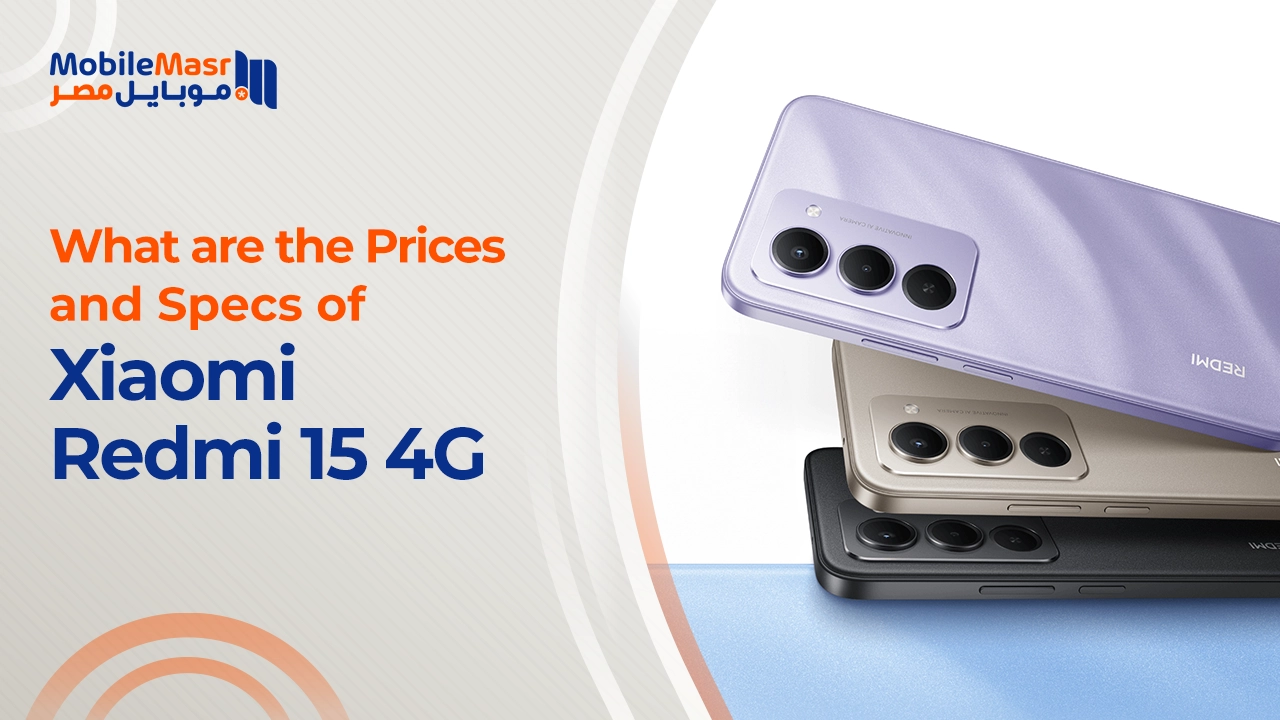
The Xiaomi Redmi 15 4G comes in Titanium Gray, Midnight Black, and Purple. Each color features a matte textured polycarbonate back panel that minimizes fingerprints and provides grip. Titanium Gray is the most neutral and professional-looking option, blending easily with any context. Midnight Black is the classic choice that never looks out of place. Purple is the most distinctive option — its subtle tonal finish catches the light and provides a refreshing visual alternative to the standard black and gray options that dominate the budget phone market.
Which Color Is Most Popular Among Egyptian Buyers?
Among Egyptian buyers, Midnight Black is typically the most popular choice — it's versatile, professional-looking, and appeals across all age groups. Titanium Gray is the second most popular, favored by buyers who want a slightly different look while maintaining a neutral, understated aesthetic. The Purple variant has gained popularity particularly among younger buyers and students who want a device that expresses personality. All three colors are generally available at major retailers and on mobilemasr.com, with stock levels varying by location and time.
How Many Storage and RAM Variants Does the Xiaomi Redmi 15 4G Have?
The Xiaomi Redmi 15 4G is available in two configurations: 6GB RAM + 128GB storage and 8GB RAM + 256GB storage. Both use LPDDR4X RAM and UFS 2.2 storage. The two-variant lineup provides buyers with a clear entry-level and an upgraded option within the same model, allowing the phone to serve both the tightest budgets and those willing to spend a bit more for meaningfully improved specifications.
What Is the Difference Between the 4GB and 6GB RAM Versions?
Clarifying an important point: the Xiaomi Redmi 15 4G is available in 6GB and 8GB RAM variants — there is no 4GB RAM model in the current lineup. The 6GB variant is the base model (6GB+128GB), and the 8GB variant is the upgraded model (8GB+256GB). The practical difference between the two configurations includes more comfortable multitasking headroom on the 8GB model, double the storage capacity, and access to the Memory Extension feature that can extend total RAM to 16GB. For users who run many apps simultaneously, game more intensively, or store large amounts of data locally, the 8GB+256GB model is the better choice.
Which Variant Offers the Best Value for Money?
For most Egyptian buyers evaluating the Xiaomi Redmi 15 4G, the 6GB+128GB variant offers the best value for money as an entry point — it provides all the core features of the phone (7000mAh battery, 144Hz display, 50MP camera, IP64, 33W charging) at the most accessible price. The 8GB+256GB variant offers better value for buyers who plan to use the phone intensively for 2–3+ years, as the extra RAM and storage provide more headroom for growing app requirements and media libraries. Both variants represent excellent value within Egypt's budget smartphone market.
What Is the Design and Build of the Xiaomi Redmi 15 4G Like?
The Xiaomi Redmi 15 4G carries the Redmi series' signature approach to design: practical, purposeful, and more polished-looking than its price suggests. The phone's durable design incorporates IP64 certification, quality materials, and an ergonomic form that serves daily use well.
Is the Xiaomi Redmi 15 4G Made of Plastic or Glass?
The back panel and frame of the Xiaomi Redmi 15 4G are polycarbonate (plastic), which is standard for budget phones at this price. The front is protected by a scratch-resistant glass panel. The plastic construction is a practical choice for a budget phone — it's more impact-resistant than glass (polycarbonate bends rather than shatters on drops), lighter per unit area, and more cost-effective to manufacture. The sleek body of the Redmi 15 4G doesn't feel cheap despite the plastic construction; the matte finish, precise assembly, and IP64 certification give it a quality feel that exceeds typical expectations for this price class.
Does the Back Panel Attract Fingerprints?
The matte textured finish on the back of the Xiaomi Redmi 15 4G is specifically effective at minimizing fingerprint visibility. Unlike gloss-finish backs that show every smudge, the matte texture scatters light in a way that makes fingerprints nearly invisible during normal use. The phone maintains a clean, fresh appearance throughout the day without requiring constant wiping. For buyers who dislike dealing with smudge-prone surfaces, the Redmi 15 4G's matte finish is a practical and appreciated design choice.
How Durable Is the Frame Under Daily Use?
The frame of the Xiaomi Redmi 15 4G is polycarbonate with a robust construction that handles the bumps and knocks of everyday use effectively. The IP64 certification provides certified protection against dust ingress and water splashing from any direction, making the phone resilient in real-world conditions including light rain, beach sand, and construction dust. The plastic frame absorbs impact energy more effectively than metal frames on drops, reducing the likelihood of cracking or deformation from everyday falls. With the included protective case, the durable design of the Redmi 15 4G provides a comfortable level of durability for daily active use.
Does the Xiaomi Redmi 15 4G Have a 3.5mm Headphone Jack?
Yes — the Xiaomi Redmi 15 4G includes a 3.5mm headphone jack. This is a feature that many users in Egypt appreciate, as it allows the use of standard wired earphones without requiring an adapter. For the Redmi series' target audience — students, everyday users, and budget-conscious buyers — the headphone jack represents practical everyday convenience that avoids the additional cost of adapters or Bluetooth earbuds. The jack is located at the bottom edge of the phone alongside the USB-C port and speaker.
What Audio Features Does It Support?
The Xiaomi Redmi 15 4G supports Dolby Atmos audio processing, which enhances sound quality for both the built-in speaker and wired headphones by adding spatial audio processing and dynamic range optimization. Hi-Res Audio over the 3.5mm jack is also supported, enabling high-fidelity audio playback for users with compatible high-quality wired earphones. The single bottom-firing speaker is clear and adequately loud for media consumption in quiet environments. The combination of Dolby Atmos, Hi-Res Audio support, and the retained headphone jack makes the audio experience on the Redmi 15 4G more complete than many competing Android devices in this price range.
What Biometric Security Options Does the Xiaomi Redmi 15 4G Offer?
The Xiaomi Redmi 15 4G provides two biometric security options: a side-mounted fingerprint sensor integrated into the power button and Face Unlock via the front camera. The side-mounted fingerprint sensor offers fast, accurate authentication — typically responding in 0.2–0.3 seconds — and works reliably even with slightly wet or moderately oily fingertips. The Face Unlock feature provides a convenient alternative for quick, hands-near-face unlocking scenarios. Together, these two security options cover the full range of typical unlock situations throughout the day.
Does It Have a Side-Mounted or Rear Fingerprint Scanner?
The fingerprint sensor on the Xiaomi Redmi 15 4G is side-mounted, integrated into the power button on the right side of the device. This placement is widely considered the most ergonomic position for a fingerprint sensor on a large phone — your thumb or index finger naturally rests on it when picking up the device, meaning the phone is often unlocked before it's fully raised to viewing position. Side-mounted sensors are generally faster and more reliable than under-display optical sensors found on more expensive phones.
Is Face Unlock Fast and Reliable on This Device?
Face Unlock on the Xiaomi Redmi 15 4G uses the 8MP front camera for software-based facial recognition. In well-lit environments, it's fast and accurate — the phone recognizes the user's face in under a second. In dim or dark environments, face unlock performance degrades as the front camera struggles to gather sufficient detail. For nighttime use or in low-light rooms, the fingerprint sensor is the more reliable option. Using both biometric methods in combination — face unlock for daytime convenience and fingerprint for reliable nighttime authentication — provides the best security and convenience balance.
What Connectivity Features Does the Xiaomi Redmi 15 4G Support?
The Xiaomi Redmi 15 4G covers the full range of connectivity features expected from a modern Android device in 2026, with all the core wireless and wired standards needed for daily use in Egypt.
Does the Xiaomi Redmi 15 4G Support Dual SIM Cards?
Yes, the Xiaomi Redmi 15 4G is a full dual-SIM phone supporting two nano-SIM cards simultaneously, with 4G connectivity active on both slots at the same time. Unlike hybrid-slot phones that share the second SIM slot with the microSD card, the Redmi 15 4G features a dedicated microSD card slot, meaning you can have two active SIM cards and expanded storage simultaneously. This is a practical advantage for Egyptian users who maintain separate personal and work numbers, or who use different carriers to optimize their data and calling plans.
Is It Compatible With All Egyptian Mobile Networks?
The Xiaomi Redmi 15 4G supports 4G LTE on the standard frequency bands used by Egyptian mobile carriers including Vodafone Egypt, Orange Egypt, Etisalat Egypt (e&), and WE (Telecom Egypt). The phone also supports 3G (WCDMA) and 2G (GSM) for fallback connectivity in areas with limited LTE coverage. Full compatibility with all active Egyptian mobile networks ensures the Redmi 15 4G works everywhere in Egypt without network-related restrictions.
Does It Support 4G LTE on Both SIM Slots Simultaneously?
Yes, the Xiaomi Redmi 15 4G supports simultaneous 4G connectivity on both SIM card slots. This means both SIM cards can connect to 4G LTE networks at the same time — useful for users who need to receive calls and data on both numbers without having to manually manage network preferences. The DSDS (Dual SIM Dual Standby) implementation ensures both lines remain active and reachable simultaneously.
What Bluetooth and Wi-Fi Version Does the Xiaomi Redmi 15 4G Use?
The Xiaomi Redmi 15 4G uses Bluetooth 5.1 and Wi-Fi 5 (802.11 a/b/g/n/ac), supporting both 2.4GHz and 5GHz bands. Bluetooth 5.1 provides improved connection stability, faster pairing, and better range compared to older Bluetooth versions. Wi-Fi 5 on both bands ensures fast home and office network connectivity, with the 5GHz band enabling significantly faster wireless data speeds in environments with a compatible router.
Does It Support Wi-Fi 5 or Wi-Fi 6?
The Xiaomi Redmi 15 4G supports Wi-Fi 5 (802.11ac) — not Wi-Fi 6 (802.11ax). Wi-Fi 6 support is typically found on higher-priced mid-range and flagship devices. For practical home and office use in Egypt, Wi-Fi 5 provides fully adequate performance — it supports the speeds of most home broadband connections and handles streaming, video calls, and large file downloads without issues. Unless you have a specifically Wi-Fi 6 optimized network environment and unusually demanding throughput requirements, Wi-Fi 5 on the Redmi 15 4G is entirely sufficient.
Can It Connect to Bluetooth Earbuds Without Latency Issues?
Bluetooth 5.1 on the Xiaomi Redmi 15 4G provides low-latency, stable connections to modern Bluetooth earbuds and headphones. For music listening and general audio playback, Bluetooth performance is excellent — connection dropout is rare, and audio quality is good with earbuds supporting aptX or AAC codecs. For gaming or video watching where audio-video synchronization is critical, there may be a small perceivable latency depending on the earbuds used, which is a general limitation of Bluetooth audio rather than a specific issue with the Redmi 15 4G. For most everyday audio use, Bluetooth connectivity is reliable and satisfying.
Does the Xiaomi Redmi 15 4G Have NFC?
NFC availability on the Xiaomi Redmi 15 4G is region-dependent. Some market variants of the phone include NFC, while others (including some versions sold in Egypt) do not. The Egyptian retail versions available through local retailers like El Avocato Mobile specifically note that the local version does not include NFC. Buyers who need NFC functionality for contactless payments should verify NFC availability on the specific unit they intend to purchase before buying. The MIUI interface — now HyperOS 2 — provides Google Pay support where NFC is available.
Is NFC Useful for Egyptian Users in 2026?
NFC-based mobile payments in Egypt are growing in adoption, with contactless payment terminals increasingly available at major retail chains, shopping malls, and modern businesses. For Egyptian users with NFC-equipped versions of the Xiaomi Redmi 15 4G, Google Pay can be used at NFC-compatible payment terminals. However, for the current version sold in most Egyptian retail channels without NFC, this feature isn't available. As Egypt's digital payment infrastructure continues to develop, NFC will become increasingly practical — buyers who prioritize this feature should verify NFC inclusion on their specific purchase.
What USB Port Does the Xiaomi Redmi 15 4G Use?
The Xiaomi Redmi 15 4G uses a USB Type-C port for charging and data transfer. USB-C is the current standard for Android devices, offering a reversible connector (no wrong way to plug in), fast data transfer speeds, and compatibility with 33W fast charging. The USB-C port is located at the bottom edge of the phone alongside the speaker and 3.5mm headphone jack.
Is It USB Type-C or Micro USB?
The Xiaomi Redmi 15 4G uses USB Type-C — not Micro USB. This is the modern standard that has replaced Micro USB across practically all new Android phones. USB-C provides faster charging speeds, faster data transfer, and a more durable reversible connector design. For buyers upgrading from older Micro USB phones, the switch to USB-C means existing Micro USB cables won't be compatible, but the included USB-C cable and the widespread availability of USB-C accessories in Egypt makes this a non-issue in practice.
What Software and OS Does the Xiaomi Redmi 15 4G Run?
The software experience on the Xiaomi Redmi 15 4G is defined by Android 15 with Xiaomi's HyperOS 2 interface — a modern, feature-rich, and customizable combination that provides a polished experience despite the phone's budget positioning.
Which Android Version Does the Xiaomi Redmi 15 4G Come With?
The Xiaomi Redmi 15 4G launches with Android 15, the latest major Android version at the time of the phone's release. Android 15 brings improved privacy controls, enhanced battery management, better notification handling, and optimized multitasking tools. Running Android 15 from day one ensures users benefit from the most current security protections and Android ecosystem features without waiting for an upgrade. HyperOS 2 layers Xiaomi's interface and features on top of Android 15, creating a well-integrated software experience.
Does It Run MIUI or HyperOS?
The Xiaomi Redmi 15 4G runs HyperOS 2 — Xiaomi's evolution beyond the older MIUI interface. HyperOS 2 replaces MIUI's branding and introduces a more refined visual design, cleaner animations, better system performance optimization, and deeper AI integration. The MIUI interface features that longtime Xiaomi users value — including App Cloner, Second Space, Game Turbo, deep customization options, and advanced privacy controls — are all carried forward and enhanced within HyperOS 2. The transition from MIUI to HyperOS represents a maturation of Xiaomi's software platform, and HyperOS 2 is the most polished version of Xiaomi's interface to date.
What Android Version Is It Based On?
HyperOS 2 on the Xiaomi Redmi 15 4G is built on top of Android 15. This is the current Android foundation, meaning the phone has access to all Android 15 features and APIs, including the latest security improvements, app compatibility improvements, and privacy enhancements that Android 15 introduced. The combination of Android 15's foundation with HyperOS 2's customization layer provides a comprehensive software experience.
Will the Xiaomi Redmi 15 4G Receive Software Updates?
The Xiaomi Redmi 15 4G is supported with Xiaomi's software update program, which includes regular monthly security patches and a 48-month software optimization guarantee. The 48-month guarantee ensures the phone will continue to perform like new from a software perspective for four years — a meaningful commitment that distinguishes Xiaomi from some competitors who offer less robust update promises.
How Many Years of Android Updates Does Xiaomi Promise?
For the Xiaomi Redmi 15 4G, Xiaomi has committed to software updates that keep the system performing well for up to 48 months. The specific number of major Android OS version upgrades beyond Android 15 may vary by region and device variant. For the core Redmi series at this price tier, buyers should expect at least one or two major Android version upgrades alongside ongoing security patches. For buyers who plan to keep the phone for 2–3 years, the software support level is entirely adequate.
How Often Does Xiaomi Release Security Patches?
Xiaomi releases security patches for the Redmi series on a monthly basis for actively supported devices. These patches address newly discovered security vulnerabilities and are typically available within a few weeks of Google's monthly Android security bulletin release. Monthly patching keeps the Xiaomi Redmi 15 4G protected against the latest known security threats throughout its supported lifespan. Patches are delivered Over-The-Air (OTA) and can be installed automatically or manually through the Settings menu.
Does the Xiaomi Redmi 15 4G Come With Bloatware Pre-Installed?
Like most Xiaomi smartphones, the Xiaomi Redmi 15 4G comes with some pre-installed apps beyond Google's standard suite and core Xiaomi utilities. These include a selection of third-party apps that Xiaomi includes through commercial partnerships. The number of pre-installed apps has decreased with HyperOS 2 compared to older MIUI versions, but some apps that users may not want are still present.
Can You Remove Unwanted Apps From the Device?
Yes, most pre-installed apps on the Xiaomi Redmi 15 4G can be uninstalled or disabled through the Settings app. Core system apps cannot be removed, but the vast majority of third-party pre-installed apps can be uninstalled like any other app. For users who prefer a clean software experience, a brief setup session of removing unwanted apps after first boot leaves the phone with a streamlined app list. HyperOS 2 also provides privacy controls that limit what pre-installed apps can access, giving users control over permissions even for apps they choose to keep.
How Smooth Is the MIUI or HyperOS Experience on a Budget Phone?
HyperOS 2 on the Xiaomi Redmi 15 4G feels noticeably more polished and responsive than what typical budget phone software experiences deliver. The 144Hz display makes HyperOS 2's animations and transitions feel particularly fluid — the interface responds immediately to touch inputs, and transitions between screens and apps are smooth. Xiaomi's system optimization, combined with the Snapdragon 685's efficient processing, means the MIUI interface (now HyperOS 2) doesn't feel sluggish or over-complicated on this budget phone. The overall software experience is clean, fast, and comfortable for everyday use.
How Does the Xiaomi Redmi 15 4G Perform in Real-World Use?
Beyond the specifications, what matters is how the Xiaomi Redmi 15 4G actually feels and performs in the hands of Egyptian users going about their daily lives. The answer is: better than the price suggests.
Is the Xiaomi Redmi 15 4G Good for Gaming?
The Xiaomi Redmi 15 4G is a capable casual gaming device. The Snapdragon 685 with Adreno 610 GPU handles popular mobile games with adequate performance at medium settings, and the 144Hz display makes gaming feel visually smooth in a way that lower-refresh competitors can't match. The Game Turbo feature in HyperOS 2 optimizes system resources during gaming sessions by prioritizing the active game and reducing background interruptions, further improving the gaming experience.
Can It Handle Popular Mobile Games Like PUBG and Free Fire?
The Xiaomi Redmi 15 4G handles both PUBG Mobile and Free Fire with playable performance. Free Fire runs smoothly at medium-to-high visual settings with consistent frame rates. PUBG Mobile operates at HD graphics with smooth or balanced frame rate settings, delivering a playable experience for casual and moderate players. Call of Duty Mobile, Mobile Legends, Clash Royale, and similar titles all run well within acceptable performance parameters. For competitive high-performance gaming at maximum settings, the Adreno 610 shows limitations, but for the casual-to-moderate gaming audience that is the Redmi 15 4G's primary audience, the experience is satisfying.
Does It Overheat During Extended Gaming Sessions?
The Snapdragon 685's 6nm process helps manage heat generation during gaming more effectively than older, larger-node chips. During typical 30–60 minute gaming sessions, the Xiaomi Redmi 15 4G gets mildly warm but remains comfortable to hold. Extended sessions of 2+ hours may produce more noticeable warmth in the upper back area of the phone near the camera module. No significant thermal throttling has been widely reported in gaming scenarios of typical duration. The phone's cooling system manages heat adequately for the casual gaming use it's designed to support.
How Does the Xiaomi Redmi 15 4G Handle Multitasking?
In daily multitasking scenarios, the Xiaomi Redmi 15 4G performs well for its price class. Switching between WhatsApp, Instagram, Chrome, YouTube, and other commonly used apps happens quickly and smoothly, with HyperOS 2's memory management ensuring that frequently used apps are kept ready in memory rather than being constantly reloaded. The 6GB or 8GB of LPDDR4X RAM provides adequate headroom for the multitasking patterns of everyday users.
Can It Run Multiple Apps at the Same Time Without Lag?
The Xiaomi Redmi 15 4G handles 5–8 active applications simultaneously without significant lag or forced app restarts under typical use conditions. The 8GB RAM variant offers more comfortable headroom and can sustain more concurrent apps before memory pressure starts affecting performance. HyperOS 2's adaptive memory management learns which apps you use most frequently and adjusts retention priorities accordingly, making the multitasking experience feel more responsive over time. For power users who routinely keep 10+ apps running simultaneously, the 8GB model is the better choice.
How Does RAM Management Work on This Device?
HyperOS 2 on the Xiaomi Redmi 15 4G uses an intelligent RAM management system that tracks application usage patterns and prioritizes which apps to keep loaded in memory. Frequently used apps are kept in memory for quick resumption, while rarely used apps are cleared to free up space for active tasks. The Memory Extension feature on the 8GB model can designate up to 8GB of internal storage as virtual RAM, providing additional buffer for multitasking-heavy scenarios. This system ensures that the mid-range specs of the Redmi 15 4G are used efficiently, delivering a more fluid experience than raw numbers might suggest.
Is the Xiaomi Redmi 15 4G Fast Enough for Social Media and Streaming?
Social media use, content streaming, and messaging are where the Xiaomi Redmi 15 4G truly shines in everyday use. The combination of a 144Hz display, sufficient RAM, fast 4G LTE connectivity, and the Snapdragon 685's capable ISP for rendering-intensive apps makes the phone feel perfectly suited for heavy social media and streaming use. Scrolling through Instagram, TikTok, and Facebook feels smooth and responsive, streaming YouTube and Netflix delivers crisp FHD+ content on the large display, and loading web pages on Chrome is fast and comfortable.
How Does It Perform on YouTube, TikTok, and Instagram?
On YouTube, the Xiaomi Redmi 15 4G's 6.9-inch 144Hz FHD+ display delivers an immersive viewing experience with sharp, smooth video playback. The Dolby Atmos speaker enhances audio for video content. TikTok scrolling and video playback are smooth thanks to the 144Hz panel and capable hardware. Instagram feeds, stories, and Reels all load and play smoothly. For Egyptian users who spend significant portions of their day consuming social media content, the Redmi 15 4G provides a consistently pleasant and fast experience that users of lower-spec phones will immediately notice as an improvement.
How Does the Xiaomi Redmi 15 4G Compare to Its Competitors?
Understanding how the Xiaomi Redmi 15 4G stacks up against key competitors in Egypt's budget smartphone market is essential for making the right purchase decision. Here are the most relevant comparisons for Egyptian buyers in 2026.
How Does the Xiaomi Redmi 15 4G Compare to the Redmi 14 4G?
The Redmi 14 4G was the predecessor to the Xiaomi Redmi 15 4G, and the upgrade between generations is meaningful. The Redmi 14 4G featured a MediaTek Helio G91 Ultra processor, a 6.67-inch FHD+ display with 90Hz refresh rate, and a 5030mAh battery. The Xiaomi Redmi 15 4G improves across every key metric.
What Upgrades Did Xiaomi Make From the Previous Generation?
The key upgrades from Redmi 14 4G to Xiaomi Redmi 15 4G are substantial:
- Battery: 5030mAh → 7000mAh (a 39% capacity increase)
- Display: 6.67-inch 90Hz → 6.9-inch 144Hz (both larger and smoother)
- Processor: MediaTek Helio G91 Ultra → Qualcomm Snapdragon 685 (6nm)
- Software: Android 14 with MIUI → Android 15 with HyperOS 2
- IP Rating: Added IP64 dust and splash protection
- Fast Charging: 33W on both generations, but with improved Redmi 15 4G delivery
These aren't minor tweaks — the battery and display upgrades alone represent a significantly better daily experience.
Is It Worth Upgrading From the Redmi 14?
For Redmi series users currently on the Redmi 14 4G, upgrading to the Xiaomi Redmi 15 4G is worthwhile if battery life or display smoothness are pain points in your current experience. The jump from 5000mAh to 7000mAh is immediately noticeable in daily life, and the 144Hz display (vs. 90Hz) makes a tangible visual difference. If your Redmi 14 4G is working well and you have no specific frustrations, you can reasonably wait — but the Redmi 15 4G is genuinely the better device in every meaningful way.
How Does the Xiaomi Redmi 15 4G Compare to Samsung Galaxy A16?
The Samsung Galaxy A16 is a competitive device in a similar price bracket, offering a Super AMOLED display with 90Hz refresh rate, a MediaTek Helio G99-U processor, and a 5000mAh battery. The Xiaomi Redmi 15 4G counters with a larger battery (7000mAh vs. 5000mAh), higher display refresh rate (144Hz vs. 90Hz), and a 3.5mm headphone jack.
Which One Has a Better Camera System?
The camera comparison between the Xiaomi Redmi 15 4G and Samsung Galaxy A16 is competitive. The Redmi 15 4G's 50MP primary camera with PDAF produces detailed, well-exposed daylight photos. Samsung's camera processing tends to deliver more consistent results across varied lighting conditions, particularly in low light. For everyday social media photography, both cameras produce good results — the choice comes down to preference for Xiaomi's color rendering or Samsung's processing style. The Redmi 15 4G has a slight resolution advantage, while Samsung typically has a software processing advantage.
Which One Offers Better Battery Life?
The Xiaomi Redmi 15 4G wins this comparison decisively. The 7000mAh battery versus the Galaxy A16's 5000mAh is a 40% capacity difference that translates directly into more hours of screen-on time and longer intervals between charges. For Egyptian buyers who prioritize battery endurance above all else, the Redmi 15 4G is the clear winner.
How Does the Xiaomi Redmi 15 4G Compare to the Infinix Note 40?
The Infinix Note 40 is another competitive option in Egypt's budget-to-mid segment. It typically offers a MediaTek Helio G99 processor, an AMOLED display with 120Hz refresh rate, and a 5000mAh battery. The Xiaomi Redmi 15 4G again holds the battery advantage significantly, while the Infinix Note 40 offers an AMOLED display with better contrast and color depth.
Which Phone Offers Better Value in the Egyptian Market?
Comparing total value in Egypt's market, the Xiaomi Redmi 15 4G wins on battery endurance and display smoothness, while the Infinix Note 40 wins on display technology (AMOLED) and potentially camera quality at similar price points. For buyers who watch a lot of video and prioritize beautiful display quality, the Infinix Note 40's AMOLED panel is compelling. For buyers who prioritize all-day battery and the smoothest possible display experience, the Redmi 15 4G offers superior value.
How Does the Xiaomi Redmi 15 4G Compare to the Tecno Spark 30?
The Tecno Spark 30 is a popular budget phone in Egypt, typically offering a MediaTek Helio G99-Ultra processor, a large display, and competitive pricing. The Xiaomi Redmi 15 4G competes on battery capacity, display refresh rate, and brand reliability, with Xiaomi's broader service network in Egypt providing a support advantage.
Which One Has a Better Display Quality?
The Xiaomi Redmi 15 4G's 144Hz FHD+ IPS LCD offers better display smoothness compared to the Tecno Spark 30's typical 90Hz panel. For raw display quality in terms of color accuracy and brightness at similar price points, the comparison is closer — both use IPS technology with comparable specifications. The HD+ screen and refresh rate advantage of the Redmi 15 4G make it the better choice for users who value smooth visuals and gaming performance.
Which One Is Easier to Find in Egyptian Stores?
Xiaomi has a broader official retail presence in Egypt than Tecno, with more authorized service centers and wider distribution across Egyptian governorates. The Xiaomi Redmi 15 4G benefits from Xiaomi Egypt's established retail network and official warranty infrastructure, making it easier to find at verified sellers and more straightforward to get serviced if needed. mobilemasr.com specifically stocks Xiaomi devices with verified provenance, making it the most reliable online source.
How Does the Xiaomi Redmi 15 4G Compare to the Realme C75?
The Realme C75 is a direct competitor in the budget segment, typically featuring a MediaTek Helio G100 processor, a 6.72-inch display, and a 5000mAh battery. The Xiaomi Redmi 15 4G again demonstrates its battery advantage with the 7000mAh pack, while the Realme C75 may offer stronger raw gaming GPU performance with the Helio G100.
Which Phone Has the Stronger Processor?
The MediaTek Helio G100 in the Realme C75 offers stronger GPU performance than the Snapdragon 685 in the Xiaomi Redmi 15 4G in benchmarks, making it better suited for graphically intensive gaming. However, the Snapdragon 685's superior power efficiency (6nm vs. Helio G100's 6nm as well, but with different architecture efficiency profiles) means the Redmi 15 4G's battery life advantage is more pronounced. For pure gaming GPU output, the Realme C75 may edge ahead. For an all-around daily use package with outstanding battery life, the Redmi 15 4G is more balanced.
Which Brand Has Better After-Sales Service in Egypt?
Xiaomi has a well-established and growing service center network in Egypt, with authorized repair centers in Cairo, Alexandria, and other major cities. Official warranty support through Xiaomi Egypt provides clear recourse for buyers with hardware issues. Xiaomi's brand reputation in Egypt is strong, backed by years of market presence and an active user community. For Egyptian buyers, the Xiaomi after-sales service infrastructure provides more reassurance than less established brands, making the Xiaomi Redmi 15 4G a safer long-term purchase from a support perspective.
What Are the Pros and Cons of the Xiaomi Redmi 15 4G?
What Are the Main Advantages of Buying the Xiaomi Redmi 15 4G?
The Xiaomi Redmi 15 4G offers an impressive list of advantages for its price:
- 7000mAh silicon-carbon battery: Genuine multi-day endurance at a budget price
- 144Hz FHD+ display: Premium display refresh rate unusually found in this price range
- 33W fast charging included with charger in box: No additional purchase needed
- IP64 dust and water splash resistance: Meaningful durability protection
- 50MP PDAF main camera: Fast autofocus and detailed daylight photography
- Snapdragon 685 on 6nm: Power-efficient performance with reliable everyday capability
- 3.5mm headphone jack retained: Practical audio convenience
- Dedicated microSD slot: Use both SIMs and expand storage simultaneously
- Dolby Atmos audio: Enhanced sound quality for media and music
- HyperOS 2 on Android 15: Modern, feature-rich software
- Triple rear camera with depth sensor: Portrait Mode capability
- NFC on supported variants: Contactless payment capability
Is It One of the Best Budget Phones Under 5000 EGP in 2026?
The Xiaomi Redmi 15 4G is priced above 5000 EGP in Egypt's current market (approximately EGP 7,400–7,700 for the base model), placing it in the under-8000 EGP segment rather than under-5000 EGP. Within the under-8000 EGP bracket, it is unquestionably one of the best-equipped budget phones available in Egypt in 2026 — offering a combination of battery, display, processor, camera, and durability features that no direct competitor in its price range matches simultaneously.
What Are the Weaknesses and Drawbacks of the Xiaomi Redmi 15 4G?
The Xiaomi Redmi 15 4G has several limitations that buyers should be aware of:
- No 5G support: 4G-only device won't benefit from future 5G rollout
- IPS LCD, not AMOLED: Lower contrast and less vibrant colors than AMOLED alternatives
- No OIS: Optical image stabilization is absent, limiting low-light and video quality
- Single rear speaker: No stereo audio without headphones
- 224g weight: Heavy due to large battery, may cause fatigue during extended one-handed use
- No dedicated ultra-wide or telephoto lens: Secondary cameras are auxiliary rather than functional
- 1080p video only: No 4K recording capability
- Large footprint: 171mm height and 82mm width makes one-handed use challenging
What Are the Most Common Complaints From Users?
The most frequent user complaints about the Xiaomi Redmi 15 4G center on: the absence of 5G connectivity (a concern primarily for forward-thinking buyers), the IPS LCD display for users who expected AMOLED, camera performance in low-light conditions falling short of expectations, and the phone's weight and size making one-handed use difficult for users with smaller hands. No widespread hardware defect issues have been reported. Complaints are largely about what the phone doesn't have rather than failures in what it does deliver.
Who Should Buy the Xiaomi Redmi 15 4G in 2026?
Is the Xiaomi Redmi 15 4G a Good Choice for Students in Egypt?
The Xiaomi Redmi 15 4G is an excellent choice for Egyptian students. The 7000mAh battery survives a full day of classes, studying, social media, and entertainment without requiring a mid-day charge. The large 144Hz display makes reading textbooks, watching lecture videos, and browsing educational content comfortable and engaging. The affordable price fits student budgets, and the included charger means no additional expenditure. The 3.5mm headphone jack works with standard library and studying earphones without needing adapters. HyperOS 2's productivity features — including split-screen for studying while messaging, App Cloner for managing multiple accounts, and efficient multitasking — support the varied needs of student life. The durable design and IP64 protection handle the inevitable bumps of campus life.
Is It Suitable for Elderly Users Looking for a Simple Smartphone?
For elderly Egyptian users transitioning to or updating their smartphone, the Xiaomi Redmi 15 4G has several appropriate qualities. The large 6.9-inch display with FHD+ resolution makes text and content easy to read without straining. The 144Hz scrolling makes navigating apps feel fluid and less jarring. The long battery life reduces the anxiety of battery depletion, and the 33W fast charging means the phone recovers quickly when it does need charging. HyperOS 2 supports large font sizes, simplified home screen layouts, and accessibility features that make the phone more usable for elderly users. The familiar 3.5mm headphone jack works with hearing aids or standard earphones. The main challenges for elderly users are the phone's size and weight, which may be difficult to manage one-handed.
Is the Xiaomi Redmi 15 4G Good for Photography Enthusiasts on a Budget?
For photography features enthusiasts working within a tight budget, the Xiaomi Redmi 15 4G provides a functional starting point with genuine strengths. The 50MP main camera with PDAF delivers sharp, detailed daylight photos with fast autofocus. The range of manual and AI shooting modes — Pro Mode, Night Mode, Portrait Mode, Panorama — provides creative options beyond simple point-and-shoot. For social media photography and casual everyday shooting, the camera delivers very satisfying results. The limitations — no ultra-wide, no OIS, 1080p video only, moderate low-light performance — will be felt by users with higher photographic ambitions. As an entry-level photography phone, the Redmi 15 4G is well-equipped. As a serious photo tool, its budget constraints show in specific scenarios.
Is It a Solid First Smartphone for Teenagers?
The Xiaomi Redmi 15 4G is a strong first smartphone choice for Egyptian teenagers. The battery life is ideal for a generation that uses their phone continuously throughout the day. The large 144Hz display makes gaming, social media, and video streaming — the primary activities of teenage smartphone users — genuinely enjoyable. The IP64 protection handles the inevitable drops and splashes that come with teenage phone ownership. The camera is capable enough for social media photography and basic content creation. The price is accessible for parents who want to provide a quality first phone without overspending. HyperOS 2's Second Space and privacy features also allow parental controls and account separation if needed.
What Do Users and Reviewers Say About the Xiaomi Redmi 15 4G?
What Are the Most Positive Reviews About the Xiaomi Redmi 15 4G?
Across review platforms, tech channels, and user forums, the Xiaomi Redmi 15 4G receives consistently positive reactions for:
- Battery life: The 7000mAh capacity is universally praised as the phone's standout feature
- Display quality and smoothness: The 144Hz panel at this price is highlighted in nearly every review
- Build quality and IP64: The durable feel and water splash protection are noted as surprising positives
- Value for money: Reviewers consistently note that the feature set exceeds what the price normally delivers
- Fast charging with included charger: The 33W adapter in the box is specifically praised
- Software polish: HyperOS 2 is noted as a significant improvement over older MIUI versions
What Do Egyptian Buyers Specifically Praise About This Phone?
Egyptian buyers of the Xiaomi Redmi 15 4G consistently highlight the exceptional battery life as the feature that most positively impacts their daily lives — particularly for users with long commutes, full school or work days, and heavy social media use. The large display for comfortable video watching during commutes and at home is also frequently praised. The combination of 4G LTE on both SIM slots, support for all Egyptian mobile networks, and dual-SIM convenience are mentioned as particularly relevant for the Egyptian market. The price-to-performance ratio in Egyptian Pounds draws positive comparisons to competing devices available at similar prices in the Egyptian market.
What Are the Most Common Criticisms in User Reviews?
The most frequently mentioned criticisms in Xiaomi Redmi 15 4G reviews include:
- No 5G: Users who want future-proof network connectivity note the 4G-only limitation
- IPS LCD vs AMOLED: Display color depth and contrast are noted as inferior to AMOLED alternatives
- Camera low-light performance: Night photography without Night Mode shows limitations
- Single speaker: The lack of stereo speakers is noted for media consumption without headphones
- Weight: The 224g weight is mentioned as tiring for very long one-handed use
- Pre-installed bloatware: Some third-party apps require removal after setup
Are There Any Known Hardware or Software Issues Reported?
No widespread hardware defects or systematic quality control failures have been reported for the Xiaomi Redmi 15 4G in available reviews and user feedback. Isolated reports of minor display inconsistencies and SIM slot fit issues appear in small numbers, as is typical for any phone model. Software issues are generally addressed through HyperOS 2's regular update cycle. The phone's overall reliability and build quality receive positive assessments in the vast majority of user feedback.
What Score Does the Xiaomi Redmi 15 4G Get on Review Platforms?
The Xiaomi Redmi 15 4G receives generally favorable scores across tech review platforms. On price comparison platforms like Kimovil, the phone scores positively on value-for-money metrics. AnTuTu benchmark scores of approximately 338,000 confirm solid budget-tier performance. User ratings on retail platforms consistently average 4.0–4.5 out of 5 stars, with the battery and display cited as the main reasons for high satisfaction scores. Professional reviewers who evaluate it as an affordable handset consistently rate it above average for its price class, with the battery life and 144Hz display frequently elevated as best-in-class features for the budget.
Is the Xiaomi Redmi 15 4G Worth Buying in Egypt in 2026?
Does the Xiaomi Redmi 15 4G Offer Good Value for Money?
Evaluated objectively, the Xiaomi Redmi 15 4G offers outstanding value for money in Egypt's budget smartphone market in 2026. At a retail price of approximately EGP 7,400–7,700 for the base model, it delivers a 7000mAh battery, 144Hz FHD+ display, Snapdragon 685 on 6nm, 50MP PDAF camera, IP64 protection, 33W fast charging (with charger included), 3.5mm headphone jack, Dolby Atmos audio, dual SIM with dedicated microSD, and Android 15 with HyperOS 2. Getting all of these features simultaneously at this price point is genuinely unusual, and it's what makes the Xiaomi Redmi 15 4G such a compelling recommendation for Egyptian buyers.
How Does Its Price-to-Performance Ratio Compare to Rivals?
In Egypt's under-EGP 8,000 segment, the Xiaomi Redmi 15 4G's price-to-performance ratio is among the strongest available. Competing devices at similar prices typically offer either better display technology (AMOLED) but smaller batteries, or larger batteries but lower refresh rates, or similar specs but without IP certification. No single competitor in this price range matches the Redmi 15 4G's complete package of battery, display smoothness, camera, durability, and software simultaneously. For price-conscious Egyptian buyers who research carefully, this phone consistently stands out as the value leader.
Should You Wait for a Better Alternative or Buy Now?
For Egyptian buyers who need a reliable, well-equipped Android device now, buying the Xiaomi Redmi 15 4G in 2026 is a sound decision. The phone offers a complete set of features that will remain relevant for 2–3 years of daily use, and the current pricing is competitive. Waiting always carries the risk of continued price increases or stock availability changes. If you have a specific requirement that the Redmi 15 4G doesn't fulfill — such as 5G connectivity or an AMOLED display — then waiting or looking at a higher-tier device makes sense. For the majority of Egyptian buyers with typical smartphone needs, buying now is the practical recommendation.
Are There Upcoming Xiaomi Phones That Might Be a Better Choice?
Xiaomi continuously refreshes its Redmi series lineup, and new models are always in development. The Redmi 16 series will eventually replace the current generation. However, for the foreseeable near-term in 2026, no confirmed Redmi 16 4G launch has been announced. For buyers who don't need the absolute latest model and want to make a purchase decision now, the Xiaomi Redmi 15 4G remains an excellent current choice. If you're reading this article closer to late 2026 or 2027, checking mobilemasr.com for the latest Xiaomi releases and pricing is the best way to confirm whether a newer model offers substantially better value.
The Xiaomi Redmi 15 4G is one of the most compelling budget phones available in Egypt in 2026. Its extraordinary 7000mAh battery, smooth 144Hz FHD+ display, reliable Snapdragon 685 performance, 50MP camera, IP64 protection, and modern HyperOS 2 software combine into a package that genuinely overdelivers for its price in the Egyptian market. Whether you're a student, a working professional, a casual gamer, or simply someone who wants a dependable phone that won't leave you scrambling for a charger mid-day, the Redmi 15 4G covers your needs with confidence.
To find the best current price on the Xiaomi Redmi 15 4G in Egypt — whether you're looking for a brand-new device or a verified pre-owned unit — visit mobilemasr.com today. Mobile Masr is Egypt's most trusted platform for buying and selling smartphones, offering verified listings, competitive pricing, official warranty options, and dedicated customer support. Don't miss out on the best deal — check out the Xiaomi Redmi 15 4G now on Mobile Masr and make your purchase with confidence.
FAQs
CONTACT US
©2026 MobiTech Integrated Solutions. . All Rights Reserved