
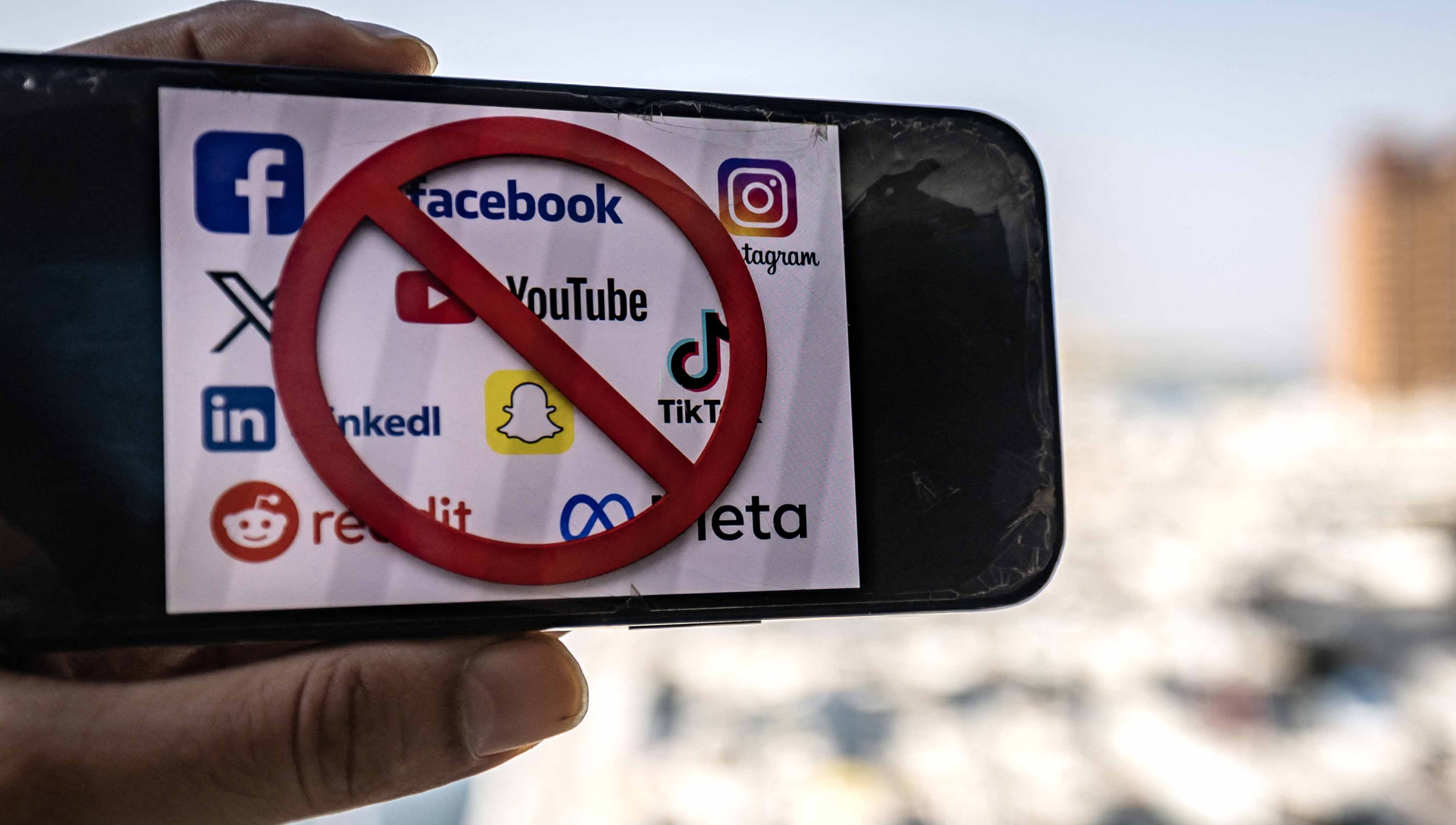
UAE Bans Social Media for Those Under 15 — First Arab Country to Implement This Measure, One Year to Comply With Digital ID and AI Age Verification
UAE Bans Social Media for Under-15s — Arab World First
A few days ago the UK government announced a ban on social media for children under 16, and now the UAE is following suit by effectively banning social media for those under 15. The UAE is the first Arab country to introduce such a measure.
The UAE decision comes within a global regulatory wave — Australia 2024, UK and France 2026, and now UAE in the Arab world. The UAE follows Britain by just days signaling coordination or direct inspiration from the European experience.
Ban Details — What's Prohibited and What's Allowed
Children under 15 are prohibited from creating, using, or operating personal social media accounts. They will not be able to post content, comment, share, or join public groups.
Those aged 15 to 16 will be allowed on social media subject to age-appropriate content controls, restrictions on interaction with unknown users, screen-time management tools, and parental supervision features.
This is a nuanced and reasoned distinction — rather than a complete ban for everyone under 18 as some countries prefer, the UAE chose a tiered approach: complete ban under 15 and moderate restrictions for 15-16. This implicitly acknowledges that older teenagers have greater maturity for dealing with social media while providing additional protection.
Age Verification — Digital ID and AI
The new rules require social media companies to implement age verification features, including digital identity checks and AI-supported technologies. Self-declaration of age will not be accepted as a valid form of verification.
An important point — the UAE goes beyond the core weakness of most similar systems: relying on self-declaration. "I'm over 15" won't suffice — an actual digital identity will be needed. The UAE has digital identity infrastructure (UAE Pass) that can be leveraged in this context.
Existing Accounts and Company Requirements
Accounts previously created by children under 15 will have to be disabled by the social media platforms, which should also prevent users from circumventing age verification systems and refrain from using children's personal data for targeted advertising or behavioral profiling.
Social media companies have one year to comply with the new regulations.
One year for compliance is a reasonable timeframe — allowing TikTok, Instagram, Snapchat, X, and others to build the necessary technical systems. But the mandatory disabling of existing accounts is the biggest challenge — how do companies verify the identity of current account holders?
Regional Significance of the UAE Decision
The UAE is the first Arab country and first Gulf country to issue this decision — giving it the role of regional driver. Saudi Arabia, Kuwait, Bahrain, and others will closely follow the UAE's experience. If implementation succeeds in the UAE other countries will find public and political pressure to follow suit.
FAQs
CONTACT US
©2026 MobiTech Integrated Solutions. . All Rights Reserved