
Samsung Galaxy Z TriFold 2026: Price & Specs?
What Is the Samsung Galaxy Z TriFold 2026 and Why Is It the Most Anticipated Foldable Phone of the Year?
The Samsung Galaxy Z TriFold isn't an upgrade to an existing product line — it's the birth of an entirely new category. When Samsung announced this Samsung tri-fold phone on December 1, 2025 and launched it in South Korea on December 12 before rolling it out to the US on January 30, 2026, the company wasn't just releasing another Samsung foldable phone. It was delivering the answer to a question the entire smartphone industry had been asking for years: what genuinely comes after the single fold?
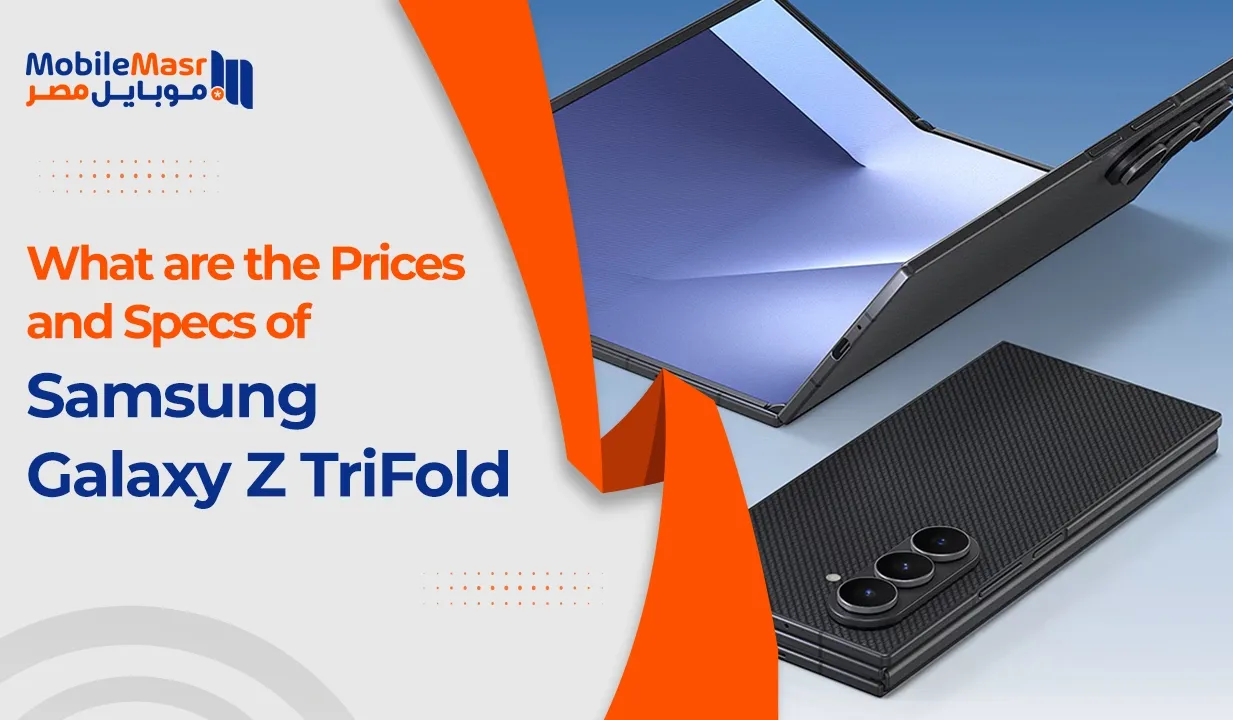
The answer is a device that unfolds not once but twice, revealing a 10-inch display — the largest screen ever built into a Galaxy smartphone — in a body slim enough to pocket. The Samsung Galaxy Z TriFold folds inward on both sides, protecting the main display when not in use while still offering a full 6.5-inch cover screen for one-handed everyday use. The engineering required to make this work reliably — dual titanium hinges, a three-cell distributed battery system, flexible display reinforcement, and Snapdragon 8 Elite performance — represents a decade of Samsung's foldable innovation condensed into one product.
This Samsung foldable smartphone launched at $2,899 in the US, making it the most expensive Galaxy phone Samsung has ever sold — a premium that reflects not just the hardware inside but the research, tooling, and testing behind building something that had never been done in this form before. In Egypt, the Samsung Galaxy Z TriFold is priced at 195,000 EGP, which places it firmly in the territory of serious professionals, technologists, and those who genuinely want the most advanced mobile computing experience available anywhere in 2026.
What makes the Galaxy Z TriFold the most anticipated foldable of the year is the combination of ambition and execution. Samsung didn't just make a wider phone — they built a portable workspace that transitions seamlessly between three distinct use modes, powered by a flagship chip, equipped with a 200MP camera system, and running the most feature-complete version of Galaxy AI ever released on any device.
What Are the Full Specifications of the Samsung Galaxy Z TriFold 2026?
The Samsung Galaxy Z TriFold specifications represent a complete engineering rethink across every component. Nothing was simply borrowed from the Z Fold series — every element was designed or redesigned to accommodate the unique demands of a device that folds twice.
What Display Technology Does the Samsung Galaxy Z TriFold 2026 Use?
The Galaxy Z TriFold display system uses Samsung's Dynamic AMOLED 2X technology across both screens. This is the same class of premium panel found in Samsung's top Ultra devices, re-engineered to function within a triple-fold form factor. Samsung developed a reinforced overcoat layer specifically for this phone — a flexible shock-absorbing coating applied directly to the inner folding display that increases resilience to impact without meaningfully affecting display quality or adding thickness.
Both screens support HDR10+ for premium-quality video rendering across all compatible content. Samsung's Samsung flexible display technology here is genuinely advanced — the folds in both directions require the display material to bend repeatedly without developing permanent creases or structural weaknesses, a challenge that Samsung addressed through new polymer formulation and layering techniques developed over years of foldable research. The result is a display system that holds up to 200,000 multi-fold cycles in Samsung's own testing — equivalent to folding the device approximately 100 times every single day for five years.
The Samsung folding technology inside the Z TriFold also introduces Vision Booster on the cover screen, which enhances color and contrast specifically for outdoor viewing conditions, making the 6.5-inch cover display fully usable even in bright Egyptian sunlight.
What Is the Size of Each Screen Panel on the Z TriFold 2026?
The Samsung Galaxy Z TriFold features two distinct screens serving completely different purposes. The cover screen is a 6.5-inch Dynamic AMOLED 2X panel with a wider-than-typical aspect ratio that feels natural and familiar for standard smartphone tasks — scrolling, messaging, calls, and quick camera access. The wide format is intentional: it makes the cover screen more comfortable for one-handed typing than traditional narrow phone screens.
When you unfold the device fully, both side panels open outward to reveal the 10-inch main screen — the largest display in the history of Samsung smartphones and comfortably in tablet territory. The 10-inch format can be used in landscape orientation for widescreen media and split-screen multitasking, or rotated vertically for a tall document-like aspect ratio similar to an A4 page, making reading and annotation genuinely natural. The partially-open flex position creates a laptop-like posture where the lower portion supports the device while the upper portion displays content — useful for video calls, note-taking, and media consumption without holding the device.
What Resolution and Refresh Rate Does the Z TriFold 2026 Display Offer?
Both screens on the Samsung Galaxy Z TriFold feature adaptive 120Hz refresh rates that intelligently adjust based on content — dropping to lower rates during static viewing to preserve battery, and pushing to 120Hz during scrolling, gaming, and animations for maximum smoothness. The cover screen achieves peak brightness of 2,600 nits, matching the brightness ceiling of the Galaxy S26 Ultra's cover screen and guaranteeing clear visibility in any outdoor environment. The main 10-inch inner screen reaches 1,600 nits peak brightness — somewhat lower than the cover screen, but entirely sufficient for indoor use and most outdoor scenarios where the large screen is most naturally employed.
The resolution across both screens is QHD+, delivering the pixel density required to make text, images, UI elements, and video content look sharp at typical viewing distances on both the compact 6.5-inch cover and the expansive 10-inch main display.
Does the Samsung Galaxy Z TriFold 2026 Use Under-Display Camera Technology?
Yes — the 10-inch inner main screen of the Samsung Galaxy Z TriFold incorporates an under-display camera positioned beneath the display surface, activating only when the camera app calls for it. This preserves the full, uninterrupted 10-inch canvas for productivity, media, and content creation without any punch-hole or notch breaking the display. Under-display camera technology is technically demanding — the display pixels above the camera must be transparent enough to allow light to reach the sensor while still delivering normal display output when the camera is not in use. Samsung's implementation represents a significant improvement over early under-display attempts, though image quality from this camera is still somewhat below a conventional front-facing camera.
For primary selfie photography and video calls, the cover screen's conventional 10MP front camera is the better-quality option. The under-display camera is most valuable when working with the fully unfolded screen — for video calls, document scanning, or creative content that benefits from an unobstructed 10-inch workspace.
What Screen Protection Does the Z TriFold 2026 Use on Each Panel?
The Galaxy Z TriFold uses layered protection solutions tailored to each screen's specific requirements. The cover screen's exterior surface uses Corning's latest glass technology for scratch and impact resistance. The inner main folding display uses a flexible polymer protective layer — necessary because rigid glass cannot flex through the fold cycles required of a tri-fold device. Samsung includes an Anti-Reflecting Film pre-applied to the main screen in the retail box, reducing glare and surface reflections on the large inner display and making it significantly more practical across varied lighting environments.
What Processor Powers the Samsung Galaxy Z TriFold 2026?
The Galaxy Z TriFold processor is the Snapdragon 8 Elite Mobile Platform for Galaxy — Qualcomm's flagship chip, custom-tuned by Samsung to meet the specific performance demands of a device running three-screen multitasking, on-device AI processing, and a 200MP camera pipeline simultaneously.
Is the Snapdragon 8 Elite the Chip Inside the Z TriFold 2026?
Yes — the Snapdragon 8 Elite for Galaxy powers the Samsung Galaxy Z TriFold globally. This is the same chip generation that powers Samsung's Galaxy S25 Ultra, and the same architecture used in the Galaxy S26 series. Samsung's custom tuning adjusts thermal thresholds, clock speeds, and memory management to optimize performance for the tri-fold form factor specifically. The Snapdragon 8 Elite's Oryon CPU cores deliver substantially faster single-core and multi-core performance than the previous generation Snapdragon 8 Gen 3, which translates directly to faster app loading, smoother multitasking across three simultaneous windows, and more responsive AI feature processing.
How Does the Z TriFold 2026 Chipset Compare to Other Samsung Flagships?
The Galaxy Z TriFold performance from the Snapdragon 8 Elite chip puts it on equal footing with the Galaxy S25 Ultra in terms of raw processing power. The chip's GPU performance comfortably handles 120Hz gaming, 8K video processing, and real-time AI image enhancement without frame drops. The Galaxy Z TriFold benefits from an enhanced vapor chamber cooling system that manages heat distribution across the phone's larger surface area — the triple-fold form factor actually provides more surface area for thermal dissipation than a conventional smartphone, which helps the chip sustain peak performance during extended demanding tasks.
Does the Z TriFold 2026 Have a Dedicated NPU for AI Tasks?
Yes — the Snapdragon 8 Elite inside the Samsung Galaxy Z TriFold includes a dedicated Neural Processing Unit (NPU) purpose-built for AI acceleration. This NPU handles Galaxy AI features on-device — processing tasks like real-time translation, AI photo editing, handwriting recognition, and contextual suggestions without sending data to external servers. The on-device processing approach ensures that AI features remain fast and responsive even without an internet connection, and that sensitive personal data stays on the device rather than passing through cloud infrastructure. The NPU's performance is critical for the Z TriFold's multitasking AI features, which need to process information from multiple open apps simultaneously on the large inner screen.
How Much RAM and Storage Does the Samsung Galaxy Z TriFold 2026 Have?
The Samsung Galaxy Z TriFold packs 16GB of RAM — more than any other Samsung foldable device released to date, and a meaningful increase from the 12GB RAM in the Galaxy Z Fold 7. This RAM figure directly supports the device's core productivity promise: running three full applications simultaneously across the 10-inch display with no performance compromise.
Does the Samsung Galaxy Z TriFold 2026 Come in Multiple Storage Variants?
The Galaxy Z TriFold is available in 512GB and 1TB storage configurations — both using fast UFS flash storage for high-speed read/write performance. The 512GB base configuration is generous for most users, while the 1TB option serves professionals managing large 8K video libraries, extensive document archives, or substantial app collections. Both variants come with 16GB RAM, so the only choice is between storage tiers.
Is There a MicroSD Card Slot in the Z TriFold 2026?
No — the Samsung Galaxy Z TriFold does not support microSD card expansion, consistent with Samsung's direction for flagship devices since the S21 series. Storage is fixed at purchase. The generous 512GB starting storage means most users won't feel constrained, and Samsung's cloud storage integration via Google One (buyers receive a 6-month Google AI Pro trial including 2TB cloud storage) provides a practical overflow solution for those with extensive media libraries.
How Does the Z TriFold 2026 RAM Compare to the Z Fold 7?
The Samsung Galaxy Z TriFold ships with 16GB of RAM compared to the Galaxy Z Fold 7's 12GB — a 33% increase that is genuinely meaningful for a device built around simultaneous multi-app use. When you're running three separate applications in split-screen on a 10-inch display, each of those apps needs to maintain its state actively in memory. More RAM means more apps stay loaded between switch events, fewer app reloads when returning to a previously opened window, and more headroom for Galaxy AI background processing while active apps run in the foreground.
What Are the Camera Specifications of the Samsung Galaxy Z TriFold 2026?
The Galaxy Z TriFold camera system represents Samsung's most ambitious camera installation in a foldable device. The Samsung foldable screen phone form factor historically required compromises in camera placement and size — the Z TriFold addresses this with a full flagship-grade quad-camera system.
How Many Cameras Does the Samsung Galaxy Z TriFold 2026 Have?
The Samsung Galaxy Z TriFold has five cameras total: a 200MP main camera, a 12MP ultrawide camera, a 10MP 3x telephoto camera on the rear, plus a 10MP front camera on the cover screen and a 10MP under-display camera on the inner 10-inch screen. The five-camera configuration gives users exceptional versatility — every shooting scenario from ultra-wide landscape photography to zoomed portrait work to selfies from either screen is covered by a dedicated, purpose-designed lens.
What Is the Main Camera Resolution on the Z TriFold 2026?
The 200MP main camera on the Samsung Galaxy Z TriFold matches the resolution of the Galaxy S25 Ultra's primary sensor — a massive sensor that captures extraordinary detail and provides significant flexibility for cropping, reframing, and post-processing without quality loss. The 200MP sensor uses pixel-binning to produce 12.5MP or 50MP images in standard shooting modes while retaining all the light-gathering benefit of the full sensor area for noise reduction and dynamic range. Full 200MP capture is available for maximum detail when needed, producing file sizes that justify the 512GB minimum storage tier.
Does the Z TriFold 2026 Support 8K Video Recording?
Yes, the Samsung Galaxy Z TriFold supports 8K video recording from its main camera. 8K video provides a level of detail that significantly exceeds any current display's ability to render it — which means 8K footage captured today will remain relevant as display technology advances. For professional video creators, 8K recording also provides the flexibility to reframe, stabilize, and crop 4K outputs from 8K source footage in post-production without quality degradation. 4K recording at up to 60fps is available as the standard high-quality video option that balances file size with excellent output quality.
How Good Is the Selfie Camera on the Z TriFold 2026?
The Samsung Galaxy Z TriFold selfie experience is notably versatile thanks to its dual front-camera arrangement. The cover screen's 10MP front camera with f/2.2 aperture and an 85° field of view delivers the best image quality for selfies and video calls — conventional placement above the display means no light transmission obstacles affecting image sharpness. The inner 10-inch screen's under-display 10MP camera with a slightly wider 100° field of view captures more of the scene but at somewhat lower sharpness due to the display pixels above it. For group selfies using the large inner screen as a viewfinder, the wider field of view compensates meaningfully for the quality trade-off.
Does the Z TriFold 2026 Have Optical Zoom and What Is the Zoom Range?
The Samsung Galaxy Z TriFold delivers 3x optical zoom through its dedicated telephoto lens, with digital zoom extending to 30x. This zoom range is more modest than the Galaxy S25 Ultra's 5x optical zoom, but the Z TriFold's 200MP main sensor enables "lossless" digital zoom at lower magnifications through sensor crop — effectively delivering high-quality 2x shots by cropping the 200MP sensor without interpolation artifacts. The combination of optical zoom, sensor-crop zoom, and the 200MP main camera creates a versatile zoom system that handles most real-world telephoto needs effectively even without a periscope telephoto lens.
What Battery Capacity Does the Samsung Galaxy Z TriFold 2026 Have?
The Galaxy Z TriFold battery uses a three-cell system with a total capacity of 5,600mAh — the largest battery Samsung has ever placed in a foldable phone. The three-cell design isn't just a battery capacity decision — it's an engineering solution. Distributing battery cells across all three panels of the device allows each panel to have its own power supply in close proximity, minimizing the length and weight of internal power delivery circuits and ensuring balanced weight distribution across the device's unusual form factor.
Does the Samsung Galaxy Z TriFold 2026 Support Fast Charging?
Yes — the Samsung Galaxy Z TriFold supports 45W wired fast charging, and Samsung includes a 45W Power Adapter in the retail box — a first for any Samsung foldable device. Previous Samsung foldables shipped without a charger. At 45W, the 5,600mAh battery charges from zero to approximately 50% in around 30-35 minutes, and reaches full charge in approximately 70-80 minutes. This is a meaningful improvement in the ownership experience for a device at this price point, removing the need for an immediate additional purchase.
Does the Z TriFold 2026 Support Wireless and Reverse Wireless Charging?
Yes, the Samsung Galaxy Z TriFold supports wireless charging at 15W and reverse wireless charging, which allows the device to share its battery with other Qi-compatible devices. The 15W wireless charging speed is adequate for overnight charging or desk use. For faster charging, the included 45W wired adapter is the recommended option. Reverse wireless charging is useful for topping up Galaxy Buds or a Galaxy Watch from the phone's battery without needing a separate charger in short-trip scenarios.
How Long Does the Z TriFold 2026 Battery Last on a Single Charge?
Samsung rates the Samsung Galaxy Z TriFold for up to 17 hours of video playback on a single charge. In real-world mixed use — combining cover screen smartphone tasks, intervals of large-screen work and media consumption, camera use, and AI feature processing — most users will comfortably get through a full day. The Snapdragon 8 Elite's improved power efficiency compared to the previous generation chip, combined with Samsung's embedded mDNIe technology for display power optimization, contributes to battery life that's competitive for a device with a 10-inch maximum display size.
How Does the Z TriFold 2026 Battery Life Compare to the Z Fold 7?
The Samsung Galaxy Z TriFold has a larger 5,600mAh battery versus the Z Fold 7's 4,400mAh — a 1,200mAh advantage that matters when the main screen is in extended use. The Z Fold 7's smaller display requires less power at peak brightness, so the gap in real-world battery life is somewhat less than the raw capacity difference suggests. For users who spend significant time on the large inner display, the Z TriFold's larger battery provides materially better endurance. For primarily cover-screen use, both devices perform similarly.
What Connectivity Features Does the Samsung Galaxy Z TriFold 2026 Support?
The Galaxy Z TriFold features in connectivity reflect the device's flagship positioning with comprehensive support for every current wireless standard.
Does the Samsung Galaxy Z TriFold 2026 Support 5G Networks in Egypt?
Yes, the Samsung Galaxy Z TriFold supports 5G connectivity across Sub-6GHz bands, which aligns with the 5G frequencies deployed by Egyptian carriers. The Snapdragon 8 Elite's integrated 5G modem delivers fast download speeds, lower latency, and improved power efficiency compared to the previous generation modem. For Egyptian users in areas with 5G coverage, the Z TriFold takes full advantage of available bandwidth — particularly relevant when downloading large files or streaming high-resolution video on the large inner display.
What Wi-Fi and Bluetooth Versions Does the Z TriFold 2026 Use?
The Samsung Galaxy Z TriFold supports Wi-Fi 7 (802.11be), delivering multi-gigabit wireless speeds in environments with compatible routers. Wi-Fi 7 also reduces latency significantly compared to Wi-Fi 6E, which benefits real-time applications like video calls, cloud gaming, and AI-assisted features that involve server communication. Bluetooth 5.4 ensures stable, low-latency connections with Galaxy Buds, Galaxy Watch, and other Bluetooth accessories.
Does the Samsung Galaxy Z TriFold 2026 Have Satellite Connectivity?
Yes, the Samsung Galaxy Z TriFold supports satellite messaging connectivity through compatible carrier partnerships, enabling emergency communication and location sharing in areas beyond cellular coverage. This feature is increasingly standard across Samsung's flagship lineup and provides a safety net for users who travel to remote areas or whose work takes them beyond urban network coverage.
Does the Z TriFold 2026 Support NFC and UWB?
Yes, the Samsung Galaxy Z TriFold supports both NFC (Near Field Communication) for contactless payments via Samsung Wallet and NFC data exchange, and UWB (Ultra-Wideband) for precise spatial awareness, secure device-to-device sharing, and compatible smart home and automotive integrations. NFC enables tap-to-pay functionality at any compatible payment terminal, while UWB enables features like precise Find My range finding with compatible accessories.
What Operating System and Software Does the Samsung Galaxy Z TriFold 2026 Run?
What Version of One UI Comes With the Z TriFold 2026 Out of the Box?
The Samsung Galaxy Z TriFold ships with One UI 8 running on Android 16 — Samsung's latest software platform, with specific interface optimizations developed for the tri-fold form factor. One UI 8 on the Z TriFold includes a dedicated triple-panel layout mode for the 10-inch inner screen that presents three portrait-sized app columns simultaneously, along with flexible multi-window resize controls and specialized app continuity features that maintain app state as you transition between the cover screen and the inner screen.
How Many Years of Software Updates Will the Z TriFold 2026 Receive?
The Samsung Galaxy Z TriFold is committed to 7 years of major Android OS updates and 7 years of security patches, consistent with Samsung's commitment across its flagship lineup. This means the device will receive software support into the early 2030s — an extraordinary long-term commitment that makes the high purchase price more justifiable from a cost-over-time perspective.
What Galaxy AI Features Come Pre-installed on the Z TriFold 2026?
Galaxy AI on the Samsung Galaxy Z TriFold includes the full suite of Galaxy AI tools plus new features designed specifically for the large inner screen. Live Translate provides real-time bidirectional translation in calls and messages. Chat Assist improves draft messages. Note Assist summarizes and organizes notes. Photo Assist enables comprehensive AI-powered image editing. Gemini Live integration allows real-time AI conversation about what's on the screen. The Z TriFold also comes with a 6-month Google AI Pro trial, giving access to advanced Gemini features and 2TB of cloud storage.
What Are the Physical Dimensions and Weight of the Samsung Galaxy Z TriFold 2026?
The Samsung Galaxy Z TriFold is engineered to be as portable as its ambitious form factor allows.
How Thick Is the Samsung Galaxy Z TriFold 2026 When Folded?
When fully folded, the Samsung Galaxy Z TriFold measures approximately 13.4mm at its thickest point — thicker than a conventional smartphone but comparable to carrying two phones stacked together, which is arguably what it is in terms of screen real estate. When fully unfolded, the device is remarkably thin at just 3.9mm — thinner than most conventional smartphones when opened flat. This engineering achievement — going from 13.4mm folded to 3.9mm unfolded — is one of the most impressive physical accomplishments in the device's construction.
How Heavy Is the Z TriFold 2026 Compared to the Z Fold 7?
The Samsung Galaxy Z TriFold weighs approximately 306-320 grams depending on configuration — significantly heavier than the Galaxy Z Fold 7's 237 grams. The weight difference is substantial and is the most common adaptation required for new Z TriFold users. The device is too heavy for comfortable extended one-handed use in the way a conventional smartphone is used, which is why the cover screen's wide format and the device's flex positions are important — they provide ways to support the phone's weight against a surface or in two hands during extended use sessions.
How Big Is the Z TriFold 2026 When Fully Unfolded?
When fully unfolded, the Samsung Galaxy Z TriFold reveals a 10-inch display in a form factor that approaches a compact tablet in sheer screen area. The width of the unfolded device extends significantly beyond a conventional phone while maintaining a relatively slim height, creating a landscape-natural form factor that's comfortable to hold in two hands or rest on a surface. The 10-inch screen is genuinely large enough to run three side-by-side apps at a usable size, display a full document page without zooming, or watch widescreen video at a size that delivers a cinematic rather than a portable experience.
What Is the Price of the Samsung Galaxy Z TriFold 2026 in Egypt?
Galaxy Z TriFold price discussions are inseparable from its ambition. This is the most expensive Samsung smartphone ever sold, and its pricing in Egypt reflects that positioning clearly.
What Is the Official Launch Price of the Samsung Galaxy Z TriFold 2026 Globally?
The Samsung Galaxy Z TriFold launched globally at a starting price of $2,899 USD — making it the priciest phone Samsung has ever offered. This price point is significantly above the Galaxy Z Fold 7 ($2,000) and substantially above any other Samsung device currently in production.
What Is the Starting Price of the Z TriFold 2026 in USD?
The starting price of the Samsung Galaxy Z TriFold is $2,899 for the 512GB configuration. The 1TB variant is available at a premium above this base price. At this price level, the Z TriFold costs more than a fully loaded premium laptop, which positions it as a device that genuinely needs to justify its price through capability — and for its target audience, it does.
How Does the Z TriFold 2026 Price Compare to the Huawei Mate XT Price?
The Samsung Galaxy Z TriFold at $2,899 is comparable in price to other high-end tri-fold devices globally. The Huawei Mate XT launched at similarly ultra-premium pricing in its available markets. The key distinction is that the Z TriFold benefits from Samsung's broader global distribution, full Google services, and Samsung's comprehensive after-sales support network — factors that meaningfully affect the real-world ownership experience beyond the hardware itself.
What Is the Expected Price of the Samsung Galaxy Z TriFold 2026 in Egypt?
The Samsung Galaxy Z TriFold is priced at 195,000 EGP in Egypt — a figure that reflects the device's global ultra-premium positioning, import costs, currency dynamics, and distribution fees in the Egyptian market. At 195,000 EGP, this is a device for serious professionals and technology enthusiasts for whom the Z TriFold's capabilities represent a genuine productivity investment rather than a consumer electronics purchase.
How Does the Z TriFold 2026 Price Compare to the Z Fold 7 in Egypt?
The Galaxy Z TriFold price in Egypt at 195,000 EGP is substantially higher than the Galaxy Z Fold 7, which is available in Egypt at a considerably lower price point. The premium reflects the Z TriFold's unique triple-fold architecture, larger battery, higher RAM, 200MP camera system, and the engineering complexity of its dual titanium hinge mechanism. For buyers weighing the two devices, the price gap is real and significant — the question is whether the additional screen real estate and productivity features of the Z TriFold justify that gap for your specific use case.
Is the Samsung Galaxy Z TriFold 2026 Available on Installments in Egypt?
Installment financing for the Samsung Galaxy Z TriFold is available through several Egyptian banks and financing partners. Given the 195,000 EGP price tag, installment plans are particularly relevant for this device — spreading the cost over 12, 24, or 36 months makes the purchase significantly more manageable on a monthly basis. Interest rates and terms vary by bank and the specific financing arrangement, so comparing available plans before purchase is worthwhile.
Which Egyptian Retailers Offer the Best Price for the Z TriFold 2026?
For the most competitive pricing, widest inventory selection, and best purchase experience for the Samsung Galaxy Z TriFold in Egypt — whether you're buying new or considering a certified pre-owned option — Mobile Masr at mobilemasr.com is the premier destination. Mobile Masr offers transparent pricing aligned with current market conditions, trusted listings, and purchasing support specifically tailored to the Egyptian buyer. For a device at this price level, buying from a trusted, established platform is essential.
Where Can You Buy the Samsung Galaxy Z TriFold 2026 in Egypt?
Is the Z TriFold 2026 Available on MobileMasr?
Yes — Mobile Masr at mobilemasr.com lists the Samsung Galaxy Z TriFold and is the recommended platform for purchasing this device in Egypt. Mobile Masr's focus on the Egyptian smartphone market means pricing reflects current local market conditions, and the platform offers both new and certified pre-owned options that can make the device more accessible at various budget levels.
Is There a Price Difference Between Online and In-Store Purchase in Egypt?
Online purchase through platforms like Mobile Masr often provides more flexibility in pricing, easier comparison across configurations, and the convenience of home delivery. In-store purchases at Samsung-authorized retailers offer the ability to handle and experience the device before buying — particularly valuable for a device as physically distinctive as the Samsung Galaxy Z TriFold, where the weight, hinge feel, and transition between modes are best assessed in person. The pricing at authorized channels is generally comparable, but promotional offers and package deals can vary.
Does Samsung Egypt Have an Official Store for the Z TriFold 2026?
Samsung's official presence in Egypt through authorized resellers and Samsung-branded retail experiences provides access to the Samsung Galaxy Z TriFold with manufacturer warranty and genuine after-sales support. For the highest-value purchase of a device at this price level, buying through authorized channels ensures warranty validity, genuine accessories, and access to Samsung's service network for any future maintenance or repair needs.
Will the Price of the Samsung Galaxy Z TriFold 2026 Drop After Launch?
When Is the Best Time to Buy the Z TriFold 2026 in Egypt for the Lowest Price?
Premium foldable devices historically maintain high prices for extended periods after launch due to limited production volumes and sustained demand among enthusiast buyers. The Samsung Galaxy Z TriFold at 195,000 EGP is likely to remain at or near this price for several months. Significant price drops typically begin when successor devices are announced or when market supply stabilizes. If you need the device now for professional productivity, buying at launch price is justified. If budget flexibility allows waiting, monitoring prices through late 2026 may yield moderate savings.
Does Samsung Egypt Offer Trade-In Deals on the Z TriFold 2026?
Samsung and authorized retailers in Egypt periodically offer trade-in programs that allow buyers to exchange a current device for a discount on a new purchase. For a device at the 195,000 EGP price point, a trade-in value on a current flagship phone can meaningfully offset the purchase cost. The availability and terms of trade-in programs vary by retailer and timing — checking current offers at Mobile Masr and Samsung-authorized stores at the time of purchase is recommended.
Are There Any Bundle Offers for the Z TriFold 2026 in Egypt?
Samsung includes a notable bundle with the Samsung Galaxy Z TriFold in the box — a Carbon Shield Case and Anti-Reflecting Film for the main screen, plus the 45W Power Adapter — more than any previous Samsung foldable has included at retail. Additional bundle offers from retailers may include Galaxy Buds, Samsung Care+ protection plans, or accessory packages. The 6-month Google AI Pro trial (including 2TB cloud storage) is a software bundle available to all buyers and adds meaningful value beyond the hardware.
How Does the Samsung Galaxy Z TriFold 2026 Design Look and Feel?
The Galaxy Z TriFold design is the most complex mechanical design Samsung has ever put into a consumer smartphone. Every visual and physical aspect of the device was engineered to solve problems that have never been solved before in this form factor.
How Does the Triple-Fold Mechanism Work on the Samsung Galaxy Z TriFold 2026?
The folding mechanism of the Samsung Galaxy Z TriFold uses an inward-fold design for both folds — meaning both outer panels fold toward the center, with the main display facing inward and protected when the device is fully closed. This contrasts with outward-fold designs where the display faces outward when closed. The inward design keeps the large main display protected at all times — no portion of the inner screen is ever exposed to the outside environment when the device is fully closed.
The mechanism transitions smoothly through multiple usable positions: fully closed (conventional phone mode on the cover screen), partially open on one side (flex mode for hands-free use), fully open one panel with one closed (transitional use), and fully open both panels (full 10-inch tablet mode). Each position has a distinct use case that One UI is optimized to recognize and adapt to automatically.
How Many Folding Hinges Does the Samsung Galaxy Z TriFold 2026 Have?
The Samsung Galaxy Z TriFold has two hinges — one on each side of the central panel. Samsung calls this system the Armor FlexHinge, refined specifically for the tri-fold use case. The two hinges are different sizes, designed to work in coordination to manage the different mechanical stresses on each side of the device as both panels fold simultaneously or independently. The hinge housing uses titanium for maximum strength-to-weight ratio, and the hinge mechanism includes stop points that allow the device to hold stable positions at various angles — important for flex mode use cases where the device rests partially open on a surface.
What Folding Directions Does the Samsung Galaxy Z TriFold 2026 Support?
Both outer panels of the Samsung Galaxy Z TriFold fold inward toward the center panel — the device cannot fold outward. The inward-fold design is a deliberate choice that prioritizes display protection over the convenience of an outward-facing display when closed. The cover screen (6.5-inch) handles all closed-state tasks, making the inward fold a practical solution that doesn't sacrifice usability while maximizing display protection for the premium inner screen.
How Durable Are the Hinges on the Samsung Galaxy Z TriFold 2026?
Samsung's Armor FlexHinge on the Samsung Galaxy Z TriFold is engineered with titanium hinge housing — the same high-strength, low-weight material used in Samsung's most premium frame constructions. The hinge mechanism is specifically designed to handle the torsional stress of two simultaneous folds across the device's wider-than-normal form factor. Samsung's in-house durability testing puts each hinge mechanism through extensive scenario-based evaluation beyond the standard fold cycle testing.
How Many Fold Cycles Can the Z TriFold 2026 Hinges Withstand?
Samsung rates the Samsung Galaxy Z TriFold main display for 200,000 multi-fold cycles — equivalent to folding the device approximately 100 times per day for five years. This is Samsung's most rigorous foldable durability certification and applies to the complete fold/unfold cycle of both hinges simultaneously. The test represents typical heavy-user patterns rather than average use — most users will fold the device significantly fewer times per day, meaning the actual lifespan of the hinge mechanism in typical use exceeds the five-year baseline estimate substantially.
What Materials Are Used in the Samsung Galaxy Z TriFold 2026 Build?
The Samsung foldable smartphone form factor demands materials that balance structural rigidity, weight reduction, and thermal management in ways conventional smartphones don't face. The Galaxy Z TriFold addresses this through thoughtful material selection across every component.
Does the Z TriFold 2026 Use a Titanium Frame Like the Galaxy S25 Ultra?
The Samsung Galaxy Z TriFold uses Advanced Armor Aluminum for its main frame — a high-strength aluminum alloy that Samsung has developed specifically for its foldable lineup. The titanium material is used specifically for the hinge housing rather than the full frame. This material choice is intentional: Armor Aluminum provides excellent strength and rigidity for the frame structure while offering better machinability for the complex three-panel geometry, better thermal conductivity for heat distribution, and slightly lower density than titanium (important for managing the device's overall weight).
What Type of Glass Protects Each Screen on the Z TriFold 2026?
The Galaxy Z TriFold design uses Corning Gorilla Glass for the cover screen's exterior surface, providing scratch and drop resistance on the conventional glass portion. The inner main screen uses Samsung's flexible display polymer layer — required by the fold mechanics — with Samsung's reinforced overcoat for shock absorption. The rear panel uses glass construction for a premium tactile feel.
Is the Back Panel of the Z TriFold 2026 Glass or Metal?
The back panel of the Samsung Galaxy Z TriFold is glass — providing the premium feel expected at this price point and enabling wireless charging (metal backs would block wireless charging signals). The glass back uses a matte finish treatment that minimizes fingerprint retention and provides secure grip during one-handed cover-screen use.
Is the Samsung Galaxy Z TriFold 2026 Water and Dust Resistant?
Water resistance on a tri-fold device is one of the most technically challenging aspects of the design, given the additional hinge points and panel gaps compared to a conventional phone.
What Is the IP Rating of the Samsung Galaxy Z TriFold 2026?
The Samsung Galaxy Z TriFold carries an IPX8 water resistance rating — certified for submersion in fresh water up to 1.5 meters for up to 30 minutes. The "X" in IPX8 indicates that dust resistance has not been officially rated for the device, due to the complexity of certifying dust resistance across the tri-fold hinge gaps. The IPX8 water rating is a meaningful achievement for a device with this mechanical complexity and provides real-world rain and splash protection.
Can You Use the Z TriFold 2026 in the Rain Without Damage?
Yes — the Samsung Galaxy Z TriFold IPX8 rating covers accidental rain exposure, splashes, and brief submersion in fresh water. For typical Egyptian weather conditions, the device is well-protected. As with all water-resistant devices, sustained exposure to high-pressure water, salt water, or chlorinated water is not covered and should be avoided. The hinge mechanisms include Samsung's proprietary water-resistant sealing developed over multiple generations of foldable technology.
How Does the Z TriFold 2026 IP Rating Compare to the Z Fold 7?
The Galaxy Z Fold 7 carries IP48 certification — covering both dust and water resistance at tested submersion depths. The Samsung Galaxy Z TriFold's IPX8 rating covers water at greater depths but omits the dust certification due to the more complex hinge geometry. In practical everyday use, the difference is marginal — neither device should be used in dusty environments deliberately, but both offer meaningful protection against the most common forms of accidental moisture exposure.
What Color Options Are Available for the Samsung Galaxy Z TriFold 2026?
What Are the Official Color Variants of the Z TriFold 2026?
The Samsung Galaxy Z TriFold launched in a single colorway globally: Crafted Black — a deep, sophisticated matte black finish that emphasizes the device's premium positioning. The singular color choice at launch reflects Samsung's approach to managing complexity in a first-generation product with highly constrained production volumes. The Crafted Black finish has a textured matte quality that resists fingerprints effectively and conveys a premium, understated elegance appropriate for a professional productivity device.
Are Exclusive Colors Available for the Egyptian Market?
As of the current availability information, the Samsung Galaxy Z TriFold is offered in the Crafted Black colorway for the Egyptian market, consistent with the global single-color launch strategy. Samsung may introduce additional colors in future production runs as the device gains broader distribution — this is a pattern Samsung has followed with previous foldable launches. For the latest availability information on color options in Egypt, checking Mobile Masr's current listings provides the most accurate picture.
Is There a Special Edition Version of the Samsung Galaxy Z TriFold 2026?
No special edition variants of the Samsung Galaxy Z TriFold have been announced as of the current date. The device itself is effectively a special edition in the sense that Samsung has noted uncertainty about whether it will produce a sequel — making the first-generation Z TriFold a potentially collectible device for enthusiasts of landmark mobile technology. The 1TB storage configuration with its premium price represents the de facto "top tier" version available.
How Does the Samsung Galaxy Z TriFold 2026 Look Compared to Competing Tri-Fold Phones?
How Does the Z TriFold 2026 Design Compare to the Huawei Mate XT?
The Samsung Galaxy Z TriFold and the Huawei Mate XT take different approaches to the tri-fold concept. The Z TriFold uses an inward fold on both sides — protecting the main display completely when closed. The Mate XT uses an outward fold on one side and an inward fold on the other — which allows a larger cover screen but leaves portions of the main display exposed. Samsung's fully inward approach prioritizes display protection; Huawei's approach prioritizes accessible screen area in the closed state. Both are valid design philosophies, with Samsung's being more protective and Huawei's being more immediately accessible.
Does the Z TriFold 2026 Have a Visible Crease When Unfolded?
The Samsung Galaxy Z TriFold has crease lines at the two fold points — unavoidable with current flexible display technology. Samsung has minimized crease visibility through the reinforced overcoat and anti-reflecting film that diffuses light reflection at the fold lines. The creases are visible when looking at the screen at certain angles, particularly in bright side lighting, but are substantially less distracting during normal use where content fills the screen. Samsung describes the crease as "minimized" — the company has worked extensively on crease reduction but hasn't fully eliminated it, and honest reviews acknowledge it as present but manageable.
Which Looks More Premium – Z TriFold 2026 or Huawei Mate XT?
The Samsung Galaxy Z TriFold presents a refined, understated premium aesthetic in Crafted Black that reads as professional and purposeful rather than showy. The matte finish, titanium hinge elements, and precise panel alignment contribute to an overall impression of meticulous engineering. Both devices convey premium positioning clearly — the difference is more in aesthetic philosophy than in quality tier.
How Does the Samsung Galaxy Z TriFold 2026 Compare to Other Samsung Phones?
Samsung Galaxy Z TriFold comparison within Samsung's own lineup clarifies where this device sits and what buyers gain or trade off compared to alternatives at various price points.
How Does the Samsung Galaxy Z TriFold 2026 Compare to the Galaxy Z Fold 7?
The Galaxy Z Fold 7 and the Samsung Galaxy Z TriFold are the two most capable foldable devices Samsung sells, but they serve the same audience differently. The Z Fold 7 is a proven, mature product with a refined design, excellent hinge reliability from seven generations of development, and a more compact form when closed. The Z TriFold offers dramatically more screen real estate, higher RAM, and a larger battery — at the cost of significantly greater size and weight.
What Are the Main Differences Between Z TriFold 2026 and Z Fold 7?
The core differences are: screen size (10 inches vs 7.6 inches unfolded), RAM (16GB vs 12GB), battery (5,600mAh vs 4,400mAh), folding mechanism (two hinges vs one), price (Z TriFold at 195,000 EGP vs Z Fold 7 significantly lower), and weight (300+ grams vs 237 grams). The Z TriFold also includes the 45W charger in box while the Z Fold 7 does not.
Is the Z TriFold 2026 Worth the Extra Price Over the Z Fold 7?
For productivity-focused users who regularly manage multiple applications simultaneously and who want the maximum possible screen real estate in a pocket-portable device, the Samsung Galaxy Z TriFold justifies its premium over the Z Fold 7. For users who primarily use a foldable as an enhanced phone with occasional large-screen use, the Z Fold 7's lower price, lighter weight, and mature software optimization may represent better overall value.
Which Is Better for Productivity – Z TriFold 2026 or Z Fold 7?
The Samsung Galaxy Z TriFold is more productive on its 10-inch inner screen — three simultaneous apps at usable sizes genuinely transforms the multitasking experience in ways that the Z Fold 7's 7.6-inch screen, while excellent, cannot fully replicate. Document editing, research and reference checking, email management alongside scheduling, and professional collaboration workflows are all meaningfully more effective on the Z TriFold's larger canvas.
Which Has a Better Camera System – Z TriFold 2026 or Z Fold 7?
The Samsung Galaxy Z TriFold has the edge in camera capability — the 200MP main sensor vs the Z Fold 7's 50MP main sensor is a significant resolution advantage, and the under-display camera on the inner screen adds a unique capability the Z Fold 7 doesn't offer. The telephoto zoom range is comparable between both devices. For photography enthusiasts, the Z TriFold's camera system is the more capable choice.
How Does the Samsung Galaxy Z TriFold 2026 Compare to the Galaxy S25 Ultra?
The Galaxy S25 Ultra and the Samsung Galaxy Z TriFold share the same Snapdragon 8 Elite chip generation but serve very different use cases. The S25 Ultra is a camera-and-productivity powerhouse in a conventional form factor with the built-in S Pen, 200MP camera with 5x periscope telephoto, and a bright 6.9-inch flat display. The Z TriFold offers the large-screen experience the S25 Ultra cannot — but at the cost of greater weight and complexity.
Which Is More Powerful – Z TriFold 2026 or S25 Ultra?
Both use the Snapdragon 8 Elite, but the Samsung Galaxy Z TriFold's 16GB RAM gives it more headroom for simultaneous multi-app use compared to the S25 Ultra's 12GB. In single-app performance, both are effectively equivalent. In the multi-app multitasking scenario where the Z TriFold is most differentiated, the additional RAM provides a genuine advantage.
Which Has a Better Camera – Z TriFold 2026 or Galaxy S25 Ultra?
The Galaxy S25 Ultra wins on telephoto — its 5x periscope zoom with the 50MP sensor and 50x maximum optical equivalent zoom significantly outperforms the Z TriFold's 3x telephoto and 30x maximum zoom. For primary camera photography, both use 200MP main sensors, giving them comparable resolution and low-light capability. The S25 Ultra also includes the S Pen, which adds annotating photos and screenshot editing workflows that the Z TriFold lacks.
Which Should You Buy in Egypt – Z TriFold 2026 or S25 Ultra?
For the photographer who values telephoto capability and a conventional phone form factor: the S25 Ultra is the clearer choice at a significantly lower price. For the professional whose work centers on document management, multitasking across multiple windows, and large-screen productivity: the Samsung Galaxy Z TriFold at 195,000 EGP is the investment that pays off.
How Does the Samsung Galaxy Z TriFold 2026 Compare to the Galaxy Z Flip 7?
The Samsung Galaxy Z TriFold and the Galaxy Z Flip 7 are at opposite ends of the Samsung foldable spectrum in every meaningful way. The Z Flip 7 is a compact clamshell that folds to half its height — its appeal is portability, style, and fitting in small pockets. The Z TriFold is a device that unfolds to a size approaching a small tablet. The use cases don't overlap: the Z Flip 7 is a fashion-forward everyday phone, while the Z TriFold is a productivity powerhouse.
What Is the Difference in Form Factor Between Z TriFold 2026 and Z Flip 7?
The Z Flip 7 folds in one direction (clamshell) and unfolds to a conventional phone (6.7-inch). The Samsung Galaxy Z TriFold folds inward on both sides and unfolds to a 10-inch tablet. When folded, the Z Flip 7 is dramatically more compact than the Z TriFold — roughly half the size. When unfolded, the Z TriFold offers 3.5x more screen area than the Z Flip 7. They are different tools entirely.
Which Is More Practical for Daily Use – Z TriFold 2026 or Z Flip 7?
For one-handed use, pocket portability, and casual daily tasks, the Galaxy Z Flip 7 is more practical for most users. For users whose daily work centers on professional productivity, document handling, and large-screen content creation, the Samsung Galaxy Z TriFold is more practical precisely because it replaces both a phone and a tablet in a single device.
How Does the Samsung Galaxy Z TriFold 2026 Compare to Previous Samsung Foldables?
How Much Better Is the Z TriFold 2026 Compared to the Z Fold 6?
The Samsung Galaxy Z TriFold represents a generational leap beyond the Z Fold 6 — more screen area, higher RAM, larger battery, a more advanced camera, newer chip, better software optimization, and a fundamentally new form factor. For Z Fold 6 owners, the Z TriFold is the most comprehensive upgrade Samsung has ever offered in the foldable category.
What Problems From the Z Fold Series Did Samsung Fix in the Z TriFold 2026?
The Samsung Galaxy Z TriFold addresses several recurring criticisms of the Z Fold series: the battery capacity has been increased substantially with the 5,600mAh three-cell system, the camera system has been elevated to 200MP matching Samsung's Ultra flagships, the RAM has been increased to 16GB for genuine three-app multitasking, and the included 45W charger eliminates the historic complaint about premium devices shipping without charging hardware. The reinforced overcoat also addresses crease visibility concerns that have followed Samsung's foldable line throughout its history.
How Does the Samsung Galaxy Z TriFold 2026 Compare to Competing Brands?
Samsung Galaxy Z TriFold review coverage consistently places it in head-to-head comparison with the only other tri-fold device with meaningful market presence — the Huawei Mate XT — and with the best conventional foldables from other manufacturers.
How Does the Samsung Galaxy Z TriFold 2026 Compare to the Huawei Mate XT?
The Samsung tri-fold smartphone vs Huawei Mate XT comparison is the defining competitive narrative in the tri-fold category. Both devices fold twice to reveal a large inner display, but their approach to the engineering challenge differs significantly.
Which Has a Better Tri-Fold Crease – Z TriFold 2026 or Huawei Mate XT?
Hands-on comparisons indicate that the Samsung Galaxy Z TriFold and Huawei Mate XT have comparable crease visibility — both show fold lines at certain angles and both have worked to minimize the visual interruption. Samsung's Anti-Reflecting Film included in the box helps diffuse crease reflections. The crease situation on both devices is best characterized as "present but manageable in normal use" — neither device has fully solved the crease, but neither is it a deal-breaker for the productivity and media use cases these phones target.
Which Has a Larger Unfolded Screen – Z TriFold 2026 or Mate XT?
The Samsung Galaxy Z TriFold unfolds to a 10-inch main screen. The Huawei Mate XT's unfolded display reaches approximately 10.2 inches — marginally larger. In practical use, the difference in usable screen area is negligible, and the actual productivity difference between the two comes down to software, not screen size.
Which Has Better Software Support – Z TriFold 2026 or Huawei Mate XT?
The Samsung Galaxy Z TriFold has a decisive advantage in software support. Running Android 16 with full Google services — including Play Store access, Google Workspace, Gmail, Google Maps, and the complete Android app ecosystem — the Z TriFold is compatible with every Android application globally. It receives 7 years of Samsung OS and security updates. The Huawei Mate XT operates on Huawei's HarmonyOS without Google services, which limits third-party app compatibility significantly for users outside China's domestic app ecosystem.
Which Is Available in Egypt – Z TriFold 2026 or Huawei Mate XT?
The Samsung Galaxy Z TriFold is available in Egypt through Mobile Masr and Samsung-authorized channels with full warranty support and Google services. The Huawei Mate XT has limited official distribution in Egypt and operates without Google services, making it impractical for the vast majority of Egyptian users whose workflow depends on Google Workspace, WhatsApp (via Play Store), and other Google-dependent services.
How Does the Samsung Galaxy Z TriFold 2026 Compare to the Google Pixel 9 Pro Fold?
Which Has Better Software Optimization for a Large Screen?
Both devices run Android 16, but the Samsung Galaxy Z TriFold benefits from Samsung's One UI 8 which has been specifically developed with multi-window and large-screen layouts as a core design priority over multiple years of foldable iteration. The three-panel layout mode on the Z TriFold has no equivalent on the Pixel 9 Pro Fold's smaller single-fold screen, and Samsung's taskbar and window management tools are more mature for power users.
Which Offers Better Value for Money in Egypt – Z TriFold 2026 or Pixel 9 Pro Fold?
At the price point of the Samsung Galaxy Z TriFold, the Pixel 9 Pro Fold is significantly less expensive while offering an excellent single-fold experience. For users who need a foldable smartphone but don't specifically require a 10-inch display, the Pixel 9 Pro Fold represents substantially better value. The Z TriFold justifies its premium specifically for users who actively need the larger screen real estate and simultaneous three-app multitasking.
Which Has Better AI Features – Z TriFold 2026 or Pixel 9 Pro Fold?
Both devices offer strong AI capabilities — the Samsung Galaxy Z TriFold with Galaxy AI and Gemini integration, and the Pixel 9 Pro Fold with Google's native AI features including Pixel-exclusive photography AI. The Z TriFold's Gemini Live real-time screen conversation and Circle to Search are standout features, while the Pixel's camera AI has historically been praised for natural-looking computational photography. The AI comparison is close enough that personal preference in AI tools may be the deciding factor.
How Does the Samsung Galaxy Z TriFold 2026 Compare to the OnePlus Open 2?
Which Has Better Build Quality – Z TriFold 2026 or OnePlus Open 2?
The Samsung Galaxy Z TriFold represents a higher tier of build quality — titanium hinge housing, Advanced Armor Aluminum frame, and Samsung's most rigorous durability testing on a device Samsung claims will survive 200,000 fold cycles. The OnePlus Open 2 offers excellent build quality for its price tier but does not match the engineering depth of the Z TriFold's specialized construction for the tri-fold challenge.
Which Is More Affordable in Egypt – Z TriFold 2026 or OnePlus Open 2?
The OnePlus Open 2 is significantly more affordable than the Samsung Galaxy Z TriFold at 195,000 EGP. For buyers whose budget doesn't extend to the Z TriFold's price point but who want a premium single-fold Android experience, the OnePlus Open 2 is a compelling alternative — but it cannot replicate the 10-inch tri-fold experience of the Z TriFold.
What Are the Best Use Cases for the Samsung Galaxy Z TriFold 2026?
The Galaxy Z TriFold experience is most compelling in specific high-demand scenarios. Understanding these use cases helps potential buyers determine whether the device genuinely serves their needs.
Is the Samsung Galaxy Z TriFold 2026 Good for Productivity?
The Samsung Galaxy Z TriFold is the most productive smartphone Samsung has ever made — full stop. The 10-inch inner display combined with One UI 8's three-panel layout transforms the device from a phone into a portable workstation in the most literal sense. The form factor creates entirely new possibilities for simultaneous information management that simply don't exist on single-screen devices.
Can You Run Three Apps Simultaneously on the Z TriFold 2026?
Yes — the Samsung Galaxy Z TriFold One UI 8 supports three simultaneous portrait-sized app windows side by side on the 10-inch inner screen. Each app window is large enough for comfortable interaction — you're not squinting at compressed content but genuinely working within three properly sized application windows. You can have email, a document editor, and a browser open simultaneously, or a spreadsheet, video call, and reference document. The 16GB RAM ensures all three stay active and responsive without forced background app reloads.
Does Samsung DeX Work on the Galaxy Z TriFold 2026?
Yes, Samsung DeX is fully supported on the Samsung Galaxy Z TriFold. When connected to an external monitor via USB-C or using DeX wirelessly, the device runs a full desktop-like interface with resizable windows, a taskbar, and file management tools. The Z TriFold's 16GB RAM particularly benefits DeX use, as running multiple DeX windows simultaneously requires more memory than typical smartphone multitasking. For professionals who occasionally need a true desktop computing experience, DeX on the Z TriFold approaches genuine laptop-replacement territory for document and communication-heavy workflows.
Is the Z TriFold 2026 Compatible With the Samsung S Pen?
The Samsung Galaxy Z TriFold does not have a built-in S Pen slot — the complex triple-fold architecture with its two hinges and three panel sections doesn't leave room for the dedicated S Pen silo found in the Galaxy S Ultra series. However, the device is compatible with a separately purchased S Pen for stylus input on the large inner screen — note-taking, sketching, annotation, and handwriting recognition all work with an external S Pen. For users who want built-in S Pen convenience, the Galaxy S26 Ultra remains the device for that specific need.
How Does the Z TriFold 2026 Handle Multitasking With Three Open Windows?
Three-window multitasking on the Samsung Galaxy Z TriFold is One UI 8's most impressive achievement. The operating system automatically adjusts app layouts when the device transitions between folded and unfolded states, preserving app continuity as the screen configuration changes. Drag-and-drop works across all three windows — moving text, images, or files between applications without clipboard steps. The Taskbar at the bottom of the large screen provides quick access to recently used and pinned apps without requiring a full gesture navigation sequence.
Is the Samsung Galaxy Z TriFold 2026 Good for Gaming?
Galaxy Z TriFold performance in gaming is outstanding — the Snapdragon 8 Elite processor handles every mobile game at maximum settings with sustained performance, and the 10-inch inner display transforms the gaming experience into something approaching handheld gaming console territory.
What Gaming Performance Can You Expect From the Z TriFold 2026?
The Samsung Galaxy Z TriFold delivers flagship-tier gaming performance — the Snapdragon 8 Elite handles intensive 3D titles at 120fps on both the 6.5-inch cover screen and the 10-inch inner screen at maximum graphical settings. The vapor chamber cooling system is sized appropriately for the device's larger form factor, helping maintain sustained performance during extended sessions. Games that have been optimized for Samsung's large-screen devices render on the full 10-inch canvas, providing a genuinely immersive experience that no conventional smartphone can match.
Does the Z TriFold 2026 Support Game Booster and High Frame Rate Gaming?
Yes — Samsung's Game Booster is fully present on the Samsung Galaxy Z TriFold, providing performance optimization, network prioritization for online games, and interference management that disables non-gaming interruptions during sessions. High frame rate gaming at 120fps is supported across both screens for titles that implement Samsung's high frame rate gaming APIs.
How Does the Large Screen Affect the Gaming Experience on the Z TriFold 2026?
The 10-inch inner screen of the Samsung Galaxy Z TriFold is transformative for games that have been optimized for large displays. Strategy games, RPGs, simulation titles, and any game with a complex HUD benefit dramatically from the additional real estate — seeing more of the game world, having larger touch targets, and experiencing immersive content at a size previously only possible on dedicated gaming tablets. For games that haven't been optimized for large screens, letterboxing or upscaling may be applied — still playable, but not as visually impressive as optimized titles.
Does the Z TriFold 2026 Overheat During Long Gaming Sessions?
The Samsung Galaxy Z TriFold manages heat well during extended gaming thanks to its vapor chamber cooling system and the physical advantage of the device's larger surface area for heat dissipation. Extended sessions of 45-60 minutes of intensive 3D gaming will cause the device to warm noticeably, but the Snapdragon 8 Elite's thermal management typically prevents the uncomfortable heat levels seen in less well-cooled competing devices.
Is the Samsung Galaxy Z TriFold 2026 Good for Content Creation?
For content creators, the Samsung Galaxy Z TriFold offers capabilities that genuinely shift what's possible on a mobile device — combining a 200MP camera, 8K video recording, a large editing canvas, and powerful processing.
Can You Edit 4K or 8K Video Directly on the Z TriFold 2026?
Yes — the Snapdragon 8 Elite inside the Samsung Galaxy Z TriFold handles 4K video editing in mobile editing applications and can process 8K timeline scrubbing in more capable applications. The 10-inch inner screen provides enough resolution and size to perform genuinely precise editing work — trimming clips, color grading, applying effects, and managing multi-track timelines at a scale that makes sense for professional mobile video workflow. The combination of a 200MP / 8K capture system with on-device editing capability creates a complete production workflow without needing a laptop.
Is the Z TriFold 2026 Good for Digital Artists and Note-Taking?
The Samsung Galaxy Z TriFold is excellent for digital art and note-taking — particularly with an S Pen accessory providing pressure-sensitive stylus input on the large inner screen. The 10-inch canvas is large enough for detailed illustration work, diagram creation, and handwritten note management at a scale that feels natural rather than cramped. Samsung Notes on the Z TriFold supports mixed media documents combining handwriting, typing, photos, and drawn elements across the full inner screen.
What Creative Apps Are Optimized for the Z TriFold 2026 Multi-Screen Layout?
Samsung has worked with developers to optimize a growing library of creative applications for the Z TriFold's multi-panel layout. Adobe Creative Cloud apps, LumaFusion for video editing, Samsung Notes, Microsoft Office suite apps, and productivity tools like Notion and Obsidian have all received updates supporting the three-panel and large-screen layouts that the Samsung foldable screen phone makes possible. The app optimization ecosystem is growing as the device gains market presence.
Is the Samsung Galaxy Z TriFold 2026 Good for Watching Videos and Streaming?
The Galaxy Z TriFold experience for media consumption is the closest thing to a cinema experience available on a pocket-portable device — the 10-inch inner screen at 1,600 nits transforms streaming into something genuinely cinematic.
Does the Z TriFold 2026 Support Dolby Vision and HDR10+?
Yes — the Samsung Galaxy Z TriFold supports both Dolby Vision and HDR10+ across its Dynamic AMOLED 2X panels. Content from compatible streaming services (Netflix, Apple TV+, Disney+, Amazon Prime) renders with the full dynamic range, color depth, and peak brightness that these HDR formats enable. On a 10-inch AMOLED display at up to 1,600 nits, HDR content looks genuinely spectacular — highlights are dazzlingly bright, shadows retain detail, and color volume is expansive.
How Good Are the Speakers on the Samsung Galaxy Z TriFold 2026?
The Samsung Galaxy Z TriFold uses a stereo speaker system tuned by AKG, positioned to take advantage of the device's larger chassis for improved separation between left and right channels. The stereo separation on a 10-inch device in landscape orientation is notably wider than on a conventional smartphone, creating a more spatially accurate audio image for music and movie watching. Paired with Galaxy AI Pro's Gemini Live integration, the Galaxy Z TriFold provides a comprehensive media consumption system.
Is the Z TriFold 2026 Good for Watching Movies and Series on Netflix and YouTube?
Absolutely — watching Netflix or YouTube on the Samsung Galaxy Z TriFold's 10-inch inner screen is one of the device's strongest practical use cases. Widescreen content fills the landscape-oriented display naturally, and the AMOLED panel's deep blacks and vivid colors make streaming content look genuinely excellent. The combined experience of a high-resolution, high-brightness 10-inch display with HDR10+ support and quality stereo speakers creates a media consumption experience that rivals small tablets at a fraction of the bulk when the device is folded.
Is the Samsung Galaxy Z TriFold 2026 Good for Business Users?
The Samsung foldable smartphone Z TriFold is perhaps most compelling as a business tool — the combination of enterprise security, Samsung DeX, multi-window productivity, and phone portability serves the professional use case unlike any previous mobile device.
Does the Z TriFold 2026 Support Samsung Knox for Enterprise Security?
Yes — Samsung Knox is fully integrated into the Samsung Galaxy Z TriFold, providing defense-grade hardware and software security for enterprise deployments. Knox creates a cryptographically separated secure environment for business applications and data, isolating corporate apps and sensitive information from personal use entirely. Knox is certified for use by government agencies and enterprises in numerous markets, and the Z TriFold's Knox implementation is the same class of security available in Samsung's Galaxy S Ultra flagship lineup.
Can the Z TriFold 2026 Replace a Laptop for Business Professionals?
For certain professional workflows, yes. The Samsung Galaxy Z TriFold running Samsung DeX on an external monitor, with a Bluetooth keyboard and mouse, provides a genuine desktop computing experience capable of handling email, document editing, spreadsheet work, presentations, and communication tools at laptop-equivalent quality. The 10-inch inner screen adds the ability to work productively without any external display at all — document review, email management, and multi-app reference work all work at a level that replaces casual laptop use for many professionals.
Is the Z TriFold 2026 a Good Choice for Business Users in Egypt?
For Egyptian business professionals who carry both a phone and a tablet, the Samsung Galaxy Z TriFold at 195,000 EGP offers genuine value as a device consolidation — replacing two devices with one. The Samsung Knox security platform provides the enterprise-grade data protection required in professional environments, and the Galaxy AI productivity features (document summarization, Live Translate for international communications, Note Assist for meeting notes) add active workflow value. The investment calculus depends entirely on whether the professional's work genuinely utilizes large-screen multitasking — those who do will find the Z TriFold highly justified.
What Software and AI Features Does the Samsung Galaxy Z TriFold 2026 Offer?
What Galaxy AI Features Are Available on the Z TriFold 2026?
The Galaxy Z TriFold features in Galaxy AI represent Samsung's most comprehensive AI deployment on any device — combining the full Galaxy AI suite with new features developed specifically for the tri-fold form factor and large inner screen.
Does the Z TriFold 2026 Support Live Translate and Chat Assist?
Yes, both Live Translate and Chat Assist are fully supported on the Samsung Galaxy Z TriFold. Live Translate provides real-time bidirectional translation during phone calls — enabling natural conversation between speakers of different languages without either party needing to switch languages. Chat Assist improves draft messages across messaging apps with tone adjustment, grammar correction, and language translation. On the Z TriFold's large inner screen, Chat Assist and Live Translate are particularly useful when the three-panel layout shows a messaging thread alongside a translation reference and calendar.
What New Galaxy AI Features Were Added Exclusively for the Z TriFold 2026?
Gemini Live on the Samsung Galaxy Z TriFold enables real-time AI conversation about what's visible on screen — users can share their screen with Gemini and have natural conversations about the content they're looking at. This is particularly powerful on the 10-inch inner screen where a document, web page, or image can be displayed at full size while Gemini provides contextual information, summarization, or suggestions in a side panel. Now Nudge adapts to the three-panel layout, providing contextual suggestions and autofill assistance across all three open app windows simultaneously.
Does the Z TriFold 2026 Support AI Photo Editing Features?
Yes — Photo Assist from Galaxy AI is fully available on the Samsung Galaxy Z TriFold. The feature allows adding objects, removing unwanted elements, reframing compositions, restoring details in aged or damaged photos, and applying AI-generated artistic styles to any image. On the Z TriFold's large inner screen, Photo Assist provides a genuinely comfortable editing workspace — the 10-inch canvas makes precise selection and adjustment work feel natural rather than cramped as it can on conventional phone screens.
How Is Multitasking Optimized for the Z TriFold 2026 Triple Screen?
Does One UI on the Z TriFold 2026 Have a Special Three-Panel Layout Mode?
Yes — One UI 8 on the Samsung Galaxy Z TriFold includes a dedicated Three-Panel Mode that divides the 10-inch inner screen into three portrait-sized application windows side by side. Each window is sized to be genuinely usable — not just technically visible but comfortably interactive. The three-panel layout can be saved as a named combination (similar to a Samsung Multi-App shortcut) so that specific sets of three applications open together with a single tap.
Can You Set Different Wallpapers and Widgets for Each Panel?
The Samsung Galaxy Z TriFold allows customization of the cover screen and inner screen independently — different wallpapers, widget arrangements, and app layout configurations for each display state. When the inner screen is open, the home screen layout can differ from the cover screen home, allowing a more information-dense, widget-rich layout on the inner screen while keeping the cover screen clean and simple for quick one-handed interactions.
How Does the Taskbar Work on the Z TriFold 2026 Multi-Screen Layout?
The Taskbar at the bottom of the Samsung Galaxy Z TriFold inner screen provides quick access to recently used apps and pinned app shortcuts without requiring a full gesture navigation sequence. The Taskbar persists across the three-panel layout and app transitions, making it easy to swap out one of the three visible apps without disrupting the other two. Dragging an app from the Taskbar to any of the three panel positions is the primary interaction model for managing the multi-app layout.
Does the Samsung Galaxy Z TriFold 2026 Support Samsung Flow and Link to Windows?
Can the Z TriFold 2026 Be Used as a Second Monitor for a Laptop?
Yes — the Samsung Galaxy Z TriFold supports Second Screen functionality that allows Windows laptops (via Link to Windows) to use the phone's inner screen as a wireless secondary display. Given the Z TriFold's 10-inch inner screen, this is actually useful as a second monitor in a way that smaller phone screens aren't — you can display reference material, a document, or a browser window on the Z TriFold while keeping your primary work on the laptop screen.
How Does Link to Windows Work on the Z TriFold 2026?
Link to Windows on the Samsung Galaxy Z TriFold connects the phone to a Windows PC wirelessly, allowing users to send and receive messages, access phone notifications, transfer files, mirror the phone screen, and use the phone's inner screen as a wireless second display — all from the Windows taskbar without picking up the phone. The large inner screen makes the mirroring and second display use cases significantly more practical than on a conventional phone.
What Security Features Does the Samsung Galaxy Z TriFold 2026 Have?
Does the Z TriFold 2026 Have an Under-Display Fingerprint Sensor?
Yes — the Samsung Galaxy Z TriFold has an ultrasonic under-display fingerprint sensor on the side of the device (accessible when folded) and on the inner main screen. The side fingerprint sensor provides secure, convenient unlocking during cover-screen use. The main screen's ultrasonic sensor handles unlocking when the inner display is active. Ultrasonic fingerprint sensors use sound wave mapping rather than optical imaging for a more secure and environmentally resistant authentication mechanism.
Does the Z TriFold 2026 Support Face Recognition Unlock?
Yes, the Samsung Galaxy Z TriFold supports face recognition unlock using the front camera. The cover screen's front-facing camera handles face recognition for typical use. The under-display camera on the inner screen can also be used for face recognition when working with the fully unfolded display. Face recognition is convenient for quick unlocking but is not as secure as ultrasonic fingerprint for high-security authentication scenarios.
How Does Samsung Knox Protect User Data on the Z TriFold 2026?
Samsung Knox on the Samsung Galaxy Z TriFold creates a hardware-backed secure enclave that protects sensitive data even if the device's operating system is compromised. Knox uses a combination of hardware security keys embedded at manufacturing, real-time kernel protection, and cryptographically signed boot chain verification to ensure that the device's security posture is maintained from power-on through every operation. Secure Folder (a Knox-powered feature) provides a completely isolated environment for personal or professional sensitive data — apps, files, and accounts in Secure Folder are invisible to the rest of the device.
What Accessories Are Available for the Samsung Galaxy Z TriFold 2026?
What Official Samsung Cases Are Available for the Z TriFold 2026?
The Samsung Galaxy Z TriFold ships with a Carbon Shield Case included in the box — a lightweight, protective case specifically designed for the device's unique triple-panel geometry, with precise cutouts for each hinge, camera, and port. The Carbon Shield Case protects all three panels simultaneously and maintains access to all functionality including hinge movement.
Does Samsung Make a Keyboard Case for the Galaxy Z TriFold 2026?
Samsung has not announced a dedicated keyboard case for the Samsung Galaxy Z TriFold as of the current date. For keyboard input with the large inner screen, a Bluetooth keyboard is the current recommended solution. Given the device's positioning as a productivity powerhouse, third-party accessory manufacturers may develop keyboard case solutions as the Z TriFold gains market distribution.
What Is the Best Protective Case for Daily Use With the Z TriFold 2026?
The included Carbon Shield Case is the primary manufacturer-recommended protective solution for daily use with the Samsung Galaxy Z TriFold. It provides impact protection across all three panels while adding minimal bulk. For users who want additional corner protection, third-party case manufacturers have begun developing specialized protective options specifically designed for the Z TriFold's unique dimensions.
Are Third-Party Cases Available for the Samsung Galaxy Z TriFold 2026?
Yes — third-party case manufacturers have responded to the Samsung Galaxy Z TriFold launch with protective options. The device's unique form factor requires case designs built specifically for it — standard Z Fold or conventional phone cases are not compatible. The growing accessory ecosystem reflects the device's premium positioning and the demand from its early adopter buyer base.
Does the Samsung Galaxy Z TriFold 2026 Come With a Charger in the Box?
This is one of the most notable departures from Samsung foldable precedent: yes, the Samsung Galaxy Z TriFold includes a 45W Power Adapter in the box — a first for any Samsung foldable device. Samsung made the decision to include the charger as a premium ownership touch appropriate for a $2,899 device, and it signals that the company recognizes the value of providing a complete out-of-box experience at this price tier.
What Accessories Are Included in the Z TriFold 2026 Box?
The Samsung Galaxy Z TriFold retail box includes: the device itself, a Carbon Shield Case, an Anti-Reflecting Film (pre-applied to the main screen), a 45W Power Adapter, a USB-C cable, documentation, and a SIM ejector tool. This is the most complete accessory package Samsung has ever included with a phone at launch — the case and charger alone represent meaningful value relative to purchasing them separately.
What Charging Brick Wattage Is Recommended for the Z TriFold 2026?
The included 45W Power Adapter is the optimal charger for the Samsung Galaxy Z TriFold — using it delivers the device's maximum wired charging speed. Third-party USB-C PD chargers rated at 45W or higher are also compatible. Lower-wattage chargers will charge the device but more slowly. The 5,600mAh battery benefits meaningfully from the 45W charging speed compared to lower-wattage options — reaching 50% charge in approximately 35 minutes versus over an hour with a 25W charger.
Is the Samsung Galaxy Z TriFold 2026 Compatible With Galaxy Buds and Galaxy Watch?
Which Galaxy Watch Models Work Best With the Z TriFold 2026?
The Samsung Galaxy Z TriFold works seamlessly with the Galaxy Watch 7 series and Galaxy Watch Ultra — Samsung's current flagship watch lineup. The Galaxy Wearable app manages health data synchronization, workout tracking, notification routing, and remote camera control between the Z TriFold and a paired Galaxy Watch. The Z TriFold's large inner screen provides an excellent interface for reviewing detailed health and fitness analytics from a paired Galaxy Watch, taking advantage of the screen real estate for more comprehensive data visualization than a conventional phone allows.
Which Galaxy Buds Are Recommended for Use With the Z TriFold 2026?
Galaxy Buds 4 Pro are the recommended earbuds for use with the Samsung Galaxy Z TriFold — they deliver Hi-Res Audio quality via Samsung's optimized audio pipeline, active noise cancellation, and seamless switching between Galaxy devices. The Z TriFold's AKG-tuned stereo speakers also perform excellently for media consumption, but Galaxy Buds 4 Pro add a private, immersive listening option that's particularly valuable during video calls and productivity work on the device's inner screen.
What Are the Pros and Cons of the Samsung Galaxy Z TriFold 2026?
What Are the Main Advantages of the Samsung Galaxy Z TriFold 2026?
The Galaxy Z TriFold features that constitute genuine advantages over any other available device are substantial and uniquely positioned.
Why Is the Z TriFold 2026 Considered a Revolution in Smartphone Design?
The Samsung Galaxy Z TriFold is a revolution because it redefines what a pocket-portable device can be. No previous product has delivered a 10-inch display in a form factor that fits in a jacket pocket — this is a genuinely new capability, not an iterative improvement. The Samsung folding technology required to achieve this — the dual titanium Armor FlexHinge, the three-cell distributed battery, the flexible display reinforcement — represents multiple novel engineering solutions developed simultaneously for a single product.
What Makes the Z TriFold 2026 the Most Versatile Samsung Phone Ever Made?
The Samsung Galaxy Z TriFold is the most versatile Samsung phone ever built because it transitions meaningfully between more use modes than any previous device: conventional phone mode (cover screen), flex mode for hands-free use, split-screen foldable mode, and full 10-inch tablet mode. Each mode is optimized by One UI 8, and the transitions are immediate and seamless. No other Samsung device can serve as a premium smartphone, a productivity workstation, a media tablet, and a near-laptop replacement simultaneously.
How Does the Z TriFold 2026 Justify Its High Price Tag?
At 195,000 EGP in Egypt, the Samsung Galaxy Z TriFold justifies its price through device consolidation (replacing a phone and tablet), 7-year software support (extending per-year cost significantly), the included 45W charger and Carbon Shield Case (reducing immediate accessory costs), the 6-month Google AI Pro trial (adding subscription value), a world-first 10-inch inward-fold display system, and flagship-tier 200MP camera and Snapdragon 8 Elite performance. For buyers who genuinely use all of these capabilities, the combined value proposition addresses the price more convincingly than most premium device launches.
What Are the Main Disadvantages of the Samsung Galaxy Z TriFold 2026?
No device at any price is without trade-offs, and the Samsung Galaxy Z TriFold has legitimate limitations that buyers should consider honestly.
Is the Samsung Galaxy Z TriFold 2026 Too Expensive for Most Users?
Yes — at 195,000 EGP, the Samsung Galaxy Z TriFold is unambiguously beyond the budget of the vast majority of smartphone buyers in Egypt. This device is positioned for the top tier of professional and technology enthusiast buyers for whom the investment can be justified by productivity gains or professional utility. For consumers looking for a premium smartphone experience within a more typical budget, Samsung's Galaxy S26 Ultra or Galaxy Z Fold 7 offer exceptional experiences at significantly lower price points.
Are There Any Durability Concerns With a Triple-Fold Design?
The Samsung Galaxy Z TriFold introduces durability questions that a single-fold device doesn't face. Two hinges instead of one means twice as many potential mechanical failure points. Reports emerged in early February 2026 of some display issues among early adopters — cracking or damage to the flexible display — though Samsung maintained limited availability of replacement displays in the immediate launch period. As a first-generation device, the Z TriFold carries more unknown long-term reliability variables than Samsung's mature Z Fold 7 platform, which has benefited from seven generations of refinement.
Is the Z TriFold 2026 Too Heavy or Thick for Everyday Carry?
At 306-320 grams, the Samsung Galaxy Z TriFold is noticeably heavier than a conventional smartphone (typically 175-220g) and noticeably heavier than the Z Fold 7 (237g). Extended one-handed use is not comfortable for most people. The device requires two-handed interaction for most inner-screen activities, and carrying it in a pants pocket is possible but clearly different from a conventional phone. Jacket pockets and bag carry are the most practical everyday options.
Does the Z TriFold 2026 Have Any Known Software or Hardware Issues?
Early reports indicated some display durability concerns with a small number of units experiencing damage to the flexible inner screen. Samsung offered a one-time 50% discount on display repair to all Z TriFold buyers, acknowledging the elevated risk of flexible display damage on a first-generation tri-fold product. Software stability is generally positive based on user reports, with One UI 8 performing well on the hardware — though some apps that haven't been optimized for three-panel layouts render in compatibility mode that may not look ideal on the inner screen.
Should You Buy the Samsung Galaxy Z TriFold 2026 in Egypt?
Who Is the Samsung Galaxy Z TriFold 2026 Designed For?
The Samsung Galaxy Z TriFold was designed with a specific kind of user in mind — one for whom mobile productivity is not a secondary consideration but a primary one, and for whom device consolidation (replacing both phone and tablet) has genuine daily workflow value.
Is the Z TriFold 2026 a Good Choice for Business Professionals in Egypt?
For Egyptian business professionals who manage complex workflows on the move, handle large documents, conduct multi-party communications across time zones, and value a device that supports both Arabic and international language workflows, the Samsung Galaxy Z TriFold at 195,000 EGP is a serious professional investment. The device's Knox security certification, Samsung DeX productivity extension, and 7-year software support commit it to long-term enterprise utility. The Live Translate feature is particularly valuable for business users who communicate across language barriers.
Is the Z TriFold 2026 Suitable for Students and Creative Users in Egypt?
For students at university level who combine research, note-taking, document creation, and media consumption in their daily work, the Samsung Galaxy Z TriFold is an extraordinary tool — but the price point makes it realistically accessible only to a small subset of students. For creative users in design, video production, or digital art who currently use both a phone and a tablet professionally, the device consolidation argument and the 200MP camera system make the investment more compelling.
Is the Z TriFold 2026 a Good Daily Driver for Average Users?
For average users who primarily use a smartphone for communication, social media, photography, and casual entertainment, the Samsung Galaxy Z TriFold is significantly over-specced relative to their needs and significantly over-priced relative to what they'd actually use. A Galaxy S26 Ultra, Galaxy S26+, or Galaxy Z Fold 7 delivers an exceptional experience at a price point that makes much more sense for everyday use without requiring adaptation to a 300+ gram tri-fold device.
Is the Samsung Galaxy Z TriFold 2026 Worth the Price in Egypt?
How Does the Z TriFold 2026 Price-to-Performance Ratio Compare in Egypt?
At 195,000 EGP, the Samsung Galaxy Z TriFold offers unique capabilities that no other device at any price currently matches in Egypt — the 10-inch inward-fold display, three-panel multitasking, and the Snapdragon 8 Elite with 16GB RAM combination is literally unavailable in any alternative product. From a price-to-unique-capability perspective, there is no alternative to compare it against. From a price-to-raw-performance perspective, other Samsung flagship phones offer equivalent or better performance per Egyptian pound spent.
Are There Cheaper Alternatives That Offer a Similar Experience in Egypt?
No device in Egypt currently offers a genuinely similar Galaxy Z TriFold experience at a lower price — the triple-fold form factor with a 10-inch inner display is unique to this device. The Galaxy Z Fold 7 offers the closest alternative experience (single-fold with an 7.6-inch inner screen) at a significantly lower price. For buyers who can adapt to a smaller inner screen, the Z Fold 7 delivers 75% of the Z TriFold's productivity benefit at meaningfully lower cost.
When Is the Right Time to Buy the Samsung Galaxy Z TriFold 2026 in Egypt?
Will Samsung Release a Z TriFold 2 Shortly After the 2026 Model?
Samsung has notably been uncertain about whether to produce a Z TriFold sequel. PhoneArena reported that Samsung may stop selling the current Z TriFold — a reflection of the device's limited production volumes and niche market positioning. A Z TriFold 2 in 2026 or early 2027 is not confirmed, and the Z TriFold remains a potentially unique product in Samsung's lineup. This uncertainty means there may not be a "wait for the next generation" option for buyers interested in the tri-fold experience.
Is It Better to Wait for a Price Drop Before Buying the Z TriFold 2026 in Egypt?
Given Samsung's ambiguity about the Z TriFold's future and the device's limited initial production volume, significant price drops are not guaranteed to occur on the timeline that typically follows mainstream flagship launches. For buyers who need the device now, the current market price is likely to remain relatively stable. Monitoring prices through Mobile Masr over coming months will provide the clearest picture of any price movement in the Egyptian market.
Should You Trade In Your Current Phone to Buy the Z TriFold 2026 in Egypt?
Trading in a current flagship device — particularly a recent Galaxy S or Z Fold — to offset the cost of the Samsung Galaxy Z TriFold at 195,000 EGP makes sense if the trade-in value is meaningful. Samsung and authorized dealers periodically offer trade-in promotions that can provide thousands of EGP in value. Checking current trade-in values through Mobile Masr before purchase helps you maximize the offset and reduce the net investment cost.
The Samsung Galaxy Z TriFold represents the most ambitious mobile device Samsung has ever attempted — and despite its limitations and high price, it largely delivers on that ambition. If you're ready to experience this device in person or explore your options across Samsung's complete 2026 lineup, visit mobilemasr.com today. Mobile Masr is Egypt's trusted platform for purchasing smartphones new and certified pre-owned, with pricing transparency and market expertise that helps every buyer — whether you're investing in the Samsung Galaxy Z TriFold at the peak of the market or finding the best value in Samsung's broader lineup. Browse the current inventory, compare prices, and make the decision that's right for your needs and budget.
FAQs
CONTACT US
Download the app


CONTACT US


Payment Methods






Shipping with

©2026 MobiTech Integrated Solutions. . All Rights Reserved
©2026 MobiTech Integrated Solutions. . All Rights Reserved