
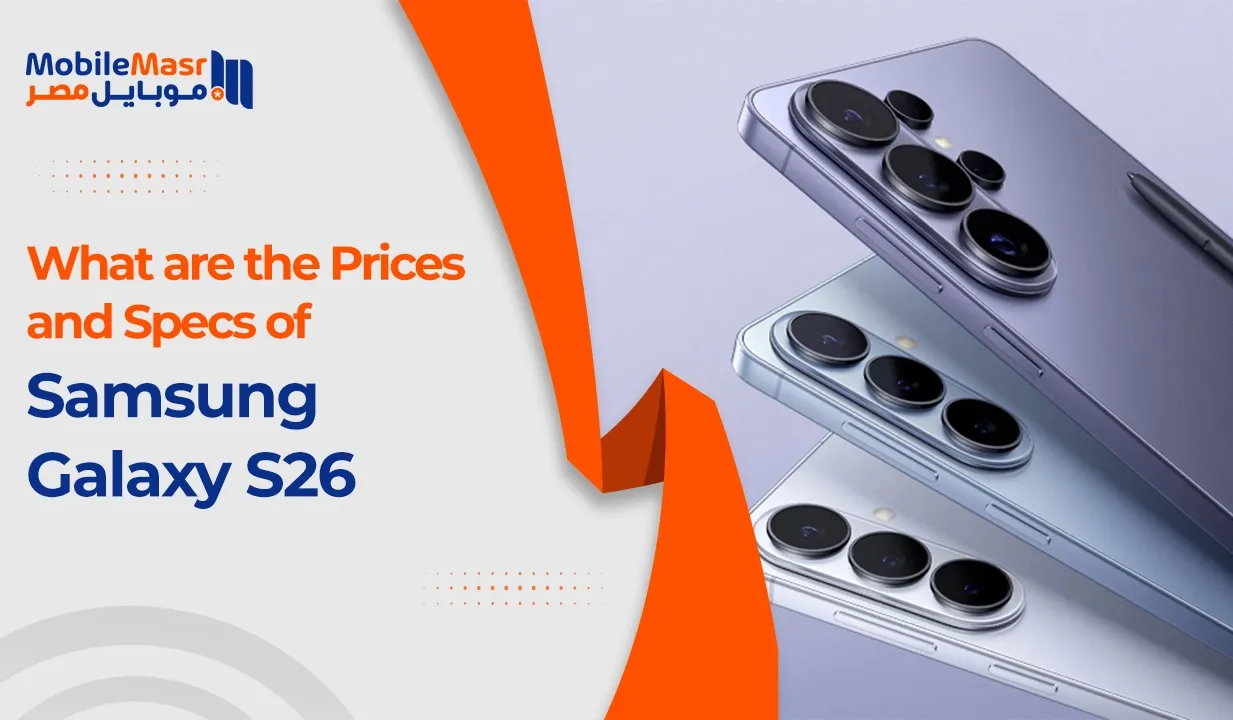
Samsung Galaxy S26 Price & Specs 2026: Worth Buying?
Samsung Galaxy S26 Price & Specs 2026: Worth Buying?
The Samsung Galaxy S26 is the standard entry point into Samsung's 2026 flagship lineup — a phone that makes the Galaxy S series experience accessible without requiring the budget of the S26 Ultra or the experimental commitment of the Z TriFold. Announced on February 25, 2026 at Samsung's Galaxy Unpacked event in San Francisco and available from March 11, 2026, the Samsung Galaxy S26 arrives as the most affordable new flagship Samsung sells in 2026, starting at $799 internationally. For Egyptian buyers, this Samsung flagship smartphone translates to a clear and specific price point that we'll address in detail in the pricing section.
What makes the Samsung Galaxy S26 meaningful in 2026 is its positioning within a market that has fundamentally changed. The mid-range segment has become so capable that buyers increasingly demand compelling reasons to spend flagship money. Samsung's answer with the Galaxy S26 is to deliver genuine flagship DNA — the Snapdragon 8 Elite Gen 5 chip (in North America and select markets), a ProMotion 120Hz OLED display with Always-On functionality, Galaxy AI features, and the full Samsung flagship software experience — at the most accessible price point in the lineup.
This Samsung premium phone doesn't try to win by matching every specification of the S26 Ultra. Instead, it makes calculated choices about what matters most to mainstream flagship buyers: a great display, solid cameras for everyday photography, all-day battery life, the latest chip, and Galaxy AI. Understanding how those choices play out in practice is what this review is about.
What Makes the Samsung Galaxy S26 Different From Previous Galaxy S Models?
The Samsung Galaxy S26 makes several meaningful improvements over the Galaxy S25 that define what "upgrade" means in 2026's competitive flagship landscape. The most impactful change is the Snapdragon 8 Elite Gen 5 for Galaxy — a chip generation that brings meaningful CPU, GPU, and NPU improvements over the previous Snapdragon 8 Elite. Galaxy AI features are more capable and more deeply integrated throughout One UI 8.5 (launching with Android 16), with improved on-device processing that makes AI suggestions faster and smarter.
The Samsung Galaxy S26 also gains the same ProMotion 120Hz display with Always-On capability that was previously a distinguishing feature of higher-end Galaxy S models. The display itself has been updated — the same generation of Dynamic AMOLED technology used in the Galaxy S26 Ultra's design language, reaching peak brightness levels that improve outdoor readability significantly. Camera improvements include enhanced AI processing through the Snapdragon's improved NPU, producing better results in challenging lighting conditions even with the same physical camera hardware.
The design language is consistent with the S25 but refined — the Samsung Galaxy S26 features the same compact 6.3-inch form factor (a slight increase from 6.2 inches on the S25) that makes it one of the few true flagship-class phones comfortable for genuine one-handed use. The flat display continues Samsung's post-curved era design philosophy, and the frame material has been updated to Armor Aluminum, consistent with the rest of the S26 family.
When Was the Samsung Galaxy S26 Officially Announced?
The Samsung Galaxy S26 was officially announced on February 25, 2026 at Samsung's Galaxy Unpacked event, held in San Francisco. Pre-orders opened the same day, with global availability commencing on March 11, 2026. The announcement was part of a multi-device event that also introduced the Galaxy S26+ and Galaxy S26 Ultra, as well as the Galaxy Buds 4 series. The Galaxy S26 release follows the cadence established by previous Galaxy S launches — a late January to early March announcement window that Samsung has maintained as a consistent part of its product calendar.
What Countries Will the Samsung Galaxy S26 Be Available In First?
The Samsung Galaxy S26 launched simultaneously across Samsung's primary markets on March 11, 2026, covering the United States, South Korea, major European markets, Australia, India, and other key global markets. Egypt is part of Samsung's regional rollout through its Middle East and Africa distribution network, making the device available through authorized Samsung channels and retailers like Mobile Masr shortly after the global launch date.
What Are the Full Specifications of the Samsung Galaxy S26?
The Samsung Galaxy S26 specifications define this phone as a genuine flagship in a compact form factor. Here's the complete picture:
- Display: 6.3-inch Dynamic AMOLED 2X, QHD+, 1-120Hz ProMotion, Always-On
- Processor: Snapdragon 8 Elite Gen 5 for Galaxy (US/Korea/select markets) / Exynos 2600 (other markets including Egypt)
- RAM: 12GB
- Storage: 256GB or 512GB
- Rear cameras: 50MP main + 12MP ultrawide + 10MP 3x telephoto
- Front camera: 12MP
- Battery: 4,300mAh, 25W wired
- OS: Android 16, One UI 8.5
- Connectivity: 5G, Wi-Fi 7, Bluetooth 5.4, NFC, USB-C
- Water resistance: IP68
What Processor and Chipset Does the Samsung Galaxy S26 Use?
The Samsung Galaxy S26 processor depends on regional market. In the United States, South Korea, Japan, and China, it uses the Snapdragon 8 Elite Gen 5 for Galaxy — Qualcomm's latest flagship chip with significantly improved CPU and GPU performance over the previous generation. In Egypt and most global markets outside North America and East Asia, the Samsung Galaxy S26 uses Samsung's own Exynos 2600 chipset — the first Exynos chip manufactured on a 2nm process node, which represents a major leap in energy efficiency and performance compared to the Exynos 2500 used in previous global-market Galaxy S devices.
The Exynos 2600 is a significant improvement over its predecessor — the 2nm manufacturing process delivers both faster performance and better power efficiency simultaneously. Samsung has claimed that the Exynos 2600's performance gap with Qualcomm's equivalent chip has narrowed substantially compared to previous generations, and early benchmark data supports this narrative. The chip includes a 16-core Neural Processing Unit (NPU) purpose-built for Galaxy AI workloads, processing on-device AI tasks significantly faster than the Exynos 2500.
How Does the Samsung Galaxy S26 Chipset Compare to Snapdragon Competitors?
For Egyptian buyers who will receive the Exynos 2600 version, understanding the competitive position of this chip is important. The Exynos 2600's 2nm process provides a genuine manufacturing advantage over competing chips still on 3nm or 4nm processes. In CPU performance benchmarks, the Exynos 2600 in the Samsung Galaxy S26 competes strongly with other 2026 flagship processors — early Geekbench data shows single-core scores around 2,800-3,000 and multi-core scores above 8,000, placing it firmly in the 2026 flagship tier. GPU performance shows the most significant improvement over the Exynos 2500, with the new GPU architecture providing meaningfully better gaming and graphics rendering.
What Are the Performance Benchmark Scores of the Samsung Galaxy S26?
The Samsung Galaxy S26 with Exynos 2600 achieves AnTuTu scores in the 1,800,000 - 2,000,000 range in testing — flagship-tier performance that handles any current application without compromise. Geekbench 6 single-core performance around 2,900+ and multi-core around 8,500+ confirm the processor's capability. For real-world tasks, these benchmark figures translate to instant app loading, smooth multitasking, capable gaming performance, and fast on-device AI processing for Galaxy AI features.
How Much RAM and Storage Does the Samsung Galaxy S26 Come With?
The Samsung Galaxy S26 RAM is 12GB across all configurations — consistent across both storage variants. The Samsung Galaxy S26 storage options are 256GB and 512GB, both using UFS 4.0 flash memory for fast read/write performance. 12GB of RAM is the standard for 2026 flagship phones, providing ample headroom for Galaxy AI background processing, smooth multitasking across many simultaneously open apps, and gaming performance without memory-constrained slowdowns.
Does the Samsung Galaxy S26 Support External Storage or MicroSD?
No — the Samsung Galaxy S26 does not support microSD card expansion, consistent with Samsung's Galaxy S series policy since the S21. Storage is fixed at purchase. The 256GB base configuration provides approximately 230GB of usable space, which is sufficient for most users. Heavy media creators who shoot extensive 4K video or maintain large local content libraries should opt for the 512GB variant at purchase.
Which Samsung Galaxy S26 Storage Variant Should You Buy?
For most Egyptian buyers, the 256GB variant of the Samsung Galaxy S26 provides adequate storage for typical use patterns combined with cloud backup through Google Photos or Samsung Cloud. The 512GB variant is the right choice for users who regularly record 4K video, download extensive offline content, maintain large music libraries locally, or who simply prefer not to manage storage. The price premium for 512GB over 256GB is typically around 10-15% of the base price — worth it if storage anxiety is something you want to eliminate entirely.
What Are the Exact Display Specs of the Samsung Galaxy S26?
The Samsung Galaxy S26 display is a 6.3-inch Dynamic AMOLED 2X panel with QHD+ resolution (3120×1440 pixels), an adaptive LTPO refresh rate from 1Hz to 120Hz, Always-On Display functionality, and peak brightness reaching 2,600 nits in HDR and sunlight boost modes. The display size of 6.3 inches (up from 6.2 inches on the S25) provides a slightly more generous screen area while maintaining the compact flagship form factor that makes the Samsung Galaxy S26 genuinely usable one-handed.
The upgrade from the Galaxy S25's display is meaningful: the ProMotion 120Hz with Always-On capability was previously exclusive to the S25 Ultra at the S25 launch, and bringing it to the standard S26 is a genuine democratization of a premium feature. The LTPO technology allows the display to intelligently drop to 1Hz during static content, conserving battery significantly compared to a fixed 120Hz panel.
Does the Samsung Galaxy S26 Have an LTPO or Fixed Refresh Rate Display?
The Samsung Galaxy S26 has a full LTPO adaptive display — adjusting continuously from 1Hz to 120Hz based on content type. Social media scrolling and gaming push to 120Hz; a paused video or the Always-On clock face drops to 1Hz. This adaptive behavior is key to delivering both the smoothness of 120Hz and the battery life of a more conservative display simultaneously. Always-On Display shows the time, notification indicators, and customizable widgets when the screen is "off" — drawing minimal power at 1Hz while keeping essential information visible.
How Does the Samsung Galaxy S26 Screen Compare to iPhone 17 Display?
The Samsung Galaxy S26 display competes directly with the iPhone 17's display — Samsung manufactures many of the OLED panels used in competing flagship phones, and the Galaxy S26's QHD+ Super AMOLED with 2,600 nits peak brightness matches or exceeds the display capabilities of competing flagship phones at this price tier. The LTPO adaptive refresh rate and Always-On Display are features shared across the flagships in this comparison. The Galaxy S26's QHD+ resolution versus the iPhone 17's lower-resolution panel gives the S26 a pixel density advantage that's noticeable when viewing detailed content.
What Are the Dimensions and Weight of the Samsung Galaxy S26?
The Samsung Galaxy S26 measures 163.3 × 77.6 × 7.2mm and weighs 167 grams — making it a genuinely compact and light flagship in 2026's market of increasingly large smartphones. The 6.3-inch display in a 7.2mm thick body that weighs 167 grams is an engineering achievement that reflects Samsung's manufacturing refinement across multiple generations. For Egyptian buyers who prioritize a phone they can use comfortably with one hand while commuting, shopping, or moving through daily life, the Galaxy S26's compact dimensions are a significant practical advantage over the larger Galaxy S26+ and S26 Ultra.
What Is the Samsung Galaxy S26 Camera System Like?
The Galaxy S26 camera system delivers a three-camera configuration with Samsung's ProVisual Engine image processing — the combination of capable hardware and sophisticated AI-driven software that defines Samsung's computational photography approach.
How Many Cameras Does the Samsung Galaxy S26 Have?
The Samsung Galaxy S26 has three rear cameras: a 50MP wide-angle main camera, a 12MP ultrawide camera, and a 10MP 3x telephoto camera. The front camera is a 12MP sensor for selfies and video calls. The hardware specifications of the camera system are unchanged from the S25, but the Exynos 2600's improved NPU enables significantly enhanced computational photography processing — particularly for AI-powered features like enhanced Night Mode, real-time scene optimization, and Galaxy AI photo editing tools.
What Is the Main Camera Sensor Resolution on the Samsung Galaxy S26?
The main camera on the Samsung Galaxy S26 is a 50MP sensor with an f/1.8 aperture and optical image stabilization (OIS). The sensor uses Samsung's own ISOCELL GN3 or equivalent technology, employing pixel-binning to produce 12.5MP shots in standard mode while using the full 50MP resolution for high-detail capture when needed. The combination of OIS and Samsung's motion compensation algorithms makes the Galaxy S26's main camera reliable for sharp shots in a variety of conditions.
Does the Samsung Galaxy S26 Support Optical Zoom and by How Much?
The Samsung Galaxy S26 delivers 3x optical zoom through its dedicated telephoto lens — a 10MP sensor with OIS that captures sharp images at 3x magnification. Digital zoom extends beyond 3x using the combination of the telephoto sensor and software processing. The Space Zoom feature pushes digital zoom to 30x for creative telephoto compositions, though image quality at extreme digital zoom levels reflects the hardware limitations of a 10MP telephoto sensor.
How Good Is the Samsung Galaxy S26 Front Camera for Selfies?
The 12MP front camera on the Samsung Galaxy S26 is a well-specified selfie camera that captures detailed, color-accurate selfies with Samsung's skin tone optimization and Live Focus (portrait mode) capabilities. The wider field of view compared to the S25 front camera (noted in Samsung's product communications) captures more subjects in group selfies without requiring the phone to be held at arm's length. Samsung's AI-powered selfie enhancement handles challenging lighting scenarios including backlit outdoor shots with competent dynamic range management.
Does the Samsung Galaxy S26 Front Camera Support 4K Video?
Yes — the Samsung Galaxy S26 front camera supports 4K video recording at up to 60fps, enabling high-quality selfie video content and video calls at resolutions that capture excellent detail. 4K front camera recording is particularly valuable for content creators who use the phone for vlogging or creating social media video content where front camera quality is central to the final output.
What Video Recording Capabilities Does the Samsung Galaxy S26 Offer?
Can the Samsung Galaxy S26 Record in 8K?
Yes — the Samsung Galaxy S26 supports 8K video recording at 30fps from the rear main camera. 8K recording captures extraordinary detail that provides maximum flexibility in post-production — editors can reframe, crop, and stabilize 8K source footage to produce 4K final outputs with no quality loss. For standard social media and everyday video documentation, 4K at 60fps is the practical choice that balances quality, file size, and storage consumption.
What AI Video Features Come Built-In on the Samsung Galaxy S26?
AI video features on the Samsung Galaxy S26 include Horizon Lock for stabilized recording during movement, Director's View for simultaneous multi-camera capture monitoring, AI-powered Super Steady for action video, and Samsung's Video Booster for automatic scene detection and quality optimization. Galaxy AI's generative video editing tools — available in Samsung Gallery and compatible editing apps — allow AI-powered clip trimming, scene transition generation, and object-aware editing.
How Does Samsung Galaxy S26 Camera Perform in Low Light?
The Samsung Galaxy S26 camera delivers competitive low-light performance driven primarily by the Exynos 2600's enhanced NPU processing rather than fundamental camera hardware changes. Night Mode captures multiple frames and intelligently merges them using AI processing, producing brighter, lower-noise images than single-frame capture. The main camera's OIS enables longer effective exposure times without blur from hand movement. The results in moderate low-light conditions (indoor restaurants, evening outdoor scenes) are genuinely impressive for the standard Galaxy S lineup — Samsung's AI processing has narrowed the gap with dedicated night photography modes on competing devices.
What Is the Battery Life of the Samsung Galaxy S26?
Galaxy S26 battery performance represents a deliberate trade-off — Samsung chose to keep the Galaxy S26 compact and light (7.2mm, 167g) rather than maximizing battery capacity, resulting in a 4,300mAh cell that's smaller than some competitors but paired with an efficient processor and intelligent display power management.
How Big Is the Samsung Galaxy S26 Battery in mAh?
The Samsung Galaxy S26 battery is 4,300mAh — a slight increase from the Galaxy S25's 4,000mAh. The Exynos 2600's 2nm efficiency improvement over the previous generation chip is significant: the processor consumes less power for equivalent computational tasks, which means the Galaxy S26's real-world battery life improvements over the S25 are greater than the raw capacity increase might suggest. Samsung's battery life estimates place the Galaxy S26 at approximately 22-24 hours of video playback and strong performance in mixed daily use.
How Many Hours of Screen-On Time Does the Samsung Galaxy S26 Offer?
Real-world screen-on time for the Samsung Galaxy S26 typically falls in the 6-8 hour range under mixed use — social media browsing, messaging, photography, video streaming, and calls. The LTPO display's 1Hz capability during static content preserves battery meaningfully compared to fixed 120Hz panels. Light to moderate users will comfortably reach end-of-day with battery remaining; heavy users who spend extensive time gaming, streaming, or using GPS navigation will need to manage their usage or carry a charger for very long days.
Does the Samsung Galaxy S26 Battery Degrade Fast Over Time?
Samsung uses adaptive charging technology in the Samsung Galaxy S26 that monitors usage patterns and adjusts charging behavior to minimize battery degradation over time. The feature can be configured to charge slowly overnight and reach full charge just before typical wake-up time, reducing the time spent at 100% charge which is the most stressful state for lithium battery cells. With these features enabled, Samsung's Galaxy S-series devices typically retain above 80% of original capacity after two years of daily use — a respectable figure for the segment.
How Fast Does the Samsung Galaxy S26 Charge?
The Samsung Galaxy S26 supports 25W wired charging — the same wired charging speed as its predecessor. At 25W, the 4,300mAh battery charges from zero to approximately 50% in 30 minutes and reaches full charge in approximately 65-70 minutes. While 25W is not the fastest charging available in the 2026 flagship landscape (some competitors offer 65W, 80W, or higher), it provides practical all-morning top-up capability and overnight full charging that serves everyday use reliably.
Does the Samsung Galaxy S26 Support Wireless Charging?
Yes — the Samsung Galaxy S26 supports Qi2.2 wireless charging at up to 25W with compatible chargers. This is the same maximum wireless charging speed as the S25, and it positions the Galaxy S26 among the faster wirelessly charging devices in the market. Qi2.2 compatibility ensures forward-looking compatibility with the latest generation of wireless chargers and accessories, including pad chargers, stand chargers, and car mount chargers.
Does the Samsung Galaxy S26 Support Reverse Wireless Charging?
Yes — the Samsung Galaxy S26 supports reverse wireless charging (PowerShare), allowing the phone to wirelessly charge Qi-compatible accessories by placing them on the phone's back. This feature is useful for charging Galaxy Buds cases and other small Qi accessories when a pad charger isn't available. The charging speed for reverse wireless is modest (approximately 4.5W) but adequate for keeping earbuds topped up during the day.
What Software and AI Features Does the Samsung Galaxy S26 Run?
Which Android Version Does the Samsung Galaxy S26 Launch With?
The Samsung Galaxy S26 operating system at launch is Android 16 with Samsung's One UI 8.5 — the latest version of both the Android platform and Samsung's interface layer. Android 16 brings improvements to system performance, privacy controls, and notification management. One UI 8.5 adds refined AI integration throughout the interface, updated visual design with new customization options, and improved app continuity and multitasking features.
How Many Years of Software Updates Will the Samsung Galaxy S26 Receive?
Samsung has committed to 7 years of major Android OS updates and 7 years of security patches for the Samsung Galaxy S26 — the same long-term support policy applied across the Galaxy S26 series. This means the Galaxy S26 will receive updates through Android 22 or 23, keeping it relevant and secure into the early 2030s. For Egyptian buyers who hold onto their phones for 3-5 years, this commitment ensures the device remains up to date and protected throughout a typical ownership period and well beyond.
What Are the New Galaxy AI Features on the Samsung Galaxy S26?
Galaxy AI on the Samsung Galaxy S26 includes the full suite of Samsung's AI capabilities plus new features enabled by the Exynos 2600's improved NPU. Now Nudge provides contextual AI assistance that understands what's on screen and proactively surfaces relevant suggestions, calendar information, and quick actions. Circle to Search (Google integration) allows on-screen visual search from any app. Chat Assist improves message drafting across apps. Note Assist organizes and summarizes notes. Photo Assist enables comprehensive AI photo editing including object addition, removal, style transfer, and reframing. Live Translate provides real-time bidirectional translation in calls.
Does the Samsung Galaxy S26 Support Samsung DeX?
Yes — the Samsung Galaxy S26 supports Samsung DeX, transforming the phone into a desktop computing experience when connected to an external monitor via USB-C. With a Bluetooth keyboard and mouse, DeX provides a windowed desktop interface capable of handling email, document editing, presentations, and communication tools at a level approaching casual laptop use. DeX is particularly valuable for Egyptian professionals who travel frequently and want to reduce the number of devices they carry.
What New Galaxy AI Tools Are Exclusive to the Samsung Galaxy S26 in 2026?
The Exynos 2600's enhanced NPU enables faster on-device processing for all Galaxy AI features on the Samsung Galaxy S26, reducing latency for real-time AI functions compared to the previous generation. Now Brief analyzes usage patterns and schedule to proactively deliver helpful information and routine suggestions. Gemini Live integration (via Google's AI framework) provides real-time screen-aware AI conversations. The combination of faster processing and Samsung's 2026 Galaxy AI refinements makes the AI experience on the Galaxy S26 meaningfully more capable and responsive than on the Galaxy S25.
How Does One UI on the Samsung Galaxy S26 Improve Daily Usability?
One UI 8.5 on the Samsung Galaxy S26 has been refined with bottom-of-screen optimization that places commonly used controls within comfortable thumb reach on the 6.3-inch display — a design philosophy Samsung has maintained across multiple One UI generations and continues to improve. The interface is clean, consistent, and logically organized, with customization depth that allows personalization without requiring it. The lock screen, home screen, and notification system all receive updates in One UI 8.5 that reflect user feedback accumulated across millions of Galaxy S series users.
What Is the Samsung Galaxy S26 Price in Egypt in 2026?
How Much Does the Samsung Galaxy S26 Cost Officially in Egypt?
The Samsung Galaxy S26 is priced at 87,770 EGP in Egypt for the base 256GB configuration. This price reflects the device's Samsung flagship smartphone positioning in the Egyptian market, incorporating import costs, currency dynamics, distribution fees, and Samsung's premium pricing strategy. At 87,770 EGP, the Galaxy S26 is accessible to serious flagship buyers in Egypt who want the full Samsung flagship experience at the most affordable price point in the S26 family — substantially less than the Galaxy S26 Ultra while delivering the same chipset generation and Galaxy AI software experience.
What Is the Price Difference Between Samsung Galaxy S26 Variants in Egypt?
The 256GB configuration of the Samsung Galaxy S26 starts at 87,770 EGP in Egypt. The 512GB variant carries a proportional premium above this base price. For most users, the 256GB model provides adequate storage with cloud backup integration, making the 87,770 EGP base model the recommended choice for buyers who want to minimize cost while still getting the full Galaxy S26 flagship experience.
Is the Samsung Galaxy S26 Price in Egypt Higher Than Other Arab Countries?
Like all imported premium electronics in Egypt, the Samsung Galaxy S26 price reflects Egypt-specific import costs, local taxes, and currency exchange rates that differ from neighboring markets. Regional price variations across Arab countries reflect different import duty structures, tax rates, and official distributor pricing decisions. For the most current price comparison across regional markets, checking directly with Mobile Masr provides current Egyptian market pricing alongside any available cross-market context.
Where Can You Buy the Samsung Galaxy S26 in Egypt?
For the best combination of price, product authenticity, warranty coverage, and purchase convenience — in both new and certified pre-owned configurations — Mobile Masr at mobilemasr.com is the premier destination for purchasing the Samsung Galaxy S26 in Egypt. Mobile Masr's specialization in the Egyptian smartphone market ensures that pricing reflects current market conditions accurately, inventory is verified, and buyers receive the purchase protection they deserve at the 87,770 EGP price level.
Is the Samsung Galaxy S26 Available on Installments in Egypt?
Yes — installment financing for the Samsung Galaxy S26 is available through Egyptian banks and financing partners, making the 87,770 EGP purchase significantly more accessible on a monthly basis. At 12-month 0% interest (where available), monthly payments fall around 7,300 EGP; at 24 months, approximately 3,650 EGP monthly. Actual terms depend on the specific bank, card type, and retailer. Checking Mobile Masr and Samsung-authorized dealers for current installment promotions provides the most accurate financing options.
Which Online Stores in Egypt Offer the Best Samsung Galaxy S26 Deals?
Mobile Masr at mobilemasr.com consistently offers competitive pricing for the Samsung Galaxy S26 alongside both new and certified pre-owned options. The certified pre-owned route through Mobile Masr allows buyers to access the Galaxy S26 experience at meaningfully lower cost with purchase security — a compelling option for buyers whose budget is flexible around the flagship tier.
Has the Samsung Galaxy S26 Price Dropped Since Launch in Egypt?
The Samsung Galaxy S26 launched in March 2026 and has been on sale for a short period. Premium Samsung flagship devices in Egypt typically maintain prices close to launch levels for several months before any meaningful adjustments occur. Monitoring prices through Mobile Masr as the year progresses provides the clearest picture of any market price movements.
How Does the Samsung Galaxy S26 Compare to Its Competitors?
Samsung Galaxy S26 comparison against the competitive landscape clarifies where this phone wins, where it concedes, and who it's right for.
Samsung Galaxy S26 vs Samsung Galaxy S25 — Is the Upgrade Worth It?
For Galaxy S25 owners, the Samsung Galaxy S26 upgrade decision centers on several specific improvements. The Exynos 2600's 2nm efficiency brings meaningful real-world performance and battery life improvements. The ProMotion LTPO display with Always-On is a tangible daily upgrade over the S25's display. Galaxy AI features are more capable and faster thanks to the improved NPU. The 6.3-inch display size increase is minor but appreciated. For users on a Galaxy S24 or older, the upgrade to Galaxy S26 is clearly worthwhile — the generational improvement across the board is substantial.
What Specific Hardware Improvements Did Samsung Galaxy S26 Add Over S25?
The Samsung Galaxy S26 over the Galaxy S25 brings: Exynos 2600 (2nm) over Exynos 2500 (3nm), improved LTPO display with Always-On capability, expanded 4,300mAh battery (vs 4,000mAh), wider front camera field of view, and One UI 8.5 with expanded Galaxy AI capabilities. The hardware camera system is similar, but software processing improvements driven by the more capable NPU produce better image quality outcomes particularly in challenging conditions.
Samsung Galaxy S26 vs iPhone 17 — Which One Should You Buy in 2026?
The Samsung Galaxy S26 vs iPhone 17 is the defining Android-vs-iOS comparison in the standard flagship tier of 2026. Both devices are compact flagships with excellent displays, capable camera systems, and powerful chips. The Galaxy S26 advantages include: larger 6.3-inch display, QHD+ resolution, Always-On Display, Samsung DeX, more versatile camera zoom range, Galaxy AI feature depth, and superior display brightness. The iPhone 17 counters with iOS ecosystem integration, typically more consistent camera performance, and Apple's ecosystem advantages for users already invested in Apple products.
How Do the Cameras of Samsung Galaxy S26 and iPhone 17 Compare?
Camera comparison between the Samsung Galaxy S26 and iPhone 17 reflects the ongoing competition between Samsung's computational photography and Apple's image processing. The Galaxy S26's 3x dedicated telephoto gives it a zoom versatility advantage. Samsung's Night Mode benefits from the Exynos 2600's NPU improvements. Apple's camera processing delivers natural, consistent results across scenarios. For buyers who are already in the Android ecosystem and appreciate Samsung's camera flexibility, the Samsung Galaxy S26 is the clear choice.
Which Has Better Battery Life: Samsung Galaxy S26 or iPhone 17?
The iPhone 17's battery has been noted for strong efficiency given its compact size. The Samsung Galaxy S26's 4,300mAh battery with Exynos 2600 efficiency delivers competitive all-day performance. Real-world comparison is close enough that individual usage patterns determine which device lasts longer on a given day. The Galaxy S26's 25W wireless charging speed matches or exceeds the iPhone 17's wireless charging capability, while 25W wired charging puts both devices at similar practical charging speeds.
Samsung Galaxy S26 vs Google Pixel 10 — Which Offers Better AI Features?
In AI capability comparison, the Samsung Galaxy S26 and Pixel 10 represent different philosophical approaches. Samsung's Galaxy AI is broadly integrated throughout One UI 8.5 with on-device processing powered by the Exynos 2600 NPU. Google's Pixel AI leverages Google's deep machine learning expertise with features that are tightly integrated with Google's cloud AI services. Both devices offer Circle to Search and Gemini integration. The Galaxy S26's advantage is in hardware-accelerated on-device processing; the Pixel 10's advantage is in Google's AI model depth and the quality of AI-driven photography.
Samsung Galaxy S26 vs Xiaomi 15 — Which Is the Better Value in Egypt?
Samsung Galaxy S26 comparison against Xiaomi's flagship offering highlights the brand trust vs specification competition that defines Egyptian flagship buying decisions. Xiaomi's flagship may offer comparable or faster hardware specifications at a lower retail price in Egypt. The Samsung Galaxy S26 counters with Samsung's service network accessibility across Egyptian cities, 7-year update commitment, Galaxy AI ecosystem depth, and brand resale value. For buyers who prioritize specification density per price, competing flagships offer compelling arguments. For buyers who prioritize Samsung's ecosystem and service support, the Galaxy S26 holds its value proposition clearly.
What Are the Samsung Galaxy S26 Colors and Design Options?
What Colors Does the Samsung Galaxy S26 Come In?
The Samsung Galaxy S26 colors available at standard retail include Black, White, Sky Blue, and a fourth color variant depending on market — Samsung typically includes a seasonal color that varies by region. Samsung.com in select markets offers additional exclusive colorways including Silver Shadow and others. All color variants of the Samsung Galaxy S26 feature a matte finish on the Armor Aluminum frame and Corning Gorilla Armor 2 glass on both front and back, giving the device a premium feel that resists fingerprints better than glossy finishes.
Are All Samsung Galaxy S26 Colors Available in Egypt?
The availability of specific Samsung Galaxy S26 color options in Egypt depends on Samsung's regional distribution decisions. Black and White are typically universally available across all markets. Sky Blue and other options may be available through specific channels. For current color availability in Egypt, checking Mobile Masr's inventory listings provides accurate real-time stock information by color option.
Is the Samsung Galaxy S26 Build Quality Better Than the S25?
The Samsung Galaxy S26 design uses Armor Aluminum for the frame — a high-strength aluminum alloy that Samsung has positioned as a durable alternative to titanium while offering better machinability and comparable strength-to-weight characteristics. The build quality of the Galaxy S26 is consistent with Samsung's flagship standard: panels align precisely, buttons have satisfying tactile feedback, and the device feels solid without excessive weight. The slightly more rounded corner design compared to the S25 is a subtle but appreciated ergonomic improvement for extended one-handed use.
Does the Samsung Galaxy S26 Have a Titanium or Aluminum Frame?
The Samsung Galaxy S26 uses Armor Aluminum for its frame — not titanium. The Samsung Galaxy S26 Ultra uses the same Armor Aluminum for 2026, with Samsung having moved away from titanium (which was used on the S24 Ultra and S25 Ultra) for engineering and ergonomic reasons. For the standard Galaxy S26, Armor Aluminum has always been the frame material, and it performs well in durability and handling characteristics.
What Gorilla Glass Version Protects the Samsung Galaxy S26 Screen?
The Samsung Galaxy S26 uses Corning Gorilla Armor 2 on both the front display glass and the rear panel — the same protective glass used on the Galaxy S26 Ultra. Gorilla Armor 2 provides significantly improved scratch resistance over standard Gorilla Glass Victus, with an anti-reflective coating built into the glass itself that reduces surface glare without the need for a screen protector. This is a meaningful upgrade in daily durability protection.
Is the Samsung Galaxy S26 Waterproof and What Is Its IP Rating?
The Samsung Galaxy S26 carries an IP68 water and dust resistance rating — certified for submersion in fresh water up to 6 meters for up to 30 minutes. IP68 provides robust real-world protection against accidental water exposure: rain, splashes, brief submersion in pools, and similar everyday water encounters are all covered. The rating applies to the device in its standard configuration; physical damage to seals or the device structure can compromise water resistance over time.
What Connectivity Features Does the Samsung Galaxy S26 Support?
Does the Samsung Galaxy S26 Support 5G in Egypt?
Yes — the Samsung Galaxy S26 fully supports 5G connectivity in Egypt. The Exynos 2600 includes an integrated 5G modem supporting Sub-6GHz bands compatible with Egyptian carriers' 5G deployments. As Egypt's 5G network coverage expands in 2026, Galaxy S26 owners will be able to benefit from improved speeds and lower latency in covered areas. 4G LTE remains the primary network technology for most Egyptian users in 2026, and the Galaxy S26 provides excellent 4G performance alongside its 5G capability.
What Wi-Fi and Bluetooth Versions Does the Samsung Galaxy S26 Have?
The Samsung Galaxy S26 features include Wi-Fi 7 (802.11be) — the latest Wi-Fi standard delivering multi-gigabit speeds and significantly lower latency than Wi-Fi 6E. Bluetooth 5.4 ensures stable, efficient connections with Galaxy Buds, Galaxy Watch, and other Bluetooth accessories. The combination of Wi-Fi 7 and Bluetooth 5.4 places the Galaxy S26 at the forefront of current wireless connectivity standards.
Does the Samsung Galaxy S26 Come With a SIM Card Slot or eSIM Only?
The Samsung Galaxy S26 supports both physical nano-SIM and eSIM in most regional configurations. Egyptian buyers will find the device compatible with physical SIM cards from all Egyptian carriers — Vodafone, Orange, Etisalat, and WE. eSIM support adds the flexibility of digital carrier switching and dual-SIM operation without requiring a second physical SIM slot.
Does the Samsung Galaxy S26 Support Dual SIM in Egypt?
The Samsung Galaxy S26 supports Dual SIM operation in Egypt through the combination of one physical nano-SIM slot and eSIM support, allowing two active phone numbers on a single device simultaneously. This configuration covers the common Egyptian use case of maintaining personal and business lines on one phone, or using two different carriers for optimized data and voice plans.
Is the Samsung Galaxy S26 Worth Buying in Egypt in 2026?
Who Should Buy the Samsung Galaxy S26 in Egypt?
The Samsung Galaxy S26 is the right phone for Egyptian buyers who want a compact, capable flagship with genuine everyday performance, excellent display quality, competitive camera versatility, and the full Samsung ecosystem experience — at the most accessible price in Samsung's 2026 flagship lineup. Buyers upgrading from a Galaxy S23 or older will see a comprehensive improvement in every dimension. Photography enthusiasts who want versatile zoom capability in a one-handed-friendly form factor will appreciate the camera system's range. Business users who need Samsung DeX and Knox security get flagship capabilities at a lower entry cost than the S26 Ultra.
At 87,770 EGP, the Galaxy S26 competes in Egypt's upper-tier flagship market, and for buyers who specifically value Samsung's software ecosystem, 7-year update commitment, and service network accessibility, it earns its price through long-term value rather than just launch-day specifications.
Who Should Skip the Samsung Galaxy S26 and Why?
Buyers who specifically need S Pen input for note-taking and sketching should look at the Galaxy S26 Ultra instead — the S Pen is exclusive to the Ultra lineup. Users who shoot extensive telephoto photography will find the Galaxy S26's 3x optical zoom limiting compared to the S26 Ultra's 5x periscope telephoto. Budget-conscious buyers who can accept last year's Galaxy S25 specifications at a lower price should compare the S25's current pricing against the Galaxy S26 premium. And buyers for whom Samsung's ecosystem specifically doesn't add value versus competing flagships should make a direct specification comparison before committing to the 87,770 EGP price.
What Are the Main Pros and Cons of the Samsung Galaxy S26?
Pros of the Samsung Galaxy S26:
- Compact, one-hand-friendly 6.3-inch form factor with flagship-grade LTPO 120Hz AMOLED display
- Exynos 2600 (2nm) delivering meaningful performance and efficiency improvements
- Full Galaxy AI suite with improved on-device processing
- 7 years of Android OS and security updates
- IP68 water resistance
- Wi-Fi 7 and Bluetooth 5.4 for latest connectivity
- Samsung DeX for laptop-replacement computing
- ProMotion Always-On Display at this price tier
Cons of the Samsung Galaxy S26:
- 4,300mAh battery is smaller than some competing compact flagships
- 25W wired charging is slower than many 2026 competitors
- Camera hardware unchanged from S25 (improvements are software/AI driven)
- Exynos 2600 vs Snapdragon 8 Elite Gen 5 in North America creates a regional performance disparity
- No S Pen
- No charger included in box
The Samsung Galaxy S26 makes a compelling case as the most accessible entry into Samsung's 2026 flagship ecosystem — delivering the Exynos 2600 chip, ProMotion 120Hz AMOLED display with Always-On, Galaxy AI, and 7-year software support in a compact 167-gram body. At 87,770 EGP in Egypt, it's a serious investment that rewards buyers who specifically value Samsung's ecosystem, compact flagship form factor, and long-term software support commitment.
Ready to experience the Samsung Galaxy S26 for yourself or explore the full Samsung 2026 flagship lineup? Visit mobilemasr.com today — Egypt's most trusted platform for buying smartphones new and certified pre-owned. Whether you're purchasing a sealed Galaxy S26 at the best market price or finding exceptional value through a certified pre-owned option, Mobile Masr makes the decision straightforward and secure. Browse the full Samsung S26 lineup on mobilemasr.com now and take the next step toward owning Samsung's 2026 flagship experience.
FAQs
CONTACT US
Download the app


CONTACT US


Payment Methods








Shipping with

©2026 MobiTech Integrated Solutions. . All Rights Reserved
©2026 MobiTech Integrated Solutions. . All Rights Reserved