
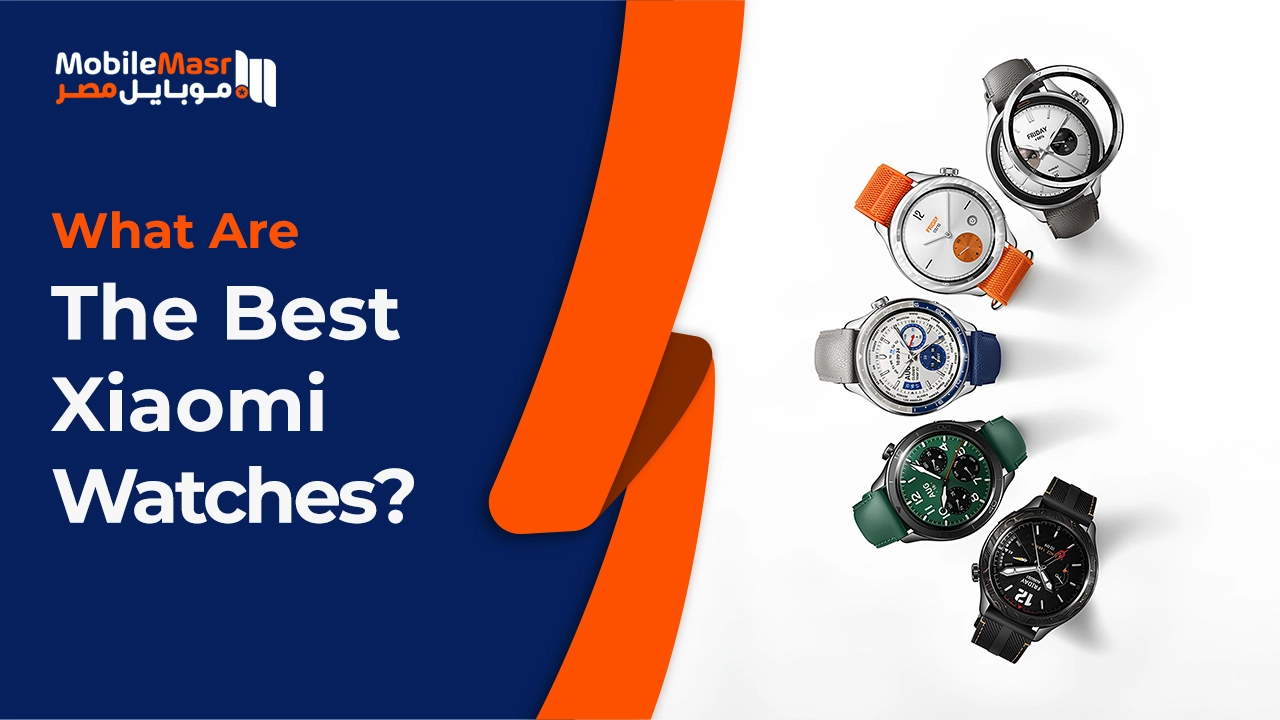
Best Xiaomi Watches 2026: Which Smartwatch Should You Buy?
Best Xiaomi Watches 2026: Which Xiaomi Smartwatch Is Right for You?
The best Xiaomi watches in 2026 cover an extraordinary range of needs, budgets, and lifestyles — from ultra-affordable entry-level trackers that cost less than a gym membership to polished flagship smartwatches running Wear OS with premium AMOLED displays and advanced health monitoring. Xiaomi has achieved something rare in the wearables market: consistent delivery of genuinely useful features at prices that don't demand financial gymnastics. This guide covers every major Xiaomi smartwatch available in Egypt in 2026, with real pricing, honest feature assessments, and clear recommendations for different types of buyers. By the end, you'll know exactly which model fits your wrist and your wallet.
What Makes Xiaomi Watches Among the Best Smartwatches in 2026?
Xiaomi's standing among the best smartwatch brands in 2026 rests on a combination of factors that have taken years to refine. The brand's engineering philosophy prioritizes delivering maximum measurable value per unit of cost — a mandate that has produced smartwatches with AMOLED displays, GPS, heart rate monitoring, and extended battery life at prices that much of the industry charges for far less capable devices. The Xiaomi watch user experience has also matured significantly: the companion app ecosystem, health data presentation, and software stability have all improved to a level where Xiaomi watches feel complete rather than compromised. For Egyptian consumers, this combination of capability and accessibility makes the best Xiaomi watches a recurring top recommendation.
Why Are Xiaomi Smartwatches So Popular in the Egyptian Market?
Xiaomi smartwatches have built a substantial following in Egypt, and the dynamics driving this popularity are worth understanding. Egypt's consumer electronics market is characterized by strong demand for capable technology at accessible price points — a description that fits Xiaomi's entire product strategy almost perfectly. The brand's reputation in Egypt was initially established through its mobile phone lineup, and the trust built through that relationship has transferred directly to wearables. Egyptian users who were satisfied Xiaomi phone owners have naturally gravitated toward Xiaomi smartwatches when looking to add a wearable to their setup. The Xiaomi watch user experience on the companion app is also available in Arabic, removing the language barrier that can make competing devices feel less accessible to Egyptian users. Community forums and social media groups in Egypt regularly feature Xiaomi watch discussions and recommendations, creating an organic word-of-mouth ecosystem that sustains strong sales.
How Does Pricing Affect Xiaomi Watch Popularity in Egypt?
Pricing is the single most powerful driver of Xiaomi's wearables popularity in Egypt. The Egyptian market has a large segment of consumers who want smartwatch capabilities — health tracking, notifications, fitness modes — but are unwilling or unable to spend 15,000 EGP or more on premium alternatives. Xiaomi addresses this segment decisively. The Redmi Watch 5 Active at approximately 1,423 EGP and the Redmi Watch 4 at approximately 3,599 EGP deliver real smartwatch functionality at prices that create minimal purchasing hesitation. Even the mid-range Xiaomi Watch S4 at approximately 8,645 EGP positions itself as accessible relative to competing mid-range watches from other brands. The Xiaomi watch price range in Egypt spans from under 1,500 EGP to under 10,000 EGP, creating entry points for virtually every budget category. This range — combined with consistent quality at each tier — drives the brand's broad appeal across different Egyptian consumer segments.
Why Do Egyptian Users Prefer Xiaomi Over Other Brands?
Egyptian users who choose Xiaomi watches over alternatives typically cite a consistent set of reasons in product reviews and community discussions. The value-for-money perception is consistently the lead factor: users feel they receive more than they paid for. Battery life is a recurring praise point — Xiaomi watches regularly deliver 10 to 15 days of standard use across the mid-range lineup, a significant advantage over daily-charging alternatives. The Xiaomi AMOLED watch display quality available even on mid-tier models is regularly praised for brightness and clarity under Egyptian outdoor conditions. Setup simplicity through the Mi Fitness (formerly Mi Fit) app is appreciated by users who found competing ecosystems more complex. The growing local availability of Xiaomi products through retailers and online platforms also removes the friction of difficult purchasing. These factors combine into a strong ownership proposition that generates loyal repeat buyers and active community recommendations.
How Does Xiaomi Compete With Other Smartwatch Brands?
In competitive analysis, Xiaomi watches consistently demonstrate an ability to match or exceed the feature sets of more expensive competing devices at lower prices. The Xiaomi watch comparison against mid-range and premium alternatives from other brands generally reveals Xiaomi delivering equivalent display quality, comparable health monitoring capabilities, and superior battery life at meaningfully lower price points. The areas where some competing brands maintain advantages over Xiaomi are in proprietary app ecosystem depth, premium case materials at lower price tiers, and operating system sophistication on flagship models — though the Xiaomi Watch 2 Pro's adoption of Wear OS addresses this on the flagship side. Overall, Xiaomi's competitive position in Egypt's smartwatch market is strong and growing, particularly in the mid-range segment where value-consciousness is highest.
Are Xiaomi Watches Better Value for Money?
The value-for-money question around Xiaomi watches in Egypt has a clear answer at most price tiers: yes, Xiaomi delivers more features per Egyptian pound than most competing brands at equivalent price points. The Xiaomi Watch S4 at approximately 8,645 EGP, for example, delivers a 1.43-inch AMOLED display, 15-day battery life, Bluetooth calling with noise reduction, advanced health detection, and GPS tracking — a feature set that competing watches often charge significantly more to match. At the entry level, the Redmi Watch 5 Active at approximately 1,423 EGP delivers 18-day battery life and over 140 sports modes — capabilities that far exceed what most watches at that price tier provide. The consistent theme across the Xiaomi watch lineup is features-at-price-points-that-surprise, which directly translates into strong value perception for Egyptian buyers.
What Features Help Xiaomi Stand Out From Competitors?
Several specific features and design choices help Xiaomi smartwatches stand out from competitors in the Egyptian market. The Xiaomi watch fast charging capability on select models significantly reduces the inconvenience of the occasional recharging session. The breadth of sports modes — over 100 on most mid-range models — covers a wider range of athletic disciplines than competing watches at similar prices. The AMOLED display quality available starting at the mid-range tier delivers visual performance that was once reserved for premium devices. Accurate GPS tracking with multi-satellite GNSS systems on Watch S3 and above provides reliable outdoor navigation and workout tracking. The Xiaomi watch health tracking depth — covering heart rate, SpO2, stress, sleep, and body composition on select models — provides actionable wellness data that competes with devices costing considerably more. These combined differentiators make Xiaomi a compelling choice for feature-conscious Egyptian buyers.
Which Are the Best Xiaomi Watches Available in 2026?
With a lineup spanning from sub-1,500 EGP entry-level devices to feature-rich mid-range flagships approaching 10,000 EGP, identifying the best Xiaomi watches for specific needs requires clear category thinking. The right Xiaomi smartwatch for a serious runner is different from the right one for a student on a tight budget or a professional who wants a stylish daily wear device. Below we identify the top recommendation in each key buying category and explain exactly what makes each model the right choice for its target user in Egypt's 2026 market.
What Is the Best Xiaomi Watch Overall in 2026?
The Xiaomi Watch S4 is the best overall Xiaomi watch available in Egypt in 2026. At approximately 8,645 EGP on Amazon EG, it delivers a 1.43-inch AMOLED display with 466x466 pixel resolution, 15 days of battery life in standard use, Bluetooth calling with AI noise reduction for cleaner call audio, advanced health detection including continuous heart rate monitoring and SpO2 tracking, and GPS for accurate outdoor workout tracking. The Watch S4 also supports customizable gesture controls — a distinctive feature that allows wrist gestures to trigger functions like rejecting calls or opening apps without touching the screen. The Xiaomi watch design on the S4 is refined and premium-looking for its price, with metallic case materials and clean proportions that work in both casual and professional settings. This combination of display quality, battery endurance, smart features, and build finish makes the Watch S4 the most balanced and recommendable Xiaomi smartwatch for most Egyptian buyers in 2026.
What Specifications Define Xiaomi's Best Overall Smartwatch?
The Xiaomi Watch S4's key specifications that define its best-overall status: 1.43-inch AMOLED display at 326 ppi delivering crisp, vibrant visuals; 15 days of typical battery life; Bluetooth 5.2 for stable connectivity; built-in GNSS multi-satellite GPS; 5ATM water resistance for swimming; continuous heart rate and SpO2 monitoring; sleep stage tracking; stress monitoring; over 150 sports modes; and Bluetooth calling with AI noise reduction that makes call quality noticeably cleaner than on competing devices. The Xiaomi watch features on the S4 also include a blood oxygen monitoring system that performs both spot checks and overnight continuous measurement, adding medical relevance to its wellness monitoring suite. Gesture control adds a layer of interaction convenience that most competing devices at this price lack entirely. These specifications collectively justify the Watch S4's position as the best Xiaomi smartwatch for buyers who want a complete, capable experience without reaching into flagship price territory.
Who Should Buy Xiaomi's Flagship Watch?
The Xiaomi Watch S4 is the right choice for buyers who want the most complete Xiaomi smartwatch experience without the premium OS investment of the Watch 2 Pro. It suits professionals who want a polished daily device, fitness enthusiasts who want reliable GPS and comprehensive health tracking, and general users who want long battery life with smart features including Bluetooth calling. Users who heavily rely on third-party apps and want the full Google Play Store access on their wrist would be better served by the Xiaomi Watch 2 Pro, which runs Wear OS. But for the majority of Egyptian buyers — those who primarily use their smartwatch for health monitoring, notifications, fitness tracking, and occasional calls — the Watch S4 covers everything needed at a more accessible price. The Xiaomi flagship watches tier (S4 and above) represents the optimal balance between features and investment for daily lifestyle use in Egypt.
Which Xiaomi Watch Is Best for Fitness and Health Tracking?
For fitness-focused buyers, the Xiaomi Watch S3 at approximately 7,699 EGP on Jumia is the strongest recommendation. Its dual-frequency GNSS chip provides exceptionally accurate GPS tracking for outdoor runners, cyclists, and hikers — the dual-frequency system reduces the position errors that single-frequency GPS experiences in urban environments with signal reflections from buildings. The Watch S3 offers over 100 sports modes with professional-grade data for running (pace, cadence, stride analysis), cycling, swimming, and more. Its 1.43-inch AMOLED display delivers clear workout statistics, and the 15-day battery life ensures it outlasts any training week without needing a charge. Health monitoring on the S3 covers continuous heart rate, SpO2, sleep tracking, and stress monitoring. For Egyptian fitness enthusiasts who train outdoors regularly and want precise data to guide their performance, the Watch S3's dual-frequency GPS is the key differentiator that justifies its position as the best Xiaomi sports watch.
What Health Sensors Do Xiaomi Watches Offer?
Across the Xiaomi smartwatch lineup, health sensor capabilities scale with price tier. Entry-level models like the Redmi Watch 5 Active include heart rate monitoring, SpO2 blood oxygen tracking, and basic sleep monitoring. Mid-range models like the Watch S3 and S4 add continuous SpO2 monitoring, stress level tracking via heart rate variability, skin temperature sensing on select variants, and more sophisticated sleep stage analysis. The flagship Xiaomi Watch 2 Pro adds Bioelectrical Impedance Analysis (BIA) — a sensor that estimates body composition metrics including muscle mass, body fat percentage, and hydration levels — alongside ECG risk monitoring. This progressive health sensor depth allows buyers to choose a level of health monitoring intensity that matches both their needs and their budget. The Xiaomi watch health tracking capabilities at the mid-range and above are comprehensive enough to serve as genuine daily wellness management tools rather than mere step counters.
How Accurate Is Fitness Tracking on Xiaomi Watches?
Xiaomi's fitness tracking accuracy has improved considerably with each generation and now sits at a level that is reliable for training guidance purposes. Heart rate monitoring during moderate steady-state exercise is typically accurate within 3-5 BPM of reference devices. The dual-frequency GPS on the Watch S3 delivers route accuracy that rivals dedicated GPS running watches at significantly higher prices, with typical distance errors below 2% over running distances of 5 kilometers or more. Sleep tracking correctly identifies major sleep stages (light, deep, and REM) with reliability comparable to other leading consumer wearable platforms. SpO2 readings under still conditions closely match medical pulse oximeter values, though motion artifacts can affect accuracy during active use. The Xiaomi watch specifications around sensor accuracy position current models as suitable for serious fitness tracking while being appropriately cautious about medical-grade claims.
Which Xiaomi Watch Is Best for Budget Users?
The Redmi Watch 5 Active at approximately 1,423 EGP is the best budget Xiaomi smartwatch available in Egypt in 2026 — and arguably one of the best budget smartwatches from any brand at this price point. For under 1,500 EGP, it delivers a 2-inch LCD display, 18-day battery life, over 140 sports modes, heart rate monitoring, SpO2 tracking, and Bluetooth calling. The 18-day battery figure is genuinely remarkable at this price tier. The calling capability — rare in watches under 2,000 EGP — adds practical connectivity value that many users will appreciate. For slightly more demanding budget buyers, the Redmi Watch 4 at approximately 3,599 EGP steps up to an AMOLED display while maintaining the long battery life and comprehensive feature set. The Xiaomi budget watches tier provides better all-round capability than competing budget options from most brands.
What Is the Cheapest Xiaomi Smartwatch Worth Buying?
The Redmi Watch 5 Active at approximately 1,423 EGP is the cheapest Xiaomi smartwatch that genuinely justifies the purchase. Below this price point, the compromises in display quality, sensor accuracy, and feature set become significant enough that the ownership experience may disappoint users expecting genuine smartwatch functionality. The Redmi Watch 5 Active avoids the worst budget smartwatch pitfalls: it has a real display (2 inches, 60Hz), accurate heart rate monitoring, reliable Bluetooth connectivity, and the 18-day battery life means the watch is never inconveniently dead. The Xiaomi watch features at this price are not pretend-premium — they are genuine features that work. For Egyptian buyers who have a strict budget below 2,000 EGP and want a real smartwatch rather than a glorified step counter, the Redmi Watch 5 Active is the recommendation.
What Features Are Missing in Budget Xiaomi Watches?
Honest assessment of the budget Xiaomi watch tier requires acknowledging the trade-offs. The most significant omission at the entry level is AMOLED display technology — the Redmi Watch 5 Active uses an LCD panel, which is less vibrant, less readable in bright outdoor Egyptian sunlight, and less power-efficient than AMOLED. Standalone GPS is absent on most entry-level models, which rely on connected GPS from the paired phone for route tracking — this limits outdoor workout tracking to situations where you carry your phone. Advanced health sensors like stress monitoring, skin temperature, and sleep stage analysis are simplified compared to mid-range models. Strap options and case materials are more basic at the entry level. Third-party watch face variety is more limited. For users who primarily want battery life, basic health stats, and Bluetooth calling at minimal cost, these trade-offs are acceptable. For users who run outdoors without their phone, the GPS absence is a meaningful limitation that may justify stepping up to the Redmi Watch 4 or Watch S3.
Which Xiaomi Watch Is Best for Women?
For female users in Egypt, the Xiaomi Watch S3 in its smaller variants and the Redmi Watch 5 Lite represent the most fitting options depending on budget. The Redmi Watch 5 Lite at approximately 3,812 to 4,527 EGP offers a lighter, more compact design with a slim profile that suits smaller wrists and fashion-conscious users. Its AMOLED display delivers color vibrancy that makes it an attractive wrist accessory as well as a functional health device. Health features relevant to women — including menstrual cycle tracking, sleep analysis, and stress monitoring — are available on this model. The Watch S3, while larger, is available in elegant color options including silver finishes that work well for formal and casual contexts. The Xiaomi watch design across the lineup has evolved toward more refined aesthetics, with multiple color and strap options that give female users genuine personalization choices.
Are There Xiaomi Watches With Smaller Sizes?
Yes — Xiaomi offers size variety across several models. The Redmi Watch 5 Lite and various Redmi Watch models are available in more compact proportions than the larger sports-focused Watch S3 and S4. The slim rectangular form factor of entry-level Redmi watches also tends to fit smaller wrists more comfortably than large round sports cases. Women seeking a compact, lightweight option have good choices in the Xiaomi lineup — particularly the Redmi Watch 5 Lite and the Watch S3 if styling in a smaller size configuration. The Xiaomi watch design choices lean more compact and fashion-oriented as you move toward the Redmi series, while the S and flagship series tend toward larger, sportier proportions. Xiaomi watch strap options including slimmer silicone, fabric, and woven alternatives are available for most models, further adjusting the fit for different wrist sizes.
What Design Options Are Best for Women?
Xiaomi's design palette for female-appealing options has expanded meaningfully in recent years. The Watch S3 in silver, the Redmi Watch 5 Lite in pastel and neutral colorways, and the Watch S4 in clean aluminum finishes all offer aesthetically refined options. The rectangular display format of lower-tier Redmi watches has a fashion-watch appearance that female users frequently cite as preferable to large round sports watch faces. Strap customization is broadly supported — compatible third-party straps in fabric, mesh stainless steel, and leather options are widely available in Egypt's electronics markets and online platforms. The health features most valued by female users — menstrual cycle tracking, sleep quality analysis, and stress monitoring — are available across multiple price tiers in the Xiaomi smartwatch lineup, meaning design preference doesn't need to sacrifice health functionality.
Which Xiaomi Watch Is Best for Men?
For men seeking a smartwatch with a strong sports or premium character, the Xiaomi Watch S4 and Watch S3 are the primary recommendations. The Watch S4's metallic case design and refined proportions deliver a premium look that works in professional and casual environments. The Watch S3's slightly larger case and sportier design language appeals to users who want a clearly athletic identity on the wrist. Both models deliver the feature depth — GPS, comprehensive health monitoring, Bluetooth calling, 150+ sports modes — that active male users value. For men who want the maximum available feature depth and don't mind a premium investment, the Xiaomi Watch 2 Pro running Wear OS offers a more feature-rich operating environment and broader app access through Google Play.
What Xiaomi Watches Offer a More Sporty or Premium Design?
The Watch S3 and Watch S4 represent Xiaomi's most sports-premium design expressions in the current lineup. Both feature round AMOLED displays with metallic cases that communicate a refined, athletic aesthetic. The Watch S4's aluminum case with its smooth finish and the Watch S3's similar premium approach both look more expensive than their price tags suggest. For buyers specifically seeking the most premium Xiaomi watch design experience, the Watch 2 Pro offers a stainless steel case option and Wear OS presentation that most closely approaches the aesthetic of traditional premium smartwatch brands. The Xiaomi watch design at the premium tier delivers materials and proportions that feel genuinely elevated compared to the brand's budget-tier plastic-dominant constructions.
Which Models Are Best for Large Wrists?
Users with larger wrists are best served by the Xiaomi Watch S3 and Watch S4, both of which feature 46mm+ case designs with larger round dials that look appropriately proportioned on substantial wrists. The Watch 2 Pro also comes in a 46mm configuration that sits well on larger wrists. Entry-level Redmi models, with their smaller rectangular form factors, may look disproportionately small on large male wrists. For Egyptian buyers who specifically need a watch that fills the wrist appropriately, the S-series and flagship tier are the right places to shop. The 1.43-inch display of the Watch S3 and S4 provides enough visual real estate to look substantive on a large wrist while delivering comfortable readability for notifications and health data.
How Do Xiaomi Watch Features Compare Across Different Models?
Understanding how Xiaomi smartwatch features distribute across the model range is essential for making a confident buying decision. Xiaomi uses a tiered feature architecture — core health features are available even at entry level, while advanced capabilities like GPS, AMOLED displays, premium health sensors, and Bluetooth calling are added progressively as you move up the price ladder. Knowing where each feature appears in the lineup helps buyers identify the minimum model needed to satisfy their specific requirements.
What Display Types Do Xiaomi Watches Use?
Xiaomi uses both AMOLED and LCD display technologies across its smartwatch lineup, with the display type being one of the most consequential differentiators between budget and mid-range models. LCD displays appear on the most affordable Redmi series watches, including the Redmi Watch 5 Active, and offer adequate brightness and readability for indoor use. AMOLED displays are standard on the Watch S3, Watch S4, Watch 2 Pro, and mid-tier Redmi models like the Watch 5 Lite. The Xiaomi AMOLED watch display advantage is meaningful for Egyptian users: true black reproduction improves contrast dramatically, pixel self-emissive technology means the display is more power-efficient during dark watch face use, and the higher peak brightness of AMOLED panels makes outdoor reading significantly more comfortable under intense sunlight. The shift from LCD to AMOLED is one of the clearest quality improvements users notice when upgrading from entry-level to mid-range Xiaomi models.
Are AMOLED Displays Available on Xiaomi Watches?
Yes — AMOLED displays are available on the Redmi Watch 5 Lite, Watch S3, Watch S4, and Watch 2 Pro, among others. The Xiaomi AMOLED watch display implementation across these models delivers 466x466 pixel resolution at 326 ppi on round-face models, providing crisp text rendering and vibrant health data visualization. The always-on display mode on AMOLED models shows a permanent dim clock face at minimal battery cost — a feature only practical on AMOLED technology because it allows individual pixels to remain dark while showing time information. AMOLED also enables the deep blacks and high contrast that make watch faces look premium and notifications easy to read at a glance. For Egyptian buyers comparing AMOLED vs LCD options, the AMOLED difference is most apparent outdoors and in low-light conditions.
How Does Screen Size Affect Daily Usage?
Screen size affects daily Xiaomi watch usability in several practical ways. The 2-inch display of the Redmi Watch 5 Active provides generous space for reading notification content and health stats but in a rectangular format suited to the slim band design. The 1.43-inch round displays of the Watch S3 and S4 balance readability with the proportional aesthetics of a traditional watch face — large enough to display information clearly, compact enough to look refined. The Watch 2 Pro's 1.43-inch AMOLED display benefits from the Wear OS tile interface, which uses the circular screen efficiently. Larger displays make extended notification reading more comfortable and enable richer watch face complications, while smaller displays conserve battery and suit smaller wrists. For typical notification glancing and health stat checking, all current Xiaomi displays are adequately sized — the difference becomes more apparent when using navigation maps or reading longer message previews.
What Health and Fitness Features Do Xiaomi Watches Support?
The health and fitness feature portfolio of Xiaomi smartwatches spans from basic step counting and heart rate monitoring at entry level to comprehensive multi-sensor wellness monitoring at the mid-range and above. Core features available across the lineup include step counting, calorie burn estimation, sleep detection, and heart rate monitoring. Moving up to mid-range models adds SpO2 blood oxygen measurement, stress monitoring via heart rate variability, continuous overnight SpO2 monitoring for sleep apnea risk assessment, skin temperature variation tracking, and menstrual health monitoring. The Xiaomi Watch 2 Pro's BIA (Bioelectrical Impedance Analysis) adds body composition metrics including fat percentage and muscle mass — features typically found on significantly more expensive devices. The Xiaomi watch health tracking depth at the mid-range tier is competitive with premium alternatives that charge substantially more.
Do Xiaomi Watches Support Heart Rate Monitoring?
Yes — heart rate monitoring is a standard feature across the entire current Xiaomi smartwatch lineup, including the most affordable Redmi Watch 5 Active. The implementation uses optical photoplethysmography (PPG) sensors on the watch's rear surface, which detect blood volume changes through the skin. Monitoring runs continuously throughout the day and night, with data logged at regular intervals and presented in the Mi Fitness app as trend charts. Abnormal heart rate alerts notify users when resting heart rate rises above or falls below user-defined thresholds — a useful health safety feature. During workouts, real-time heart rate data feeds into intensity zone calculations displayed on the watch face. The Xiaomi watch health tracking around heart rate has improved in accuracy with each generation, with current models delivering readings within acceptable margins for wellness monitoring purposes across a range of activity levels.
Can Xiaomi Watches Track Sleep and Stress?
Sleep tracking is available across the Xiaomi smartwatch lineup, with sophistication scaling by model tier. Entry-level models detect sleep onset and wake times and provide total sleep duration. Mid-range models including the Watch S3 and S4 add sleep stage detection — identifying light sleep, deep sleep, and REM phases — along with a sleep quality score and specific recommendations for improvement. Breathing quality monitoring during sleep, which can indicate potential sleep apnea events, is available on upper-mid-range models. Stress monitoring appears on mid-range and above, using heart rate variability data collected throughout the day to generate a continuous stress index. When the watch detects elevated physiological stress, it prompts a guided breathing exercise. The Mi Fitness app compiles weekly stress trend reports that allow users to identify patterns and peak stress periods over time. Both features receive consistently positive feedback in Xiaomi watch user experience reviews from Egyptian users.
What Sports Modes Are Available on Xiaomi Smartwatches?
Sports mode coverage is one of Xiaomi's most impressive achievements across the lineup. Even entry-level models like the Redmi Watch 5 Active include over 140 sports modes — a figure that covers mainstream activities like running, cycling, and swimming as well as niche disciplines including archery, equestrian sports, and various combat sports. Mid-range models including the Watch S3 and S4 refine the professional sports modes with dedicated coaching data for running (cadence, stride length, ground contact time), cycling (power estimation, cadence), and swimming (stroke recognition, SWOLF). These professional-grade data points distinguish Xiaomi's sports tracking from basic step-and-time logging, providing actionable feedback that athletes can use to improve performance and prevent injury.
How Many Sports Modes Do Xiaomi Watches Offer?
Xiaomi smartwatches offer impressive sports mode quantities across the lineup: the Redmi Watch 5 Active provides 140+ modes, the Watch S3 and S4 cover 150+ modes, and the Watch 2 Pro running Wear OS adds further sport-specific refinements through Google Fit integration. These mode counts far exceed what competing brands typically offer at comparable price tiers. It's worth noting that mode quantity is less important than mode quality — having 150 modes is less valuable than having 15 highly accurate, data-rich modes for the sports you actually practice. Xiaomi's advantage is that it combines high mode counts with data depth in the key sports that most Egyptian users engage in: running, cycling, gym training, and swimming. The Xiaomi sports watches in the S-series deliver professional-grade running and cycling metrics that rival dedicated sports watches.
Are Xiaomi Watches Suitable for Professional Athletes?
For professional athletes and highly serious sports enthusiasts, Xiaomi watches occupy an interesting position. The Watch S3's dual-frequency GPS delivers accuracy competitive with dedicated sports watches, and the running form analytics provide 10+ training metrics that professional coaches and serious athletes can use for structured training. For recreational competitive athletes — regular 5K and 10K runners, amateur cyclists, and fitness competitors — the Watch S3 and S4 provide everything needed for effective training monitoring at prices far below professional-tier sports watches. For Olympic-level performance athletes who rely on precise power meters, cadence sensors, and training load analytics at the highest accuracy, dedicated sports watch platforms may offer deeper integration with training software. But for the vast majority of the Egyptian athletic community — serious amateurs and recreational competitors — Xiaomi's best models are more than sufficient.
How Good Is Battery Life on Xiaomi Watches in 2026?
Battery life is one of the most practically important aspects of smartwatch ownership, and Xiaomi has consistently prioritized it across the lineup. The best Xiaomi watches in the current generation deliver battery endurance that removes charging from the daily agenda entirely, establishing a comfortable weekly or bi-weekly charging habit. Understanding the specific battery performance of each model and the factors that influence it helps buyers set accurate expectations and identify the watch that best fits their recharging tolerance.
How Long Does a Xiaomi Watch Battery Last on Average?
Battery performance across the 2026 Xiaomi lineup spans a wide range: the Redmi Watch 5 Active leads with an impressive 18-day battery life in standard mode, making it the longest-lasting Xiaomi device currently available in Egypt. The Watch S3 delivers 15 days in typical use, the Watch S4 achieves 15 days, and the Watch 2 Pro — running the more power-hungry Wear OS — lasts approximately 65 hours (about 2-3 days) in smart mode or up to 12 days in basic mode. The Xiaomi watch battery figures for the Redmi series are particularly striking given their price points: 18 days on a sub-1,500 EGP device is remarkable. The S-series balance of 15 days alongside a full AMOLED display and comprehensive health monitoring represents the strongest overall battery-to-features ratio in the lineup.
Does Battery Life Differ Between AMOLED and LCD Models?
Yes — there is a meaningful difference in battery consumption between AMOLED and LCD Xiaomi models, though the relationship is more nuanced than a simple AMOLED-uses-more-power statement. On dark watch faces — which are common on smartwatches — AMOLED displays are actually more power-efficient than LCD because dark pixels on AMOLED emit no light and consume no power. On bright watch faces or with always-on display enabled, AMOLED can consume more power than LCD. In practice, Xiaomi's AMOLED models tend to achieve comparable or only slightly shorter battery life than their LCD counterparts because the watches' default dark watch face themes leverage AMOLED's efficiency advantage. The Redmi Watch 5 Active's 18-day LCD battery is partly explained by its LCD display and lower-power sensor configuration, but AMOLED models like the Watch S3 and S4 at 15 days are not far behind despite more capable displays.
How Does Always-On Display Affect Battery Life?
The always-on display (AOD) feature — which keeps a permanent dim clock face visible without requiring a wrist raise or screen tap — significantly impacts battery life on any Xiaomi watch that offers it. Enabling AOD on the Watch S3 or S4 typically reduces battery duration from approximately 15 days to around 7-10 days, a roughly 30-40% reduction. This is consistent with AMOLED AOD implementations across the industry. For users who value the watch-like appearance of a constantly visible display, the trade-off is acceptable — 7-10 days still far exceeds daily-charging alternatives. For users who prioritize maximum battery duration, disabling AOD and using the raise-to-wake gesture instead is the most impactful single setting adjustment available. The Xiaomi watch user experience allows this adjustment through the companion app with a single toggle, making it easy to experiment with the trade-off.
How Fast Is Charging on Xiaomi Smartwatches?
Charging speed varies across the Xiaomi lineup, and the Xiaomi watch fast charging capability on select models is a meaningful practical advantage. The Watch S3 and S4 support fast charging that achieves significant battery recovery in short sessions — approximately 80% charge in around 60 minutes from empty. The Watch 2 Pro also supports reasonably fast magnetic charging. Entry-level Redmi models charge more slowly, typically requiring 2-2.5 hours for a complete charge. However, given the 15-18 day battery life of the non-AOD modes, charging frequency is low enough that even slower charging speeds are rarely inconvenient. Most users charge Xiaomi watches during a shower, a short work break, or an evening TV session — intervals that align well with the 60-90 minute charge times of mid-range models.
Do Xiaomi Watches Support Fast Charging?
Xiaomi watch fast charging is available on mid-range and flagship models including the Watch S3, Watch S4, and Watch 2 Pro. The fast charging implementation uses a magnetic charging dock with elevated power delivery that charges the watch significantly faster than the basic charging of entry-level models. The Watch S4's charging system is particularly efficient — a 15-minute charge session delivers enough battery for approximately 1-2 days of use, making it easy to top up during a short break. The Watch 2 Pro's Wear OS platform benefits from fast charging given its shorter overall battery life — recovering quickly when the battery runs down matters more on a 2-3 day battery device than on a 15-day device. For Egyptian buyers who occasionally need emergency quick charging before heading out, the fast charging capability on S-series and above models is a practical differentiator worth considering.
How Long Does a Full Charge Take?
Full charge durations across the current Xiaomi lineup: the Watch S4 achieves a complete charge in approximately 80-90 minutes, the Watch S3 in approximately 90 minutes, the Watch 2 Pro in approximately 80 minutes, the Redmi Watch 4 in approximately 110 minutes, and the Redmi Watch 5 Active in approximately 120 minutes. These figures represent charging from near-zero to 100% using the provided magnetic charging cables. In practice, most users don't charge to 100% from empty — they top up from 20-30% during convenient intervals, which significantly reduces the actual time the watch spends on the charger. The infrequency of charging sessions on the best Xiaomi watches means that even the 2-hour entry-level charge times feel acceptable in the context of 18 days between charges.
How Compatible Are Xiaomi Watches With Android and iPhone?
Compatibility with your existing smartphone is a foundational consideration for any smartwatch purchase. Xiaomi watches are designed primarily for Android compatibility, with iOS support available but carrying feature limitations imposed by Apple's platform policies. Understanding these compatibility realities before buying is essential for iPhone users in Egypt who are attracted to Xiaomi watches for their value proposition and want accurate expectations about what will and won't work with their device.
Do Xiaomi Watches Work Better With Android Phones?
Yes — Xiaomi watches deliver their fullest and most integrated functionality when paired with Android phones through the Mi Fitness app. On Android, the complete feature set of every Xiaomi watch model is accessible: workout tracking, health data sync, notification management, watch face installation, GPS route sync, Bluetooth calling, firmware updates, and app settings management all function seamlessly. The Mi Fitness (formerly Mi Fit) app on Android is well-designed, data-rich, and available in Arabic for Egyptian users. For Xiaomi phone users specifically, additional system-level integration creates a more cohesive experience — some quick health widgets and phone-to-watch data sharing features work more smoothly within the Xiaomi ecosystem. However, non-Xiaomi Android phones from other brands work nearly identically for all core features.
What Features Are Limited on iPhone?
On iOS, Xiaomi watches experience meaningful feature limitations imposed by Apple's platform restrictions. The most significant limitation is Bluetooth calling — you can receive call notifications on the watch but cannot answer or conduct calls through the watch's speaker and microphone when paired with an iPhone, because Apple restricts third-party audio routing at the system level. Quick replies to messages are also unavailable on iOS. Some notification types from iOS apps may deliver less content preview than on Android. GPS route sync and watch face management work normally on iOS. Health data tracking — heart rate, sleep, SpO2, workout modes — functions fully because this data is generated by the watch's sensors independently of the phone platform. For iPhone users whose primary motivation is health and fitness tracking with basic notifications, the iOS limitations are workable. For users who specifically want Bluetooth calling from the wrist, an Android phone is necessary to access this feature.
Is the Xiaomi Wear App Available on iOS?
The Mi Fitness app (previously Mi Fit, and sometimes referred to as Xiaomi Wear in certain regions) is available on the Apple App Store for iOS. iPhone users can download it, pair their Xiaomi smartwatch, and access core functionality including health data review, activity logging, sleep analysis, and watch face management. The iOS app has some feature limitations compared to the Android version — primarily around notification customization and calling features as noted above — but the core health and fitness monitoring capabilities are fully functional. Regular updates to the iOS app have gradually improved its feature parity with the Android version, though certain deeply Android-integrated features remain Android-exclusive. The availability of the iOS app means that Egyptian iPhone users are not excluded from the Xiaomi watch ecosystem, though they should set accurate expectations about which features will be limited.
Can Xiaomi Watches Replace a Smartphone for Daily Tasks?
Xiaomi smartwatches are companion devices rather than smartphone replacements — they extend your phone's functionality to your wrist rather than substituting for the phone entirely. This is an important clarification because no Xiaomi watch in the current lineup includes a cellular SIM card for independent network connectivity. All communication features (calls, notifications, messaging) require the watch to be paired and within Bluetooth range of a connected phone. Within these constraints, Xiaomi watches do handle a meaningful subset of daily phone tasks from the wrist: answering calls, reading message notifications, controlling music playback, checking weather and calendar, setting timers and alarms, and accessing health data are all wrist-based without touching the phone. For users who want true standalone smartwatch independence with cellular connectivity, Xiaomi's current lineup does not offer this option.
Can You Make Calls From Xiaomi Watches?
Yes — Bluetooth calling is supported on mid-range and above Xiaomi watch models including the Watch S3, Watch S4, Watch 2 Pro, and Redmi Watch 5. This feature routes calls through the watch's built-in speaker and microphone via Bluetooth connection to the paired phone. When a call arrives, the watch vibrates and displays the caller ID — you answer with a tap on the watch screen and conduct the conversation through the watch. The AI noise reduction on the Watch S4 specifically improves call audio quality by filtering ambient background noise, making conversations clearer in noisy Egyptian urban environments. Call quality is appropriate for brief, practical conversations rather than extended calls where earphone audio would be preferable. The calling feature is particularly valued by Egyptian users who commute or exercise and want to handle calls without stopping to reach for their phone.
Do Xiaomi Watches Support App Notifications Properly?
App notification support is well-implemented on current Xiaomi watches paired with Android phones. The Mi Fitness app allows granular control over which phone apps push notifications to the watch — enabling only the apps you actually want to be alerted about and suppressing low-priority notifications. Supported apps include calls, SMS, WhatsApp, Telegram, Gmail, calendar, and most other apps that generate notifications on Android. Notification content displays on the watch face with sender identification and message preview, and notifications can be dismissed from the wrist. Arabic text in notifications renders correctly, which is important for Egyptian users who receive messages primarily in Arabic. Notification delivery is prompt and reliable under normal Bluetooth conditions. The Xiaomi watch user experience around notifications has matured considerably and now provides a polished, practical communication management experience that meets daily needs effectively.
How Accurate Are Xiaomi Watches for Health and Fitness Tracking?
Accuracy is the question that separates genuinely useful health monitoring devices from ones that generate impressive-looking numbers without meaningful precision. The best Xiaomi watches have reached a level of sensor accuracy that makes them reliable tools for wellness monitoring and fitness guidance, though the precise accuracy level varies by sensor type, activity intensity, and specific model. Understanding what to expect from Xiaomi's health tracking performance helps users extract genuine value from their device rather than being either over-reliant on or dismissive of the data.
How Reliable Is Heart Rate and SpO2 Tracking?
Heart rate tracking on current Xiaomi smartwatches is reliable for the health monitoring use cases most users have in mind — resting heart rate monitoring, workout zone guidance, and trend analysis over time. Under resting conditions, modern Xiaomi optical heart rate sensors are typically accurate within 2-4 BPM of reference chest strap measurements. During moderate steady-state exercise like jogging or cycling, accuracy remains within acceptable margins. During high-intensity interval training with rapid wrist movement, accuracy can degrade due to motion artifacts — this is a limitation shared by all optical wrist-based heart rate sensors, not unique to Xiaomi. SpO2 blood oxygen monitoring under still conditions closely matches medical pulse oximeter readings within 1-2 percentage points for most users. Continuous overnight SpO2 monitoring is more variable due to sleeping position and movement but still provides useful trend data for sleep apnea risk assessment.
Are Xiaomi Health Sensors Medically Accurate?
Xiaomi watches are consumer wellness devices, not medical instruments, and the distinction matters. The heart rate, SpO2, and stress monitoring features are designed to provide health trend awareness and fitness guidance, not to diagnose medical conditions. Xiaomi's own documentation clearly states that its health measurements should not be used for medical decision-making. This doesn't mean the sensors are inaccurate for consumer purposes — they are reliable enough for tracking trends, identifying unusual patterns, and guiding fitness intensity. The BIA body composition sensor on the Watch 2 Pro provides estimates rather than clinical measurements of body fat and muscle mass. For everyday health awareness — tracking resting heart rate trends, monitoring sleep quality patterns, maintaining SpO2 awareness — the accuracy levels of current Xiaomi watches are entirely appropriate. For clinical decisions or managing diagnosed health conditions, professional medical devices and healthcare providers remain the appropriate resource.
How Often Do Sensors Update Data?
Sensor update frequency varies by feature and measurement type across the Xiaomi watch lineup. Heart rate monitoring operates in smart mode by default, sampling continuously with algorithm-determined intervals that increase frequency during detected activity. In manual mode, heart rate can be measured on demand with an instantaneous reading taking 15-30 seconds. SpO2 measurement in standard mode performs periodic spot checks throughout the day and a continuous overnight measurement during sleep detection. Stress monitoring samples heart rate variability data throughout the day at regular intervals, with the stress index updating every few minutes during waking hours. GPS tracking samples position data continuously during outdoor workouts, with the update frequency of the dual-frequency GNSS on Watch S3 providing smoother track recording than single-frequency alternatives. The Xiaomi watch specifications around sensor update rates balance monitoring completeness against battery consumption effectively.
How Good Is GPS Performance on Xiaomi Watches?
GPS performance across the Xiaomi lineup varies significantly by model tier, and understanding these differences is important for buyers who rely on outdoor tracking. The Watch S3 stands out with its dual-frequency GNSS chip — a technology that uses both L1 and L5 GPS frequencies simultaneously to dramatically improve positioning accuracy, particularly in urban environments where signal reflections from buildings can cause errors with single-frequency GPS. In outdoor running tests, the dual-frequency GPS on the Watch S3 consistently delivers route accuracy competitive with dedicated sports GPS devices. Single-frequency GPS on the Watch S4 and Watch 2 Pro is still reliable for standard running and cycling tracking with acceptable accuracy for training purposes. Entry-level Redmi models use connected GPS from the paired phone rather than standalone GPS.
Do All Xiaomi Watches Have Built-In GPS?
No — not all Xiaomi watches include built-in standalone GPS. The Watch S3, Watch S4, and Watch 2 Pro include standalone GPS that can track routes without a phone present. Mid-tier Redmi models like the Redmi Watch 4 also include GPS. Entry-level models like the Redmi Watch 5 Active rely on connected GPS from the paired phone, meaning you must carry your phone to track outdoor routes accurately. This distinction is significant for users who run, cycle, or hike without their phone. Buyers who need standalone GPS should ensure their target model specifically lists built-in GPS in its specifications before purchasing. The presence of GPS is clearly a mid-range and above feature in the Xiaomi watch lineup, and it is one of the clearer dividing lines between the Redmi and S-series tiers.
How Accurate Is GPS Tracking for Running and Cycling?
GPS accuracy on Xiaomi watches equipped with standalone GPS is generally good for consumer fitness tracking purposes. The Watch S3's dual-frequency GNSS achieves distance accuracy within 1-2% of actual distance on standard outdoor runs, with smooth route recording even in moderately urban environments. The Watch S4 and Watch 2 Pro's single-frequency GPS performs well in open environments but may show occasional routing inaccuracies in dense urban areas with significant building obstruction — common in Cairo's city center. For most Egyptian runners and cyclists who train on roads, parks, and open areas, the GPS accuracy of mid-range Xiaomi models is more than sufficient. Cyclists doing performance interval training who need split-second precision may find the dual-frequency GPS of the Watch S3 more satisfying. The Xiaomi AMOLED watch display on these models renders live GPS map routes clearly during outdoor workouts.
What Should You Consider Before Buying a Xiaomi Watch in Egypt?
The practical considerations around purchasing a Xiaomi watch in Egypt extend beyond the specifications and feature lists. Warranty coverage, product authenticity, and retailer reliability are all factors that affect the real-world value of the purchase and the peace of mind that comes with it. Understanding these practical dimensions — alongside the technical ones — creates a more complete picture of what it means to own a Xiaomi smartwatch in Egypt in 2026.
How Important Is Warranty When Buying Xiaomi Watches in Egypt?
Warranty coverage is a practically important purchasing consideration for any electronic device purchased in Egypt, and Xiaomi watches are no exception. A valid warranty protects against manufacturing defects and component failures that may emerge within the coverage period — typically 12 months for most models. Without warranty coverage, repair costs for a faulty watch are entirely out of pocket, which can amount to a significant fraction of the original purchase price. Xiaomi has an official presence in Egypt through authorized distributors and retail partners, which means legitimate warranty-covered products are available through the right channels. The challenge is that parallel imports and grey-market products — often priced slightly below official retail — may lack valid Egyptian warranty coverage. Verifying warranty terms before purchase is an important step that can prevent later frustration.
Are Xiaomi Watches Covered by Local Warranty?
Xiaomi watches purchased from authorized Egyptian distributors and retailers are covered by a local warranty valid through Xiaomi's official service channels in Egypt. The warranty period is typically 12 months from purchase date and covers manufacturing defects and component failures under normal use conditions. Physical damage from drops, water ingress beyond the device's stated water resistance rating, and unauthorized modifications are not covered. Authorized retailers including B.TECH, 2B Computer, iMedia Egypt, and the official Xiaomi Egypt store distribution channels provide products with valid local warranty documentation. Online purchases from official brand stores on Amazon EG and noon also typically include warranty coverage. The Xiaomi watch updates that arrive via firmware are delivered regardless of purchase channel, but warranty service for hardware issues is only available for officially purchased products.
What Should You Check Before Purchase?
Before completing a Xiaomi watch purchase in Egypt, verify the following: confirm the seller is an authorized retailer or official brand distributor rather than an unverified third party; verify the product packaging includes Arabic warranty documentation for the Egyptian market; check that the model number exactly matches your intended purchase — color variants and regional models can have subtle specification differences; read recent buyer reviews specifically from Egyptian purchasers on the platform you're using to check for delivery and authenticity issues; confirm the return policy in case the device arrives with defects; and use a price comparison tool to verify you're getting a competitive price. Also check that the model's firmware is currently receiving Xiaomi watch updates — this confirms the product is within its active software support window.
Should You Buy Xiaomi Watches Online or From Local Stores?
Both purchasing channels have distinct advantages for Egyptian buyers, and the right choice depends on your priorities. Physical retail gives you the ability to inspect the device before buying, confirm packaging and warranty documentation in person, and eliminate concerns about shipping damage or counterfeit products. Online purchasing typically offers lower prices (often 5-15% below physical retail), a broader selection of models and colors, user reviews that supplement your research, and home delivery convenience. For high-value purchases like the Watch S4 or Watch 2 Pro, the combination of price comparison across online platforms and the guarantee of authorized retailer status is often the most practical approach. Mobile Masr (mobilemasr.com) is an excellent local platform for finding Xiaomi watches at competitive Egyptian prices with reliable customer service.
Which Is Safer: Online Stores or Physical Shops?
Both channels carry risk if you're not careful about where you buy — an unauthorized online seller is just as problematic as a non-certified physical shop. The safety question is really about seller authorization rather than channel type. Buying online from Amazon EG's official Xiaomi store, noon's direct listings, or iMedia Egypt's authorized portal is just as safe as buying from B.TECH or 2B Computer in person — all are official or authorized channels. The risk of receiving counterfeit or grey-market Xiaomi watches is primarily associated with unverified third-party sellers on marketplace platforms, where lower prices may reflect the absence of warranty coverage or even counterfeit products. Mobile Masr (mobilemasr.com) provides an additional trusted local option for Egyptian buyers who want expert guidance alongside competitive pricing.
How Can You Avoid Fake Xiaomi Watches?
Protecting against counterfeit Xiaomi watches in Egypt requires several practical precautions. First, purchase only from authorized retailers and official brand stores — Xiaomi Egypt's authorized network includes named electronics chains and official online stores. Second, verify the serial number on the device against Xiaomi's official IMEI/serial check tool to confirm authenticity. Third, be suspicious of prices significantly below market rates — genuine new Xiaomi watches priced 30%+ below official retail are almost certainly grey-market or counterfeit. Fourth, check that the packaging includes a local warranty card with Arabic documentation and authorized retailer stamp. Fifth, examine the Xiaomi branding quality on the physical device — counterfeit watches often have subtle logo imperfections, inconsistent materials, or poor finish quality. The Xiaomi watch design quality on genuine devices is consistent and refined; significant build quality deviations are a warning sign.
How Much Do Xiaomi Watches Cost in Egypt in 2026?
The Xiaomi watch price range in Egypt covers one of the broadest spans in the smartwatch market — from an entry point accessible to almost any budget up through competitive mid-range pricing that delivers premium-adjacent features. Current prices sourced from major Egyptian retail and e-commerce platforms reflect the market reality of 2026 and provide a practical foundation for budget planning. Prices can fluctuate based on promotions, currency movements, and stock availability.
What Is the Average Price Range of Xiaomi Watches?
Current Xiaomi watch prices in Egypt in 2026: • Redmi Watch 5 Active: Approximately 1,423 – 1,600 EGP (best budget option) • Redmi Watch 4: Approximately 3,599 EGP • Redmi Watch 5 Lite: Approximately 3,812 – 4,527 EGP • Xiaomi Watch S3: Approximately 7,699 EGP (Jumia) • Xiaomi Watch S4: Approximately 8,645 – 8,666 EGP • Xiaomi Watch 2 Pro: Approximately 15,267 EGP (older pricing) These figures represent current market pricing from Amazon EG, noon, Jumia, and other major Egyptian platforms. The entry tier (Redmi Watch 5 Active) provides an accessible starting point, while the mid-range tier (Watch S3 and S4) delivers the most comprehensive feature sets at competitive value. For the Watch 2 Pro's current pricing in Egypt, we recommend contacting Mobile Masr customer service at mobilemasr.com for the most up-to-date information, as pricing for this model may have changed since last verification.
Which Xiaomi Watches Offer the Best Value for Money?
At each price tier, there is a clear best-value Xiaomi watch. In the budget tier, the Redmi Watch 5 Active at approximately 1,423 EGP is exceptional — 18-day battery, 140+ sports modes, heart rate monitoring, and calling at this price is genuinely remarkable value. In the lower-mid tier, the Redmi Watch 4 at approximately 3,599 EGP adds an AMOLED display at an accessible step up. In the core mid-range tier, the Watch S4 at approximately 8,645 EGP is the best value proposition — 15-day battery, AMOLED display, Bluetooth calling with noise reduction, GPS, and advanced health monitoring at a price that rivals with similar specifications charge significantly more for. For buyers specifically seeking the broadest feature set including dual-frequency GPS, the Watch S3 at approximately 7,699 EGP provides outstanding performance for serious athletes and outdoor enthusiasts.
Are Older Models Still Worth Buying?
Older Xiaomi watch models remain worth considering in specific circumstances. The Watch S3, while not the newest model, retains its dual-frequency GPS advantage and 15-day battery in a refined package that many users find optimal. If pricing for older models has dropped significantly since launch, the value proposition improves further. However, older models risk receiving fewer Xiaomi watch updates over time as Xiaomi's software team focuses resources on newer hardware. The practical consideration is: does the older model support the features you'll actually use? If it does, and the price is meaningfully lower than current-generation equivalents, it can represent smart buying. The Watch S2 and Watch S1 Pro, still occasionally available in Egypt's market, offer good hardware at reduced prices but may receive fewer ongoing features through Xiaomi watch updates compared to the Watch S3 and S4.
How Often Do Xiaomi Watch Prices Change in Egypt?
Xiaomi watch prices in Egypt are moderately dynamic, influenced primarily by three factors: currency exchange rate movements (the EGP/USD rate directly affects import costs), promotional events and discount seasons, and the launch of new models that trigger price reductions on predecessors. The Egyptian electronics market sees predictable promotional periods including Ramadan sales (typically April-May in recent years), national holiday sales, and mid-year electronics events. During these periods, discounts of 10-20% on Xiaomi watches are common across major platforms. New model launches — which Xiaomi executes roughly annually for its main watch lines — typically trigger 15-25% price reductions on outgoing models within a few weeks of the new model's availability, creating buying opportunities for value-conscious consumers.
Are Seasonal Discounts Worth Waiting For?
Seasonal discounts on Xiaomi watches in Egypt can be genuinely worthwhile, particularly for mid-range models where a 10-20% reduction represents a substantial absolute saving. For example, a 10% discount on a Watch S4 at 8,645 EGP saves approximately 865 EGP — meaningful money that could fund accessories, extended warranty coverage, or additional straps. However, the timing of need matters: if you want a watch for a specific purpose starting now (a new training season, a health monitoring initiative), waiting several months for a discount may not be practical. Setting price alerts on tools like Pricena Egypt for your target model allows you to be notified automatically when the price drops, without committing to a wait or constantly checking manually. This approach captures discount benefits when they occur without requiring indefinite patience.
Does Currency Exchange Affect Xiaomi Prices?
Yes — currency exchange dynamics meaningfully affect Xiaomi watch prices in Egypt because all devices are imported and priced in USD or EUR before conversion to EGP. When the Egyptian pound weakens against the dollar, import costs rise in EGP terms, and retailers adjust prices upward to maintain margins. Conversely, periods of EGP stability or strengthening can create favorable buying windows. This exchange rate sensitivity is not unique to Xiaomi — it affects all imported electronics in Egypt. The practical implication for buyers is that current prices may not persist indefinitely, and significant currency movements can drive price increases with relatively short notice. Monitoring the USD/EGP exchange rate trend alongside Xiaomi watch price tracking provides the most complete picture of whether current pricing represents a favorable buying moment.
Who Should Buy a Xiaomi Watch in 2026?
The best Xiaomi watches appeal to different user groups for different reasons, and the brand's broad product range means there is a genuinely compelling option for a wide variety of Egyptian consumer profiles. Identifying which buyer profile best describes your situation clarifies which specific model to focus on and confirms whether a Xiaomi watch is the right choice for your needs.
Are Xiaomi Watches Suitable for Students?
Xiaomi watches are an excellent choice for Egyptian students, and the Redmi series in particular is specifically well-suited to student budgets and lifestyles. For students on tight budgets, the Redmi Watch 5 Active at approximately 1,423 EGP provides a real smartwatch experience — health tracking, notification management, fitness modes, and Bluetooth calling — at a price that doesn't create financial stress. The long battery life (18 days on the Redmi Watch 5 Active) is particularly valuable for students in university environments where carrying a charger for the watch is inconvenient. Sleep tracking helps students monitor the impact of study schedule pressures on sleep quality. Notification management from the wrist reduces phone distraction during lectures. The Xiaomi watch user experience is intuitive enough for tech-comfortable but not technically specialized users. For students with more budget flexibility, the Watch S4 adds GPS for campus running routes and more comprehensive health monitoring.
Are Xiaomi Watches Good for Office and Business Users?
For Egyptian office and business users, the best Xiaomi watches offer a practical combination of connectivity, health monitoring, and professional aesthetics that supports demanding work schedules. The Watch S4's refined metallic design looks appropriate in professional meeting environments without the conspicuously sporty appearance of a dedicated fitness tracker. The Bluetooth calling with AI noise reduction means incoming calls can be handled discreetly from the wrist during commutes. Calendar and notification management keeps professionals informed without constant phone distraction. Continuous heart rate and stress monitoring throughout the workday provides a physiological awareness that many professionals find valuable for managing energy and recognizing when breaks are needed. For business users who travel internationally, the Watch 2 Pro's Wear OS enables Google Maps and travel app access directly from the wrist — a meaningful functional advantage over the proprietary OS models.
Are Xiaomi Watches Ideal for Fitness Enthusiasts?
For fitness enthusiasts in Egypt, the Xiaomi Watch S3 and Watch S4 are among the most capable options available at their respective price points. The dual-frequency GPS on the S3 makes it the strongest recommendation for serious outdoor runners, cyclists, and trail enthusiasts who need reliable, accurate route tracking without carrying a phone. The 150+ sports modes on both models cover the full range of gym and outdoor training disciplines with professional-grade data for the key sports. Heart rate zone monitoring during workouts guides intensity effectively. The 15-day battery life handles intensive training weeks without charging interruptions. Advanced recovery metrics — sleep quality, stress levels, resting heart rate trends — help fitness-focused users optimize their training load and prevent overtraining. For Egyptian fitness enthusiasts who want serious training tools without the premium pricing of dedicated sports watch brands, the Xiaomi sports watches in the S-series are the clearest recommendation.
Find the Best Xiaomi Watch Deal in Egypt — Shop Mobile Masr Today!
Whether you've decided on the value-packed Watch S4, the sports-grade Watch S3, or the ultra-affordable Redmi Watch 5 Active, Mobile Masr is Egypt's go-to destination for finding the best Xiaomi watches at competitive prices. Visit mobilemasr.com to browse the full Xiaomi smartwatch lineup, compare models, and take advantage of the best available deals — whether you're after a brand-new device or a quality certified pre-owned option. The Mobile Masr team offers expert local support to help you choose the right watch for your lifestyle and budget. Head to mobilemasr.com now and put the best Xiaomi smartwatch on your wrist today.
FAQs
CONTACT US
Download the app


CONTACT US


Payment Methods










Shipping with

©2026 MobiTech Integrated Solutions. . All Rights Reserved
©2026 MobiTech Integrated Solutions. . All Rights Reserved