
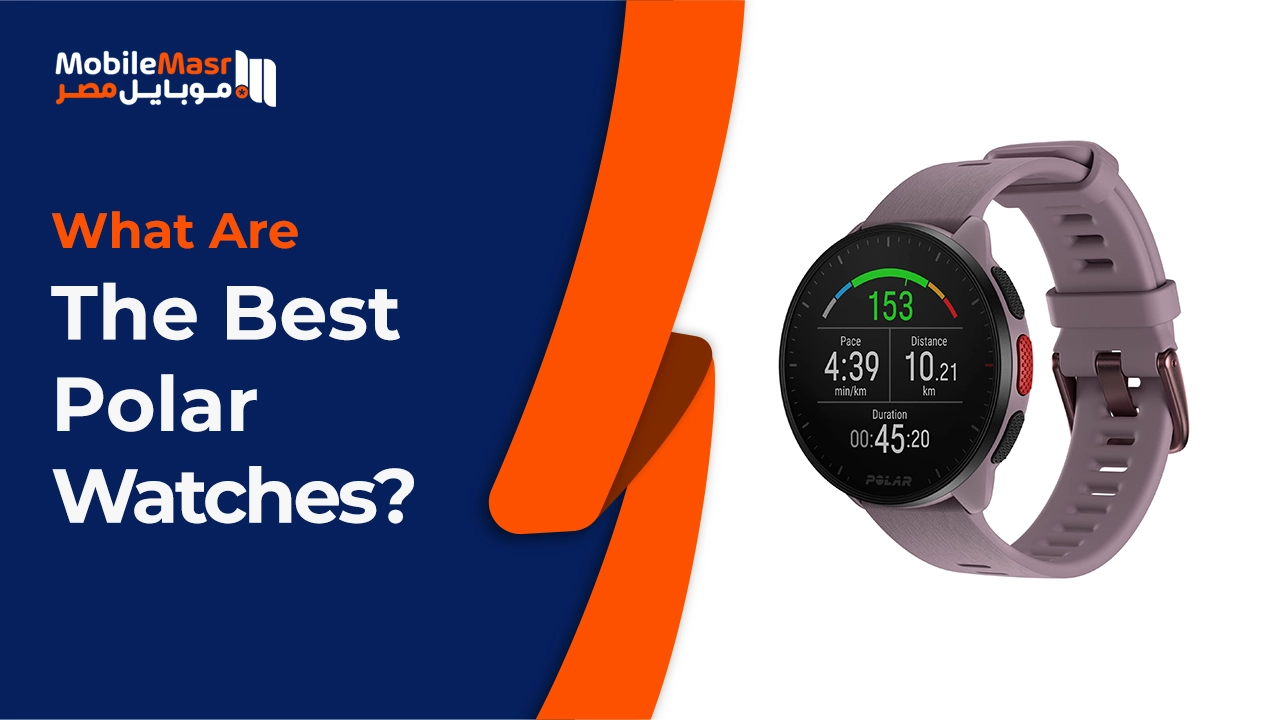
Best Polar Watches in 2026: Which Model Should You Buy?
Why Are Polar Watches Among the Best Smart Sports Watches in 2026?
The sports watch market in 2026 is more sophisticated and competitive than it has ever been, yet Polar continues to hold its ground as one of the most respected names in fitness technology. When people talk about the best Polar watches, they're not just talking about stylish wrist-worn devices — they're talking about precision-engineered training tools built on nearly five decades of physiological science. Polar's reputation wasn't built overnight, and understanding why these watches remain highly relevant in 2026 requires looking at the brand's core values: accuracy, scientific integrity, and athlete-first design.
Polar watches are designed to do one thing exceptionally well: help you train smarter. Whether you're a professional triathlete preparing for an Ironman, a weekend runner trying to improve your 5K time, or someone simply trying to get a better night's sleep and manage daily stress, Polar has a model that speaks to your specific needs. The brand's dedication to heart rate accuracy, training load analysis, and recovery science has made Polar sports watches a trusted companion at every level of athletic performance — from Olympic training centers to your local running club.
In Egypt, interest in wearable fitness technology has grown significantly, and Polar watches are increasingly visible on the wrists of serious athletes and health-conscious professionals. Understanding what makes Polar stand out — and which specific models deliver the best results — is exactly what this guide is here to answer.
What Makes Polar a Trusted Brand in Fitness and Sports Technology?
How Long Has Polar Been Innovating in Heart Rate Monitoring?
Polar Electro was founded in Finland in 1977, and its very first product was a wireless heart rate monitor designed for the Finnish national cross-country ski team. This single innovation fundamentally changed the way athletes train, replacing guesswork with measurable, real-time physiological data. Before Polar, athletes had to rely on perceived exertion or stop mid-workout to manually check their pulse. Polar's technology made continuous heart rate monitoring practical for the first time, and it sparked a revolution in data-driven training that continues today.
By the 1980s and 1990s, Polar heart rate tracking technology had become the gold standard in endurance sports. Research institutions, medical facilities, and sports federations adopted Polar equipment because of its scientific reliability. The company developed the now-iconic H-series chest strap sensors, which remain among the most accurate consumer heart rate measurement devices ever made. Over the decades, Polar gradually transitioned from chest-only monitoring to wrist-based optical sensors without sacrificing the accuracy that made the brand famous.
In 2026, Polar's 4th generation optical heart rate sensor — branded as Polar Elixir — represents the culmination of nearly 50 years of sensor research. Combined with Polar's proprietary algorithms for training load, recovery scoring, and sleep analysis, this heritage gives Polar a depth of physiological knowledge that newer fitness tech brands simply cannot replicate. When you buy one of the best Polar watches, you're buying into nearly half a century of sports science.
Why Do Professional Athletes Trust Polar Watches?
Professional athletes operate at the margins of human performance, where even small improvements in training accuracy or recovery management can make a meaningful competitive difference. This is precisely where Polar training technology earns its reputation. Features like Training Load Pro — which tracks both cardio and muscular load across sessions — and Recovery Pro — which uses orthostatic test results and long-term HRV data to assess true readiness for training — give elite athletes insights that go well beyond what a basic activity tracker provides.
Polar has been the equipment choice for national Olympic teams, professional cycling squads, and elite running programs worldwide. Coaches who work with high-performance athletes trust Polar GPS watches because the data they produce is accurate enough to base real training decisions on. The Polar Vantage V3 and Grit X2 Pro, Polar's current flagships, are routinely recommended by coaches who need multi-sport watches capable of tracking running, cycling, swimming, and strength training with consistent, reliable accuracy. This professional-grade credibility filters down into the consumer market, where serious recreational athletes choose Polar specifically because they want the same quality of data that professionals rely on.
How Does Polar Compare to Other Fitness Watch Brands?
Polar's positioning in the fitness watch market is unique. Unlike brands that try to be everything to everyone — blending smartwatch lifestyle features with fitness tracking in a diluted package — Polar focuses almost exclusively on sports performance and health science. This focus means that Polar multisport watches deliver deeper training analytics, more accurate physiological measurements, and more sophisticated recovery tools than most competitors at the same price point.
The trade-off is that Polar watches offer fewer conventional smartwatch features. You won't find a large app store, contactless payments in all markets, or the seamless ecosystem integration that comes with some other brands. What you will find is a watch that knows more about your body, your training, and your recovery than virtually any other device in its class. For users whose primary goal is athletic performance and health optimization, this trade-off is worth every penny.
Why Are Polar Watches Popular in the Egyptian Market?
Are Polar Watches Suitable for Egypt's Climate?
Egypt's climate presents specific and demanding challenges for wearable technology. Prolonged heat, intense sun, and high perspiration rates test both hardware durability and sensor performance in ways that moderate climates don't. Polar watches are built to handle these conditions effectively. The Polar AMOLED display on flagship models like the Vantage V3 and Grit X2 Pro maintains excellent readability even under direct Egyptian sunlight — a practical necessity for runners, cyclists, and outdoor athletes who train throughout the day.
Water resistance across the Polar lineup is substantial: most models carry a WR30 rating at minimum, with mid-range and flagship models reaching WR50 and the Grit X2 Pro achieving WR100. This means that heavy sweating, post-workout showers, and swimming are never a concern. Polar watch design also prioritizes strap breathability, with silicone and FKM rubber bands that remain comfortable even during extended wear in hot conditions. For Egyptian athletes who train seriously through the summer months, Polar watches handle the environment with confidence.
Are Polar Watches Easy to Find in Egypt?
Availability of Polar watches in Egypt has improved considerably as online shopping platforms have expanded their international brand offerings. Through international shipping services and import platforms like Ubuy Egypt, Egyptian consumers can access the full range of current Polar models. Some specialist sports technology retailers and premium electronics stores in Cairo and Alexandria also carry select Polar watch models directly.
Pricing in Egypt, as with most imported premium technology, reflects exchange rate movements and import costs, which means prices can vary significantly over time. For the most reliable purchasing experience, online platforms that offer buyer protection and clear return policies are generally recommended. The actual current prices of specific Polar models in Egypt are subject to ongoing exchange rate changes, so you can contact the customer service team at Mobile Masr through mobilemasr.com to confirm the latest available prices and best current deals.
Do Polar Watches Offer Good Value for Money in Egypt?
For Egyptian consumers who are serious about sport and health, Polar watches represent a compelling value proposition despite their premium price tags. A Polar GPS watch at the mid-range level provides training load analysis, sleep and recovery tracking, sports-specific metrics, and heart rate accuracy that would require combining multiple devices to replicate with other brands. When you consider the depth of data and the scientific rigor behind each metric, Polar watch price translates into genuine long-term value.
The key is matching the right model to your actual needs. Not every Egyptian buyer needs the flagship Grit X2 Pro at $750. The Polar Pacer Pro at approximately $279 and the Polar Ignite 3 at around $229 deliver an exceptional training and health experience at more accessible price points. Understanding this range — and knowing which features matter for your lifestyle — is central to getting the best value from your Polar purchase.
What Are the Best Polar Watch Models Available in 2026?
The current Polar lineup spans five distinct series: the flagship Vantage and Grit X series for performance athletes, the Pacer series for dedicated runners, the Ignite series for fitness and wellness users, and the Unite for budget-conscious beginners. Each series serves a specific audience with specific training needs. Here's a detailed breakdown of the best models in 2026.
Which Polar Watch Is Best Overall in 2026?
What Features Define the Best Overall Polar Watch?
The Polar Vantage V3 is the best overall Polar watch in 2026 for most users who want the complete performance package. Priced at $599, it combines Polar's most comprehensive suite of training and recovery tools with a stunning 1.39-inch AMOLED touchscreen at 454 x 454 pixel resolution — making it both technically impressive and visually beautiful on the wrist. The Vantage V3 was Polar's first watch to introduce AMOLED display technology to the Vantage series, and it remains the standard bearer for the brand's performance-meets-usability philosophy.
Polar watch specifications on the Vantage V3 include dual-frequency GPS for maximum tracking accuracy, the 4th generation Polar Elixir optical heart rate sensor, ECG heart rate functionality, nightly skin temperature monitoring, continuous SpO2 tracking, full offline maps with points of interest, altitude data, and Polar's full training and recovery platform — including Training Load Pro, Recovery Pro, Sleep Plus Stages, Nightly Recharge, and FitSpark daily training guidance. The WR50 water resistance rating covers swimming and all typical athletic activities. With up to 43 hours of GPS training time and approximately 8 days in basic watch mode, Polar watch battery life on the Vantage V3 balances performance monitoring with practical longevity.
Software Release 3.0, rolled out in January 2025, brought major additions to the Vantage V3 including charging during training, Strava route support, vertical speed and VAM metrics, and historical track display — showing how Polar software updates continue to expand the value of existing purchases over time.
Who Should Buy the Best Overall Polar Watch?
The Vantage V3 is ideal for multi-sport athletes, dedicated runners, cyclists, triathletes, and serious fitness enthusiasts who want the deepest available training insights on a sleek, comfortable daily-wear device. If you're the type of person who analyzes your training data after every session, adjusts your week based on recovery scores, and wants a watch that keeps up with everything from pool swims to mountain runs to gym sessions, the Vantage V3 is your watch. It's also suitable for professionals who want a watch that looks polished enough for the office while secretly tracking their HRV overnight.
Which Polar Watch Is Best for Professional Athletes?
What Training Metrics Do Professional Athletes Need?
Professional athletes and elite-level amateurs need more than basic pace and heart rate — they need a complete picture of how their body responds to training stress over time. Key metrics include orthostatic test results (which measure autonomic nervous system recovery), Training Load Pro data that separates cardio and perceived load, VO2 Max tracking, power output for cycling, running economy metrics, and longitudinal recovery trending that reveals patterns across weeks and months of training. They also need navigation tools for route planning, the ability to operate in extreme environmental conditions, and a battery that survives ultra-endurance events.
How Do Polar Pro Models Support Advanced Training?
The Polar Grit X2 Pro ($750) and its titanium variant, the Grit X2 Pro Titan (starting around $900+), are Polar's answers to the elite athlete's demands. The Grit X2 Pro features military-standard durability with a stainless steel bezel and fiberglass-reinforced polymer body, 100-meter water resistance, sapphire crystal AMOLED display, and the same 4th generation Elixir sensor as the Vantage V3. What sets it apart is its ruggedness — it's tested against military standards for shock, temperature extremes (-20°C to +50°C), humidity, and UV exposure. The redesigned GPS antenna provides enhanced signal acquisition in challenging terrain, and the built-in virtual flashlight is a practical tool for early morning or twilight training sessions.
For endurance events, the Charging During Training feature — introduced via Software Release 3.0 — allows athletes to top up the battery during ultra-races without interrupting recording, solving one of the most practical limitations of long GPS sessions. With 43 hours in GPS mode and up to 140 hours in eco GPS mode, Polar watch battery life on the Grit X2 Pro is built for the most demanding events imaginable.
The Polar Vantage M3 completes the professional tier with a multi-sport focus at a slightly lower price point, offering the same training platform in a more everyday-friendly form factor. For athletes who rotate between multiple disciplines, the M3's breadth of sport profiles and training analytics make it a compelling all-rounder.
Which Polar Watch Is Best for Beginners?
What Features Matter Most for First-Time Users?
A beginner entering the world of sports watches for the first time has genuinely different priorities than an experienced athlete. They want a watch that doesn't overwhelm them with data, that guides them toward better habits without requiring an instruction manual, and that delivers clear, actionable recommendations from day one. Features like guided breathing exercises, simple daily activity summaries, basic sleep tracking, and pre-designed workout suggestions matter far more than advanced training load modeling or GPS antenna optimization.
Price sensitivity is also a real factor for many beginners who want to try out the wearable fitness experience before committing to a premium investment. The best Polar watches for beginners are therefore those that provide genuine value at an accessible entry price while still being backed by Polar's trusted health science.
Are Entry-Level Polar Watches Easy to Use?
The Polar Unite is the brand's most accessible model, designed specifically for users who want a simple, guided fitness experience without technical complexity. It offers continuous heart rate monitoring, basic sleep tracking, guided breathing exercises, daily activity goals, and FitSpark daily training suggestions tailored to your current fitness level and recovery state. The interface is clean and intuitive, with a touchscreen display and straightforward navigation that requires no prior experience with sports watches.
The Polar Ignite 3 at around $229 is the next step up, adding GPS tracking, Sleep Plus Stages, Nightly Recharge recovery scoring, and a significantly more capable health monitoring suite in a design that's genuinely stylish. The Ignite 3's Polar AMOLED display is bright and beautiful, and the watch is light enough that many users forget they're wearing it. For beginners who are ready to invest a little more from the start, the Ignite 3 offers a richer experience that will grow with them as their fitness journey develops.
Which Polar Watch Is Best for Runners?
How Accurate Is Polar GPS for Running?
GPS accuracy is the foundation of any useful running watch, and Polar GPS watches have matured considerably in recent years. The flagship Vantage V3 and Grit X2 Pro both feature dual-band GPS (simultaneously accessing L1 and L5 frequency bands), which dramatically improves tracking accuracy in urban environments where buildings cause signal interference and multipath errors. The Grit X2 Pro's dedicated external GPS antenna design further enhances signal acquisition in open country and forested terrain.
For the Polar Pacer Pro and Pacer, single-frequency GPS provides accurate tracking in open environments and performs reliably in most running scenarios. In comparative testing, Polar GPS watches in the performance tier consistently produce clean, accurate route traces that reflect actual running paths rather than GPS "wander." For city runners navigating complex routes, the dual-band GPS models are noticeably more precise.
What Running Programs Do Polar Watches Offer?
Polar running watches are packed with dedicated running analytics that go well beyond distance and pace. The Polar Pacer Pro — at approximately $279 and weighing just 41 grams — is purpose-built for runners, offering Running Power, Running Index (a measure of running economy that correlates with VO2 Max), VO2 Max estimation, Race Time Predictor, Running Performance Test, stride length, cadence, and ground contact time. The Polar Running Program feature, available through the Polar Flow app, creates a structured weekly training plan based on your available training time and target race date — one of the most practical tools for runners preparing for a specific event.
The ultra-light design of the Pacer Pro (45mm case at 41g) makes it genuinely comfortable for long runs where wrist weight matters. The always-on display with no touchscreen keeps interactions simple and reliable during training. For runners who want a no-nonsense Polar sports watch that delivers elite running data at a sub-$300 price, the Pacer Pro is one of the most compelling options in the entire market.
Which Polar Watch Is Best for Gym and Strength Training?
How Do Polar Watches Track Strength Workouts?
Most GPS sports watches are optimized for cardio activities, where heart rate and movement data map cleanly onto effort and performance. Strength training presents a different challenge: exercises are brief and explosive, heart rate fluctuates quickly, and the metric that matters most — muscle load — is not directly measurable via an optical wrist sensor. Polar has invested specifically in addressing this gap, making its watches more capable in the gym than most running-focused competitors.
The Polar Vantage V3 and Grit X2 Pro include a dedicated strength training sport profile that tracks sets and reps automatically using the watch's accelerometer, logs rest times between sets, and monitors heart rate zones throughout the session to give you a cardio load picture alongside your resistance training volume. Training Load Pro tracks perceived exertion data that you can log manually, building a comprehensive picture of how strength sessions contribute to your overall weekly training stress alongside cardio workouts.
Can Polar Watches Measure Muscle Load?
Polar's Training Load Pro system includes a Muscle Load metric that estimates mechanical stress on the muscular system based on movement data and training type. While it cannot provide the granular muscle group-specific data of a dedicated strength analytics platform, it gives gym-goers and functional fitness athletes a meaningful sense of how their resistance training is contributing to overall physical load — and when their muscles need rest before the next hard session.
The Orthostatic Test feature, available on the Vantage V3 and Grit X2 Pro, measures heart rate variability while transitioning from lying to standing. This test detects autonomic nervous system fatigue — a key marker of whether your body is ready for hard training or needs recovery. For gym athletes who push intensity frequently, this daily readiness marker is a practical tool for avoiding overtraining.
Which Polar Watch Is Best for Swimming and Water Sports?
Are Polar Watches Fully Waterproof?
Water resistance across the Polar lineup varies by model tier. Entry-level models like the Unite carry WR30 (3 ATM) protection — suitable for rain, sweating, and splashing but not for swimming. Mid-range models including the Ignite 3 and Pacer series offer WR30 ratings, making them splash-resistant for typical training activities. The flagship Vantage V3 is rated WR50, which means it can be worn while swimming in pools and open water. The Grit X2 Pro takes this further with WR100 — 100-meter water resistance that makes it suitable for snorkeling, active water sports, and any aquatic activity a triathlete or adventure athlete is likely to encounter.
Polar Elixir sensor technology performs reliably underwater, maintaining heart rate monitoring during swim sessions — a technical challenge that not all optical sensors handle successfully. The watches use specialized swim mode that disables the touchscreen underwater (preventing false inputs from water contact) while keeping all sensors and tracking active.
What Swimming Metrics Do Polar Watches Track?
Polar multisport watches with swim capability track the full suite of pool swimming metrics: lap counts, lengths, SWOLF efficiency score (a composite of strokes per length and time per length that measures swimming economy), stroke count, stroke rate, and continuous heart rate. Pool mode requires you to input your pool length so the watch can accurately calculate distance based on turn detection.
For open water swimming — a critical discipline for triathletes — the Vantage V3 and Grit X2 Pro provide GPS route tracking combined with heart rate monitoring, giving you a complete picture of distance covered, pace, and cardiovascular effort across the swim leg. The Grit X2 Pro's WR100 rating is particularly valuable for open water events where the watch may be submerged at depth during surf entries or rough water.
How Do Polar Watches Compare to Other Smartwatch Brands?
How Do Polar Watches Compare to Apple Watch?
Which Is Better for Fitness Tracking?
The Apple Watch and Polar watches serve genuinely different audiences, and comparing them fairly requires acknowledging that difference. Apple Watch is primarily a smartwatch with fitness tracking capabilities layered on top of a rich app ecosystem, deep iPhone integration, and consumer lifestyle features. Polar watches are primarily athletic training instruments with some smartwatch features added around the edges.
For fitness tracking depth, Polar watches win clearly. Polar training technology — including Training Load Pro, Recovery Pro, Sleep Plus Stages, Nightly Recharge, FitSpark training guidance, and the Polar Flow analysis platform — provides a level of training science sophistication that Apple Watch simply doesn't attempt to match. Polar watch review consensus across independent sports technology publications consistently places Polar ahead of Apple Watch when it comes to actionable training data for athletes. For casual activity tracking, step counting, and integration with iPhone health apps, Apple Watch has the edge. For serious athletic performance monitoring, Polar is the stronger platform.
Which Offers Better Battery Life?
This is not a close contest. Polar watch battery life is dramatically longer than Apple Watch battery life across every comparison. The Polar Vantage V3 delivers up to 43 hours in GPS training mode and approximately 8 days in basic watch mode. The Polar Grit X2 Pro extends this to 43 hours GPS and up to 140 hours in eco GPS mode. The Polar Pacer Pro, despite its lightweight build, reaches around 35 hours of GPS use.
By contrast, the Apple Watch Series 10 lasts approximately 18 hours from a full charge, requiring daily charging as a baseline expectation. For athletes who want to track sleep, wake up, train, and go about their day without managing charging anxiety, the Polar battery advantage is a genuine daily convenience that directly impacts how useful the watch is as an always-on health and training monitor.
How Do Polar Watches Compare to Garmin Watches?
Which Brand Is Better for Runners?
Polar versus Garmin is the most significant comparison in the sports watch category, and it's genuinely close. Both brands produce excellent running watches, backed by decades of GPS technology investment and large communities of devoted users. For runners specifically, the choice often comes down to ecosystem preference and specific feature priorities.
Polar running watches excel in physiological depth — heart rate accuracy, training load modeling, recovery science, and the Polar Running Program's structured training plans are all top-tier. Garmin counters with a larger ecosystem of running apps, more customizable displays, better third-party integration (including native Strava connectivity), and some very specific advanced running features like Running Dynamics Pod compatibility and a wider breadth of coached workouts via Garmin Connect.
The Polar Pacer Pro is a strong challenger to entry Garmin running watches and outperforms in terms of raw running analytics at the same price. At the flagship level, the Polar Vantage V3 and Garmin flagship offerings are genuinely comparable, with Polar winning on recovery science and Garmin winning on app ecosystem richness.
Which Brand Is Better for Multi-Sport Athletes?
For triathlon and multi-sport use, Polar multisport watches provide excellent coverage of swim, bike, and run disciplines with transitions between sport modes handled cleanly. Training Load Pro's ability to distinguish between cardio and muscular load across different sport types is particularly valuable for triathletes managing multiple training disciplines simultaneously.
Garmin has historically had an edge in multi-sport functionality, particularly for triathletes, due to its dedicated triathlon watches and more polished multi-sport transition handling. However, the gap has narrowed considerably with the Polar Vantage V3 and Grit X2 Pro. For an athlete whose primary focus is running and cycling with swimming as a third discipline, Polar is now a fully competitive choice.
How Do Polar Watches Compare to Samsung Galaxy Watch?
Which Is Better for Android Users?
Samsung Galaxy Watch is designed as a premium smartwatch for Android users, offering deep integration with Android phones, a full Wear OS app ecosystem, contactless payments, stylish design, and a balance of fitness and lifestyle features. Polar watches offer a more focused fitness and health experience with a standalone app ecosystem.
For Android users who prioritize smartwatch convenience — reading and replying to messages, using apps, controlling smart home devices, and managing daily tasks from their wrist — Samsung Galaxy Watch is the more capable platform. For Android users who care primarily about training quality, health data accuracy, and sleep and recovery insights, Polar GPS watches deliver a fundamentally more athletic experience. The choice reflects what you want your watch to be: a wrist-based smartphone companion, or a precision athletic training tool.
Which Has More Accurate Health Data?
Polar's health data accuracy has a genuine scientific edge, built on nearly 50 years of sensor research and physiological algorithm development. Polar heart rate tracking uses sensor fusion technology that combines optical readings from multiple LEDs and wavelengths, producing readings that are demonstrably accurate even during intense exercise. The Polar AMOLED display on flagship models shows health metrics in real time with clarity, and the underlying data is backed by peer-reviewed research partnerships.
Samsung's health sensors have improved substantially in recent generations and offer competitive heart rate and SpO2 accuracy for everyday health monitoring. However, Polar's advantage in the training context — particularly in cardiovascular load calculation, HRV analysis, and the translation of raw sensor data into actionable training insights — gives it a consistent edge for users who want their health data to actually improve their athletic performance and recovery management.
What Features Should You Look for in the Best Polar Watches?
How Important Is Heart Rate Accuracy in Polar Watches?
What Is Polar Precision Prime Technology?
Polar Precision Prime is the name Polar gave to its multi-point optical heart rate sensing system before evolving it into the current Polar Elixir technology platform. The original Precision Prime system used multiple LEDs at different wavelengths and two separate photodiode signals, combined with skin contact sensing to detect poor contact that could compromise readings. This multi-channel approach allowed the watch to select the most reliable signal from available data, rather than relying on a single reading that might be corrupted by wrist movement or optical interference.
The evolution of this technology into the current Polar Elixir platform (the 4th generation optical HR sensor) builds on these foundations with improved hardware, refined skin contact detection, and more sophisticated signal processing algorithms. The addition of ECG functionality in the Vantage V3 and Grit X2 Pro further enhances heart rate monitoring by providing a direct electrical measurement option alongside the optical reading, giving users a highly accurate reference point whenever needed.
How Accurate Is Optical Heart Rate Monitoring?
Polar heart rate tracking through optical sensing is among the most accurate available in wrist-based smartwatches. In resting conditions and steady-state cardio activities like moderate running or cycling, readings align closely with chest strap measurements, which remain the gold standard for continuous HR monitoring. During high-intensity activities with rapid heart rate fluctuations, optical sensors of all brands face challenges — but Polar's sensor fusion approach and signal validation algorithms minimize these discrepancies more effectively than most competitors.
For the most accurate Polar heart rate tracking during intense exercise, wearing the watch slightly higher up the forearm (approximately two finger-widths above the wrist bone) reduces interference from wrist tendons and improves contact consistency. Users who need absolute maximum HR accuracy during HIIT or interval training can pair their Polar watch with a compatible Polar chest strap via Bluetooth or ANT+, accessing the gold-standard accuracy of electrical HR sensing in real time.
What Role Does GPS Play in Polar Watches?
Does Dual-Band GPS Matter?
Yes, and the difference is genuinely measurable. Standard single-frequency GPS uses only the L1 band, which can suffer from multipath errors — signal reflections caused by buildings, trees, and terrain features that cause the GPS receiver to see the same satellite multiple times. Polar dual-band GPS, available on the Vantage V3 and Grit X2 Pro, simultaneously processes both L1 and L5 frequencies. Because L5 is a more modern, higher-bandwidth signal designed with better error correction, combining L1 and L5 dramatically reduces multipath errors and improves positional accuracy in challenging environments.
For urban runners, trail athletes, and cyclists in complex terrain, dual-band GPS produces noticeably cleaner route traces and more accurate distance calculations. For open-terrain running on clear days, the difference is less perceptible — single-band GPS performs very well in good conditions. The practical implication is that if you primarily train in cities, wooded areas, or valleys, the dual-band models represent a meaningful accuracy upgrade worth the investment.
How Accurate Is Polar GPS in Urban Areas?
Urban GPS tracking has historically been a weakness for sports watches in general, and Polar GPS watches are no exception to the challenge. In city environments with tall buildings, overpasses, and underground routes, any GPS system can struggle. However, the dual-band GPS in the Vantage V3 and Grit X2 Pro provides a significantly better result than previous Polar generations in urban conditions.
Testing of the Grit X2 Pro in challenging city terrain showed improvements over the earlier Grit X2's single-band GPS, with cleaner corner tracking and reduced "teleporting" effects where the measured route jumps unrealistically from one point to another. For runners who do most of their training in dense urban areas, the dual-band flagship models are worth prioritizing over the single-band Pacer series.
How Important Is Battery Life When Choosing a Polar Watch?
How Long Does Polar Battery Last in Training Mode?
Polar watch battery performance in GPS training mode is one of the brand's most practically important strengths. Here's a summary of key models:
- Polar Grit X2 Pro: 43 hours in GPS mode, up to 140 hours in Eco GPS mode
- Polar Vantage V3: 43 hours in GPS mode, 8 days basic watch mode
- Polar Pacer Pro: Approximately 35 hours in GPS mode, 7 days basic mode
- Polar Ignite 3: Approximately 30 hours in GPS mode, 5 days basic mode
- Polar Unite: No built-in GPS (uses phone GPS); battery approximately 4 days
These figures represent meaningful real-world training capability. A marathoner running 4+ hours, a cyclist doing all-day rides, or a triathlete completing an Ironman can all rely on the Vantage V3 or Grit X2 Pro to outlast their event. The Eco GPS mode, which reduces GPS sampling frequency, extends battery life dramatically for ultra-endurance events where battery preservation outweighs pinpoint GPS precision.
How Does Battery Saver Mode Work?
Battery Saver mode on Polar GPS watches reduces power consumption by lowering GPS sampling frequency, dimming the display, and disabling continuous heart rate monitoring in favor of periodic measurements. This mode is designed for situations where you're in the middle of an extremely long event and need to extend your recording time beyond what normal GPS mode allows. In eco GPS mode, the watch samples GPS position every 60 seconds rather than every second, which reduces GPS accuracy but preserves the essential training record.
For most training sessions under 10 hours — which covers the vast majority of athletic events — normal GPS mode is entirely sufficient on the Vantage V3 and Grit X2 Pro. Battery Saver mode becomes relevant for ultramarathons, multi-stage events, and cross-country expeditions where the watch might need to record continuously for 20, 40, or even 100+ hours.
What Smart Features Do Polar Watches Offer?
Do Polar Watches Support Notifications?
Yes, Polar watches display smartphone notifications on the wrist, including calls, text messages, emails, and app notifications. The implementation is notification display rather than full interaction — you can read incoming messages and see who is calling, but you cannot reply directly from the watch or take calls through a speaker. This is a deliberate design choice that reflects Polar's sports-first philosophy: notifications are available when you need them, but they're not so prominent that they distract from training.
Polar watch features in the notification department cover the essentials clearly and without clutter. The always-visible notification alerts keep you informed during training sessions, while the clean interface means you're never overwhelmed by social media pings when what you really want is to focus on your workout.
Can You Control Music from a Polar Watch?
Yes, most mid-range and flagship Polar watches include a music control widget that allows you to play, pause, skip tracks, and adjust volume for music playing on your paired smartphone. This is a convenient training companion feature — you can skip to a better running song without reaching for your phone or fumbling with earbuds. The Polar Vantage V3, Grit X2 Pro, Pacer Pro, and Ignite 3 all include this functionality.
It's worth noting that Polar watches do not have onboard music storage for offline playback directly from the watch to wireless earbuds — this is one area where some competing brands have an advantage. For athletes who prefer to train without their phone, the music control feature requires the phone to be within Bluetooth range. If phone-free music is a priority, this is worth factoring into your Polar watch comparison with alternative brands.
Are Polar Watches Good for Health Tracking in 2026?
Polar has always approached wearable health tracking with scientific rigor, and the 2026 lineup represents the most comprehensive expression of that philosophy in the brand's history. Where many fitness watches treat health data as secondary to training metrics, Polar recognizes that recovery, sleep, and stress management are integral parts of athletic performance — and its health tracking features reflect that understanding.
How Do Polar Watches Track Sleep Quality?
What Is Sleep Plus Stages?
Sleep Plus Stages is Polar's flagship sleep tracking algorithm, available on mid-range and premium models including the Ignite 3, Pacer Pro, Vantage V3, and Grit X2 Pro. It automatically detects when you fall asleep and wake up, then analyzes your sleep using optical heart rate data and movement sensing to classify each moment of the night into one of four sleep stages: Light Sleep, Deep Sleep, REM Sleep, and Wake.
The depth of data that Polar sleep and recovery tracking provides goes well beyond simply telling you how many hours you slept. The Sleep Plus Stages report shows you the distribution of sleep stages across the night — how much time was spent in restorative deep sleep, how much in cognitively important REM, and how many times you woke up. This information helps you identify patterns: perhaps you're consistently short on deep sleep, or your REM percentage drops on nights after heavy training. Understanding these patterns is the foundation of sleep improvement strategies that actually make a difference to athletic performance.
How Accurate Is Sleep Tracking?
Polar sleep and recovery tracking accuracy is among the highest in the consumer wearable space, validated through comparison with polysomnography (professional sleep lab measurements) in clinical research partnerships. While no wrist-based optical system can perfectly replicate EEG-level sleep stage detection, Polar's algorithms produce results that correlate meaningfully with clinical measurements, particularly for overall sleep duration, gross stage distribution, and sleep efficiency.
The key practical implication is that Polar sleep data is consistent and reproducible enough to be used for longitudinal tracking — comparing your sleep quality this week to last week, identifying the impact of life events or training changes on sleep quality, and making evidence-based decisions about your sleep habits. This consistency is what transforms raw sleep data into a genuinely useful health monitoring tool.
How Do Polar Watches Track Stress and Recovery?
What Is Nightly Recharge?
Nightly Recharge is one of Polar's most distinctive and practically useful health features. It measures how well your body recovers from the demands of the previous day during the first hours of sleep — the most physiologically restorative sleep period. The measurement combines two components: Sleep Charge (which quantifies sleep quality, duration, and continuity) and ANS (Autonomic Nervous System) Charge (which measures HRV and heart rate patterns during the first three to four hours of sleep to assess nervous system recovery).
The result is a morning readiness score that tells you clearly: your body recovered well last night (green), it recovered adequately (yellow), or it didn't fully recharge (red). This information directly informs the FitSpark daily training guidance, which on low-recharge mornings recommends lighter activities like mobility work or easy cardio, and on high-recharge mornings suggests the conditions are right for hard training. For athletes managing the balance between training stress and recovery, Nightly Recharge provides a practical daily anchor that removes guesswork from training decisions.
How Does Recovery Pro Work?
Recovery Pro is an advanced recovery monitoring system available on the Vantage V3 and Grit X2 Pro, taking Nightly Recharge one step further by incorporating the Orthostatic Test. The Orthostatic Test involves lying down, standing up, and measuring how your heart rate and HRV respond to the change in posture — a change that taxes the autonomic nervous system and reveals how recovered (or fatigued) you truly are at a physiological level.
When done consistently every morning, the Orthostatic Test builds a personal baseline of your typical cardiovascular response. Deviations from this baseline — an elevated heart rate on standing, reduced HRV, or an altered recovery curve — are objective signals of physiological stress or fatigue that may not yet be perceptible subjectively. Recovery Pro combines this data with training load history and sleep quality to provide a detailed, science-backed picture of where you stand in the training-recovery cycle. It's the kind of tool that elite coaching teams have used for decades, now accessible to any Polar Vantage V3 or Grit X2 Pro user.
Can Polar Watches Monitor Blood Oxygen Levels?
Is SpO2 Tracking Available on All Models?
SpO2 (blood oxygen saturation) tracking is available on most mid-range and premium Polar models, including the Ignite 3, Pacer Pro, Vantage V3, and Grit X2 Pro. It is not available on the entry-level Unite. The implementation across these models includes both on-demand spot measurement (take a reading whenever you want) and automatic periodic measurement throughout the day and night. Continuous overnight SpO2 monitoring is particularly valuable for detecting potential sleep breathing abnormalities — periods where oxygen saturation drops significantly, which can be an early indicator of sleep apnea.
Polar watch features related to SpO2 have been expanded with nightly skin temperature monitoring on the flagship Vantage V3 and Grit X2 Pro, which adds another dimension to overnight health monitoring by tracking temperature variations that can indicate illness onset, hormonal cycle patterns, or elevated physiological stress before you consciously notice any symptoms.
How Useful Is SpO2 Data for Athletes?
For athletes, SpO2 data serves several practical purposes. At altitude — relevant for hikers, trail runners, and cyclists who train or compete at elevation — monitoring oxygen saturation provides an early warning of altitude sickness and helps guide acclimatization decisions. At sea level, consistently low SpO2 during normal activity (below 95%) can signal respiratory compromise or circulatory issues worth investigating with a healthcare provider.
During recovery monitoring, overnight SpO2 trends contribute to the broader picture of sleep quality and physiological recovery. An athlete whose overnight SpO2 is consistently stable and high is recovering well; one who shows frequent dips or low baseline saturation may have an underlying issue affecting their recovery capacity. Integrated with Polar's sleep and recovery tracking platform, SpO2 data becomes one more reliable signal in a comprehensive health monitoring system.
Are Polar Watches Suitable for Everyday Use?
Can Polar Watches Be Worn as Daily Smartwatches?
Are Polar Watch Designs Stylish Enough?
Polar watch design has historically been the brand's most consistent criticism — functional to a fault, but not exactly fashionable. The newer generation of Polar watches has addressed this meaningfully. The Polar Ignite 3 is a genuinely stylish watch with a slim profile, round AMOLED display, metal case options, and a range of color and strap choices that include woven braided fabric bands — making it attractive enough for casual wear, dinner, and professional settings. The Polar Vantage V3's clean, Nordic-inspired aesthetic with its aluminum bezel and color options including Sunrise Apricot and Sky Blue represents a real departure from the purely utilitarian look of earlier Polar models.
The Grit X2 Pro and Grit X2 lean into their rugged athletic identity more overtly, with case shapes and strap options that signal serious outdoor athlete rather than everyday wearable. The Titan variants with leather straps are notably premium-looking, but they're still clearly sports watches. Overall, Polar has made genuine progress in Polar watch design aesthetics, though the brand still prioritizes function over fashion compared to lifestyle-oriented competitors.
Can Polar Watches Replace a Traditional Watch?
For users whose primary watch use case is simply telling the time and checking basic notifications, yes — Polar watches can fill that role effectively. The always-on display mode (available on AMOLED models) shows time, date, and basic status information continuously, functioning exactly like a traditional watch in terms of basic utility. Notification mirroring for calls and messages means you remain connected throughout the day.
Where Polar watches fall short of replacing a traditional dress or fashion watch is in formal or non-athletic contexts where appearance is paramount. A Polar smartwatch on the wrist at a black-tie event is still going to look like a sports watch. For users who want a single watch that works equally in athletic and formal contexts, a premium fashion watch with some fitness tracking (or a slim lifestyle-oriented sports watch from another brand) might be a more versatile choice.
How Comfortable Are Polar Watches for All-Day Wear?
Are Polar Straps Comfortable?
Polar uses high-quality silicone and FKM rubber for its standard sports straps, both of which are skin-friendly materials that resist sweat, heat, and repeated washing without degrading. The strap surface finish is smooth enough to wear comfortably against skin during long periods, including sleep tracking. The Ignite 3 Braided Yarn variant offers a woven fabric strap that many users find even more comfortable for extended wear, with better breathability in warm conditions.
For athletes training in Egypt's heat, the breathable properties of Polar's strap materials prevent the skin irritation that can develop under a heavily sealed rubber strap in hot, humid conditions. Aftermarket third-party straps in various materials are compatible with standard 20mm or 22mm strap widths depending on the model, giving users flexibility to choose materials that suit their lifestyle.
Are Polar Watches Lightweight?
Polar has invested significantly in making its watches comfortable for extended daily wear and all-night sleep tracking, which requires keeping weight down. The Polar Pacer Pro stands out as genuinely ultralight at just 41 grams with its 45mm case — one of the lightest GPS sports watches available. The Polar Vantage V3 weighs approximately 52 grams, which is notably light for a flagship multisport watch. The Polar Ignite 3 is similarly light for its size.
The Grit X2 Pro is the heaviest in the current lineup at 79 grams due to its military-grade construction — a weight that's worth noting if you plan to wear it 24 hours a day for sleep tracking. Most users find the weight acceptable in context of what the watch offers, but those who are particularly sensitive to wrist weight during sleep may prefer the Vantage V3 or Pacer Pro for overnight monitoring.
What Are the Pros and Cons of Polar Watches in 2026?
What Are the Main Advantages of Polar Watches?
Why Is Training Accuracy a Key Advantage?
The most compelling reason to choose Polar over competing brands is training accuracy — not just heart rate sensor accuracy, but the accuracy of the entire system from raw data collection through to actionable insights. Polar's 4th generation Elixir optical heart rate sensor is among the most technically sophisticated wrist-based sensors on the market. Combined with Polar's scientific approach to converting raw physiological data into training load, recovery scores, and performance metrics, the result is a platform where you can genuinely trust the data to inform real decisions about how hard to train, when to rest, and whether your fitness is improving.
This accuracy extends to GPS tracking, where the dual-band implementation in flagship models provides cleaner and more reliable route data than previous Polar generations, and to sleep and recovery metrics that are backed by clinical validation research. When training with Polar training technology, you're not just wearing a device that counts steps and shows your heart rate — you're using a system designed to model your physiology accurately and give you guidance that would previously have required a sports scientist at your side.
Why Is Battery Life a Strong Point?
Polar watch battery performance is a genuine differentiator that shapes the daily experience of using the device. The ability to wear your watch continuously for multiple days without charging means that sleep tracking, 24/7 heart rate monitoring, and recovery measurements never have gaps. You don't miss the overnight data that informs your morning readiness score because you were charging overnight. You don't have to choose between going for a long run and having battery left for the rest of the day.
For serious athletes, this continuous data recording is not just convenient — it's scientifically meaningful. Longitudinal health monitoring that covers every hour of every day produces richer, more accurate trend data than a device that's offline for charging periods. The Polar watch battery advantage directly translates into better health data quality over time.
What Are the Main Disadvantages of Polar Watches?
Do Polar Watches Lack Some Smart Features?
Polar watch disadvantages begin with the smartwatch functionality gap. Compared to brands that run full smartwatch operating systems, Polar watches have a deliberately limited smart feature set. There is no native third-party app store — you cannot install Spotify directly on the watch, add a navigation app, or extend the watch's functionality with developer-created applications. The Polar Flow ecosystem is rich for sports and health data, but it's closed compared to the open app environments of competing platforms.
Contactless payment via NFC is absent from most Polar models — a feature many users have come to expect as standard in 2026. The notification system covers the basics (display incoming calls and messages) but does not support replies or app-specific interactive notifications. For users who see their smartwatch as an extension of their phone's functionality, these limitations feel significant. Polar watch review assessments from general tech publications consistently flag this as the primary trade-off for the brand's athletic depth.
Are Polar Watches Expensive Compared to Competitors?
Polar watch price positions the brand firmly in the premium segment. The entry point for a Polar watch with GPS is approximately $199-$229 (Polar Pacer or Ignite 3), which is higher than many competing entry-level sports watch options. The flagship Vantage V3 at $599 and Grit X2 Pro at $750+ are significant investments that require clear fitness and training priorities to justify.
For the Egyptian market specifically, Polar watch price in local currency is notably high once import costs and exchange rate factors are applied, placing these watches in the premium spending category. The value case for Polar is compelling for dedicated athletes and serious health monitors, but the Polar watch price represents a genuine barrier for budget-conscious buyers who might find strong alternatives at lower price points.
How Much Do the Best Polar Watches Cost in Egypt?
What Is the Price Range of Polar Watches in 2026?
Are There Budget-Friendly Polar Models?
Within the Polar lineup, the budget-friendliest option is the Polar Unite, which retails globally at approximately $99-$109. It offers continuous heart rate monitoring, guided breathing exercises, sleep tracking, FitSpark daily training guidance, and basic activity tracking — without built-in GPS. For Egyptian buyers on a tight budget, the Unite delivers a genuine slice of Polar's health science at the most accessible entry price in the range.
The Polar Pacer at approximately $199 is the next tier, adding built-in GPS, running cadence, and more comprehensive training features while keeping the price below $200. These budget-oriented Polar sports watches offer meaningful health and fitness value for users who don't need advanced recovery metrics or premium materials. In Egypt, the exact current prices for these models fluctuate with exchange rates and import conditions — you can reach out to Mobile Masr customer service at mobilemasr.com for up-to-date local pricing information.
Are Premium Polar Watches Worth the Price?
For the right user, absolutely. The Polar Vantage V3 at $599 and Grit X2 Pro at $750 deliver a level of physiological insight, GPS precision, and build quality that is genuinely difficult to replicate at lower price points. The combination of Recovery Pro, Sleep Plus Stages, Training Load Pro, dual-band GPS, AMOLED display, and the Polar Elixir sensor system represents the current state of the art in wrist-based training technology.
The value case strengthens when you consider software longevity — Polar software updates have consistently added major new features to existing hardware, meaning a Polar Vantage V3 purchased today continues to receive meaningful capability improvements for years. Athletes who treat their sports watch as a long-term training investment, rather than a consumer gadget to be replaced annually, consistently find that premium Polar watches retain and grow their value over extended ownership periods.
Where Can You Buy Polar Watches in Egypt?
Are Polar Watches Available in Local Stores?
Polar does not have a dedicated retail presence in Egypt in the same way that major phone brands do, but select premium sports equipment retailers and specialist electronics stores in Cairo and Alexandria may carry certain Polar models. Availability varies and stock is generally limited compared to more widely distributed consumer electronics brands. Verifying current stock directly with individual retailers is recommended before visiting in person.
Sports specialty stores focused on running, triathlon, or outdoor athletics — which are growing in number in Egyptian urban centers — are more likely to carry Polar GPS watches than general electronics retailers, as Polar's positioning is firmly in the performance sports segment.
Can You Buy Polar Watches Online in Egypt?
Yes, online purchasing is the most reliable way for Egyptian consumers to access the full range of Polar watches. International e-commerce platforms with Egyptian delivery services, including import-focused online retailers, provide access to current Polar models. Platforms like Ubuy Egypt specialize in shipping international products to Egypt and carry Polar watches regularly.
For the best purchasing experience with after-sales support, clear return policies, and buyer protection, well-established online platforms are recommended. To confirm current availability, the most accurate pricing in Egyptian pounds, and any available deals or promotions, contacting Mobile Masr customer service through mobilemasr.com is a practical and reliable starting point for Egyptian buyers.
How Do You Choose the Best Polar Watch for Your Needs?
Should You Choose Based on Sports Type?
Which Polar Watch Fits Runners Best?
Runners looking for the best Polar watches in 2026 should focus on two models depending on their budget and performance goals. The Polar Pacer Pro ($279) is the definitive Polar running watch for dedicated runners who want every running-specific metric available in an ultralight, no-nonsense package. At 41 grams, it disappears on the wrist during long runs. Running Power, VO2 Max, Running Index, Race Time Predictor, and the Polar Running Program cover everything a runner from 5K to marathon training needs. It's the watch that running-focused publications consistently recommend as Polar's best pure-running value.
For runners who also want multi-sport capability, recovery science, and a premium display experience, the Polar Vantage V3 is the natural upgrade. It adds all of the Pacer Pro's running capabilities to a full multi-sport platform, AMOLED display, Recovery Pro, and dual-band GPS in a watch that works equally well for cycling days and swim sessions.
Which Polar Watch Fits Gym Users Best?
Gym-focused users who want Polar training technology integrated into their strength and conditioning work will find the Vantage V3 the best match, specifically because of Training Load Pro's muscle load tracking and the Orthostatic Test's recovery monitoring. These features help gym users manage the cumulative fatigue of heavy resistance training — something that simpler sports watches don't account for effectively.
For gym users whose training is less data-intensive, the Polar Ignite 3 delivers an excellent combination of heart rate monitoring, sleep tracking, daily activity metrics, and FitSpark training guidance in a design that's light enough for all-day wear and stylish enough for non-athletic settings. The Ignite 3 is the Polar watch that best bridges the gap between fitness and everyday lifestyle.
Should You Choose Based on Budget?
What Is the Best Polar Watch Under a Limited Budget?
If budget is a primary constraint, the Polar Pacer at approximately $199 delivers the best value in the Polar lineup for health-and-fitness-conscious buyers. It includes built-in GPS, continuous heart rate monitoring, sleep tracking, basic recovery metrics, and over 130 sport profiles — covering all the essentials for runners, cyclists, and gym users. Polar watch features at this price point represent a meaningful upgrade from entry-level fitness bands and activity trackers, providing genuine sports watch functionality at an accessible investment.
The Polar Unite at $99-109 is worth considering for buyers who specifically don't need GPS — its health science depth (continuous HR, sleep tracking, FitSpark guidance) is genuine and the Polar brand reliability is fully present. If you're primarily using the watch for gym training, indoor cycling, or general health monitoring, the Unite's lack of built-in GPS is a manageable trade-off.
Is It Worth Paying More for Advanced Features?
For athletes who train seriously and who will actually use the advanced features, paying more for the Vantage V3 or Grit X2 Pro is justified by the genuine additional value. Recovery Pro, dual-band GPS, the Elixir 4th-gen sensor, AMOLED display quality, and the premium build of these models translate into a better data quality, a more usable daily experience, and hardware that lasts longer under real athletic use.
For casual users, paying up for features like the Orthostatic Test or advanced GPS accuracy when you primarily track daily steps and the occasional jog would be an overshooting investment. Aligning Polar watch price with genuine feature utilization is the most practical approach to the Polar watch comparison decision.
Are Polar Watches Worth Buying in 2026?
Who Should Buy a Polar Watch?
Are Polar Watches Ideal for Athletes Only?
Polar watches are designed with athletes in mind, but they deliver value to a wider audience than pure competitors might. Anyone who takes their health seriously — whether that means monitoring sleep quality, managing stress through recovery data, or understanding how their body responds to exercise — will find genuine value in a Polar smartwatch. The Sleep Plus Stages feature alone is compelling enough for health-conscious non-athletes who want detailed, accurate sleep data. FitSpark's daily training suggestions work as much for someone doing casual fitness routines as for a triathlete.
The Polar Ignite 3, in particular, is designed to appeal beyond the athletic community — its slim design, lifestyle-friendly aesthetics, and focus on energy management and wellness make it relevant for office workers, parents, and health-focused individuals who want more from their wearable than a basic step counter.
Are Polar Watches Good for Casual Users?
Casual users who primarily want to count steps, track sleep, and receive phone notifications will find Polar watches functional but potentially overspecified — and therefore overpriced for their actual needs. The Polar Unite is the most appropriate match for a genuinely casual user, providing solid basic health tracking at an accessible price without the complexity of advanced training features that would go largely unused.
That said, even casual users who wear their Polar watch consistently and engage with the Polar Flow app's data summaries often find themselves naturally drawn into deeper health monitoring habits. The platform's strength is not just the data it collects but the way it presents that data in accessible, motivating formats that help users build lasting wellness habits.
When Is a Polar Watch Not the Best Choice?
Should You Choose Another Brand for Smart Features?
If your primary motivation for buying a smartwatch is the smart functionality — apps, third-party integrations, contactless payments, voice assistants, and deep smartphone ecosystem integration — then another brand will serve you better than Polar. Polar watch disadvantages in the smart features category are real and intentional; the brand focuses its engineering resources on sports and health science rather than app ecosystem development. Users who want a wrist-based device that replaces their phone for day-to-day convenience tasks will find Polar's offering limited.
For buyers who prioritize using their watch to stream music independently of their phone, pay for coffee with a tap, get turn-by-turn navigation for commuting, or use a wide variety of third-party health and fitness apps that integrate with the watch natively, alternative brands are more suitable choices.
Should You Avoid Polar If You Want Apps?
The Polar Flow ecosystem is closed and intentionally limited compared to open smartwatch platforms. If you rely on specific third-party training apps that you want to run directly on your watch — cycling power meter apps, advanced navigation tools, or sport-specific coaching apps — Polar will frustrate you. The Polar Flow platform for post-workout analysis and training planning is excellent and deep, but it's a smartphone app ecosystem rather than a watch-based one.
Users who want to extend their watch's capabilities with third-party apps, who want native Strava or training platform integration on-device, or who want features like golf course maps, ski run tracking, or specialized sport profiles beyond Polar's built-in selection, should factor in this ecosystem limitation before committing. Polar watch review consensus is clear: it's the best platform for athletes who work within its ecosystem, but a frustrating limitation for those who need openness.
Every serious athlete, health monitor, and fitness enthusiast in Egypt considering a premium sports watch in 2026 owes it to themselves to look closely at what Polar offers. The best Polar watches aren't just technically impressive devices — they're training partners built on almost 50 years of sports science, designed to help you understand your body better, train smarter, and recover more effectively. Whether you choose the flagship Vantage V3 for its all-round excellence, the Grit X2 Pro for adventure durability, the Pacer Pro for pure running focus, or the Ignite 3 for elegant wellness tracking, you're investing in a platform that genuinely delivers on its promises.
The Polar watch comparison process ultimately comes down to matching the right model to your real training life — not the most impressive spec sheet, but the watch that fits how you actually move, sleep, and recover day after day.
Ready to find the best deal on your next Polar watch or any other premium tech device? Visit mobilemasr.com — Egypt's most trusted destination for smartphones and smart devices, new and pre-owned. Browse current offers, get expert advice, and discover deals tailored to your budget. Head to Mobile Masr now and take the next step in your fitness journey!
FAQs
CONTACT US
©2026 MobiTech Integrated Solutions. . All Rights Reserved