
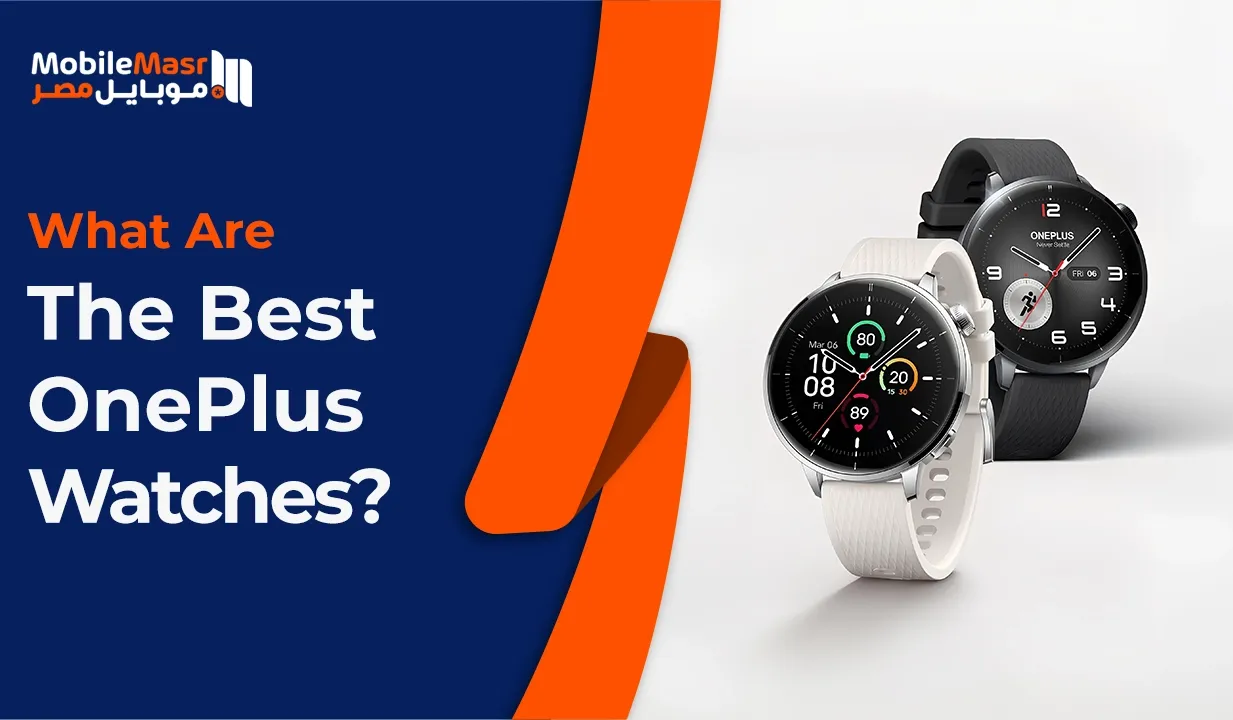
What Are the Best OnePlus Watches to Buy in 2026?
What Are the Best OnePlus Watches to Buy in 2026?
OnePlus smartwatches have evolved from a slow, uncertain start into one of the most compelling lineups in the Wear OS ecosystem. If you've been asking which best OnePlus watches are actually worth your money in 2026, the answer is more nuanced — and more interesting — than ever. The brand now has multiple models across different price tiers and use cases, each built around a philosophy of maximum battery life, clean Android integration, and premium hardware at competitive pricing.
Whether you're comparing OnePlus watch specifications for the flagship Watch 3, evaluating the Watch 2R as a budget-friendly option, or just trying to understand how the whole ecosystem fits together, this guide covers everything you need to make the smartest possible decision.
What Is the OnePlus Watch Brand and Why Does It Matter?
OnePlus has been a disruptor in the smartphone market since 2014, but their entry into wearables took longer to mature. The brand's reputation for delivering near-flagship experiences at accessible prices applies to their watch lineup too — but only from the Watch 2 generation onward. Understanding where this product line came from, and what distinguishes it from the crowded smartwatch market, helps explain why the best OnePlus watches are genuinely worth considering in 2026.
The watch segment is competitive in a way that even phones aren't: you're competing with Apple, Samsung, Garmin, and a wave of competent budget Chinese alternatives all fighting for the same wrist. OnePlus has carved its niche by solving one of Wear OS's most persistent problems — battery life — through hardware architecture innovation. That's the brand's strongest card, and they've played it effectively.
How Did OnePlus Enter the Smartwatch Market?
OnePlus launched their first smartwatch in 2021, but the reception was blunt. The original OnePlus Watch ran a proprietary RTOS (real-time operating system) rather than Wear OS, which meant limited app support, restricted third-party integrations, and a software experience that couldn't keep up with the best Android smartwatches of the time. Reviews were largely critical, pointing to fitness tracking inaccuracies, limited notification management, and an overall platform that felt half-finished compared to what the hardware deserved.
The lesson OnePlus took from that experience was significant. Rather than doubling down on their own platform, they made a strategic pivot: adopt Wear OS while solving its core weakness. Wear OS watches had excellent app ecosystems and Google integration, but notoriously poor battery life — most lasting only a day or day and a half. OnePlus engineered a dual-chip architecture that runs Wear OS for heavy tasks while switching to an ultra-efficient co-processor for passive monitoring and basic functions. That innovation defined their second generation and became the foundation of every OnePlus flagship watch since.
What Makes OnePlus Watches Different from Other Brands?
The defining advantage of OnePlus smartwatches is their Dual-Engine Architecture. By combining the Snapdragon W5 performance chipset with a secondary BES microcontroller (MCU), the watch can run Wear OS apps smoothly when needed while dropping to a near-zero-power idle state during periods of low activity. This approach achieves 100+ hours of battery life in Smart Mode — a figure that no other comparably-specced Wear OS watch achieves.
The second differentiator is premium hardware at accessible pricing. The OnePlus watch design philosophy prioritizes stainless steel, sapphire crystal glass, and mil-spec durability — materials typically found in watches costing $400–$600 more. The OnePlus Watch 2 launched at $299 with a stainless steel case and sapphire crystal display. The Watch 3 followed at $329.99 with a titanium bezel upgrade. Both prices undercut the equivalent Samsung Galaxy Watch and Google Pixel Watch by a meaningful margin while offering competitive or superior hardware quality.
Third, OnePlus watches offer broad Android compatibility. Unlike Samsung's Galaxy Watch, which reserves several features exclusively for Samsung phone users, OnePlus watch user experience features remain fully available on any Android 8.0+ phone with no functional limitations.
Who Is the Target Audience for OnePlus Watches?
OnePlus smartwatches primarily target Android users who want a proper Wear OS experience — Google Pay, Google Maps, Google Assistant, third-party apps — without the daily charging ritual that most Wear OS watches demand. The core buyer is a tech-savvy person aged 25–45 who values performance, design, and battery endurance over niche sport-focused metrics.
The lineup also serves budget-conscious buyers through the Watch 2R and the original Nord Watch, which bring many of the flagship's core capabilities to more accessible price points. For OnePlus phone owners specifically, the integration between OxygenOS/HyperOS and the watch's notification handling and data syncing creates a smoother-than-average paired experience — though as noted, non-OnePlus Android users miss very little.
What Are All the OnePlus Watch Models Available in 2026?
The current OnePlus watch lineup spans four distinct product generations, each with different positioning and target audiences. Understanding the full picture helps you avoid overspending on features you don't need or underspending and missing capabilities that matter to your use case.
What Is the OnePlus Watch 2?
The OnePlus Watch 2 is where the brand's smartwatch story truly begins. Announced at MWC 2024, it represented a complete reset from the original — new OS, new architecture, new hardware, and a dramatic improvement in every measurable category. When it launched at $299.99, it became immediately recognized as one of the best Wear OS values on the market.
The Watch 2 introduced the Dual-Engine Architecture that now defines the entire lineup, combining Snapdragon W5 processing with BES2700 co-processor efficiency management. This was the watch that proved OnePlus could compete seriously in the wearables space, not just in phones.
What Are the Key Specs of the OnePlus Watch 2?
The OnePlus watch specifications for the Watch 2 include a 1.43-inch AMOLED display with 466×466 resolution at 326 PPI, sapphire crystal glass cover, and a stainless steel case in 47mm diameter. The display is bright enough for outdoor use in direct sunlight and sharp enough that individual pixels are invisible at normal viewing distance.
Processing comes from the dual-chip setup: Snapdragon W5 Gen 1 for Wear OS workloads, BES2700 MCU for power-efficient background operations. RAM is 2GB and storage is 32GB — significantly more than most competitors, enabling meaningful local music storage alongside apps. The battery is 500mAh, delivering up to 100 hours in Smart Mode and up to 12 days in Power Saver Mode with VOOC fast charging at 7.5W (0–100% in under 75 minutes).
Health sensors include optical heart rate, optical SpO2, accelerometer, gyroscope, geomagnetic sensor, barometer, and light sensor. ECG is available in select regions. Built-in dual-frequency L1+L5 GPS provides accurate outdoor tracking without phone tethering. Water resistance is 5ATM + IP68 — suitable for swimming and shower use. The watch runs Wear OS 4 with Google apps built in: Assistant, Wallet, Maps, Calendar, Phone, Messages, Gmail, and access to the full Google Play Store for third-party apps.
What New Features Did the OnePlus Watch 2 Introduce?
Compared to the original OnePlus Watch, the Watch 2 introduced the full Wear OS platform (a complete replacement of the previous RTOS-only system), dual-frequency GPS (L1+L5 for significantly improved accuracy in urban environments), snoring detection within the sleep monitoring suite (previously seen only in premium Samsung watches), and the VOOC fast charging system providing a complete charge in under 75 minutes. The mil-spec durability testing (MIL-STD-810H) was a first for the lineup, certifying the watch against temperature extremes, shock, vibration, and humidity.
The stress tracking through HRV monitoring and the expanded sports library (100+ modes) were also new additions that made the Watch 2 a far more complete fitness companion than its predecessor.
How Does the OnePlus Watch 2 Perform in Daily Use?
In real-world use, the Watch 2 consistently delivers 3–4 days of battery life under normal conditions (moderate notifications, one workout session daily, AOD off), with heavy GPS users seeing 1–2 days per charge. This positions it fundamentally differently from competing Wear OS watches that require nightly charging. The OnePlus watch performance in terms of app load times and interface responsiveness is excellent — Wear OS 4 on the Snapdragon W5 is smooth, fast, and predictable.
The OnePlus watch display is among the better AMOLED panels in this price category — visible in direct sunlight, accurate in color reproduction, and responsive to touch. The 47mm case is large, which suits many users but creates comfort issues for smaller wrists. The non-functional rotating crown was a noted disappointment (fixed in the Watch 3). Overall, the Watch 2 earned consistent praise from tech reviewers as one of the best Wear OS watches available, with the battery life advantage described as transformative for users accustomed to daily charging.
What Is the OnePlus Watch 2R?
The OnePlus Watch 2R is the value-tier companion to the Watch 2, following OnePlus's well-established "R" product strategy — keep the essential hardware, reduce the premium materials, lower the price. Announced in July 2024 and priced at $229.99, the Watch 2R makes a compelling case as one of the best OnePlus watches for budget-conscious buyers who want Wear OS without compromise on the core user experience.
How Is the OnePlus Watch 2R Different from the Watch 2?
The differences are primarily material and cosmetic rather than functional. The Watch 2R uses an aluminum case instead of stainless steel, making it approximately 25% lighter than the Watch 2 (a genuine ergonomic benefit for smaller-wristed users or those who find the Watch 2 heavy). The display glass is Panda Glass rather than sapphire crystal — scratch-resistant but less premium. The Watch 2R is available in Forest Green and Gunmetal Gray colorways with a somewhat more casual aesthetic compared to the Watch 2's formal, dress-watch styling.
Underneath, the Watch 2R is virtually identical to the Watch 2: same Snapdragon W5 + BES2700 Dual-Engine Architecture, same 500mAh battery with 100-hour Smart Mode rating, same 32GB/2GB RAM storage configuration, same L1+L5 dual-frequency GPS, same health sensor suite (excluding ECG), and same Wear OS 4 software experience with full Google app access. The OnePlus watch battery endurance and performance parity is essentially complete — users choosing between the two models are choosing aesthetics and build premium, not capability.
Who Should Buy the OnePlus Watch 2R?
The Watch 2R is the right choice for buyers who: prioritize comfort and lighter weight over premium build materials; want the best possible Wear OS experience in the sub-$250 category; don't particularly care about the formal, dress-watch look of the stainless steel Watch 2; or simply want to maximize value — getting 95% of the Watch 2's capabilities at 25% less cost. Fitness-focused users particularly benefit from the lighter aluminum construction, which is more comfortable during extended workout sessions.
Android Central described it as "immediately one of the best cheap Android watches on the market" — and that assessment remains accurate in 2026. For buyers in Egypt where import pricing creates price sensitivity, the Watch 2R often represents the best value per pound spent in the entire OnePlus watch lineup.
What Is the Price of the OnePlus Watch 2R?
The OnePlus Watch 2R launched globally at $229.99 / CAD 299.99. In Egypt, the exact current price is not confirmed by official local channels. For the most accurate and up-to-date pricing in Egypt, contact Mobile Masr through mobilemasr.com — their customer service team can provide the current EGP price based on the latest import availability and exchange rates.
What Is the OnePlus Nord Watch?
The OnePlus Nord Watch was introduced to serve the entry-level segment, priced aggressively and targeting first-time smartwatch buyers or users on very tight budgets. It runs a custom RTOS rather than Wear OS, which is the most important distinction from every other model in the OnePlus smartwatches lineup.
What Are the Specs of the OnePlus Nord Watch?
The OnePlus Nord Watch features a 1.78-inch AMOLED display, up to 30 sports modes, heart rate and SpO2 tracking, sleep monitoring, stress tracking, menstrual cycle tracking, and a claimed battery life of up to 30 days in basic mode. The build uses an aluminum frame with a rectangular form factor — different from the round case shared by the Watch 2, 2R, and Watch 3. It carries a 5ATM water resistance rating.
The Nord Watch is powered by a proprietary OS (not Wear OS), which means no Google apps, no third-party Wear OS apps, and no Google Pay. The OnePlus watch operating system here is entirely OnePlus's own, resulting in a more limited but simpler user experience.
Is the OnePlus Nord Watch Good for Budget Buyers?
For absolute budget buyers — particularly those who want the OnePlus brand name, a decent fitness tracker, and an attractive display without Wear OS complexity — the Nord Watch delivers acceptable value. The 30-day battery claim (in basic mode) and the large AMOLED display are genuine selling points at its price tier.
However, in the context of the full best OnePlus watches conversation, the Nord Watch is the weakest recommendation in the lineup. Its RTOS-based OS means it can't run any third-party apps, doesn't have Google Pay or Google Maps integration, and lacks the ecosystem depth that defines the Wear OS experience. Buyers who want a basic fitness tracker with notifications are served adequately; buyers who want a proper smartwatch should stretch their budget to the Watch 2R.
What Are the Limitations of the OnePlus Nord Watch?
The OnePlus watch disadvantages for the Nord Watch specifically include: no Wear OS means no third-party app support, no Google Pay, no Google Maps, and no Google Assistant. The proprietary OS receives less frequent updates and has a smaller development community supporting it. The rectangular form factor polarizes users accustomed to round watch designs. GPS accuracy is acceptable but not comparable to the dual-frequency L1+L5 system in the Watch 2 or Watch 2R. Overall health tracking — while functional — lacks the depth and accuracy of the more expensive models.
What Is the Original OnePlus Watch (Gen 1)?
The original OnePlus Watch launched in 2021 at $159 and was subsequently remembered as one of the brand's most disappointing products. It ran RTOS exclusively, struggled with fitness tracking accuracy, had limited notification support, and offered an ecosystem that felt significantly behind competing smartwatches of the time. It did deliver exceptional battery life (up to two weeks), which proved the core concept that OnePlus would later perfect.
Is the OnePlus Watch Gen 1 Still Worth Buying in 2026?
No. The original OnePlus Watch is not worth purchasing in 2026 under any circumstances. Software updates have largely stopped, the proprietary OS offers a severely limited app ecosystem, and the hardware is now five years old with five-year-old health tracking capability. Even at heavily discounted prices, the Watch 2R is a categorically better product at a meaningfully higher value for any buyer's money.
The only exception would be if someone found an original OnePlus Watch for less than $30–40 and needed nothing more than basic step counting and notification display — but at that price, better alternatives exist from other brands.
What Were the Main Complaints About the OnePlus Watch Gen 1?
The primary OnePlus watch disadvantages of the first generation were: fitness tracking inaccuracy (particularly GPS and heart rate during workouts), a proprietary OS that couldn't run third-party apps, limited notification management options compared to Wear OS alternatives, and a software experience that felt unfinished and received insufficient updates after launch. The absence of Wear OS — which was available on competing watches at similar prices — was widely cited as the most significant structural limitation. OnePlus took these criticisms seriously, which is why the Watch 2 was a fundamentally different product.
What Are the Best OnePlus Watches for Specific Use Cases?
Not everyone buys a smartwatch for the same reason. The best OnePlus watches for fitness tracking aren't necessarily the same recommendation as the best for battery life or sleep monitoring. Here's how each model stacks up against the most common purchase priorities.
What Is the Best OnePlus Watch for Fitness Tracking?
The OnePlus Watch 3 is the strongest recommendation for fitness-focused buyers in 2026. It introduced a dedicated 60-second Health Check-In feature that consolidates heart rate, SpO2, stress, and other key health metrics in a single one-touch process — a genuinely useful addition for users who check their status regularly throughout the day. The enhanced dual-frequency GPS on the Watch 3 provides more accurate outdoor workout tracking than the Watch 2 or Watch 2R, particularly in urban environments with tall buildings that can confuse single-band GPS signals.
For buyers on a tighter budget, the Watch 2R is a solid fitness companion with 100+ sports modes, optical heart rate, SpO2, and the same L1+L5 dual-frequency GPS as the flagship. The lighter aluminum construction makes it more comfortable during extended workouts than the heavier stainless steel Watch 2.
How Accurate Is OnePlus Watch Heart Rate Monitoring?
OnePlus health sensors for continuous heart rate monitoring deliver reasonable accuracy for resting heart rate — real-world comparisons against clinical measurements show acceptable results for everyday health awareness. During workouts, the optical heart rate sensor is less reliable, showing more variance compared to chest strap monitors or Garmin's dedicated sports watches. For casual fitness users — those tracking daily steps, moderate gym sessions, and general activity — the accuracy is entirely adequate. For competitive athletes who need precise training zone data for performance optimization, OnePlus watch performance in heart rate accuracy falls short of dedicated sports wearables.
Does OnePlus Watch Support Blood Oxygen (SpO2) Tracking?
Yes. All current OnePlus smartwatches from the Watch 2 onward support optical SpO2 (blood oxygen) monitoring. The sensor provides spot-check readings on demand and continuous overnight monitoring during sleep. The data is logged in the OnePlus Health app and displayed with historical trends. Clinical precision for medical diagnosis isn't claimed or appropriate — the company explicitly notes the watch is not a medical device — but for general wellness awareness and sleep quality assessment, the SpO2 readings provide useful context.
How Many Sports Modes Do OnePlus Watches Offer?
The OnePlus Watch 2, Watch 2R, and Watch 3 all support 100+ sports tracking modes. These cover the full range from common activities (running, cycling, swimming, walking) to more niche options (table tennis, fencing, skiing, yoga, Pilates, and many more). The OnePlus sports watch credential is well-earned across the lineup. Running tracking is particularly capable — the Watch 2R's running metrics include cadence, stride length, ground contact time, vertical amplitude, and running power analysis — a level of detail that would have been exclusive to dedicated sports watches a few years ago.
What Is the Best OnePlus Watch for Battery Life?
This is where OnePlus watches most convincingly separate themselves from the competition. Every current model — Watch 2, Watch 2R, and Watch 3 — offers 100 hours (approximately 4+ days) in Smart Mode with Wear OS active. The OnePlus Watch 3 extended this further to 120 hours (5 days) in Smart Mode and up to 16 days in Power Saver Mode through an upgraded 631mAh silicon carbon battery.
For battery life specifically, the Watch 3 is the definitive recommendation within the lineup. Outside the OnePlus family, no Wear OS watch comes close to these figures — the Galaxy Watch 7 and Pixel Watch 4 both require daily charging or near-daily charging.
How Many Days Does the OnePlus Watch 2 Battery Last?
Real-world use with the OnePlus Watch 2 consistently delivers 3–4 days per charge under normal conditions: AOD off, moderate notifications, one GPS workout session daily, occasional Google Pay use. Heavy GPS users who run or cycle outdoors daily see 1–2 days per charge. After 12–18 months of regular charging cycles, expect approximately 10–20% capacity degradation — meaning a watch that originally lasted 4 days may settle to 3–3.5 days. That's still ahead of competing Wear OS devices that charge every night. The Power Saver mode's 12-day claim extends life dramatically but disables most smart features.
Does OnePlus Watch Support Fast Charging?
Yes — all current OnePlus watch models support VOOC fast charging through their proprietary magnetic puck charger. The Watch 2 and Watch 2R both go from 0–100% in under 60–75 minutes at 7.5W. The Watch 3 charges slightly faster given its larger 631mAh battery, but is similarly efficient. Importantly, 10 minutes of charging provides roughly a full day's power on the Watch 3 — a spec that meaningfully reduces charging anxiety for users who occasionally forget to charge overnight.
How Does OnePlus Watch Battery Compare to Competitors?
The OnePlus watch battery advantage is the clearest category win in the lineup. The Samsung Galaxy Watch 7 lasts approximately 24–40 hours; the Google Pixel Watch 4 averages about 24 hours. Both require daily charging for most users. The OnePlus Watch 3 at 5 days Smart Mode (16 days Power Saver) operates in a completely different battery tier. The trade-off compared to dedicated fitness watches like Garmin (which can last 2–4 weeks for certain models) is that Garmin watches have no third-party app support and limited smart notification management. Within the Wear OS category specifically, OnePlus watch battery life is unmatched.
What Is the Best OnePlus Watch for Sleep Tracking?
The OnePlus Watch 2 and Watch 3 both deliver comprehensive sleep tracking. The Watch 2 monitors sleep stages (light, deep, REM, and waking intervals), calculates a daily sleep score, tracks breathing rate, assesses snoring risk, detects auto sleep start/stop, and provides a full daily sleep report in the OnePlus Health app. The Watch 3 added improvements to sleep stage detection accuracy and consistency, making it the marginally better recommendation for sleep-focused buyers.
How Does OnePlus Watch Monitor Sleep Stages?
The OnePlus health sensors involved in sleep tracking include the optical heart rate sensor (which monitors HRV for sleep stage inference), the accelerometer (movement detection), and the SpO2 sensor (blood oxygen, particularly relevant for detecting possible sleep apnea indicators). The system uses these combined data points to classify each period of sleep into light, deep, or REM phases and log waking moments. The Sleep Score synthesizes all data into a single 0–100 rating that tracks trends over weeks and months.
Is OnePlus Sleep Tracking Data Accurate?
For general wellness awareness — identifying trends in sleep quality, understanding your rough sleep stage distribution, and correlating sleep patterns with how you feel — OnePlus watch sleep tracking is accurate enough to be genuinely useful. In direct comparisons, some reviewers noted occasional discrepancies in sleep score results compared to dedicated sleep-focused wearables. TechRadar's reviewer noted one night's sleep score on the Watch 3 differed by 20 points from a Samsung Galaxy Ring measurement. For users who need clinical-precision sleep analysis, a dedicated medical sleep study is the appropriate tool. For everyday sleep improvement awareness, the OnePlus data is reliable and actionable.
What Is the Best OnePlus Watch for Style and Design?
The OnePlus Watch 2 and Watch 3 lead on design quality within the lineup. Both feature round cases, premium materials, and a formal aesthetic that works for office environments, social events, and workouts equally well. The Watch 3's titanium bezel upgrade from stainless steel gives it a distinctly premium visual impression — titanium is a material associated with the highest-end sports watches and premium tech.
What Materials Are Used in OnePlus Watch Cases?
The OnePlus watch design materials hierarchy is:
- Watch 3: Stainless steel case, titanium alloy bezel, 2D sapphire crystal display glass
- Watch 2: Stainless steel case, sapphire crystal display glass (2.5D)
- Watch 2R: Aluminum case, Panda Glass display
- Nord Watch: Aluminum frame, standard glass
The sapphire crystal glass on the Watch 2 and Watch 3 is genuinely scratch-resistant — sapphire scores 9 on the Mohs hardness scale (compared to roughly 6 for Gorilla Glass), making accidental scratches from keys, coins, or rough surfaces dramatically less likely. This material choice adds meaningfully to the daily durability experience.
What Strap Options Are Available for OnePlus Watches?
All OnePlus watches use quick-release strap systems, making strap swaps tool-free and straightforward. Official straps come in silicone sport configurations (various colors), and OnePlus offers a leather strap option for the Watch 2 and Watch 3. Third-party strap compatibility is wide — standard 22mm lug width on the Watch 2/3 means any 22mm watch band from any brand is physically compatible. The variety of available aftermarket straps for a 22mm lug is essentially unlimited, from premium leather to NATO fabric to metal link bracelets.
Do OnePlus Watches Support Third-Party Watch Faces?
Yes. The OnePlus watch operating system on Wear OS models (Watch 2, Watch 2R, Watch 3) supports full third-party watch face installation through the Google Play Store. 100+ native watch faces are included from OnePlus, and thousands more are available through the Play Store ecosystem. One important nuance: using a third-party watch face deactivates the Dual-Engine Architecture, meaning the watch runs solely on the Snapdragon W5 chipset rather than the battery-saving dual-chip mode. Battery life with a third-party face is therefore shorter than with native OnePlus faces. This is worth knowing when customizing, but most users find the native face selection broad enough to satisfy without needing to compromise battery life.
What Is the Best OnePlus Watch for Android Users?
All OnePlus smartwatches running Wear OS (Watch 2, Watch 2R, Watch 3) are fully compatible with any Android phone running Android 8.0 or later. There are no feature limitations when pairing with a non-OnePlus Android phone — this is a key competitive advantage over Samsung Galaxy Watch, which reserves health features like ECG, blood pressure, and body composition analysis exclusively for Samsung phones.
How Well Does OnePlus Watch Integrate with OnePlus Phones?
OnePlus phone owners get a few additional perks: seamless alarm synchronization between phone and watch, weather data syncing without manual configuration, faster initial setup, and tighter OxygenOS notification management. Some OnePlus watch features related to fitness coaching and health data sharing also integrate more deeply with OnePlus Health on OnePlus devices. These extras are genuine quality-of-life improvements but not fundamentally transformative — the core watch experience is fully accessible to any Android user.
Does OnePlus Watch Work with Non-OnePlus Android Phones?
Fully and without compromise on essential features. A Xiaomi user, a Samsung user, or a user with any other Android brand can pair an OnePlus smartwatch and access 100% of the Wear OS functionality, Google Pay, GPS workout tracking, sleep monitoring, and third-party apps. The initial pairing uses Google's Fast Pair, which is as smooth as pairing any other Wear OS device. This flexibility is a meaningful differentiator and one of the reasons OnePlus watches are recommended broadly across the Android ecosystem rather than only to OnePlus phone owners.
What Apps Are Available on OnePlus Watches?
OnePlus watch models running Wear OS have access to the full Google Play Store on-wrist. Pre-installed Google apps include Assistant, Wallet (including Google Pay), Maps, Calendar, Phone, Messages, and Gmail. Third-party apps available through the Play Store include Spotify, Strava, WhatsApp, various banking and payment apps, weather apps, and fitness platforms. While the Wear OS app catalog is smaller than watchOS (Apple), it covers all common use cases effectively. Note that the Nord Watch, running RTOS, has no access to third-party apps.
What Is the Best OnePlus Watch for Budget-Conscious Buyers?
The OnePlus Watch 2R is the clear recommendation for budget-conscious buyers who want a genuine Wear OS smartwatch experience. At its launch price of $229.99 and with street pricing in 2026 likely lower given it's a 2024 device, the Watch 2R delivers identical core capabilities to the Watch 2 at a reduced price with the added benefit of a lighter build. The only meaningful sacrifices are cosmetic — aluminum instead of stainless steel, Panda Glass instead of sapphire.
For buyers whose budget truly can't reach the Watch 2R's price point, the OnePlus Nord Watch serves basic fitness and notification needs at a lower entry point — but with the important caveat that it runs a proprietary OS with no third-party app support.
How Do OnePlus Watches Compare to the Competition?
Understanding where OnePlus watch comparison results land against the major competitors helps calibrate whether the value proposition works for your specific priorities.
How Does OnePlus Watch Compare to Samsung Galaxy Watch?
Samsung's Galaxy Watch lineup (Galaxy Watch 7, Galaxy Watch Ultra) is the most direct competition for OnePlus smartwatches in the Android ecosystem. Samsung offers advanced health sensors (body composition, ECG, blood pressure), a broader ecosystem integration with Samsung phones, and a more comprehensive fitness platform. However, Galaxy Watch's health features are significantly restricted for non-Samsung users, and the battery life — averaging 24–40 hours — requires daily charging for most users.
The OnePlus watch comparison here yields a clear conclusion: for Samsung phone users who want the tightest ecosystem integration and most advanced health sensors, Galaxy Watch wins. For Android users on any phone who prioritize battery life, want Google Pay, and don't need Samsung-exclusive health features, the OnePlus Watch 3 or Watch 2 offers superior overall value.
Which Has Better Health Features — OnePlus or Samsung?
Samsung leads on clinical health sensor breadth — blood pressure monitoring (Galaxy Watch Ultra), body composition analysis (bioelectrical impedance), and ECG with AFib detection (available more broadly than OnePlus's region-restricted ECG). The core metrics that most users care about — heart rate, SpO2, sleep tracking, stress — are delivered comparably by both brands. For users who specifically need medical-adjacent tracking features, Samsung wins. For general wellness awareness, the OnePlus health sensors are fully adequate.
Which Offers Better Value for Money?
The OnePlus watch lineup offers better value for most users. The Watch 2 at $299 and Watch 3 at $349.99 compare favorably against the Galaxy Watch 7 at $299+ while delivering superior battery life. The Watch 3's titanium bezel and 5-day Smart Mode at $349.99 is arguably the best value-per-feature proposition in the Wear OS market.
How Does OnePlus Watch Compare to Apple Watch?
Apple Watch dominates the premium smartwatch segment globally, but the comparison is somewhat artificial: OnePlus smartwatches don't work with iPhones at all. OnePlus watches require Android 8.0+ and are incompatible with iOS. The Apple Watch is overwhelmingly stronger for iPhone users — tighter ecosystem, more health features in the US, better watchOS app catalog, and seamless iPhone integration. For Android users, the Apple Watch is simply not an option.
Can OnePlus Watch Be Used with an iPhone?
No. All OnePlus watch models — including all Wear OS variants — require an Android phone with Android 8.0 or later. iOS support is explicitly not available and is not on OnePlus's roadmap. This is a Wear OS platform-level limitation, not specific to OnePlus.
Which Has a Better Ecosystem — OnePlus or Apple?
Apple's ecosystem is deeper, more integrated, and has a larger watchOS app catalog than Wear OS. However, this is only relevant to iPhone users. For the Android user base — which represents approximately 72% of global smartphone users — the relevant comparison is between Wear OS (OnePlus) and alternatives like Samsung's Galaxy Watch or Garmin. Within that Android context, OnePlus watch user experience on Wear OS delivers a strong, full-featured ecosystem with Google's full app suite.
How Does OnePlus Watch Compare to Xiaomi/Amazfit Watches?
Xiaomi and Amazfit offer competing budget-to-mid-range smartwatches that overlap with the OnePlus Watch 2R and Nord Watch in pricing. The key differences: Xiaomi and Amazfit devices often use proprietary operating systems rather than Wear OS, limiting third-party app support similarly to the OnePlus Nord Watch. Those that run Wear OS are typically in the same price tier as the OnePlus Watch 2R and offer comparable battery performance.
Which Brand Offers Better Battery Life?
OnePlus leads Wear OS competitors on battery. Amazfit's T-Rex Ultra and Balance series achieve 20+ days on their proprietary OS (ZEPP OS), which beats OnePlus's 5-day claim for the Watch 3 — but those Amazfit watches don't run Wear OS and can't install third-party apps. Among Wear OS watches specifically, OnePlus watch battery life is unmatched. For users who specifically want Wear OS capabilities AND maximum battery life, OnePlus is the clear choice.
Which Has More Accurate Fitness Tracking?
On dedicated sports metrics, Amazfit's higher-end models with advanced algorithms for running, cycling, and triathlon tracking offer more specialized sports data than OnePlus smartwatches. For casual to intermediate fitness tracking — step counting, basic heart rate zone training, sleep quality — the accuracy difference between brands is minimal and unlikely to affect most users' experience.
How Does OnePlus Watch Compare to Garmin?
This is the most instructive comparison for understanding what OnePlus watch models are and aren't. Garmin is the dedicated sports watch brand, optimized entirely around fitness tracking accuracy, training load management, advanced sport-specific metrics, and extreme battery life through low-power GPS modes. Garmin Forerunner and Fenix watches offer 2–4 weeks of battery in smartwatch mode, unmatched GPS accuracy for trails and sports, advanced recovery metrics, and training load analysis that no smartwatch brand matches.
Is OnePlus Watch Suitable for Serious Athletes Like Garmin?
No — not at the elite level. An OnePlus sports watch is appropriate for fitness-conscious individuals who run, swim, cycle, or do gym workouts casually to moderately. For competitive runners, triathletes, cyclists tracking performance metrics, or users who need multi-week battery life for expeditions, Garmin is the appropriate category. This isn't a weakness of OnePlus so much as a category distinction: OnePlus watches are premium smartwatches with fitness features, not dedicated sports computers with basic smart features.
Which Brand Has Better GPS Accuracy?
Garmin leads on GPS accuracy for sports, particularly in challenging terrain (dense forests, urban canyons, mountainous areas). The dual-frequency L1+L5 GPS on the OnePlus Watch 2, 2R, and Watch 3 represents a genuine upgrade over single-band GPS in outdoor reliability — good enough for most users' fitness activities. For serious athletes who run trail ultras or cycle mountain routes where every meter of GPS track accuracy matters, Garmin's multi-band GNSS systems with proprietary accuracy algorithms are superior.
How Does OnePlus Watch Compare to Huawei Watch?
Huawei smartwatches — the GT4, Watch 4 Pro, and Watch Ultimate series — occupy a similar space to OnePlus in terms of targeting premium hardware at accessible pricing. Key differences: Huawei watches run HarmonyOS with proprietary app ecosystems and no Google services (relevant for buyers outside China who rely on Google Pay and Google apps). Huawei offers some of the best heart rate and SpO2 accuracy metrics in independent testing, plus compelling blood pressure and ECG support on premium models. Battery life on Huawei watches is competitive with OnePlus — the Huawei Watch GT4 claims 14 days in standard mode.
For buyers who rely on Google apps and Google Pay, OnePlus smartwatches are the better choice. For buyers in markets with strong Huawei service networks who don't need Google integration, Huawei offers a compelling alternative with excellent health sensor accuracy and similar multi-day battery performance.
What Features Should You Look for When Buying a OnePlus Watch?
Making the right purchase decision means knowing which features matter for your lifestyle and which are optional extras. Here's the definitive guide to every key feature category in the OnePlus watch lineup.
What Display Technology Do OnePlus Watches Use?
All OnePlus watches from the Watch 2 onward use AMOLED display technology. AMOLED offers true black reproduction (each pixel turns off completely), high contrast ratios, vibrant color accuracy, and efficient power consumption when displaying dark watch faces (dark pixels consume no power). These are the correct characteristics for a watch display that users glance at hundreds of times per day.
What Is the Screen Size and Resolution of OnePlus Watches?
The OnePlus watch display specifications across the current lineup:
- Watch 3: 1.5-inch LTPO AMOLED, 466×466 resolution, larger and brighter than Watch 2
- Watch 2 / Watch 2R: 1.43-inch AMOLED, 466×466 resolution (326 PPI)
- Nord Watch: 1.78-inch AMOLED, rectangular format
The Watch 3's LTPO (Low Temperature Polycrystalline Oxide) panel is the most advanced in the lineup, enabling variable refresh rates that save power when the display is showing static content. The 1.5-inch upgrade over the Watch 2's 1.43-inch screen is noticeable and appreciated for reading notifications and navigating menus.
Do OnePlus Watches Have Always-On Display?
Yes — Always-On Display (AOD) is available on the OnePlus Watch 2, Watch 2R, and Watch 3. The AOD shows the time and basic information with the screen at a reduced brightness, and using it does reduce battery life (OnePlus's quoted battery figures are with AOD off). The AMOLED panel handles AOD efficiently — the trade-off in battery life with AOD enabled is meaningful but manageable, typically reducing Smart Mode duration from 4–5 days to 2–3 days depending on the model and use intensity.
What Health and Wellness Sensors Do OnePlus Watches Have?
The OnePlus health sensors on current models include: optical heart rate, optical SpO2 (blood oxygen), accelerometer, gyroscope, geomagnetic sensor, barometer, and ambient light sensor. Combined, these enable heart rate monitoring, blood oxygen measurement, step counting, movement classification, altitude tracking, and various derived metrics including stress (via HRV), sleep staging, and calorie estimation.
Do OnePlus Watches Support ECG Monitoring?
ECG (electrocardiogram) is available on the OnePlus Watch 2 and Watch 3, but with a critical caveat: ECG functionality is region-restricted and not available in all markets, including in many cases Egypt. In regions where it is enabled, the ECG requires the user to place a finger on a designated electrode to complete the circuit and generate a single-lead ECG readout. This can help identify irregular heart rhythms, including potential atrial fibrillation indicators, but as with all smartwatch ECG implementations, it is not a medical diagnostic tool.
For Egyptian buyers, verify current ECG region availability with Mobile Masr before making ECG support a deciding factor in your purchase.
Do OnePlus Watches Measure Stress Levels?
Yes. Stress monitoring is available across the Watch 2, Watch 2R, and Watch 3. The measurement uses HRV (heart rate variability) analysis — lower HRV generally correlates with higher physiological stress. The watch continuously tracks HRV through the day and categorizes stress into Low, Normal, Medium, and High bands displayed both on the watch and in the OnePlus Health app. Real-world user feedback suggests the stress readings can be somewhat conservative — many users report that the watch frequently shows "Normal" even during subjectively stressful periods. The system is useful for identifying patterns over time rather than providing moment-to-moment stress granularity.
Is There a Skin Temperature Sensor on OnePlus Watches?
The OnePlus Watch 3 includes skin temperature monitoring, a feature added to track baseline temperature variations that can indicate illness, hormonal changes, or recovery status. The Watch 2 and Watch 2R do not include a dedicated skin temperature sensor. Skin temperature data is most useful when tracked over time to establish a personal baseline — deviations from that baseline can be early indicators of fever or health changes before symptoms become obvious.
What Connectivity Options Do OnePlus Watches Support?
The OnePlus watch Wear OS models support Bluetooth 5.3 for phone pairing, Wi-Fi (2.4GHz and 5GHz) for independent syncing and app downloads, NFC for contactless payments via Google Wallet, and built-in dual-frequency GPS for standalone location tracking during workouts.
Do OnePlus Watches Have Built-In GPS?
Yes. All current OnePlus smartwatches (Watch 2, Watch 2R, Watch 3) include standalone dual-frequency GPS (L1+L5), meaning they track your route, distance, and pace during outdoor workouts without needing your phone present. L1+L5 dual-band GPS is significantly more accurate than single-band GPS, particularly in cities with tall buildings where GPS signals can bounce off structures and introduce location errors. This is the same GPS technology found in much more expensive sports watches.
Do OnePlus Watches Support Bluetooth Calling?
Yes. All OnePlus watch Wear OS models support Bluetooth calling — you can accept, make, and manage calls directly from the watch when your phone is nearby and connected. The built-in speaker and microphone handle call audio reasonably well for brief calls. The feature requires the watch and phone to be within Bluetooth range (approximately 10 meters).
Do OnePlus Watches Support Wi-Fi and NFC?
Wi-Fi is supported on the Watch 2, Watch 2R, and Watch 3 — both 2.4GHz and 5GHz bands. Wi-Fi enables the watch to sync data, download watch faces, and perform updates independently when away from the paired phone. NFC is present on the Watch 2 and Watch 3, enabling Google Wallet contactless payments. The Watch 2R notably lacks NFC — this is one of the few functional differences from the Watch 2 beyond build materials.
Is There an LTE/eSIM Version of Any OnePlus Watch?
As of 2026, no OnePlus watch model currently available in global markets includes LTE or eSIM connectivity. The OnePlus Watch 3 (47mm) remains Bluetooth/Wi-Fi only. However, during the Watch 3 review period, OnePlus confirmed plans for LTE models in future versions, and recent reports indicate an LTE variant and OnePlus Watch 4 are in development. For users who specifically need cellular independence from their phone — receiving calls and messages without the phone present — this is a genuine gap compared to the Apple Watch and some Samsung Galaxy Watch models.
What Operating System Do OnePlus Watches Run?
The OnePlus watch operating system situation is straightforward in 2026. The Watch 2, Watch 2R, and Watch 3 all run Wear OS by Google (Watch 2/2R on Wear OS 4; Watch 3 on Wear OS 5). The Nord Watch and original OnePlus Watch run proprietary RTOS. For all practical purposes, buying a "real" OnePlus smartwatch in 2026 means buying a Wear OS device.
Do OnePlus Watches Run Wear OS or a Custom OS?
The Wear OS models (Watch 2, Watch 2R, Watch 3) run a hybrid implementation: Wear OS for the primary user-facing experience and third-party app support, plus a secondary RTOS layer managed by the BES co-processor for efficiency. From the user's perspective, the experience is standard Wear OS — all Google apps work normally, third-party apps install from the Play Store, and the UI is identical to other Wear OS watches. The RTOS layer operates transparently in the background without requiring any user interaction.
How Does the OnePlus Watch Software Experience Compare to Others?
OnePlus watch Wear OS implementation is clean and well-optimized. The Snapdragon W5 chipset delivers smooth, responsive performance with minimal app loading delays. The OnePlus watch review consensus from major publications (TechRadar, Tom's Guide, PhoneArena, Android Central) consistently rates the software experience as one of the best Wear OS implementations available — faster and more stable than many competing Wear OS watches, particularly older models using slower processors.
Does OnePlus Watch Receive Regular Software Updates?
This is the most honest caveat in the OnePlus watch review picture. OnePlus has not made a clear multi-year update commitment comparable to Google's Pixel Watch (7 years) or Samsung's Galaxy Watch (4 years). The Watch 2 launched on Wear OS 4 and received the Wear OS 5 update (though early reports noted some battery issues post-update that required follow-up patches). OnePlus watch updates arrive regularly but without a clearly communicated schedule or end-of-support date. For users who keep devices for 4+ years and prioritize guaranteed software support, this uncertainty is a real risk factor. For 2–3 year device cycles, it's less consequential.
What Is the Water Resistance Rating of OnePlus Watches?
All current OnePlus watch Wear OS models carry 5ATM + IP68 dual water resistance ratings. 5ATM (50 meters under ISO 22810:2010) is the standard benchmark for swimming-safe devices. IP68 independently certifies submersion in up to 1.5 meters of freshwater for up to 30 minutes per IEC 60529 standards.
Can You Swim with a OnePlus Watch?
Yes. The 5ATM rating makes OnePlus water-resistant watch models appropriate for swimming — both pool and open water. The swim tracking mode logs stroke count, lap count, SWOLF score, and pace. However, OnePlus explicitly advises against hot showers, saunas, hot springs, and deep diving. After sea water or saltwater exposure, rinse thoroughly and dry the watch. The IP68 rating applies to fresh water specifically; salt water's higher mineral content can accelerate seal degradation over time.
The OnePlus Watch 3 adds further peace of mind with MIL-STD-810H certification, which tests against temperature extremes, humidity, shock, and vibration — making it meaningfully more durable than the water resistance rating alone suggests.
What Is the IP or ATM Rating Across Different Models?
- Watch 3: 5ATM + IP68 + MIL-STD-810H
- Watch 2: 5ATM + IP68 + MIL-STD-810H
- Watch 2R: 5ATM + IP68
- Nord Watch: 5ATM
- Original OnePlus Watch: IP68
How Much Do OnePlus Watches Cost in Egypt in 2026?
OnePlus watch price information in Egypt requires care because OnePlus doesn't have a direct official retail presence in Egypt, and prices fluctuate based on import batches, exchange rates, and retailer margins. The following provides the best available guidance; for confirmed current pricing, Mobile Masr (mobilemasr.com) is the recommended source.
What Is the Official Price of OnePlus Watch 2 in Egypt?
The OnePlus Watch 2 launched globally at $299.99 USD. In Egypt, pricing depends on import availability and current exchange rates. The exact current price in EGP is not confirmed by official local channels. For the most accurate current price, contact Mobile Masr customer service through mobilemasr.com — they maintain current stock visibility and EGP pricing for wearables including OnePlus watch models.
What Is the Price of OnePlus Watch 2R in Egypt?
The OnePlus Watch 2R launched globally at $229.99 USD. At current exchange rates, this would place it in the lower end of the mid-range smartwatch price tier in Egypt. As with other models, the exact current EGP price is not confirmed. Check mobilemasr.com for the latest pricing or contact their customer service for current availability.
What Is the Price of OnePlus Nord Watch in Egypt?
The original OnePlus Watch (Gen 1) was listed at EGP 3,144 on local comparison sites — providing a reference point for the entry-level tier. The Nord Watch's current EGP price is not confirmed by up-to-date official sources. Contact Mobile Masr through mobilemasr.com for current pricing and availability.
Where Can You Buy OnePlus Watches in Egypt?
Are OnePlus Watches Available on Noon and Amazon Egypt?
OnePlus smartwatches are sporadically available on Noon Egypt and Amazon Egypt (Souq). Availability is inconsistent — stock depends on import batches and isn't always maintained. The original OnePlus Watch Gen 1 has been listed on Amazon Egypt previously. For newer models (Watch 2, Watch 2R, Watch 3), availability may be through gray market imports. Always verify warranty terms before purchasing from these platforms, as gray-market imports may not include local warranty coverage.
Are There Authorized OnePlus Resellers in Egypt?
OnePlus doesn't maintain an official branded retail presence in Egypt. Sales occur through tech specialty retailers, online platforms, and Mobile Masr. For the most reliable, warranty-covered purchase of any OnePlus watch model in Egypt, Mobile Masr is the recommended source — they specialize in both new and certified pre-owned devices with clear condition ratings and customer support in Arabic.
How Do You Avoid Fake OnePlus Watches When Buying Online in Egypt?
Key verification steps: check that the box includes all original accessories (charging puck, documentation), verify the IMEI/serial number through OnePlus's official website, inspect build quality carefully (sapphire glass is noticeably harder and clearer than inferior materials), confirm the operating system is genuine Wear OS, and test NFC functionality if present. Buying from Mobile Masr avoids this risk entirely — the platform verifies all devices before listing.
Are OnePlus Watches Worth the Price in the Egyptian Market?
For Egyptian buyers, OnePlus watch models represent strong value — particularly the Watch 2R, which delivers the full Wear OS experience with 100-hour battery life at a price point below competing brands offering equivalent capabilities. The Watch 3, while the most premium option, is the definitive recommendation for buyers who want the best within the lineup and are willing to invest accordingly. Given the alternative of daily-charging Galaxy Watch or Pixel Watch at comparable or higher prices, the OnePlus value proposition is compelling even after accounting for Egypt's import-driven price premium.
What Are the Pros and Cons of OnePlus Watches?
What Are the Biggest Advantages of Buying a OnePlus Watch?
The OnePlus watch features advantages are clear and consistent across the lineup:
Industry-leading battery life: 100+ hours in Smart Mode (Watch 2/2R), 120 hours (Watch 3) — the strongest Wear OS battery performance available. This fundamentally changes the ownership experience; charging every few days instead of every night is a meaningful quality-of-life difference.
Full Wear OS with Google ecosystem: Google Pay, Google Maps, Google Assistant, Google Calendar, Gmail, and the full Play Store — all the smart features that make a smartwatch genuinely useful rather than just a fitness tracker with notifications.
Premium hardware at competitive pricing: Sapphire crystal glass, stainless steel or titanium construction, mil-spec durability — materials and build quality typically found in watches $150–$200 more expensive.
Broad Android compatibility: Works fully with any Android phone, no brand lock-in, no feature restrictions for non-OnePlus users.
Dual-frequency GPS: L1+L5 GPS on all current Wear OS models provides accuracy that rival devices at similar prices don't offer.
Fast charging: 0–100% in under 75 minutes via VOOC — shorter charge waits when you do need to plug in.
What Are the Common Disadvantages of OnePlus Watches?
OnePlus watch disadvantages to consider honestly:
Large, heavy form factor: The 47mm round case (Watch 2/3) is uncomfortable for smaller wrists and heavier than many competing watches. The Watch 2R's aluminum build addresses weight but not diameter.
No LTE/eSIM: Total dependence on phone for cellular connectivity — you can't receive calls or messages independently.
Software update uncertainty: No clear multi-year update commitment comparable to Samsung or Google's Pixel Watch.
No rotating crown on Watch 2: The Watch 2's non-functional crown was a design compromise. The Watch 3 fixed this with a functional rotating crown.
ECG region restrictions: ECG is unavailable in many markets including Egypt, making this advertised feature inaccessible to many buyers.
Third-party watch faces disable Dual-Engine Architecture: Using non-OnePlus watch faces significantly reduces battery life.
Are There Any Known Problems or Bugs with OnePlus Watches?
What Are the Most Common User Complaints About OnePlus Watch?
Real user feedback highlights several recurring issues: some users report inconsistency in workout auto-detection (workouts starting or stopping at incorrect times); the stress tracking tends to report "Normal" too uniformly, reducing its usefulness for those who want granular stress insight; early-production Watch 3 units experienced a case engraving error (a "meda" typo instead of "media") that OnePlus offered free returns to resolve; GPS occasionally takes longer to acquire lock in dense urban environments compared to dedicated sports watches; and Wear OS 5 update on Watch 2 caused battery drain issues for some users that required subsequent patches to resolve.
Has OnePlus Fixed These Issues with Software Updates?
OnePlus has addressed most significant bugs through OTA OnePlus watch updates. The Wear OS 5 battery drain issue on Watch 2 received a follow-up patch. GPS accuracy improvements have been delivered through software. Auto-workout detection has been refined. The pace of updates has been reasonable but not rapid, and the timeline between identifying an issue and receiving a fix can span weeks to months. Users who need the most current bug fixes should ensure their OnePlus watch firmware is up to date via the OnePlus Health app.
How Do You Set Up and Use a OnePlus Watch?
The initial setup process for OnePlus smartwatches is streamlined by Wear OS's built-in pairing infrastructure. Here's the complete guide from unboxing to daily use.
What App Do You Need to Use a OnePlus Watch?
The primary companion app for all OnePlus watch models is the OnePlus Health app (available on Android only from the Google Play Store). For Wear OS models, the watch also integrates with the Google Wear OS app, which handles the core Wear OS pairing and settings.
How Do You Download and Set Up the OnePlus Health App?
Open the Google Play Store on your Android phone, search "OnePlus Health," and install the app. Open it and follow the on-screen instructions to create or log in to your OnePlus account. The app will guide you through watch pairing once your OnePlus watch is powered on. Accept all permission requests (location for GPS sync, health data permissions for sensor logging) to enable full functionality. Initial setup takes approximately 5–10 minutes.
What Features Does the OnePlus Health App Offer?
The OnePlus Health app is the data hub for all watch activity. Features include: daily step count, distance, and calorie overview; detailed workout history with maps (GPS routes) and performance metrics; sleep history with stage breakdown and score trends over time; heart rate history and resting heart rate trends; SpO2 and stress logs; body weight and BMI logging (manual entry); OnePlus watch settings management including notification preferences, watch face selection, and app management; and health insights that synthesize your activity, sleep, and recovery patterns into actionable recommendations. The app's UI is clean and easy to navigate, with a home dashboard that surfaces the most relevant data immediately.
How Do You Pair a OnePlus Watch with Your Phone?
With your OnePlus smartwatch charged and powered on, open the OnePlus Health app on your Android phone and tap "Add Device." The app will scan for nearby devices via Bluetooth and detect your watch by model name. Select it, confirm the pairing code displayed on both screens, and accept the Bluetooth pairing request. For Wear OS models, the Google Wear OS app will also activate to complete the Wear OS platform setup. The entire pairing process takes under 3 minutes under normal conditions, and Google's Fast Pair can accelerate it further if you have Google's device services enabled on your phone.
How Do You Customize Your OnePlus Watch?
How Do You Change Watch Faces on OnePlus Watch?
On the watch itself: press and hold on the current watch face to enter watch face selection mode, swipe left/right to browse available faces, and tap to apply. Through the OnePlus Health app: navigate to Device Settings > Watch Face to browse and download additional faces. From the Google Play Store (on Wear OS models): search for "watch face" to find thousands of third-party options — but remember that non-OnePlus faces deactivate the Dual-Engine battery-saving mode.
How Do You Set Up Notifications on OnePlus Watch?
Open the OnePlus Health app, go to Device Settings > Notifications. Toggle on the master notification switch and then enable/disable specific apps individually. WhatsApp, email apps, messaging apps, calendar reminders, and any installed app can have notifications enabled independently. The watch displays notification content, and for messaging apps, you can send quick-reply templates directly from the watch without touching the phone. For calls, the watch shows caller ID and allows you to accept or decline.
How Do You Use Workout Mode on OnePlus Watch?
Press the physical action button on the side of the watch to launch the workout menu directly. Scroll to select your activity type (Running, Cycling, Swimming, etc.) and tap Start. The OnePlus sports watch will begin GPS acquisition, heart rate monitoring, and recording all relevant metrics for the selected activity. A progress screen shows live data (pace, distance, heart rate, time) during the session. Press the action button again to pause or end the workout. Completed workout data syncs to the OnePlus Health app automatically via Bluetooth.
How Do You Charge a OnePlus Watch?
What Charger Does OnePlus Watch Use?
All OnePlus watch models use a proprietary magnetic charging puck — a small disc that attaches magnetically to the back of the watch. The charging puck connects to a standard USB-C cable on the other end, compatible with any USB-C power adapter. The charger is included in the box. Third-party magnetic charging pucks with the correct OnePlus specification are available from accessory brands if you need a spare for travel.
How Long Does It Take to Fully Charge a OnePlus Watch?
At 7.5W VOOC charging, the OnePlus Watch 2 and Watch 2R (500mAh battery) charge from 0–100% in under 75 minutes. The OnePlus Watch 3's larger 631mAh battery charges comparably fast — OnePlus quotes that 10 minutes of charging delivers a full day of power, and a complete charge takes approximately 70–80 minutes. These charge times are competitive with other smartwatches and meaningfully faster than some competitors using slower magnetic charging solutions.
What Are Experts and Users Saying About OnePlus Watches in 2026?
What Do Tech Reviewers Think About OnePlus Watch 2?
The OnePlus watch review consensus from major technology publications is strongly positive, with battery life unanimously praised as the Watch 2's defining strength. TechRadar called it "a device that has all of the specs and Wear OS 4 and health tracking and lots of metrics and the good GPS and the good battery life." Tom's Guide described it as "a $299 device that's virtually incomparable to its predecessor" and highlighted the Google ecosystem integration as a key strength. Android Central called the Watch 2R "immediately one of the best cheap Android watches on the market."
The consistent criticisms across reviews: the 47mm case size is too large for some wrists, the crown wasn't functional on the Watch 2 (fixed in Watch 3), and the software update commitment needed clarification. Scores ranged from 4 to 4.5 out of 5 across major platforms, with battery life driving the ratings above the competition.
What Do Real Users Say About OnePlus Watches in Egypt?
Egyptian user feedback highlights the excellent battery life, clean Wear OS experience, and build quality as primary positives. A recurring challenge is availability — obtaining the Watch 2 or Watch 3 requires going through import channels, as OnePlus doesn't have an official retail presence in Egypt. Users who have purchased through Mobile Masr or reliable tech import retailers report satisfaction with build quality and day-to-day reliability. The price-to-performance ratio is consistently rated as competitive with what's available locally from other brands at similar price points.
Some users have noted that the OnePlus Health app's Arabic language support could be improved, and a small number have reported warranty claim difficulty for imported units — reinforcing the recommendation to purchase through Mobile Masr for clearer support coverage.
What Is the Average Rating of OnePlus Watches Online?
On Amazon US, the OnePlus Watch 2 holds a 4.3–4.4/5 average rating across thousands of reviews. The Watch 2R holds similar scores in the 4.2–4.3/5 range. The Watch 3 has accumulated positive early reviews in the 4.4–4.5/5 range. On Google Play Store, the OnePlus Health app holds approximately 4.2/5 with users noting the app has improved significantly over earlier versions. The overall ratings picture is positive and consistent — the OnePlus watch lineup is well-regarded by the user community that's adopted it.
What Is the Future of OnePlus Watches?
Will There Be a OnePlus Watch 3 in 2026?
The OnePlus Watch 3 already launched — it's a 2025 product, announced in February 2025 and available now. In 2026, the most relevant upcoming product is the OnePlus Watch 4, which is in development and has reportedly passed certification hurdles. Reports from Android Central and other sources suggest the OnePlus Watch 4 and potentially an LTE variant are being developed for future release.
What Features Are Expected in the OnePlus Watch 3?
Since the Watch 3 is already released, this question is best answered with its actual delivered features: titanium alloy bezel (upgrade from stainless steel on Watch 2), functional rotating digital crown for navigation, 1.5-inch LTPO AMOLED display (larger than Watch 2's 1.43"), 631mAh silicon carbon battery for 120-hour (5-day) Smart Mode battery life, 16-day Power Saver mode, 60-second Health Check-In feature, skin temperature sensor, improved dual-frequency GPS, Wear OS 5, and a 43mm smaller size option offering 60-hour battery life — addressing the size criticism of the 47mm model.
When Will the OnePlus Watch 3 Be Released?
The OnePlus Watch 3 released globally in March 2025 at $329.99 (subsequently adjusted to $349.99 in the US market). The 43mm variant was launched shortly after. The 47mm model is currently priced at approximately $349.99 USD globally.
Is OnePlus Investing More in Wearables?
Evidence suggests yes. The pace of OnePlus watch releases has accelerated — from a long gap between Gen 1 and Watch 2, to the rapid succession of Watch 2 (February 2024), Watch 2R (July 2024), and Watch 3 (February 2025). The introduction of a 43mm size variant responds directly to user feedback. Reported development of LTE-capable models shows commitment to closing the feature gap with Apple Watch and Samsung Galaxy Watch. The OPPO Watch X2 (released as a rebadged OnePlus Watch 3 in other markets) indicates the parent BBK Electronics group is investing in wearable development more broadly.
The brand is also expanding health sensor capability (skin temperature added in Watch 3, ECG in select regions) and software depth with each generation — indicators of genuine long-term investment in the OnePlus flagship watch category.
How Will OnePlus Watches Evolve in the Next Few Years?
The trajectory points toward several clear improvements over the next 2–3 years. LTE/eSIM capability is confirmed in development — this will close the most significant feature gap with Apple Watch and Galaxy Watch. ECG availability in more regions is likely as regulatory approvals expand. Continued battery improvements through advancing battery chemistry and more efficient processor generations will maintain OnePlus's defining advantage. Health sensor accuracy will improve as the brand invests more in algorithms and additional sensors (blood glucose non-invasive monitoring is an industry-wide ambition for 2027+).
OnePlus watch updates for existing models will likely include Wear OS platform updates and health feature additions, though the rate and commitment level of these updates remains the biggest question mark in the brand's long-term watch strategy. The 43mm Watch 3 with its 60-hour battery life suggests OnePlus is also broadening its appeal beyond the core male-skewing market that gravitates to large, heavy watches.
The best OnePlus watches lineup in 2026 represents a genuine, compelling proposition for Android users who are tired of charging their smartwatch every single night. The Watch 3 is the definitive recommendation for users who want the most complete experience. The Watch 2R offers nearly identical capabilities at a lower price with a lighter build. And the Watch 2, now available at discounted pricing, remains one of the best Wear OS values on the market.
Whether you're in Cairo, Alexandria, or anywhere else in Egypt, the best place to explore, compare, and purchase OnePlus smartwatches — along with the widest selection of smartphones, tablets, and wearables both new and certified pre-owned — is mobilemasr.com. Visit mobilemasr.com today, browse the full OnePlus wearables catalog, check current pricing in EGP, and speak directly with customer service experts who can help you find the right watch for your budget and lifestyle. Don't settle for less than the right device — discover your perfect match at mobilemasr.com.
FAQs
CONTACT US
Download the app


CONTACT US


Payment Methods










Shipping with

©2026 MobiTech Integrated Solutions. . All Rights Reserved
©2026 MobiTech Integrated Solutions. . All Rights Reserved