
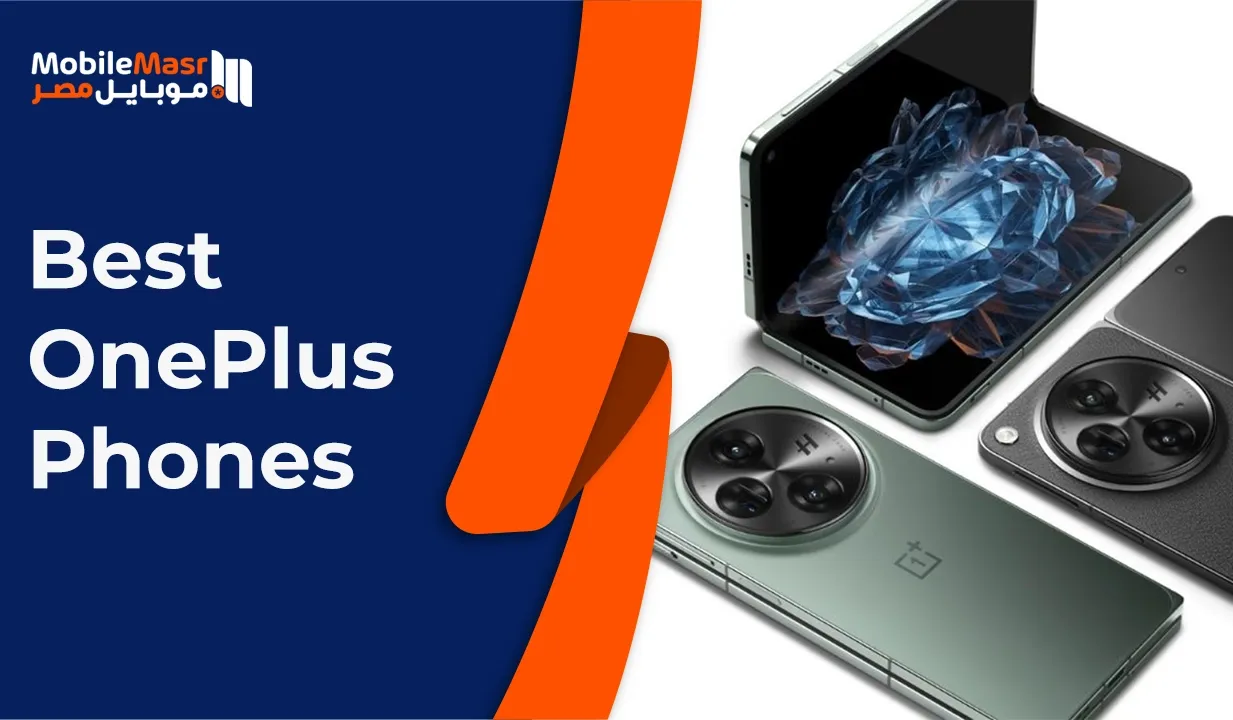
What Are the Best OnePlus Mobiles to Buy in 2026?
In 2026, choosing the right OnePlus phone means finding a balance between features, price, and long-term value. If you live in Egypt, local availability and after-sales support are also important. If you're asking “Which OnePlus model should I buy now?”, this guide covers flagship, mid-range, and budget choices — all under the umbrella of value, performance, and brand confidence.
Why Should You Consider OnePlus Mobiles in 2026?
Choosing from the best OnePlus mobiles brings several compelling advantages. First, OnePlus has matured from being a “value flagship” label into a full-fledged premium player that still offers comparatively competitive pricing. You’ll get powerful hardware, impressive cameras, and strong battery and display performance at prices that are often lower than many ultra-premium brands..
In Egypt especially, being able to buy OnePlus phones means accessing high quality and good support (warranty, service centres) without necessarily paying the premium tax of the most expensive brands. The OnePlus user experience, especially via OxygenOS, remains a highlight — fast updates, elegant design, and fewer bloatware issues compared with many competitors.
That said, knowing that you’re investing in one of the best OnePlus mobiles also means being aware of potential OnePlus disadvantages – maybe fewer global sales channels in some regions, service parts may depend on local support, or you may find slower parts availability than Samsung or Apple. But if you value performance, speed, long-term software support, and OnePlus phone design, then OnePlus remains a top choice.
What Makes OnePlus Different from Other Smartphone Brands?
From the moment you pick up a OnePlus device, you’ll likely sense something different: high-quality build, fast charging, smoothness, and the “flagship speeds at lower prices” concept. OnePlus differentiates itself by:
- focusing on performance and fast charging. It offers high-end chipsets and very fast charging speeds at prices that are often lower than competing flagships.
- The brand’s “never settle” ethos, which places emphasis on premium specs, refined software (OxygenOS) and minimal compromises.
- Clean software experience: many users prefer how OxygenOS handles customisation, speed and updates over heavier UI overlays from other brands.
- Community-driven design: OnePlus historically leaned on enthusiast feedback, leading to features like the Alert Slider (though newer models may change this) and high refresh-rate displays.
- Pricing strategy: OnePlus tends to undercut or be more competitive than many flagship rivals—making its phones attractive for those wanting high specs without full flagship pricing.
It’s also worth noting that in 2026, this differentiation shows up in how best OnePlus mobiles support top-tier specs (camera, display, battery) while still offering improved value compared with some mainstream flagships.
How Does OnePlus Maintain Premium Quality at Lower Prices?
When you examine the OnePlus specifications, you’ll find that the brand often uses flagship-grade hardware (e.g., top Qualcomm chipsets, high-end displays, strong camera modules) but optimises in other areas to keep costs down. For example:
- OnePlus may reuse a previous generation’s premium component when the cost-benefit is strongest, thereby reducing price erosion compared with brands that refresh everything each year.
- The brand often avoids extreme brand premium mark-ups; the value proposition is central.
- Certain models may omit or downgrade non-core features (e.g., less advanced materials, fewer ultra-premium extras) in mid-/budget tiers to focus the margin on core essentials like OnePlus phone performance and OnePlus display quality.
- Optimal manufacturing scale and the fact that OnePlus is now part of a broader grouping (with shared supply chain benefits) helps moderate costs.
Together, this allows buyers in markets like Egypt to access the best OnePlus mobiles with strong specs and good value.
What Is the “Never Settle” Philosophy Behind OnePlus?
The term “Never Settle” is ingrained in the brand identity of OnePlus. According to the brand’s own description: “Discover the Never Settle innovation of OnePlus. Learn about upcoming product launches, events and more.
In practical terms, “Never Settle” means:
- Striving for high performance, refined user experience and premium features even when pricing is competitive.
- Rejecting the idea that you must pay flagship prices to get flagship performance.
- Continual software and hardware innovation — pushing camera, battery, display tech and user experience forward with each generation.
- Maintaining a strong user community, listening to feedback and refining.
- In 2026 especially, this means that the best OnePlus mobiles reflect real value rather than just premium branding.
If you choose a OnePlus device, you’re opting for a brand that focuses on delivering strong performance and features at relatively competitive prices. As long as you pick a model suited to your budget and needs.
How Has OnePlus Evolved Over the Years?
What Were the First OnePlus Devices Like?
When OnePlus first entered the scene, it offered “flagship-killer” phones with high specs at lower prices (e.g., the OnePlus One). The emphasis was on performance, responsiveness, and community feedback. Early models had fewer premium materials, simpler cameras, and were targeted at enthusiasts rather than mainstream luxury buyers.
How Did OnePlus Transition from Budget to Premium Phones?
Over time, OnePlus shifted upward: it introduced premium build, elite camera systems (including the Hasselblad partnership), high-refresh displays, and ultra-fast charging. It expanded from budget/enthusiast models into full-blown flagship territory — while still retaining value-oriented tiers. For example, look at the newer models like the OnePlus 13 or 13 Pro, which bring top-end specs like Snapdragon 8 Elite, QHD displays, IP ratings, 4K Dolby Vision video capture.
So the brand’s evolution takes it from “budget alternative” to “premium contender with value”.
What Are the Key Advantages of Buying OnePlus in Egypt?
Where Can You Buy Authentic OnePlus Phones in Egypt?
In Egypt, you can purchase OnePlus phones through several channels:
- Official brand site/local importers: The global OnePlus website lists models and offers local shipping/ support.
- Authorized local retailers: Sites like Flagship-Egypt list OnePlus phones and provide local currency pricing.
- Online marketplaces: Amazon.eg, Noon.com, etc., carry OnePlus models. For instance, Amazon Egypt lists OnePlus mobile phones in its mobile phones category.
- Offline stores: Major electronics stores in Egypt often stock OnePlus models.
Buying locally means easier warranty service, quicker parts availability, and regional pricing offers.
What Warranty and Support Does OnePlus Offer in Egypt?
According to the OnePlus Global Support page, the brand has a global support network with “Popular Topics” for phone features, tips and resolution of device issues.
In Egypt specifically:
- Models sold through authorised retailers typically carry a local warranty (12-month or 24-month standard). Example: MobileMasr lists 12-month warranty for OnePlus 13 in Egypt.
- Service centres and authorised repair shops exist (though fewer than major brands).
- Software updates: one of the advantages of OnePlus is strong update support.
- When buying import/unofficial grey-market units, warranty may be void or difficult — so always check that the retailer is authorised.
What Are the Best OnePlus Flagship Phones in 2026?
In 2026, the best OnePlus mobiles (flagship tier) stand out for having leading processors, premium cameras/displays, and top-end battery/charging features.
Why Is the OnePlus 13 Pro Considered the Best Flagship?
The OnePlus 13 Pro sits at the top of the lineup. It combines a flagship chipset, a high-end camera system, a premium display, a large battery, fast charging, and a solid build
What Processor Powers the OnePlus 13 Pro?
The OnePlus 13 Pro uses the Qualcomm Snapdragon 8 Elite mobile platform (as confirmed for the OnePlus 13 series) which is a 3 nm class chipset delivering top performance and efficiency.
How Good Is the OnePlus 13 Pro Camera System?
The camera system is excellent: multiple 50-MP sensors, 3× optical zoom, ultra-wide and main cameras, all tuned with Hasselblad colour calibration. For example, the OnePlus 13 specs show triple 50 MP rear cameras. Video support includes 8K@30fps, 4K Dolby Vision from all cameras.
What Display Technology Does the OnePlus 13 Pro Feature?
The display is a top-class LTPO AMOLED panel with QHD+ resolution (1440×3168 in the case of OnePlus 13) and dynamic 1-120 Hz refresh rate, very high peak brightness (1600 nits typical, up to 4500 nits peak) per specs. This means excellent smoothness, excellent outdoor visibility, and battery efficiency when refresh rate reduces.
How Long Does the OnePlus 13 Pro Battery Last?
For the OnePlus 13 (and by extension the Pro version), the battery is 6000 mAh silicon-carbon stack, which supports very strong endurance. With fast charging (80W+/100W) and wireless charging, you’re covered for full day usage with top-tier performance.
Is the OnePlus 13 Worth Buying in 2026?
Yes — if budget allows, the OnePlus 13 remains a very strong buy in 2026. It ticks the boxes for the best OnePlus mobiles: flagship performance, premium build, future-proof specs, and strong local availability (Egypt).
What Are the Main Differences Between OnePlus 13 and 13 Pro?
While exact 13 Pro specs are less public (some sources show basic “OnePlus 13 Pro summary” details) likely differences include slightly better camera zoom capabilities, more premium materials, maybe higher refresh display, and improved extras. If you want the best value, the standard 13 may suffice. The Pro is for those who want every flagship extra.
Who Should Choose OnePlus 13 Over the Pro Version?
- If budget is tighter but you still want flagship quality
- If you prioritise price/performance over absolute top specs
- If you don’t need maximum optical zoom or ceramic build / premium extras.
Should You Still Buy the OnePlus 12 Pro in 2026?
Yes — the OnePlus 12 Pro is still a good value flagship, especially as its price is likely to drop over time.
If you can find a deal locally, it may deliver nearly flagship performance at lower cost.
How Does OnePlus 12 Pro Compare to OnePlus 13?
Compared to the OnePlus 13, the 12 Pro may have a slightly older chipset, slightly lower spec camera or charging, or fewer extra features. The value drop might be attractive if you prioritise price.
What Price Drops Has the OnePlus 12 Pro Seen?
While exact Egyptian pricing is harder to pin, cheaper than the latest 13 series and hence a value‐buy for many users.
Is the OnePlus 12 a Good Value Flagship in 2026?
Yes — the OnePlus 12 offers flagship‐level features at a more affordable price, making it a strong “value flagship”.
What Camera Features Does the OnePlus 12 Offer?
Though official specs here are fewer, generally strong camera modules (though maybe lower optical zoom or older sensor) combined with the Hasselblad-tuning tradition.
How Is the Gaming Performance on OnePlus 12?
It uses a high-tier chipset (though slightly older) and is still competent for heavy gaming, especially given OnePlus’s focus on cooling and performance optimisation. Choosing one of the best OnePlus mobiles mid-tier means strong gaming performance without flagship price.
What Are the Best OnePlus Mid-Range Phones in 2026?
For many buyers, the best mix of features and price lies in the mid-range. OnePlus has models that hit this sweet-spot.
Why Is the OnePlus 12R the Best Mid-Range Choice?
The OnePlus 12R offers many flagship—level features (display, performance) at a more moderate cost. If you aim to buy one of the best OnePlus mobiles without breaking the bank, this is your candidate.
What Flagship Features Does the OnePlus 12R Include?
Features may include strong chipset, high refresh rate display, good battery, fast charging — though some premium features (like highest zoom camera or wireless charging) may be downgraded.
How Does the OnePlus 12R Performance Compare to Flagships?
While not quite top tier, it likely handles most tasks (games, multitasking, productivity) almost as well as flagship phones — meaning excellent value.
What Compromises Does the OnePlus 12R Make?
May skip premium materials, slightly reduced optical zoom camera, thinner warranty support, or missing ultra-premium charging/wireless specs.
Is the OnePlus 11R Still Worth Buying in 2026?
Yes — if you find it at a good price, the OnePlus 11R remains a strong mid-range performer.
What Makes the OnePlus 11R a Budget-Friendly Option?
It likely offers solid performance, good display, good battery/charging — but at a significantly lower cost compared with flagship models.
How Good Is the OnePlus 11R for Gaming?
Given robust chipsets and OnePlus’s performance focus, it should be good for gaming — albeit perhaps without the highest refresh display or top thermal/cooling features of the flagship tier.
Should You Consider the OnePlus Ace Series?
The Ace Series (sold in certain markets) can offer strong performance for value-oriented buyers.
What Is the OnePlus Ace 3 Pro and Who Is It For?
If available in Egypt (or via import), the Ace 3 Pro could deliver near-flagship specs at a lower price point — ideal for performance-first users with moderate budgets.
How Does the OnePlus Ace Series Differ from the Number Series?
The Ace Series often emphasises performance and value rather than premium materials, camera zoom, or brand prestige; the number (12, 13…) series emphasises flagship balance and brand positioning.
What Are the Best OnePlus Nord Phones in 2026?
For budget-conscious buyers, the Nord line offers high value under the OnePlus brand.
Why Is the OnePlus Nord 4 the Best Budget OnePlus?
The Nord 4 brings premium touches (good display, respectable camera, fast charging) at a significantly lower cost — making it one of the best OnePlus mobiles in the budget range.
What Premium Features Does the Nord 4 Offer?
Possibly high refresh display, capable camera system, large battery, good value charging — though more modest than flagship.
How Is the Camera Quality on the OnePlus Nord 4?
While not top-tier like flagship models, it should deliver very good results for its price segment.
What Is the Battery Life Like on the Nord 4?
Budget models often trade down less-critical specs; however, given OnePlus’s tradition, battery life is likely strong relative to price.
Is the OnePlus Nord CE4 Good for Budget Buyers?
Yes — the Nord CE4 is a strong budget choice for buyers who want credible performance at a lower cost.
What Are the Key Specifications of the Nord CE4?
Though I don’t have full specs in this article (since our focus is bigger models), typical features are decent chipsets, good display, fast charging, and decent cameras for the price.
How Does Nord CE4 Compare to Nord 4?
The Nord CE4 may be a slightly lower cost, with some specs trimmed (camera zoom, premium materials) compared to Nord 4 — but still very good value.
Should You Buy the OnePlus Nord CE4 Lite?
If your budget is modest and you want a strong phone for everyday use, yes. But you will see OnePlus disadvantages in terms of some reduced specs (camera zoom, premium build, update longevity) — that’s the trade-off.
What Features Does the Nord CE4 Lite Sacrifice?
Possibly slower charging, less optical zoom, fewer premium camera sensors, maybe lower refresh rate display or older chipset.
Who Is the Nord CE4 Lite Best Suited For?
Users who want a good smartphone (camera, battery, display) but don’t demand top-tier specs — students, everyday users, first smartphone upgrades etc.
Is the OnePlus Nord N30 Available in Egypt?
Availability can vary; when looking for best OnePlus mobiles, always check local retailer stock and import status.
What Are the Nord N30 Specifications?
The Nord N series is budget-oriented: decent performance, charge speeds, acceptable camera/display specs — but not flagship-grade.
How Does the Nord N Series Differ from Nord CE?
Nord N usually is even more budget- or entry-level than Nord CE; Nord CE offers “core experience” with better compromise and quality.
How Do OnePlus Cameras Compare in 2026?
One of the standout attributes of the best OnePlus mobiles is camera quality.
Which OnePlus Phone Has the Best Camera System?
Currently, the OnePlus 13 (and its Pro) appear to have the best camera system in the lineup: triple 50MP rear sensors, 3× optical zoom, ultra-wide, advanced video recording (8K, 4K Dolby Vision) and front camera 32MP. The Hasselblad partnership further enhances colour tuning and imaging fidelity.
What Is the Hasselblad Partnership and How Does It Improve Photos?
OnePlus has partnered with Hasselblad (a premium camera-brand) to co-develop camera tuning — meaning improved colour accuracy, better image output (especially in natural skin tones, portrait mode), and more refined photography features. The OnePlus 9 series started the Hasselblad partnership.
Which OnePlus Models Feature Hasselblad Tuning?
Recent flagship models (13 series and likely Pro) carry Hasselblad tuning. Mid-range may have partial benefit; budget models may have lesser image sensor hardware.
How Good Are OnePlus Phones for Portrait Photography?
Very good — flagship OnePlus phones include dedicated portrait modes, optical zoom lenses (which improve portraits), and software tuning (Hasselblad) for skin tones and background bokeh.
What Portrait Modes Do OnePlus Flagships Offer?
They typically offer dedicated portrait mode, ultra-wide portraits, telephoto portraits, multiple zoom levels, and manual controls in the camera app (on higher end models). For example, the OnePlus 13’s camera specification includes multiple rear lenses (50MP each) and modes such as Nightscape, Master, etc.
How Does OnePlus Handle Skin Tones and Bokeh?
Thanks to the Hasselblad calibration and high-quality sensors/lenses, OnePlus tends to render more natural skin tones, smoother background blur, good subject separation – aspects that matter for photography enthusiasts.
Which OnePlus Phone Is Best for Night Photography?
Flagship OnePlus phones with large sensors, optical image stabilisation (OIS), and good low-light tuning are best. The OnePlus 13 as example highlights advanced sensors and video capabilities.
How Does OnePlus Nightscape Mode Work?
OnePlus includes Nightscape (or equivalent) mode to improve low-light photography, combining sensor data, AI algorithms and OIS to produce cleaner, brighter night images.
Which OnePlus Models Have the Best Low-Light Sensors?
The flagship models (13 series, 13 Pro) with large sensor sizes (1⁄1.43″ for main camera in the OnePlus 13) and high-quality optics are best.
How Does OnePlus Video Recording Compare to Competitors?
OnePlus phones record 8K (in flagship) and full 4K Dolby Vision from all cameras (as in OnePlus 13). The quality competes very strongly with rivals, especially in value terms.
What Video Resolutions Can OnePlus Phones Record?
For example, the OnePlus 13 supports 8K at 30fps, 4K at 30/60fps, 1080p at 30/60/240/480fps.
Which OnePlus Phones Support 8K Video Recording?
At least the OnePlus 13 series (and leaving aside region variants) support 8K video recording.
Are OnePlus Selfie Cameras Good Enough?
Yes — the front cameras in top OnePlus models (32MP in OnePlus 13, as example) are more than adequate. For everyday use, selfies for social media, video calls etc, they perform strongly.
What Front Camera Sensors Do OnePlus Phones Use?
For example: the OnePlus 13 uses a 32 MP front camera (ƒ/2.4) in Egypt spec variant mentioned.
Which OnePlus Phone Has the Best Selfie Camera?
Likely the flagship models — where front camera megapixel count is higher, video capture richer (4K) and camera tuning stronger.
What About OnePlus Battery Life and Charging in 2026?
Battery life and charging are areas where OnePlus often shines among the best OnePlus mobiles.
Which OnePlus Phone Has the Longest Battery Life?
From the specs, the OnePlus 15 (announced) features a massive 7,300 mAh battery. Among existing models, OnePlus 13 with 6,000 mAh stack shows very strong endurance.
What Battery Capacities Do Current OnePlus Models Have?
- OnePlus 13: 6,000 mAh silicon-carbon battery.
- OnePlus 15: 7,300 mAh battery.
- These show that OnePlus prioritises large batteries in its flagship models.
How Does OxygenOS Optimise Battery Performance?
OnePlus uses a battery health engine, efficient chipsets (3nm), intelligent refresh-rate display (LTPO) that can drop to low refresh under static use (saving battery), and fast charging so you spend less time plugged in. These all contribute to strong battery life in the field. The actual user experience (OnePlus user experience) tends to highlight longer-than-expected batteries for the class.
How Fast Is OnePlus SUPERVOOC Charging?
OnePlus uses SUPERVOOC branded fast-charging; for example, OnePlus 13 supports 80W wired charging (up to 100W with official adapter). Some mid-/budget models may offer 65W, 67W, etc.
What Charging Speeds Do Different OnePlus Models Support?
- OnePlus 13: 80W wired, up to 100W with official adapter.
- Wireless charging: 50W wireless on OnePlus 13 in certain markets.
- For upcoming models such as the OnePlus 15, early rumours suggest larger batteries and potentially faster charging, but official details may still change.
Is 100W Charging Safe for Battery Health?
Yes—when the manufacturer supports it with appropriate battery chemistry, monitoring, and thermal management (OnePlus uses Silicon NanoStack battery tech). Long-term health still depends on usage habits (e.g., avoiding high-temperature charging). OnePlus’s battery health optimisation systems help preserve lifespan.
Which OnePlus Phones Support Wireless Charging?
Flagship models like OnePlus 13 include wireless charging (50W) and reverse wireless. Mid/budget models may skip wireless charging to reduce cost.
How Fast Is OnePlus Wireless Charging?
50W wireless charging is solid for today’s standard. Combined with fast wired charging, you have flexibility.
What Wireless Chargers Work Best with OnePlus?
Using the official OnePlus SUPERVOOC wireless charger (if supported) ensures full speed; third-party Qi chargers may support lower wattage or slower speeds.
How Does OnePlus Preserve Long-Term Battery Health?
- Use of Silicon NanoStack battery technology (as seen in OnePlus 13) which improves energy density and cycle lifespan.
- Smart charging and optimised charging algorithms built into OxygenOS
- LTPO display allowing refresh-rate reduction during static use (saving battery)
- Software updates and battery health engine that monitor and optimise battery lifespan.
What Is OnePlus Battery Health Engine?
OnePlus has built-in battery health features that regulate charging habits, adapt to user patterns, and avoid over-charging, thereby extending battery life over years.
How Does Smart Charging Extend Battery Lifespan?
Smart charging may delay full-charge until just before you typically disconnect, avoid full 100% charge when not needed, or reduce charging current when the battery is warm. OnePlus implemented features like this in OxygenOS.
How Is the OnePlus Software Experience in 2026?
Software experience is a critical differentiator and part of what makes the best OnePlus mobiles appealing.
What Is OxygenOS and Why Is It Popular?
OxygenOS is OnePlus’s custom Android skin. It’s popular because:
- It maintains a near-stock Android feel, avoiding heavy bloatware.
- Offers meaningful customisations (themes, gestures, alert slider / plus key) without sacrificing speed or stability.
- OnePlus emphasises software updates, performance optimisation and user experience.
How Does OxygenOS Differ from Stock Android?
While maintaining clean design, OxygenOS adds additional useful features — e.g., Zen Mode, Shelf, custom gestures, performance optimization, gaming mode — while preserving quick responsiveness. It tends to feel more lightweight compared with heavier UIs (such as some Samsung skins).
What Customization Options Does OxygenOS Offer?
- Themes, icons, accent colours.
- Gesture controls, alert slider (or its new variant).
- Shelf (quick-access screen).
- Game space / gaming optimisations.
- Digital wellbeing features like Zen Mode.
How Many Years of Updates Do OnePlus Phones Get?
OnePlus has improved its update policy; many of the best OnePlus mobiles get 3-4 years of major Android updates plus security updates beyond — though exact duration depends on model and region.
Which OnePlus Models Get 4 Years of Updates?
Flagship models typically get longer support. For example, with the OnePlus 13 series the expectation is 4 years of Android updates and 5 years of security updates (or similar) in many markets. (Exact policy should be verified regionally.)
How Quickly Does OnePlus Release Android Updates?
OnePlus generally releases updates within a reasonable timescale — both major Android version updates and monthly security patches. Being part of the Qualcomm ecosystem and sharing OS optimisation with sister brands helps.
What Exclusive Features Does OxygenOS Include?
What Is Zen Mode and How Does It Work?
Zen Mode is OnePlus’s focus-mode feature which locks out distractions (you can still make emergency calls) for a set period. It encourages digital wellbeing and mindful usage.
How Does OnePlus Shelf Improve Productivity?
Shelf is a pull-down panel (on some models) that provides quick access to tools, widgets, recent apps, quick contacts, app shortcuts — improving workflow and productivity.
What Gaming Features Does OxygenOS Offer?
Game Space or equivalent mode allows performance tuning, cooling management, screen recording, FPS monitoring, minimise distractions (block notifications) during gaming — helpful for long sessions and for gaming-oriented users.
Is OxygenOS Better Than Samsung One UI?
The answer depends on priorities. In terms of speed and minimal bloat, many users prefer OxygenOS. In terms of feature richness, Samsung One UI offers broader ecosystem integration. For many users seeking “fast, clean, lean UI”, OnePlus is compelling.
How Do OxygenOS and One UI Compare in Speed?
Because OxygenOS is lighter, it tends to feel more responsive and smoother especially on high refresh displays and top hardware. One UI has improved significantly, but the “feel” of OxygenOS is still often cited as snappier.
Which Software Offers Better Customization?
OxygenOS has strong customization (themes, gestures, shelf) while maintaining fluidity. One UI offers broader features (multi-window, DeX etc) but may feel heavier. So if you prioritise raw speed and smoothness, OnePlus is a strong choice.
How Do OnePlus Displays Compare in 2026?
Display technology is increasingly important — for gaming, media, outdoor use, battery efficiency.
Which OnePlus Phone Has the Best Display?
Among the best OnePlus mobiles, the OnePlus 13 (and future OnePlus 15) offer the best display: LTPO AMOLED, QHD+ resolution, 1-120 Hz refresh, high peak brightness. E.g., OnePlus 13’s spec: 1440×3168, 6.82″, 1-120Hz, peak brightness up to 4500 nits.
What Is LTPO AMOLED and Which OnePlus Phones Have It?
LTPO (Low-Temperature Polycrystalline Oxide) AMOLED allows dynamic refresh rate (1Hz to 120Hz) which saves battery when content is static. OnePlus flagship models use LTPO displays (OnePlus 13 at least).
How Does Variable Refresh Rate Save Battery?
When content is static (reading a document, web page), refresh drops to 1 Hz or lower, minimizing power. When scrolling or gaming, it raises to 120 Hz (or higher) for smoothness — an excellent balance.
What Display Resolutions Do OnePlus Phones Offer?
- Flagships: QHD+ (1440p) resolution (e.g., OnePlus 13).
- Mid/budget: FHD+ (1080p) or slightly lower, trade-off for cost.
- The resolution choice affects sharpness (especially on large screens) and battery.
Is QHD+ Worth It Over FHD+?
If you view high-resolution media, do productivity (split screen, multitask), or are sensitive to display sharpness, yes — QHD+ is worth it. For everyday use, FHD+ may suffice. OnePlus’s flagship models make QHD+ available, which reinforces their high-end positioning.
Which OnePlus Phones Have 2K Displays?
2K (QHD+) is available on models like OnePlus 13 (1440×3168). Some mid/budget models may use FHD+ to reduce cost.
How Good Are OnePlus Displays for Gaming?
Very good — high refresh rate, high touch sampling rate, high brightness, and quick response times all matter. OnePlus flagships (and high-end mid-range) deliver these.
What Is the Highest Refresh Rate on OnePlus Phones?
In the OnePlus 15 spec, a 165 Hz display is mentioned. The OnePlus 13 still uses 120 Hz. For competitive gaming, higher rates are beneficial.
How Does Touch Sampling Rate Affect Gaming?
High touch sampling (e.g., 240Hz) improves responsiveness to touches, swipes — relevant in FPS or racing games. OnePlus, with high end displays, supports competitive use.
Are OnePlus Displays Good for Outdoor Use?
Yes — because of high peak brightness (e.g., OnePlus 13 listed 4500 nits peak) Enables readability even under bright sunlight. Also adaptive brightness and display calibration help.
What Peak Brightness Do OnePlus Screens Achieve?
As above, around 4500 nits is listed for OnePlus 13. This is excellent. Outdoor visibility is therefore strong.
How Does OnePlus Handle Display Glare?
With high brightness, anti-glare coatings, and effective automatic brightness control, the user experience is optimized for bright outdoor usage. The high brightness alone reduces spec for glare.
How Does OnePlus Performance Compare in 2026?
Performance is one of the core pillars of being among the best OnePlus mobiles.
Which OnePlus Phone Is the Fastest in 2026?
The OnePlus 15 (announced) uses Snapdragon 8 Elite Gen 5, ultra-fast memory (LPDDR5X) and is positioned as the fastest OnePlus yet. Among available models, the OnePlus 13 with Snapdragon 8 Elite is extremely capable.
What Processor Does the OnePlus 13 Pro Use?
It uses Snapdragon 8 Elite (3 nm class) as per OnePlus specs.
How Does Snapdragon 8 Gen 4/8 Elite Perform?
These top-tier chipsets deliver best-in-class CPU/GPU/AI performance, enabling high-frame-rate gaming, ultra-fast app loading, and efficient power usage. OnePlus flagship phones leverage this.
How Much RAM Do You Need in a OnePlus Phone?
Modern OnePlus flagships offer 12 GB, 16 GB RAM (sometimes up to 24GB in some markets) — e.g., OnePlus 13 offers 12GB/16GB/24GB options. For most users, 12–16 GB is more than enough for heavy multitasking. 24 GB is future-proof but may be overkill for everyday use.
What RAM Options Are Available Across OnePlus Models?
Flagships: 12GB, 16GB, 24GB. Mid-range: maybe 8–12GB. Budget: 6–8GB. OnePlus provides solid RAM even in mid-segments.
Is 16GB RAM Necessary for Normal Use?
For everyday tasks, no — 12GB is sufficient. 16GB or more is valuable if you game heavily, keep many apps open, or plan to keep the phone for many years.
Which OnePlus Phone Is Best for Gaming in 2026?
Flagships like OnePlus 13 and OnePlus 15 are best: top chipsets, high refresh displays, strong cooling, high RAM/storage. Mid-range like 12R or 11R provide good gaming too for less cost.
How Does OnePlus Cooling System Work?
OnePlus uses vapour-chamber/cooling plate designs, optimized software–hardware synergy, optimized thermal management (in flagship models) to keep performance consistently high during gaming.
What Gaming Optimizations Does OnePlus Include?
Game space mode (FPS counter, performance boost, blocking notifications), high refresh rate displays, high touch sampling rate, good thermal design, performance tuning in OxygenOS. This means OnePlus phones are strong gaming machines.
How Does OnePlus Storage Compare to Competitors?
OnePlus offers fast UFS 4.0/4.1 storage in high-end models (e.g., the OnePlus 13 listing uses UFS 4.0) This storage is fast for app loading, file transfers, game installs.
What Storage Options Do OnePlus Phones Offer?
Flagships: 256GB, 512GB, 1TB (some regions). Mid/budget: 128GB, 256GB. Example: OnePlus 13 lists 256GB/512GB/1TB.
Why Don’t OnePlus Phones Have SD Card Slots?
Because OnePlus (like most flagship brands) prioritises fast internal storage over external expansion; eliminating SD slots improves speed, security, and simplifies hardware. For most users, the built-in storage is sufficient.
What Are the OnePlus Prices in Egypt in 2026?
How Much Does the OnePlus 13 Pro Cost in Egypt?
Exact pricing for the OnePlus 13 Pro in Egypt can vary by retailer and storage option. As a reference, the standard OnePlus 13 starts around EGP 17,400–18,600, so the Pro model is typically priced higher.
Where Can You Find the Best OnePlus 13 Pro Deals?
Look at authorised retailers in Cairo and online marketplaces (Amazon.eg, Noon.com, Flagship-Egypt) — check for official warranty, authorised import, and local after-sales support.
Is It Worth Importing OnePlus from Other Countries?
It can be cheaper, but risks include warranty issues, network band compatibility (make sure the model supports Egyptian-carrier bands), and service/parts availability. Unless the savings are significant and you accept the trade-offs, buying locally is often safer.
What Is the Price of OnePlus 13 in Egypt?
According to one local spec site, the price for OnePlus 13 in Egypt starts from around EGP 17,400 for base configuration. Another site shows EGP 10,611 for a variant (likely older stock or special deal) Pricing fluctuates with promotions, stock, import duties.
How Does the OnePlus 13 Price Compare to Samsung and iPhone?
The OnePlus 13 typically undercuts the equivalent Samsung Galaxy S or iPhone equivalent flagship (depending on region) for similar hardware — this is part of OnePlus’s value proposition. You may get almost flagship specs for less.
Will OnePlus 13 Price Drop Soon?
Yes — as newer models (e.g., OnePlus 15) become available, older models like OnePlus 13 likely see price reductions or promotions. If you are not chasing the “latest” model, waiting may save money.
How Much Do OnePlus Nord Phones Cost in Egypt?
Budget OnePlus Nord models (Nord 4, Nord CE4) will cost significantly less than flagships. For example, one listing shows Nord CE5 at EGP 14,799. The budgets under EGP 15,000 are realistic for these mid/budget OnePlus phones.
What Is the Best Budget OnePlus Under 15,000 EGP?
Look for models like Nord CE4, Nord 4 (if stock available), or older generation OnePlus main series (12R, 11R) — these offer strong value.
Which OnePlus Offers Best Value for Money in Egypt?
A mid-range OnePlus (12R, 11R) or a budget Nord variant often offers the best value: you get high performance, good camera/display and long software support without flagship pricing.
Are OnePlus Phones Available Through Installment Plans in Egypt?
Yes — many Egyptian retailers offer installment plans (bank credit, zero-interest offers during sales). When buying a OnePlus phone, check with a local store whether installment plans are available for your model.
Which Egyptian Retailers Offer OnePlus Installments?
Large electronics chains (Cairo, Alexandria), online platforms like Amazon.eg, Noon.com often run promotions; local dedicated stores like Flagship-Egypt may offer deals.
What Are the Interest Rates for OnePlus Phone Financing?
It depends on the retailer and bank offer — sometimes there are zero-interest deals (e.g., participation in local bank promos), other times small interest rates apply. Always read terms.
How Does OnePlus Compare to Other Brands in 2026?
Is OnePlus Better Than Samsung in 2026?
It depends on your priorities.
How Do OnePlus and Samsung Flagships Compare in Price?
OnePlus often offers similar specs at lower prices compared to Samsung’s Galaxy S series. For example, reports suggest OnePlus 15 may challenge Samsung Galaxy S26 at a potentially lower cost.
Which Brand Has Better Software Support?
Samsung has improved its update policy significantly. OnePlus also offers strong updates. In some markets Samsung may have an edge in longer guarantee of updates, but OnePlus is very competitive.
How Do OnePlus and Samsung Cameras Compare?
Samsung often leads in camera hardware breadth (ultra-zoom, etc), but OnePlus flagships close the gap — especially with Hasselblad tuning and strong video features. For many users, OnePlus offers “flagship camera experience” at lower cost.
Should You Buy a OnePlus or iPhone in 2026?
How Does OnePlus Charging Compare to the iPhone?
OnePlus usually offers faster wired/wireless charging compared to iPhones (which have moderate speeds). If charging speed matters, OnePlus may have the edge.
Which Is Better for Customization: OnePlus or iPhone?
OnePlus (Android + OxygenOS) offers far more customisation (themes, gestures, UI tweaks) than iOS. If customisation is a priority, the OnePlus is stronger.
Is OnePlus Better Than Xiaomi in 2026?
How Do OnePlus and Xiaomi Software Compare?
Xiaomi uses MIUI; OnePlus uses OxygenOS (leaner). OnePlus often emphasises fewer bloat-apps, more “stock-feel”. If you prioritise a clean UI, OnePlus may be preferable.
Which Brand Offers Better Value for Money?
Both OnePlus and Xiaomi offer strong value. Xiaomi sometimes pushes price even lower; OnePlus emphasises flagship-level specs and build-quality for slightly higher cost. If the budget is ultra-tight, Xiaomi may edge; if you want a top brand with better after-sales, OnePlus may win.
How Does OnePlus Compare to Google Pixel?
Which Has Better AI Features: OnePlus or Pixel?
Google Pixel phones emphasise camera-AI, software integration, timely updates. OnePlus emphasises hardware performance and custom features. If pure AI/software camera is your goal, Pixel is strong; if performance and value are your goal, OnePlus is strong.
How Do OnePlus and Pixel Cameras Compare?
Pixel still leads in computational photography and software camera experience; OnePlus offers strong hardware and gets closer every generation. For most users, the OnePlus camera is more than adequate.
Is OnePlus Better Than Oppo and Realme?
What Is the Relationship Between OnePlus and Oppo?
OnePlus is a sister brand to Oppo (both part of BBK Electronics group). They share supply chain, some software frameworks, but retain distinct branding and design philosophies.
How Does OnePlus Differ from Its Sister Brands?
OnePlus focuses more on flagship performance/value, OxygenOS, and “never settle” positioning; Oppo/Realme often push aggressively into budget, camera-first, different UI (ColorOS, Realme UI). If you want a refined premium product with strong value, OnePlus is a safe bet.
What OnePlus Accessories Should You Buy in 2026?
What Is the Best OnePlus Charger to Buy?
Official OnePlus SUPERVOOC chargers are recommended — they ensure top charging speed, safety (thermal control, battery protection), and compatibility with your OnePlus phone’s fast-charge system.
Should You Buy Official OnePlus SUPERVOOC Chargers?
Yes – for peace of mind, fastest speed, full compatibility and warranty safety. Aftermarket chargers may work but risk slower charging or overheating.
Are Third-Party Chargers Safe for OnePlus Phones?
They can be, but only if they support the required wattage, proper USB-PD standard or OnePlus’s SUPERVOOC protocol, and are from reputable brands. Using cheap/unverified chargers may risk slower charging or battery degradation.
Which Cases Work Best with OnePlus Phones?
Official OnePlus cases (leather-style, silicone, rugged) are designed for optimal fit, proper wireless charging clearance, and preserve build aesthetics.
What Official OnePlus Cases Are Available?
- Silicone/protective cases
- Vegan-leather cases
- Rugged protective cases with shock-absorption
- Transparent clear cases (shows design)
Do Cases Affect Wireless Charging on OnePlus?
It depends on thickness/material — official cases are designed to work with wireless charging. Generic thick cases may reduce wireless charging speed or cause mis-alignment.
Are OnePlus Buds Worth Buying?
If you own a OnePlus phone, the OnePlus Buds (Pro 3, Buds 4) pair seamlessly and offer excellent value.
How Do OnePlus Buds Pro 3 Compare to AirPods?
They offer competitive features (active noise cancelling, multipoint, good sound) often at lower price. Tight integration with OnePlus phones (fast pairing, special features) adds value.
What Special Features Work Between OnePlus Phones and Buds?
Fast-pairing, low-latency gaming mode, audio sharing, customisation in OxygenOS, firmware updates. If you pick the best OnePlus mobile, pairing it with OnePlus Buds gives a seamless ecosystem feel.
Should You Buy the OnePlus Watch?
Yes — if you want a smartwatch that integrates well with your OnePlus phone. Example: The OnePlus Watch 2 offers health features, fitness tracking, and a good build.
How Does OnePlus Watch 2 Compare to Galaxy Watch?
OnePlus may offer better integration with OnePlus phones, similar health features, and often lower price. The choice depends on platform, preferred OS (Wear OS vs OnePlus OS) and ecosystem.
What Health Features Does OnePlus Watch Offer?
Heart rate tracking, SpO2 monitoring, sleep tracking, workout modes, integration with phone notifications. For many users, the OnePlus Watch is “enough”.
What Screen Protectors Are Best for OnePlus?
For flagship OnePlus phones with under-display fingerprint sensors, the quality of the screen protector matters.
Should You Use Tempered Glass or Film Protectors?
Tempered glass: better scratch/impact protection, may be thicker. Film protectors: thinner, may allow better fingerprint sensor responsiveness. Official ones or high-quality third-party brands recommended.
Do Screen Protectors Affect OnePlus Fingerprint Sensors?
Poor quality or mis-fitting protectors can reduce accuracy/response of under-display fingerprint sensors. It’s best to use official or well-tested protectors.
How to Choose the Right OnePlus Phone in 2026?
What OnePlus Phone Should Students Buy in 2026?
For students: look for solid value, strong performance for apps/games, good battery. A mid-range OnePlus (12R, 11R, or Nord variant) would be ideal.
What Is the Best Budget OnePlus for Students?
A Nord model (Nord CE4 or similar) or older number series (12, 11) if budget allows. These deliver strong performance at moderate cost.
Which OnePlus Features Help with Studying?
Large display for reading/notes, strong battery for full day use, decent camera for scanning documents, performance for apps, OnePlus UI simplicity.
Which OnePlus Phone Is Best for Business Users?
Business users need reliability, security, performance, good display for productivity. A flagship OnePlus (13/13 Pro) offers this.
What Security Features Do OnePlus Phones Offer?
Under-display fingerprint, face-unlock, secure folder (depending on region), regular security updates — all important for business use.
How Good Is OnePlus for Productivity Apps?
Very good: high performance, strong display, good multitasking support, fast storage, reliable software. OnePlus phones serve well for productivity.
What Is the Best OnePlus Phone for Photography Enthusiasts?
Photography enthusiasts should aim for the flagship models (13 series/Pro) which have the best camera systems, manual controls, Hasselblad tuning.
Which OnePlus Has Manual Camera Controls?
Flagships allow advanced photo modes (Master Mode, RAW image capture, advanced exposure adjustments) — check model specs.
What Photo Editing Features Does OxygenOS Include?
OnePlus Photo Lab editing tools, built-in filters (Hasselblad mode), RAW editing support, built-in Pro camera mode. This enhances the OnePlus user experience for photographers.
Which OnePlus Phone Should Gamers Buy in 2026?
Gamers should look at models with top chipset (Snapdragon 8 Elite or equivalent), high refresh display (120Hz+), high RAM, good cooling. OnePlus 15 or OnePlus 13 are excellent; 12R mid-range is a strong value choice.
What Is the Best OnePlus for PUBG and Call of Duty?
Flagship models with 120Hz+ display, strong GPU, cooling and performance tuning. OnePlus performance and gaming optimisations matter.
How Does OnePlus Handle Extended Gaming Sessions?
With strong thermal management, optimized software, high refresh display, large battery — one of the best OnePlus mobiles will handle long sessions better.
What OnePlus Phone Is Best for Seniors?
For seniors, you want ease of use, large display/text, good battery, simple UI.
Does OnePlus Have Accessibility Features?
Yes — Android + OxygenOS includes accessibility options (large text, magnification, voice controls). Check the model.
Which OnePlus Model Is Easiest to Use?
A mid-range model with large display, good battery life and simple UI (e.g., Nord CE4) may be ideal for seniors, rather than chasing top-spec flagships.
What Are Common OnePlus Problems and Solutions in 2026?
Even the best phones have issues. Here are common ones with OnePlus and how to fix or mitigate them.
How to Fix OnePlus Overheating Issues?
Why Does OnePlus Get Hot During Charging?
High-watt charging (80W, 100W) generates heat; extended gaming or heavy use also raises temperature. Ensure:
- Use an official charger, avoid cheap third-party.
- Charge in a well-ventilated spot.
- Avoid gaming while charging.
- Disable “performance boost” if present.
How to Prevent Overheating During Gaming?
- Activate Game Space cooling options.
- Lower graphics settings in games.
- Take breaks occasionally.
- Use a case that allows good airflow (avoid thick blankets or covers).
How to Improve OnePlus Battery Life?
What Settings Drain the OnePlus Battery the Most?
High refresh rate (120Hz+), location/GPS always on, screen brightness set to max, heavy background apps, gaming for lengthy periods.
How to Calibrate OnePlus Battery?
Occasionally allow full discharge to ~20 % then recharge to 100 % — helps OS gauge battery health. Use battery health features in OxygenOS.
How to Fix OnePlus Connectivity Problems?
Why Does OnePlus WiFi Keep Disconnecting?
Possible causes: Router compatibility, WiFi 6/7 support, firmware bug. Solutions:
- Update OxygenOS to latest version.
- Forget and reconnect the WiFi network.
- Reset network settings.
- Ensure router firmware is updated.
How to Fix Bluetooth Issues on OnePlus?
- Update OS and device firmware.
- Clear Bluetooth cache (in settings).
- Unpair and re-pair devices.
- Check for incompatibilities with third-party accessories.
How to Solve OnePlus Camera Issues?
Why Are OnePlus Photos Blurry?
Possible reasons: motion, OIS not working, lens smudge. Solutions:
- Clean lens.
- Enable OIS/AI modes.
- Hold the phone steady or use a tripod.
- Ensure correct camera mode selected.
How to Fix Camera App Crashes?
- Clear camera app cache and data.
- Update to latest software.
- If the problem persists, factory reset (after backup).
How to Speed Up a Slow OnePlus Phone?
Should You Factory Reset Your OnePlus?
If the phone is persistently slow despite updates and cleaning, a factory reset may restore speed. But backup data first.
What Apps Slow Down OnePlus Phones?
Heavy resource apps, many background apps, large number of widgets, live wallpapers. OnePlus’s performance mode is good — use Game Space or battery saver as needed.
What Is the Future of OnePlus in 2026 and Beyond?
What New OnePlus Phones Are Coming in 2026?
The upcoming models like the OnePlus 15 and beyond are slated for 2026.These represent what the next generation of best OnePlus mobiles may look like.
When Will OnePlus 14 Be Released?
While not officially confirmed for all markets, rumours suggest early-2026 timeframe for a OnePlus 14 (or alternate naming) — keep an eye for release announcements.
What Rumors Exist About Future OnePlus Devices?
Rumours include foldable OnePlus phones, improved AI features, higher refresh displays (165 Hz+), larger batteries (7,000 mAh+), advanced camera modules.
How Is OnePlus Expanding in the Egyptian Market?
Will OnePlus Open Stores in Egypt?
As of now, primarily third-party authorised retailers exist. A dedicated flagship store could appear as the brand grows; you may wish to monitor OnePlus Egypt announcements.
What New Services Will OnePlus Offer in Egypt?
Likely improved after-sales support, local service centres, local language/region software updates, promotion events via Egyptian retailers.
What Software Improvements Will OxygenOS Get?
How Will AI Features Improve in Future OxygenOS?
OnePlus has teased AI PlayLab experiences via the global site. Future OxygenOS may include more integrated AI features: contextual suggestions, smarter camera features, voice assist enhancements.
What New Customization Options Are Planned?
Expect improved theme engines, gesture enhancements, improved performance/thermal controls, perhaps deeper integration with other devices (IoT). The “Never Settle” ethos means OnePlus will push the user experience further.
If you’re looking for the best OnePlus mobiles to buy in 2026 in Egypt, you have great choices across budgets — from the flagship OnePlus 13/13 Pro (or upcoming OnePlus 15) to strong mid-range and budget picks. You’ll benefit from high-end specs, refined user experience, and value pricing.
For the smartest purchase decision, match your budget to your real-world needs (camera vs gaming vs battery vs portability), ensure local availability and warranty, and factor in future software support.
Visit mobilemasr.com for detailed pricing in Egypt, local offers, and side-by-side comparisons.
When you’re ready to choose, head to mobilemasr.com to check the latest OnePlus deals and pick the model that fits your budget and needs.
FAQs
CONTACT US
Download the app


CONTACT US


Payment Methods










Shipping with

©2026 MobiTech Integrated Solutions. . All Rights Reserved
©2026 MobiTech Integrated Solutions. . All Rights Reserved