
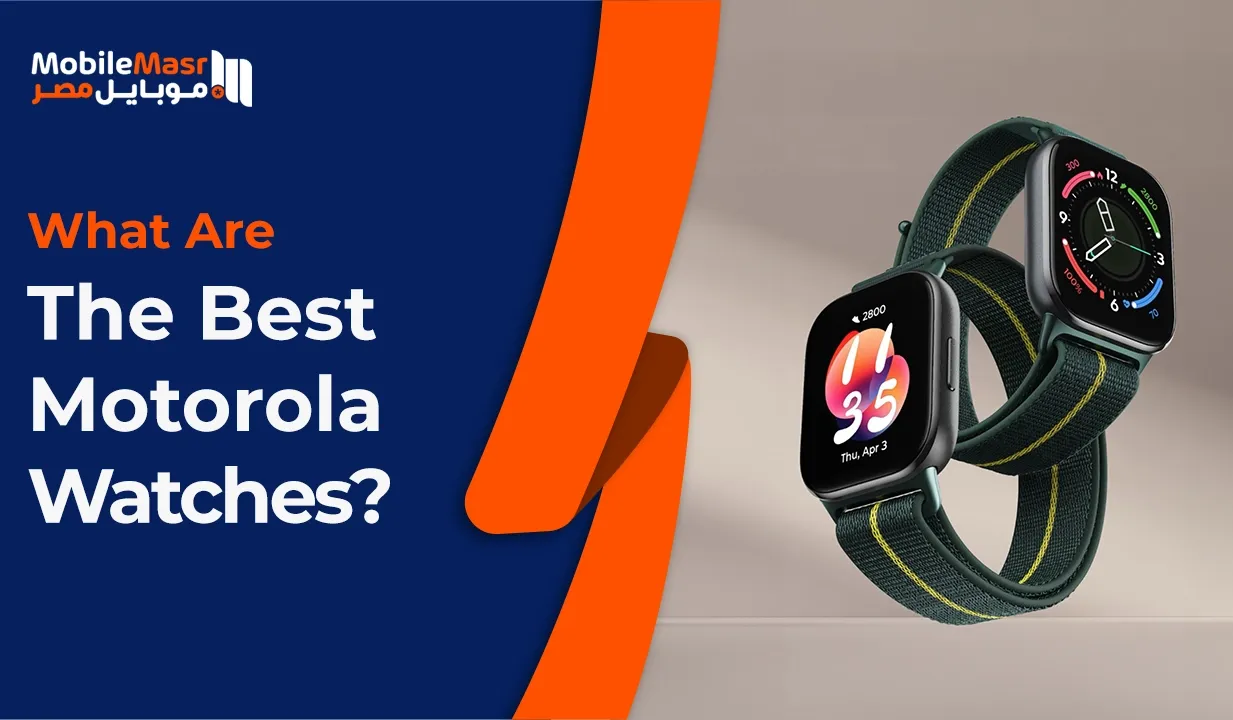
What Are the Best Motorola Watches to Buy in 2026?
What Are the Best Motorola Watches to Buy in 2026?
Motorola has a complicated but fascinating relationship with the smartwatch market. The brand that introduced millions of people to the idea of a beautiful, round-faced smartwatch through the iconic Moto 360 is now back with a refreshed lineup — and the best Motorola watches in 2026 are genuinely worth your attention. The story isn't just nostalgia. It's about a brand that has redefined what it's willing to offer at accessible price points, with a growing portfolio that spans budget fitness trackers all the way to feature-rich daily wear devices powered by one of the world's most respected fitness science companies.
If you've been searching for the right Motorola smartwatch for your wrist, this is the most comprehensive guide you'll find. Every model, every feature category, every use case — it's all here.
What Is the History of Motorola Smartwatches?
Motorola's story in wearables didn't begin in the smartwatch era — it began decades earlier with the pager and two-way radio, giving Motorola deep roots in connected wearable communication devices. But the smartwatch chapter specifically is one of the most interesting in consumer electronics history: a defining moment of early success, a long fade, a brief revival, and now a new chapter that's still being written.
How Did Motorola First Enter the Smartwatch Market?
Motorola entered the modern smartwatch market in 2014 with the original Moto 360 — a product that instantly became the defining image of what a smartwatch could look like. At a time when nearly every competitor was producing rectangular, phone-like watches with flat screens, the Moto 360 arrived with a circular face, a stainless steel case, and a traditional watch aesthetic that resonated with consumers and reviewers alike. It was announced in March 2014 and released in September of that year, running Android Wear (later renamed Wear OS).
The Moto 360 was launched at $249 and positioned as a premium product in an emerging category. The design approach was deliberate: Motorola understood that a smartwatch isn't just a gadget, it's a visible fashion accessory worn on the wrist in meetings, social situations, and everyday life. That insight drove a design-first philosophy that separated the Moto 360 from utility-focused competitors. Despite technical limitations — the first generation used an outdated Texas Instruments processor that reviewers criticized for sluggish performance — the watch became one of the bestselling Android Wear devices of its era simply because of how it looked.
What Were the Most Iconic Motorola Watch Models Before 2020?
The Moto 360 (1st Gen, 2014) set the template. The Moto 360 (2nd Gen, 2015) addressed most of the hardware criticisms — better processor, improved battery, new size options (42mm and 46mm), and Moto 360 Sport for fitness-focused buyers with GPS and a silicone case. Both generations carried the distinctive "flat tire" display — a small strip at the bottom of the circular screen occupied by an ambient light sensor — which became the watch's signature visual quirk, loved or criticized depending on the user.
The Moto 360 Sport (2015) was particularly notable as an early attempt at a fitness-focused wearable with built-in GPS, heart rate monitoring, and a scratch-resistant display. In 2016 and 2017, as Motorola's parent company Lenovo made strategic shifts, the Moto 360 line was discontinued. This left a years-long gap in Motorola's smartwatch presence during which competing brands built significant market positions.
The 2020 Moto 360 (3rd Gen) was a brief return — produced under license by a third party, running Wear OS, and targeting nostalgia buyers who remembered the original. Reviews were mixed; the hardware was solid but the licensed production model limited Motorola's direct control over software updates and long-term support. It quietly faded from the market within 18 months.
How Has Motorola's Watch Design Philosophy Evolved Over the Years?
The evolution of Motorola watch design tracks the same arc as the company itself — from a bold, design-first luxury statement to a pragmatic value-oriented proposition. The original Moto 360 was deliberately targeting premium aesthetics at a mid-range price, competing directly against expensive traditional watches in terms of appearance. The 2nd generation doubled down on customization — different sizes, different metals, different bands — to give buyers a sense of personalization that felt more like jewelry than gadgetry.
By the 2020s, Motorola (under Lenovo's ownership) pivoted toward a different strategy: mass-market accessibility over aspiration. The current Moto Watch lineup introduced in 2024–2026 maintains the round-face philosophy but uses aluminum instead of premium stainless steel or titanium, prioritizes battery life and fitness features over ecosystem richness, and prices aggressively to target the budget-to-midrange buyer who wants a capable daily wearable without flagship investment. The current Moto Watch 2026 retains echoes of the original Moto 360's DNA — circular case, stainless steel crown, clean circular OLED display — but it's a fundamentally different product built for a different buyer priority set.
Why Did Motorola Pause and Then Return to the Smartwatch Market?
The pause between the discontinuation of the original Moto 360 line (2017) and the current revival had multiple causes. Lenovo's acquisition of Motorola in 2014 brought significant corporate restructuring, and wearables represented a lower-margin, rapidly-commoditizing market that Lenovo didn't prioritize. The Wear OS platform itself went through years of stagnation between 2017 and 2021, making it less attractive as a software base for new entrants. The market was also increasingly dominated by Apple Watch (for iPhone users) and Samsung Galaxy Watch (for Samsung phone users), leaving relatively little room for a new Wear OS entrant without significant differentiation.
The return came through a different model — rather than manufacturing watches directly, Motorola licensed the brand to CE Brands (for the Moto Watch 40/70/100/120 sub-brand) and then developed the 2025–2026 Moto Watch and Moto Watch Fit directly under the Motorola brand with a Polar fitness science partnership. This approach let Motorola rebuild a watch presence without the capital investment of full in-house smartwatch manufacturing. The 2026 Moto Watch announced at CES 2026 is the most direct, meaningful Motorola smartwatch release since the Moto 360 era.
Why Should You Choose a Motorola Watch in 2026?
The case for Motorola smartwatches in 2026 isn't built on a single killer feature — it's built on a combination of brand heritage, accessible pricing, Polar-backed fitness science, and a hardware quality level that consistently outperforms expectations for the price. If you've been considering a smartwatch and want to understand what best Motorola watches actually deliver versus the marketing claims, here's the honest breakdown.
What Makes Motorola Watches Stand Out From the Competition?
Three things genuinely differentiate Motorola smartwatches from the crowded field. First, the Polar partnership: Motorola has licensed Polar's sports science algorithms — including Nightly Recharge recovery tracking, Smart Calories (which distinguishes calorie burn by fat, protein, and carbohydrate sources), HRV-based insights, and Activity Score — giving their fitness tracking a credibility that budget watches from less experienced brands simply don't have. Polar has 50 years of sports science development behind their algorithms, and having those run on a $150 watch is genuinely remarkable.
Second, battery life: the 2026 Moto Watch claims up to 13 days of continuous use, with real-world testing confirming approximately 10 days under moderate use. The fast charging story is exceptional — 5 minutes of charging delivers approximately a full day of power, which eliminates charging anxiety entirely.
Third, the design quality relative to the price: the Motorola watch design philosophy delivers an aluminum and stainless steel aesthetic that genuinely looks more expensive than the asking price. Reviewers consistently note that the watch "looks and feels like a more expensive device than it is."
How Does Motorola's Build Quality Compare to Other Brands?
For the $150 price tier, Motorola watch hardware quality is strong. The 2026 Moto Watch uses a 47mm aluminum frame with a stainless steel crown, Gorilla Glass 3 protection over the 1.43-inch OLED display, and IP68 + 1ATM water resistance. The weight is approximately 35 grams without the band — light enough to be comfortable during extended wear and workouts. The standard 22mm lug compatibility is a significant practical advantage: any aftermarket 22mm watch band works, giving users enormous customization flexibility without proprietary band costs.
The Moto Watch Fit ($199) uses a rectangular aluminum alloy case, weighs just 25 grams without the band, and features a 1.9-inch OLED display with 1000-nit peak brightness. Build quality at both price points has been praised by reviewers for exceeding expectations — the matte aluminum finish handles minor scratches well and resists fingerprints effectively.
What Unique Design Features Do Motorola Watches Offer?
The circular case design of the Moto Watch 2026 is a direct callback to the Moto 360 legacy and stands out in a market segment where many competing budget watches use rectangular or asymmetrical form factors. The stainless steel crown gives the watch a traditional timepiece feel. The Moto Watch Fit's rectangular form factor with a large 1.9-inch display offers excellent screen real estate for workout data and notification reading.
Both models offer customizable watch faces through the Moto Watch app, with options spanning minimalist digital faces, traditional analog-style displays, and data-rich information displays that show health metrics at a glance. The watches come in limited colorway options (Volcanic Ash grey for the Moto Watch, dark grey for the Moto Watch Fit), but the 22mm band compatibility opens extensive customization through aftermarket straps in any material or color.
Are Motorola Watches Worth the Money in 2026?
Value assessment depends entirely on what you're comparing and what you need. At $150, the Moto Watch competes directly with budget smartwatches from various brands — and wins on build quality, battery life, and the credibility of Polar-backed fitness metrics. It loses on app ecosystem (no Wear OS, no third-party apps) and notification interactivity (can't reply to messages from the watch). If battery life, design quality, and fitness tracking are your priorities and you don't need a wrist-based app ecosystem, the value case is strong.
The Moto Watch Fit at $199 delivers a compelling fitness tracker with a large display, 16-day battery life, built-in GPS, and IP68/5ATM water resistance. For fitness-focused buyers who don't need smart features beyond notifications, it's a well-priced package.
How Do Motorola Watches Perform in Their Price Range?
Motorola watch performance in the $150–$200 segment is competitive on hardware metrics (display brightness, GPS accuracy with dual-frequency L1+L5, battery endurance) but limited by the proprietary OS choice. The RTOS-based software delivers smooth basic navigation but can't offer the depth of Wear OS — no Google Pay, no Google Maps, no third-party app installation. The companion Moto Watch app handles data visualization adequately, with clear presentation of seven health metrics, but lacks the AI-driven insights and coaching features found in more expensive wearable ecosystems.
What Do Long-Term Users Say About Motorola Watch Durability?
User reviews on Amazon and technology forums consistently praise the physical durability of Motorola water-resistant watch models. The Gorilla Glass 3 display holds up well against daily scratches, the aluminum casing develops minimal wear marks, and the bands (both silicone originals and aftermarket alternatives) maintain integrity through months of daily use including workout sessions. The proprietary charging connector is cited as a potential weak point for long-term ownership — damage or loss requires a brand-specific replacement. Battery degradation after 12–18 months is reported as modest, with most users experiencing 15–20% capacity reduction — acceptable for a device in this price range.
What Are the Best Motorola Watches Available in 2026?
The current Motorola smartwatch lineup in 2026 consists of three primary products at different price and feature tiers: the flagship Moto Watch (2026) at $150, the fitness-focused Moto Watch Fit at $199, and the budget CE Brands sub-line (Moto Watch 40, 70, 100, 120) starting below $130. Here's the complete breakdown of each.
What Is the Best Overall Motorola Watch in 2026?
The Moto Watch (2026) — announced at CES 2026 in January and released on January 22 in the US — is the best overall option in the lineup. It represents the clearest expression of what Motorola is trying to build: a device that looks premium, lasts long between charges, tracks fitness with credible science behind it, and handles daily smartphone connectivity needs at an accessible $150 price.
What Are the Full Specs of This Model?
The Motorola watch specifications for the Moto Watch (2026) are:
- Display: 1.43-inch circular OLED, Gorilla Glass 3
- Case: 47mm, aluminum frame, stainless steel crown
- Weight: ~35g (without band)
- OS: Proprietary RTOS (Moto Watch OS)
- Battery: Up to 13 days (standard use), 7 days with always-on display
- Charging: Fast charge — 5 minutes = ~1 day of use
- GPS: Dual-frequency L1+L5
- Water Resistance: IP68 + 1ATM
- Health Sensors: Heart rate (continuous), SpO2, accelerometer, gyroscope
- Fitness Features: Polar-powered: Nightly Recharge, Smart Calories, HRV insights, Activity Score, sleep tracking (REM/light/deep stages), stress monitoring
- Connectivity: Bluetooth, built-in mic and speaker for calls
- Bands: Standard 22mm lug (interchangeable)
- Colors: Volcanic Ash (grey)
- Price: $150 USD
What Are the Pros and Cons of This Model?
Pros of the Moto Watch (2026): Battery life is the strongest argument — 10+ days in real-world testing is exceptional at this price point, and the 5-minute fast charge is a quality-of-life feature that genuinely changes how you think about watch charging. The Polar partnership delivers fitness credibility (Nightly Recharge, Smart Calories, HRV) that competing budget watches don't offer. Design quality exceeds the price — the circular OLED, stainless steel crown, and aluminum build feel considerably more premium than the $150 asking price. Built-in mic and speaker enable Bluetooth calling directly from the wrist. Standard 22mm bands allow extensive customization without brand lock-in. Dual-frequency GPS delivers better outdoor workout accuracy than single-band GPS alternatives.
Cons of the Moto Watch (2026): The proprietary RTOS means no Wear OS, no Google Pay, no Google Maps, and no third-party app installation. Notification management is view-only — you can read notifications but cannot reply, snooze, or interact with them from the watch, a significant limitation compared to Wear OS alternatives. Activity tracking reliability has been criticized in reviews — some workout sessions (particularly outdoor activities like snowboarding) showed tracking failures and data loss. The OS, while Wear OS-like in visual design, lacks the software maturity of actual Wear OS. Moto AI notification summarization is limited to select Motorola phones. Only available in one size (47mm) and one color at launch.
Who Is This Model Best Suited For?
The Moto Watch (2026) is best suited for Android users who: prioritize battery endurance above everything else; want a classic round-face watch aesthetic with premium build quality; find the $150 price point appropriate; primarily use the watch for fitness tracking (steps, heart rate, sleep, recovery), basic notification awareness, and Bluetooth calling; and don't need a wrist-based app ecosystem. It's particularly well-matched for Motorola Android-compatible watch buyers who already use a Motorola phone and can take advantage of Moto AI features.
What Is the Best Budget Motorola Watch in 2026?
The Moto Watch 120 is the best budget option in the broader Motorola ecosystem, produced under license by CE Brands and available at approximately $130. It features an AMOLED display, claimed 10-day battery life, heart rate and SpO2 tracking, 100+ workout modes, and compatibility with Google Fit. It runs a proprietary Moto Watch OS with no Wear OS support, targeting buyers who want a capable fitness tracker with a recognizable brand name at the lowest accessible price.
What Features Do You Get at This Price Point?
At $130, the Motorola budget watch Moto Watch 120 delivers: AMOLED display (larger than some budget alternatives), heart rate monitoring, blood oxygen tracking, sleep monitoring, stress tracking, 100+ sports modes, Google Fit compatibility for data syncing, and a design that PhoneArena described as "hard to beat in that price bracket." Battery life claims of 10 days represent a meaningful advantage over many budget competitors that struggle to reach three days.
The Moto Watch 40 and Moto Watch 70 (available from approximately $50–$80) exist at the extreme budget end — basic fitness trackers with limited smart features, small displays, and fundamental health tracking. These are pure step-counter-and-notification devices rather than genuine smartwatches.
How Does It Compare to Other Budget Smartwatches?
The Motorola budget watch Moto Watch 120 positions itself against sub-$150 fitness trackers from other brands. The AMOLED display and Google Fit integration are differentiators at this price point — many competing devices use less vivid LCD panels and have minimal third-party app connectivity. The brand recognition and support infrastructure of the Motorola name also provides a level of consumer confidence that no-brand budget alternatives can't match.
The main competitive weakness: no built-in GPS (the Moto Watch 120 uses connected GPS from a paired phone, unlike the standalone GPS in the Moto Watch 2026 and Moto Watch Fit). For users who want GPS-independent workout tracking, the Moto Watch 120 is insufficient — step up to the Moto Watch (2026) at $150 for the full experience.
Is the Budget Motorola Watch Good Enough for Daily Use?
For non-demanding daily use — step counting, heart rate awareness, notification display, sleep tracking, and basic workout logging — the Moto Watch 120 performs adequately. Users who aren't interested in GPS workouts, who don't need to reply to messages from their wrist, and who primarily want to see incoming notifications and monitor their health metrics will find the device serves these needs reliably. The 10-day battery life means weekly charging at most, which reduces ownership friction significantly compared to daily-charging alternatives.
For users who want to interact with their notifications, use Google Pay, run third-party apps, or track GPS-dependent outdoor activities independently, the budget lineup is insufficient — it's the wrong tool for the job, and spending more on the Moto Watch (2026) or Moto Watch Fit is the appropriate recommendation.
What Is the Best Premium Motorola Watch in 2026?
The Moto Watch Fit at $199 is currently the closest thing to a premium Motorola flagship watch in the 2026 lineup. While it doesn't reach the price ceiling of true flagship smartwatches, it delivers a significantly more complete fitness experience than the $150 Moto Watch, with superior display size, higher water resistance ratings, and longer claimed battery life.
What Premium Features Justify the Higher Price?
The Moto Watch Fit's premium positioning rests on several genuine upgrades over the base Moto Watch: the 1.9-inch OLED display at 442×348 resolution with 1000-nit peak brightness is larger and sharper, providing better readability for workout data and detailed health stats. The 5ATM + IP68 water resistance combination (versus IP68 + 1ATM on the base Moto Watch) offers genuine swim-safe protection, making it appropriate for pool workouts. The claimed 16-day battery life at standard use represents a meaningful extension over the 13-day claim of the Moto Watch. The Velcro strap system accommodates any wrist size without size selection complications. Built-in GPS provides independent outdoor workout tracking.
Root-Nation's review described the Moto Watch Fit as "a proper gadget rather than just a fitness band with a clock" — which captures the distinction from the budget tier accurately. The display quality in particular received consistent praise, with 1000-nit brightness confirming full outdoor readability even in direct sunlight.
How Does the Premium Model Compare to Apple Watch and Samsung Galaxy Watch?
The honest answer is that the Moto Watch Fit doesn't compete directly with Apple Watch or Samsung Galaxy Watch in terms of ecosystem capabilities — it runs a proprietary OS, has no third-party app support, and lacks Google Pay or NFC payment features. What it does offer is dramatically longer battery life (16 days vs. 1 day for Apple Watch, 2 days for most Galaxy Watch models), a lower price, and fitness tracking capabilities that are sufficient for the majority of non-competitive athletes.
For users who prioritize battery longevity and fitness basics over app ecosystem richness, the Moto Watch Fit wins on practical daily usability. For users who want the full smartwatch experience with payments, navigation, and third-party apps, the premium Motorola watch lineup doesn't satisfy those needs — a Wear OS watch is the appropriate choice.
Is the Premium Motorola Watch Worth It for Power Users?
Power users — defined as people who want maximum smart features, full app ecosystems, Google Pay, and deep phone integration — will find the Moto Watch Fit insufficient. The proprietary OS is the fundamental limiting factor, and no firmware update will change this architecture. For fitness-focused power users who want comprehensive health tracking, excellent GPS, swim-safe water resistance, and extraordinary battery life without needing apps, the Moto Watch Fit at $199 delivers excellent value in its specific category.
What Is the Best Motorola Watch for Fitness and Health Tracking in 2026?
The Moto Watch Fit leads the lineup for fitness and health tracking specifically. Its Polar-powered algorithms, built-in GPS, 5ATM swim-safe rating, and extensive workout mode library make it the strongest fitness-focused recommendation in the current Motorola sports watch range.
What Health Sensors Does This Watch Include?
The Motorola watch features for health monitoring on the Moto Watch Fit include: optical heart rate sensor (continuous monitoring), optical SpO2 sensor for blood oxygen measurement, accelerometer for step counting and movement classification, gyroscope for workout motion analysis, and built-in GPS for independent pace, distance, and route tracking. The Moto Watch (2026) shares the same sensor suite with the addition of the dual-frequency L1+L5 GPS system for improved outdoor accuracy.
How Accurate Is the Heart Rate and SpO2 Monitoring?
The Polar partnership brings credibility to the heart rate monitoring, with Polar's algorithms processing the optical sensor data with decades of sports science refinement behind them. Resting heart rate monitoring is reported as reasonably accurate for general wellness awareness — comparable to competing devices at similar price points. During workouts, particularly high-intensity or movement-heavy activities, optical heart rate accuracy varies, with some reviewers noting greater variance during intense sessions compared to chest strap references.
SpO2 monitoring provides spot-check readings and continuous overnight monitoring. Results are appropriate for wellness awareness but not medical diagnosis — standard SmartWatch-grade accuracy applicable to trend monitoring rather than clinical measurement.
Does This Watch Support Advanced Workout Modes?
The Motorola sports watch Moto Watch Fit supports a comprehensive workout mode library including running, cycling, swimming, yoga, HIIT, walking, and many more activities across a range of categories. The watch includes auto-workout detection for common activities. For running specifically, the Polar-powered metrics include advanced running dynamics when the GPS is active — a meaningful upgrade over the basic step-count-based tracking common in budget fitness trackers. The base Moto Watch (2026) also includes extensive workout modes, though its 1ATM water resistance limits swimming tracking compared to the 5ATM-rated Moto Watch Fit.
What Is the Best Motorola Watch for Style and Fashion in 2026?
The Moto Watch (2026)'s circular case and clean OLED display make it the style leader in the current lineup. Multiple reviewers drew comparisons to the original Moto 360's classic aesthetic, with the circular face and stainless steel crown evoking traditional watchmaking conventions rather than the boxy utility of budget fitness trackers.
What Customization Options Are Available for Watch Faces?
The Moto Watch app provides access to a library of watch face designs spanning minimalist digital displays, analog-style faces with traditional hour/minute/second hands, sports-focused informational displays showing health metrics, and hybrid designs combining time display with weather and notification badges. Users can select accent colors on compatible watch face designs and configure which data widgets appear. The Motorola watch user experience for face customization is straightforward but limited compared to Wear OS, which offers thousands of third-party watch faces. You're working within Motorola's curated selection rather than an open marketplace.
What Band Materials and Colors Does It Come In?
The included silicone band is functional and durable for workout use, available in the Volcanic Ash grey of the standard Moto Watch and dark grey of the Moto Watch Fit. The critical advantage: the standard 22mm lug system means any aftermarket 22mm band from any manufacturer is physically compatible. This opens an enormous range of options — leather bands for formal settings, metal link bracelets for a dressier look, NATO fabric straps for casual wear, additional silicone colors for sport use. Motorola also sells first-party bands in multiple materials and colors through their accessories ecosystem.
How Does It Look in Formal and Casual Settings?
The circular design of the Moto Watch (2026) transitions reasonably between casual and slightly formal settings — it doesn't scream "fitness tracker" the way a rectangular smartwatch does in a business context. With a leather or metal band, it reads as a conventional watch at a distance, making it less intrusive in professional environments where smartwatch notifications might be considered rude. For genuinely formal occasions (weddings, high-level business meetings), the aluminum build and limited band options make it less ideal than a traditional dress watch, but it competes well with other smartwatches in this category.
What Is the Best Motorola Watch for Long Battery Life in 2026?
Battery life is the most compelling category win across the entire Motorola watch lineup. Both the Moto Watch (2026) and the Moto Watch Fit deliver multi-week battery performance that categorically outperforms daily-charging alternatives from premium brands.
How Many Days Does the Battery Actually Last?
The Moto Watch (2026) claims 13 days under standard use (raise-to-wake, no always-on display) or 7 days with always-on display active. Real-world reviewer testing consistently landed at approximately 10 days under moderate use (intermittent health tracking, regular notifications, no intensive daily GPS workouts). With daily GPS workouts, expect 5–7 days. The Moto Watch Fit claims 16 days standard use — real-world performance places this at approximately 10–12 days under typical conditions. Both figures are dramatically ahead of daily-charging wearables.
How Fast Is the Charging Speed on This Model?
The fast charging capability of the Moto Watch (2026) is exceptional: just 5 minutes of charging provides approximately a full day of use. Full charge from zero takes approximately 90–120 minutes. This fast-charging dynamic fundamentally changes the ownership experience — rather than needing nightly charging, a brief 5-minute charge while getting dressed in the morning provides all-day power if needed. The Motorola watch battery story is genuinely one of the strongest in the entire smartwatch market at the $150 price point.
Does Battery Saver Mode Affect Performance?
Battery saver mode on Motorola watches reduces health tracking frequency, disables always-on display, limits notification processing, and puts the watch into an essential timekeeping mode. In this mode, the claimed 13-day figure extends toward several weeks of pure timekeeping use. The trade-off is real — you lose continuous heart rate monitoring and responsive smart features — but the flexibility to drop into an extended mode when needed (travel, camping, situations where charging isn't convenient) adds genuine ownership value.
What Is the Best Motorola Watch for Android Users in 2026?
The Moto Watch (2026) is the strongest recommendation for Android users in the current lineup. Its Bluetooth calling capability, notification management (view-only but comprehensive), Moto AI integration with compatible Motorola phones, and the Moto Watch app's clean data presentation make it a solid Android companion.
How Well Does It Integrate With Android Phones?
Motorola Android-compatible watch pairing with Android phones works through the Moto Watch companion app, requiring Android 12 or later. Setup is straightforward — download the app, follow the pairing instructions, and the watch connects via Bluetooth. Notification forwarding from installed Android apps works across WhatsApp, Gmail, messaging apps, and social media. The watch receives calls and manages basic call functions via its built-in mic and speaker.
For Motorola phone users specifically, the Moto AI "Catch me up" feature provides AI-generated summaries of recent notifications — a useful feature for users who want quick context without reading through every notification individually. This feature is only available on select Motorola devices that support Moto AI.
What Android-Exclusive Features Does It Offer?
The Moto AI notification summarization is the most significant Android-exclusive (and Motorola-phone-exclusive) feature. Standard Android users on non-Motorola phones get full notification display, call management, and fitness tracking — the core functionality is present regardless of brand. The deeper integration benefits are specifically for the Motorola phone + Moto Watch ecosystem pairing.
What Is the Best Motorola Watch for iPhone Users in 2026?
The Moto Watch (2026) and Moto Watch Fit do not support iOS. This is the most important limitation for potential Motorola smartwatch buyers to understand before purchasing. All current Moto Watch models require Android 12 or later and do not pair with iPhones.
Does Motorola Watch Work Fully With iOS?
No. The Motorola watch lineup as of 2026 is Android-exclusive. The Moto Watch app is not available for iOS, and the watches cannot pair with iPhones. This is a platform-level limitation that won't be resolved through software updates — the Moto Watch ecosystem is designed specifically for Android users. iPhone users seeking a smartwatch need to look at alternative options, and Mobile Masr's customer service team can help identify the right Android or cross-platform smartwatch alternative through mobilemasr.com.
What Features Are Limited When Paired With an iPhone?
Not applicable — no features are limited when paired with an iPhone because pairing is not possible at all. The Motorola watch lineup has no iOS compatibility whatsoever.
What Are the Key Features to Look for in a Motorola Watch?
Understanding the specific capabilities and limitations across the Motorola watch lineup helps you match the right device to your actual use patterns and avoid post-purchase disappointment.
What Operating System Do Motorola Watches Run?
This is the most important technical question for any potential Motorola smartwatch buyer. The current lineup — Moto Watch (2026), Moto Watch Fit, Moto Watch 120, and related budget models — all run proprietary RTOS-based operating systems rather than Wear OS. The Motorola watch operating system situation means no Google Play Store access, no third-party app installation, no Google Pay, and no Google Maps on the watch itself.
What Is Wear OS and How Does It Work on Motorola Watches?
Wear OS is Google's smartwatch operating system, running on watches from various manufacturers including older Samsung and Google Pixel Watch devices. It provides access to the Google Play Store on-wrist, full Google app integration, third-party app installation, Google Pay for contactless payments, and Google Maps for navigation. The Moto 360 (3rd Gen, 2020) did run Wear OS, making it a genuine smartwatch in the fullest sense. The current 2026 Moto Watch lineup does not run Wear OS — instead using a proprietary OS that mimics Wear OS's visual design (tiles to the left and right, quick settings above, notifications below) but without the underlying platform capabilities.
This is the most consistently criticized aspect of current Motorola smartwatches. Multiple reviewers note that Motorola appears to have studied Wear OS's interface design carefully when building their proprietary OS — which raises the obvious question of why they didn't just use actual Wear OS and save buyers the app-ecosystem limitations.
How Often Does Motorola Push Software Updates?
Motorola watch updates arrive periodically through the Moto Watch companion app, covering bug fixes, fitness algorithm improvements, and occasionally new watch face designs. The update cadence is slower than Wear OS platforms (Google pushes regular Wear OS updates to all compatible devices). For the CE Brands sub-line (Moto Watch 40/70/100/120), update frequency and long-term support commitment are less clear. The 2026 Moto Watch (developed directly by Motorola in partnership with Polar) is expected to receive more consistent updates given higher brand investment — but no formal multi-year support timeline has been publicly committed.
What Apps Are Available on Motorola Smartwatches?
The app situation is the clearest limitation of current Motorola smartwatch models. Because they run proprietary RTOS rather than Wear OS, there is no app store. You get the pre-installed apps that come with the watch — fitness modes, health dashboards, weather, alarms, stopwatch, timer, music playback controls, and call handling. No third-party apps can be installed. You cannot add Spotify control (native), WhatsApp replies, banking apps, or any other third-party functionality. For users who want an expandable app ecosystem on their wrist, the current Motorola lineup is not the right choice.
How Good Is the Display on Motorola Watches?
The Motorola watch display quality across the current lineup is genuinely strong, particularly given the price points. OLED technology delivers the true black backgrounds, vibrant colors, and excellent contrast ratios that make watch faces look sharp and notification text easy to read.
What Display Technologies Do Motorola Watches Use (AMOLED vs LCD)?
The Moto Watch (2026) uses a 1.43-inch circular OLED display with Gorilla Glass 3. The Moto Watch Fit uses a 1.9-inch OLED display at 442×348 resolution with 1000-nit peak brightness. The budget Moto Watch 120 uses an AMOLED display. All current meaningful models in the Motorola watch lineup use OLED or AMOLED technology — the LCD-based models were earlier generation budget devices. The shift to OLED across the lineup is appropriate: OLED's ability to turn off individual pixels for true black backgrounds and high contrast is particularly valuable for always-on display modes and dark-theme watch faces.
How Visible Is the Screen in Direct Sunlight?
The 1000-nit peak brightness of the Moto Watch Fit was specifically validated in outdoor testing — reviewers confirmed it remains comfortably readable under direct sunlight. The Moto Watch (2026)'s display brightness wasn't formally specified in available spec sheets, but reviewers consistently noted satisfactory outdoor visibility. For Egyptian users who regularly experience intense sunlight conditions, brightness performance is a practical consideration — and both current Motorola models perform acceptably, though the Moto Watch Fit's confirmed 1000-nit specification provides more reassurance.
What Screen Sizes and Resolutions Are Available?
Current Motorola watch display options: Moto Watch (2026) — 1.43-inch circular OLED; Moto Watch Fit — 1.9-inch rectangular OLED at 442×348 pixels; Moto Watch 120 — AMOLED (size varies). The Moto Watch Fit's 1.9-inch screen is noticeably large for a fitness-focused wearable, providing excellent readability for detailed workout metrics, health data, and notification content without squinting.
How Accurate Is the GPS on Motorola Watches?
GPS capability is one of the clearer differentiators within the Motorola smartwatch lineup. The Moto Watch (2026) and Moto Watch Fit both include built-in standalone GPS — the watch tracks your route, distance, and pace without needing a phone present. Both use dual-frequency L1+L5 GPS systems, which are significantly more accurate than single-band GPS, particularly in urban environments with tall buildings.
Do All Motorola Watches Have Built-In GPS?
No. The budget CE Brands sub-line (Moto Watch 40, 70, 100, 120) uses connected GPS — meaning the watch borrows location data from a paired phone. If you leave your phone at home or go for a run without it, route tracking won't work. The Moto Watch (2026) and Moto Watch Fit both include standalone GPS that operates independently of your phone. For serious outdoor workout tracking, the standalone GPS models are required.
How Does Motorola GPS Performance Compare to Garmin and Apple?
Dual-frequency L1+L5 GPS on the Moto Watch (2026) represents genuine accuracy capability — better than budget single-band alternatives, comparable to mid-range dedicated sports watches. However, Garmin's advanced multi-band GNSS systems, combined with decades of GPS algorithm refinement, still provide superior accuracy on challenging terrain (trails, canyons, dense forests). Apple Watch Ultra's precision GPS is also in a different league than the Moto Watch's system.
For the vast majority of urban and suburban workout users — running on streets, cycling on roads, walking in parks — the Moto Watch's dual-frequency GPS delivers accurate-enough results that the difference from Garmin is imperceptible in everyday use.
What Health and Fitness Tracking Features Do Motorola Watches Have?
The Motorola watch features for health and fitness tracking are shaped by the Polar partnership, which brings specific, scientifically-grounded metrics to the lineup that generic budget watches simply don't have.
Do Motorola Watches Track Sleep Quality?
Yes. All current meaningful Motorola watches include sleep tracking with stage breakdown (REM, light, and deep sleep), sleep score generation, and — through the Polar Nightly Recharge feature on the Moto Watch (2026) and Moto Watch Fit — recovery assessment that measures how your body's autonomic nervous system responded to the previous day's stress and activity. This recovery context (is your body ready for another hard workout, or does it need rest?) is a level of insight typically found only in higher-end dedicated fitness devices. It's one of the Polar partnership's most tangible benefits.
Can Motorola Watches Detect Irregular Heartbeats?
Current Motorola watch models do not include ECG (electrocardiogram) capability. The continuous heart rate monitoring provides HRV data for recovery and stress assessment, and the watch generates alerts when heart rate moves outside user-configured normal ranges. However, AFib detection or clinical ECG readings — features found on Apple Watch and some Samsung models — are not available in the current Motorola lineup. This limits the watches' utility for users with specific cardiac monitoring needs.
Do Motorola Watches Support Blood Oxygen (SpO2) Monitoring?
Yes. The Moto Watch (2026) and Moto Watch Fit both include optical SpO2 monitoring. The sensor provides spot-check readings on demand and continuous overnight monitoring during sleep. Blood oxygen data appears in the Moto Watch companion app alongside other health metrics. As with all smartwatch SpO2 implementations, this is for wellness awareness rather than medical-grade measurement.
How Many Sports and Workout Modes Are Available?
The Moto Watch (2026) and Moto Watch Fit include extensive workout mode libraries covering running (with Polar advanced metrics including pace, HRV-based training intensity, and smart calorie burn calculation), cycling, swimming (Moto Watch Fit, 5ATM rating), yoga, HIIT, walking, strength training, and many additional activities. The Moto Watch 120 advertises 100+ workout modes. Auto-workout detection identifies common activities without manual mode selection.
What Connectivity Features Do Motorola Watches Support?
Motorola watch features for connectivity are appropriate for the price tier but leave meaningful gaps compared to premium smartwatches.
Do Motorola Watches Have LTE / eSIM Capability?
No. Current Motorola smartwatch models do not include LTE or eSIM capability. All communication (calls, notifications, data) requires Bluetooth proximity to a paired Android phone. The watch cannot independently receive calls or messages away from the phone. This is standard for the $150–$200 price tier — LTE-capable smartwatches start at higher price points.
What Bluetooth and Wi-Fi Standards Do They Support?
The Moto Watch (2026) uses Bluetooth for phone pairing and data sync. Detailed Bluetooth version specifications were not confirmed in available specifications. Wi-Fi connectivity is not listed as a feature for current Motorola watch models — unlike some Wear OS watches that use Wi-Fi for independent app downloads and data sync. Bluetooth-only connectivity means the watch's smart features depend on phone proximity throughout the day.
Can You Make and Receive Calls Directly From a Motorola Watch?
Yes — this is one of the Moto Watch (2026)'s genuine differentiators at the $150 price point. The built-in microphone and speaker enable Bluetooth calling directly from the wrist when the paired phone is within Bluetooth range. Reviewers noted "crystal-clear sound" quality for brief calls. Call management (accept, decline, end) and audio handling work through the watch's interface. This feature is absent from the Moto Watch Fit, which focuses on fitness capabilities rather than smart communication features.
Do Motorola Watches Support NFC for Contactless Payments?
No. Current Motorola smartwatch models do not include NFC, meaning no Google Pay or contactless payment capability. This is a notable gap for users who want payment functionality at their smartwatch. Wear OS watches at similar or higher price points typically include NFC — the proprietary OS and no-NFC combination together represent the primary feature trade-off users make for the Moto Watch's battery life and build quality advantages.
How Water-Resistant Are Motorola Watches?
Motorola water-resistant watch ratings vary by model and are an important consideration for users who want swim-safe protection.
What Is the IP or MIL-SPEC Rating on Motorola Watches?
- Moto Watch (2026): IP68 + 1ATM — suitable for rain, sweat, splashing, and brief shallow submersion; not suitable for swimming
- Moto Watch Fit: IP68 + 5ATM — full swim-safe protection up to 50 meters
- Moto Watch 120: Water resistance specifications vary; typically IP67 or similar
The Moto Watch (2026)'s 1ATM rating limits it to above-water activities — it's not rated for swimming laps. The Moto Watch Fit's 5ATM rating makes it the appropriate choice for users who want to track swim workouts or wear the watch in pools regularly.
Can You Swim or Shower While Wearing a Motorola Watch?
The Moto Watch (2026) should not be used for swimming but is safe for showering (avoiding hot water and high-pressure jets that can compromise seals over time). The Moto Watch Fit with its 5ATM + IP68 ratings is fully swim-safe and appropriate for pool workout tracking. Users who primarily swim for fitness should choose the Moto Watch Fit over the base Moto Watch specifically for this capability difference.
How Do Motorola Watches Compare to Other Smartwatch Brands?
The Motorola watch comparison against major competitors reveals where the brand wins, where it compromises, and which users are best served by each option.
How Does Motorola Watch Compare to Samsung Galaxy Watch?
The comparison is most instructive when framed by use case. Samsung Galaxy Watch offers: Wear OS or Samsung's own One UI platform (Galaxy Watch FE/7), advanced health features (ECG, blood pressure on Ultra, body composition), Google Pay via NFC, full third-party app ecosystem, and tight integration with Samsung phones. Battery life runs 24–40 hours, requiring daily charging.
Motorola watch comparison results: the Moto Watch (2026) at $150 provides dramatically superior battery life (10+ days vs. 1–2 days), competitive build quality, and lower cost. The Galaxy Watch wins on ecosystem depth, payment capability, notification interactivity, and health sensor breadth. The choice is clear: if battery life and price are the primary factors, Motorola wins. If smart features, payments, and app ecosystem matter, Samsung wins.
Which Has Better Health Features — Motorola or Samsung?
Samsung leads on health sensor breadth — body composition analysis, blood pressure (Ultra), and ECG with AFib detection represent clinical-adjacent capabilities not found in Motorola watches. For core wellness metrics (heart rate, SpO2, sleep stages, stress/HRV, recovery), the Polar-backed algorithms on the Moto Watch provide meaningful fitness tracking quality. For medical-adjacent health monitoring, Samsung is the choice. For fitness-focused wellness tracking, Motorola's Polar partnership delivers credible results at a much lower price.
Which Offers Better Value for Money?
At equivalent price points, the Moto Watch (2026) at $150 versus the Galaxy Watch FE at around $200 is a meaningful comparison. The Moto Watch wins on battery life, build quality (stainless steel crown vs. polymer case on Galaxy Watch FE), and price. The Galaxy Watch FE wins on app ecosystem, NFC payments, and notification interactivity. Value depends on which of these factors matters most to the individual buyer.
How Does Motorola Watch Compare to Apple Watch?
This comparison is largely academic for Android users, since Motorola watches don't support iOS and Apple Watch doesn't support Android. For users who currently use Android and are considering switching to iPhone: the Apple Watch ecosystem is dramatically richer in software, apps, payments, health features, and integration — at a dramatically higher price and with daily charging requirements. The Motorola watch at $150 with 10+ days of battery life operates in a completely different product philosophy.
Which Is Better for Cross-Platform Compatibility?
Neither brand is meaningfully cross-platform — Apple Watch is iOS-only, Motorola watches are Android-only. For truly cross-platform smartwatch use, Wear OS watches that work with Android (non-brand-locked Wear OS devices) or some Fitbit models that offer limited iOS support are more appropriate.
Which Has a Better Ecosystem?
Apple Watch's ecosystem is the deepest in the smartwatch market — watchOS has the largest app catalog, tightest health platform integration, and most complete payment functionality. The Motorola watch operating system can't compete on ecosystem depth. The trade is the same as the Samsung comparison: Motorola wins on battery life and price, Apple wins on everything software-related.
How Does Motorola Watch Compare to Garmin Watches?
Garmin occupies a dedicated sports watch category that doesn't directly overlap with the everyday smartwatch positioning of the Motorola watch lineup. Garmin Forerunner and Fenix devices offer multi-week battery life (in GPS smartwatch mode), industry-leading GPS accuracy, advanced training load management, recovery analytics, and sport-specific performance metrics for competitive athletes. They don't offer app ecosystems, Google Pay, or smart notification interaction.
Which Is Better for Serious Athletes?
Garmin is unambiguously better for serious athletes. The depth of training metrics, the accuracy of GPS across challenging terrain, the precision of physiological load estimation, and the specificity of sport-specific analytics (swimming efficiency, running dynamics, cycling power metrics) represent years of dedicated development that the Motorola sports watch Moto Watch Fit's Polar partnership approximates but doesn't match. For casual to moderate fitness enthusiasts, the Polar-backed Moto Watch is adequate. For competitive athletes, Garmin is the professional standard.
How Does Battery Life Compare Between Motorola and Garmin?
This comparison is interesting: Garmin's entry-level watches last 7–11 days in smartwatch mode; mid-range models extend to 2–3 weeks; high-end expedition models reach months. The Moto Watch (2026)'s 10-day real-world performance compares favorably to Garmin's entry-level lineup. The Moto Watch Fit's 10–12-day real-world performance is similarly competitive with basic Garmin models. Where Garmin's advantage shows is in GPS-active mode — a Garmin Forerunner can track a 10-hour GPS activity on a single charge, while the Motorola watch battery under continuous GPS use depletes much faster.
How Does Motorola Watch Compare to Fitbit?
Fitbit has historically occupied the fitness tracker segment, transitioning from simple step counters to capable health monitoring devices under Google ownership. Fitbit's strength is its companion app, which offers strong activity insights, long historical data tracking, and Google integration. Most Fitbit devices run a proprietary OS similar to Motorola's RTOS approach.
Which Is Better for Everyday Fitness Tracking?
Both brands serve everyday fitness tracking adequately, but the Polar-backed algorithms on the Motorola watch Moto Watch (2026) deliver credibly more sophisticated recovery analytics (Nightly Recharge, Smart Calories, HRV-based insights) than comparable Fitbit fitness trackers. For step counting, daily activity rings, and basic health awareness, both are excellent. For deeper performance recovery insights, the Polar partnership gives Motorola a genuine edge.
How Do Their Companion Apps Compare?
Fitbit's companion app (Google Fit integrated) offers more mature historical data presentation, AI-driven health insights, and guided wellness programs. The Motorola watch Moto Watch app presents the seven core health metrics clearly and accessibly but lacks the coaching depth and AI-driven insights that Fitbit and some competitors (Oura, Whoop) provide. For data-driven users who want the app to actively guide their health decisions, Fitbit's ecosystem is more developed. For users who want basic data clarity without subscription-based coaching, the Moto Watch app is entirely adequate.
How Does Motorola Watch Compare to Xiaomi and Huawei Watches?
Xiaomi and Huawei both offer competitive smartwatch and fitness tracker options in the same general price range as Motorola smartwatches. Xiaomi devices run their own OS (MIUI Watch) and offer strong hardware at aggressive pricing. Huawei watches run HarmonyOS and are notable for excellent health sensor accuracy (some of the best-validated heart rate and SpO2 accuracy in independent testing) and multi-week battery life on their fitness tracker models.
Which Brand Offers Better Specs for the Price in 2026?
In direct spec comparison, Xiaomi and Huawei often offer comparable or larger displays at similar price points. The Motorola watch differentiator is the Polar fitness science partnership — competitors at the same price point don't have equivalent algorithms for Nightly Recharge or Smart Calories. Brand trust, ecosystem integration, and after-sales service are the secondary factors that vary by user location and brand familiarity.
How Does After-Sales Support Compare?
For Egyptian buyers specifically, after-sales service is a practical consideration that often determines real-world ownership satisfaction. Motorola's brand presence in Egypt is better established than some Chinese-origin watch brands, and Mobile Masr provides comprehensive support for Motorola devices including wearables. Service availability, replacement part access, and warranty claim processing are areas where buying through an established platform like Mobile Masr provides meaningful protection.
How Do You Set Up and Use a Motorola Watch?
Getting the most from a Motorola smartwatch starts with proper initial setup and an understanding of the customization options available.
What Do You Need to Set Up a Motorola Watch for the First Time?
Initial requirements: an Android phone running Android 12 or later, the Moto Watch companion app (available from the Google Play Store), and a Motorola account (or Google account for sign-in). The watch ships with a basic charge — sufficient to complete initial setup — and a proprietary magnetic charging cable.
What App Do You Need to Download to Use a Motorola Watch?
The Motorola watch companion app is called "Moto Watch" and is available on the Google Play Store for Android phones. It serves as the hub for all configuration, health data visualization, watch face management, and app notification permissions. The app interface is divided into three main sections: Home (health metrics overview), Activity (workout history and goals), and Device (watch settings and customization). For the CE Brands sub-line watches (Moto Watch 120, 70, etc.), there may be a separate "Moto Watch OS" app — verify the specific model's app requirement before downloading.
How Do You Pair a Motorola Watch With an Android Phone?
Power on the watch after charging. Open the Moto Watch app on your Android phone and follow the on-screen pairing instructions. The app will search for nearby Bluetooth devices, detect the watch by model name, and prompt you to confirm the connection. Accept any permission requests for notifications, location (for GPS syncing), and health data access. Initial sync downloads your health history from the watch and uploads any customizations from your phone. Full pairing and initial sync typically takes 3–5 minutes.
How Do You Pair a Motorola Watch With an iPhone?
The Motorola watch lineup is not compatible with iPhones and cannot be paired with iOS devices. The Moto Watch app is not available for iOS. This is a fundamental limitation of the entire current Motorola watch ecosystem, not a configuration issue.
How Do You Customize a Motorola Watch?
How Do You Change the Watch Face on a Motorola Watch?
From the watch itself: long-press on the current watch face to enter the face selection carousel, swipe through available faces, and tap to apply. From the Moto Watch app on your phone: navigate to Device Settings > Watch Face to browse the full library and download additional designs. Customization options within available faces include selecting data widget placements on compatible designs and, on some faces, adjusting accent colors. Remember that the overall face selection is curated by Motorola — you can't install faces from external developers as you would on Wear OS.
How Do You Add and Remove Apps From a Motorola Watch?
Because current Motorola watches run a proprietary OS without an app store, you cannot add third-party apps. The watch comes with a fixed set of built-in functionality. You can reorder tiles and widgets displayed on the watch face swipe surfaces, and you can enable/disable specific health tracking features through the Moto Watch app. The experience is configuration management rather than app installation — you're adjusting what the watch shows and how it behaves, not expanding what it can do.
How Do You Set Up Notifications on a Motorola Watch?
Open the Moto Watch app, navigate to Device Settings > Notifications. Enable the master notification toggle and then selectively enable notifications from specific installed apps. WhatsApp, messaging apps, email, calendar alerts, and other installed apps can be configured independently. The notification experience on the watch is view-only — you'll see the content of incoming messages and alerts but cannot reply, dismiss in a meaningful way, or interact with the notification content beyond reading it.
How Do You Charge a Motorola Watch Correctly?
What Type of Charger Do Motorola Watches Use?
The Moto Watch (2026) and Moto Watch Fit both use proprietary magnetic charging pucks — small magnetic discs that attach to the back of the watch and connect via USB-A or USB-C to a power source. The charger is included in the box. Unlike some premium watches that support standard wireless Qi charging, Motorola watches require their specific magnetic puck. Losing or damaging the charger means purchasing a replacement accessory — carry a spare if traveling.
How Long Does It Take to Fully Charge a Motorola Watch?
The Moto Watch (2026) charges fully in approximately 90–120 minutes. The fast charging system provides approximately one day of use from just 5 minutes of charging — the most practically useful charging metric. The Moto Watch Fit with its larger battery charges in approximately 60–80 minutes from empty to full. Both models use the watch's battery more slowly than competing daily-charging smartwatches, meaning the charging cycle frequency is dramatically lower — weekly or biweekly rather than nightly.
What Are the Best Practices to Extend Motorola Watch Battery Life?
Disable always-on display (this single change adds approximately 3–4 days to the Moto Watch's real-world battery life). Reduce notification checking frequency by limiting the number of apps allowed to push watch notifications. Use native watch faces rather than heavy data-rich designs. Limit continuous GPS tracking to actual workout sessions. Turn off continuous heart rate monitoring (switching to interval monitoring) if recovery analytics aren't a priority for you. Keep the watch's firmware updated, as software optimizations from Motorola watch updates sometimes include battery efficiency improvements.
How Do You Maintain and Troubleshoot a Motorola Watch?
How Do You Keep a Motorola Watch Clean and in Good Condition?
Regular maintenance extends both the functional life and aesthetic condition of any Motorola smartwatch. Sweat, oils, and dirt accumulate on both the case and band with daily wear and workout use — particularly relevant given that fitness tracking is a primary use case.
What Is the Best Way to Clean a Motorola Watch Band?
For silicone bands: wipe down with a damp, lint-free cloth after workouts. For deeper cleaning, mild soap and water with a soft toothbrush can clean the band without damaging the silicone. Rinse thoroughly and allow to air dry completely before wearing. For leather or fabric aftermarket bands: follow the specific material's care instructions — leather requires leather conditioner and shouldn't be submerged; fabric bands can typically be gently hand-washed. The proprietary release mechanism (or standard 22mm lug) allows band removal for thorough cleaning separately from the watch body, which is particularly useful after swimming.
How Do You Protect the Screen From Scratches?
The Gorilla Glass 3 protection on the Moto Watch (2026) provides solid scratch resistance against everyday contact with surfaces, keys, and minor impacts. For users who work in physically demanding environments, a tempered glass screen protector (cut to fit the circular display) or a watch-specific case provides additional protection. Avoid dragging the watch face against rough surfaces — concrete, brick, metal edges. The matte aluminum case finish handles minor cosmetic scratches gracefully, maintaining acceptable appearance despite typical daily wear marks.
What Are the Most Common Motorola Watch Problems and How Do You Fix Them?
Why Is My Motorola Watch Not Connecting to My Phone?
The most common connectivity issues and their resolutions: Bluetooth is disabled on either the watch or the phone (enable in respective settings). The phone's battery optimization settings are aggressively backgrounding the Moto Watch app (add the app to the battery optimization exceptions list). The watch is out of Bluetooth range (bring within 10 meters). Cached Bluetooth data has become corrupted — unpair the watch from the phone's Bluetooth settings, restart both devices, and re-pair through the Moto Watch app. If none of these resolve the issue, a factory reset of the watch followed by fresh pairing typically resolves persistent connection failures.
Why Is My Motorola Watch Battery Draining Too Fast?
Excessive Motorola watch battery drain usually has identifiable causes: always-on display enabled (highest single drain), continuous heart rate monitoring running constantly, GPS active (either from a workout session left running or a background location request), high notification frequency from many installed apps, or a recent software update that introduced a background process issue (check for follow-up updates). Methodically disabling features one at a time while monitoring drain rate identifies the specific culprit. A factory reset sometimes resolves drain issues caused by software instability.
Why Is My Motorola Watch Screen Not Responding?
Touch screen responsiveness issues on Motorola watches are typically caused by: water on the display (the capacitive touchscreen can misread water drops as touch input — dry the screen thoroughly), extreme temperatures (below freezing or above 45°C can temporarily affect capacitive response), firmware instability (perform a restart), or physical damage to the display layer. Restart the watch by holding the crown button. If the display remains unresponsive after restart, a factory reset is the next step. Persistent hardware-based screen issues require service.
How Do You Perform a Factory Reset on a Motorola Watch?
Navigate to Settings on the watch > System > Factory Reset (or similar path depending on firmware version). Alternatively, through the Moto Watch app: Device Settings > Advanced > Factory Reset. The factory reset erases all stored health data, watch face customizations, and pairing information. After reset, the watch requires fresh pairing through the Moto Watch app. Back up important health data via the app before resetting.
How Do You Update the Software on a Motorola Watch?
Why Are Software Updates Important for Motorola Watches?
Motorola watch updates serve several critical functions: fixing bugs that affect tracking accuracy or connectivity (the Moto Watch (2026) had early workout tracking reliability issues that updates addressed), adding new health features or watch face options, improving battery efficiency through power management optimizations, and applying security patches. Given that the current lineup runs proprietary software rather than a widely-maintained platform like Wear OS, manufacturer updates are the primary (and only) mechanism for software improvement.
How Do You Manually Check for Updates on a Motorola Watch?
Open the Moto Watch companion app on your Android phone, navigate to Device Settings > Software Update (or System > Updates depending on app version). The app will check for available firmware updates and, if found, prompt you to install. Ensure the watch is on its charger (or has sufficient battery above 30%) during the update process. Keep the watch within Bluetooth range of the phone throughout the update. Updates typically take 5–15 minutes to download and install. The watch may restart during the process — this is expected behavior.
Where Can You Buy the Best Motorola Watches in Egypt in 2026?
The Motorola watch availability situation in Egypt reflects the brand's broader distribution pattern — present but not with the same retail depth as in the US or European markets.
Are Motorola Watches Available in Egyptian Retail Stores?
Motorola smartphones have an established distribution network in Egypt through major electronics retailers in Cairo, Alexandria, and other major cities. However, Motorola smartwatch availability in physical retail is more limited — the watch lineup is primarily distributed through online channels and specialty tech retailers rather than widespread mass-market retail. The Moto Watch brand products (CE Brands sub-line: Watch 40/70/100/120) have had some local availability; the newer 2026 Moto Watch and Moto Watch Fit are primarily available through import and online retail channels.
Which Egyptian Cities Have the Best Motorola Watch Availability?
Cairo and Alexandria have the highest concentration of specialty electronics retailers that stock or can order Motorola wearables. In Cairo, the electronics markets and specialty gadget stores in areas like Nasr City, Heliopolis, and Mohandiseen are the starting points for in-person availability checks. For buyers outside major cities, online purchasing through Mobile Masr (mobilemasr.com) is the most reliable and convenient option, with nationwide delivery.
What Are the Most Trusted Stores to Buy Motorola Watches in Egypt?
Mobile Masr (mobilemasr.com) is Egypt's most reliable platform for both new and certified pre-owned Motorola products, including wearables. Their customer service team can confirm current availability of specific Motorola watch models, provide current EGP pricing, and assist with verification of product authenticity. For buyers who prefer in-person retail, authorized Motorola distribution partners in major Egyptian cities are the appropriate starting point — Mobile Masr's team can advise on local partner availability.
What Is the Price of Motorola Watches in Egypt in 2026?
How Do Egyptian Motorola Watch Prices Compare to Global Prices?
The Motorola watch price in Egypt is influenced by import duties, distribution costs, and exchange rate fluctuations. The Moto Watch (2026) at its US price of $150 and the Moto Watch Fit at $199 would translate to EGP prices significantly above their dollar equivalents due to import costs and retail margins. The exact current EGP prices for these models are not confirmed by official local channels — for the most accurate current pricing, contact Mobile Masr customer service through mobilemasr.com.
When Is the Best Time to Find Motorola Watch Discounts in Egypt?
Major shopping events — including Black Friday (late November), Amazon Egypt sales periods, Eid shopping promotions, and back-to-school periods — are when electronics retailers offer the most meaningful discounts on smartwatches. Mobile Masr's certified pre-owned selection also provides an ongoing source of value pricing for buyers who want to maximize their budget. A pre-owned Moto Watch Fit at a 20–30% reduction from new pricing represents compelling value for buyers who don't require factory-new packaging.
Can You Buy Motorola Watches Online in Egypt?
Yes — and for most Motorola smartwatch models in 2026, online is the primary purchase channel in Egypt given the limited physical retail distribution.
What Are the Best Egyptian E-Commerce Platforms to Buy Motorola Watches?
Mobile Masr (mobilemasr.com) is the recommended primary platform for Motorola watch purchases in Egypt. It offers new and certified pre-owned options with verified product authenticity, clear condition ratings, and Arabic-language customer support. Amazon Egypt (amazon.eg) and Noon Egypt (noon.com) also list Motorola products, with availability varying by model and timing. For the newest models (Moto Watch 2026, Moto Watch Fit), Mobile Masr's specialist team is better positioned to source current stock than general marketplace platforms.
What Should You Check Before Buying a Motorola Watch Online in Egypt?
Verify that the listed model number matches the specifications you want (particularly GPS capability — standalone GPS vs. connected GPS). Confirm warranty coverage for the Egyptian market — gray-market imports may not include local warranty. Check that the model supports your Android version (Android 12 or later required for current Moto Watch models). Read recent buyer reviews for the specific listing rather than only the generic product page reviews. Confirm the seller reputation and return policy before completing the purchase. Buying through Mobile Masr addresses most of these verification concerns through their standardized sourcing and quality control processes.
How Do You Verify the Warranty When Buying a Motorola Watch in Egypt?
Ask the seller explicitly for warranty documentation and confirm whether it covers service in Egypt. For new devices purchased from authorized distributors, a manufacturer warranty card is typically included. For import devices, warranty coverage may be provided by the retailer (seller warranty) rather than Motorola directly — understand the distinction. Mobile Masr clearly communicates warranty coverage terms for both new and pre-owned purchases, making this verification straightforward for buyers.
Are Motorola Watches Worth the Price in the Egyptian Market?
The Motorola watch value proposition holds in the Egyptian market with some caveats. The battery life advantage is universally valuable — daily-charging alternatives at similar price points require charger access every night, which is a convenience factor that benefits any user. The Polar partnership's fitness science credibility is a genuine differentiator from cheaper alternatives. The build quality-to-price ratio remains competitive even after Egyptian import premiums. The main caution is the proprietary OS limitation — if you're paying an import premium to reach the Moto Watch's price tier and then discovering you can't reply to messages or install apps, the value case weakens.
For Egyptian buyers who primarily want: a good-looking, long-lasting watch that tracks fitness basics with credible algorithms, receives and displays notifications, takes calls on the wrist, and doesn't need daily charging — the Moto Watch (2026) delivers that package at a price that represents reasonable value in the Egyptian market context.
What Accessories Are Available for Motorola Watches?
What Watch Bands Are Compatible With Motorola Watches?
What Materials Are Available for Motorola Watch Bands?
Motorola's first-party band selection for the Moto Watch (2026) — which uses standard 22mm lugs — includes silicone sport bands in various colors and leather bands for a dressier aesthetic. Beyond first-party options, the 22mm lug standard is one of the most widely used dimensions in the watch industry, meaning aftermarket band options are essentially unlimited. Materials available from third-party sources include: silicone (sport/everyday use), genuine leather (formal/business), stainless steel mesh (dressy/casual), NATO nylon (casual/active), rubber (sport/water resistant), and premium leather alternatives like vegan leather.
Are Third-Party Bands Compatible With Motorola Watches?
Yes — fully and completely. The standard 22mm lug system on the Moto Watch (2026) accepts any band with a 22mm width. Quick-release mechanisms from third-party bands work the same as on first-party bands. This compatibility is one of the most practically useful features of the watch's design — it means you're never locked into paying Motorola's accessory pricing for band replacements or style variations. Any standard 22mm watch band purchased from electronics retailers, watch shops, or online stores will physically fit and function correctly.
How Do You Change the Band on a Motorola Watch?
Standard 22mm bands use a spring-bar mechanism: push the small pin/lever on the spring bar (or use a spring-bar tool on traditional bars) while pulling the band away from the watch lug. Reverse the process to attach a new band — align the band's end with the lug, press the spring bar in, and slide until it clicks into the lug notch. For Moto Watch Fit, which uses an Apple Watch-style band release latch: press the release button on the back of the case near the band attachment point to release the current band, then slide the new band in until it clicks.
What Chargers and Cases Are Available for Motorola Watches?
Are There Wireless Charging Options for Motorola Watches?
Current Motorola watch models use proprietary magnetic charging pucks rather than standard Qi wireless charging. There are no standard Qi wireless charging options for the Moto Watch lineup — you must use the proprietary magnetic charger. Third-party alternatives that replicate the magnetic charging spec are available from accessory brands, providing a useful backup if the original charger is lost or damaged. For travel convenience, purchasing a second magnetic charger and leaving one at home and one in your travel bag eliminates the risk of forgetting your charger.
What Screen Protectors Work Best With Motorola Watches?
For the circular Moto Watch (2026), circular-cut tempered glass protectors designed specifically for the watch model provide the best combination of clarity and protection. Confirm the cut diameter matches your model's display size before purchasing. Soft film protectors are an alternative — less scratch-resistant than glass but more flexible and easier to apply without bubbles on curved display edges. The Gorilla Glass 3 protection is reasonably scratch-resistant for everyday use, so screen protectors are recommended primarily for users in physically demanding work environments rather than typical office/casual use.
What Are the Expected Upcoming Motorola Watches in 2026?
What New Motorola Watch Models Are Rumored for 2026?
The current 2026 lineup represents Motorola's most significant wearable investment in years — the Moto Watch (2026) launched in January 2026, and the Moto Watch Fit was released in mid-2025. Given Motorola's annual release cadence, a potential follow-up generation watch announcement in late 2026 or early 2027 is within the expected range. Specific model leaks or confirmed product names hadn't been widely reported as of the current date — check mobilemasr.com for the latest Motorola wearable news and availability.
What New Features Are Expected in the Next Motorola Watch Generation?
Based on the trajectory of the current lineup and user feedback patterns, the most likely improvements in next-generation Motorola watches include: Wear OS adoption (this has been the most consistent user request since Motorola re-entered the smartwatch market), NFC for contactless payment capability, ECG heart rhythm detection for health users, notification interactivity (replies, dismissal) that the current proprietary OS can't deliver, and LTE/eSIM connectivity for phone-independent operation. Whether Motorola commits to Wear OS or persists with their proprietary OS approach will define the brand's direction in wearables more than any individual hardware upgrade.
What Price Range Is Expected for Upcoming Motorola Watches?
The Motorola watch price positioning at $150–$200 has established a clear market identity for the brand. If a next-generation model adopts Wear OS, the price would likely increase — Wear OS licensing and the hardware requirements for smooth Wear OS operation push costs above the current budget positioning. Expect $200–$300 for a Wear OS Motorola watch, similar to where current OnePlus Wear OS models are positioned. The budget CE Brands sub-line will likely continue at $50–$130 independently of what Motorola does with the main Moto Watch line.
Should You Buy a Motorola Watch Now or Wait for the Next Model?
How Long Does Motorola Typically Wait Between Watch Releases?
The modern Motorola watch release cadence has been: Moto Watch Fit (mid-2025), Moto Watch 2026 (January 2026). This suggests approximately 6–12 months between significant Motorola wearable launches. For buyers considering waiting: if the current Moto Watch (2026) meets your needs — battery life, fitness tracking, basic notification handling, Bluetooth calling — waiting 6–12 months for unconfirmed improvements may not be the optimal strategy, particularly if current pricing represents good value.
What Factors Should You Consider Before Deciding to Buy Now or Wait?
Buy now if: you need a watch immediately; the current model's battery life and fitness features match your requirements; you're comfortable with the proprietary OS limitations; you find a good price in Egypt through Mobile Masr. Wait if: Wear OS support is essential for your use case (Google Pay, third-party apps); you specifically need ECG or NFC that current models lack; pricing is too high and you expect import prices to stabilize in coming months; or you've seen credible leaks about near-term product announcements that address your specific needs.
The best Motorola watches in 2026 tell a compelling story about a brand that's still finding its smartwatch identity — with genuine strengths (battery life, Polar-backed fitness science, design quality for the price) and honest limitations (proprietary OS, no app store, no payments) that you should weigh thoughtfully against your needs. The Moto Watch (2026) at $150 is the clearest recommendation for Android users who prioritize endurance, build quality, and fitness tracking simplicity. The Moto Watch Fit at $199 adds swim-safe water resistance, a larger display, and Velcro band convenience for fitness-first buyers.
Ready to find the right Motorola smartwatch for your wrist at the best available price in Egypt? Visit mobilemasr.com — Egypt's most trusted platform for new and certified pre-owned Motorola devices, smartphones, tablets, and wearables. Browse the current inventory, compare prices, and connect with the Mobile Masr customer service team in Arabic for personalized guidance on which Moto Watch model suits your lifestyle and budget. Make the smart choice — shop confidently through mobilemasr.com.
FAQs
CONTACT US
Download the app


CONTACT US


Payment Methods










Shipping with

©2026 MobiTech Integrated Solutions. . All Rights Reserved
©2026 MobiTech Integrated Solutions. . All Rights Reserved