
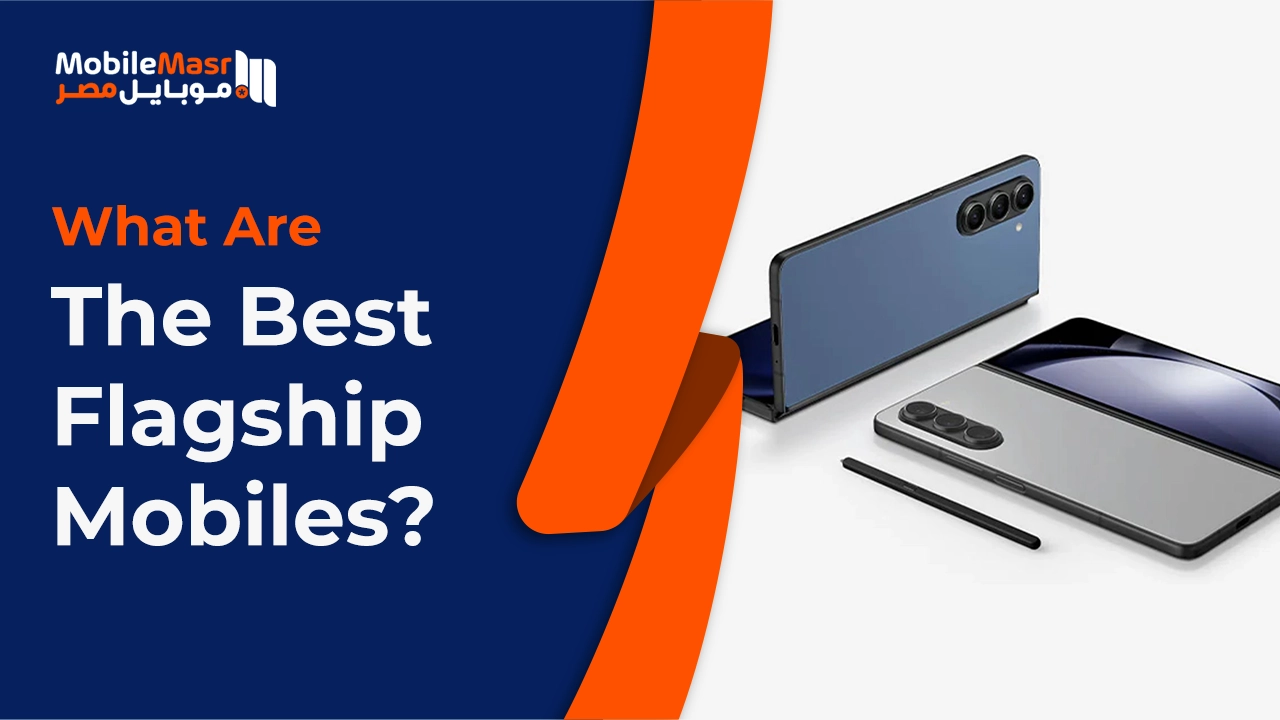
What Is the Best Flagship Killer Phone in 2026?
What Is the Best Flagship Killer Phone in 2026?
The smartphone market in 2026 has reached a point that nobody fully predicted a decade ago: you no longer need to spend the equivalent of a used car on a phone to get a genuinely premium experience. The best flagship killer phone category has matured, deepened, and — frankly — started to embarrass some brands that still charge over $1,000 for their top devices. If you've been watching phone launches this year and wondering whether you're missing something by skipping the ultra-expensive options, the answer is often no. The flagship killer phones 2026 lineup is strong, varied, and remarkably capable.
This guide covers everything — from the definition of the category to detailed specs, comparisons, use-case recommendations, and Egyptian market pricing. Read through it all or jump to the section that matters most to you.
What Exactly Is a Flagship Killer Phone in 2026?
The term itself is a promise: a phone that punches so far above its price class that it metaphorically "kills" the need for a true flagship. But in 2026, the definition has evolved considerably. A best value flagship phone today is no longer just a phone with a single impressive spec — it's a well-rounded device that delivers 90% or more of the true flagship experience at 40–60% of the cost. These are phones that gamers, photographers, content creators, and heavy multitaskers can use without feeling like they made a compromise.
What Makes a Phone a "Flagship Killer" and Not Just a Mid-Range Device?
The midrange smartphone segment is enormous, and most of those devices don't qualify as flagship killers. So what's the actual distinction? A mid-range phone typically offers solid everyday performance with moderate cameras, a decent display, and acceptable battery life — but it makes obvious trade-offs in chipset performance, build quality, or camera capability. A true best flagship killer phone, on the other hand, closes those gaps to a level where the compromises are genuinely hard to notice in daily use.
To qualify as a flagship killer in 2026, a phone needs to meet specific thresholds. The chipset must be upper-tier — not a mid-range chip, but an actual flagship or near-flagship processor. The display should be an AMOLED panel with at least 120Hz refresh rate, ideally higher. The camera must produce results that hold up against direct comparison with phones costing hundreds more. Battery capacity should be substantial (5,000mAh or more), and fast charging should be genuinely fast — meaning 65W or above. Build quality should feel premium, not plasticky. And software support should be meaningful, with at least three to four years of Android updates promised.
A phone that hits all these marks but costs significantly less than the competition from Samsung's Galaxy S series, Apple's iPhone lineup, or Xiaomi's flagship tier — that's a premium features low price device that earns the flagship killer label.
How Did the Term "Flagship Killer" First Appear in the Smartphone Market?
The phrase was essentially coined by OnePlus when it launched the original OnePlus One back in 2014. The company's marketing was deliberately provocative: they claimed their $299 device could compete directly with the $600–$700 flagships of the time from Samsung and HTC. And remarkably, they were largely correct. The OnePlus One packed a Snapdragon 801 — the same chip powering that generation's Samsung Galaxy S5 — in a well-built body with a clean CyanogenMod-based operating system, all for a fraction of the price.
That launch changed the smartphone industry's conversation permanently. It proved that a smaller brand without carrier relationships and retail shelf space could offer genuinely compelling hardware if they cut the right corners (mainly marketing spend and distribution costs) while keeping the things users actually cared about. The concept spread rapidly. Xiaomi had already been doing something similar in China, and soon Realme, POCO, and iQOO all entered with the same philosophy. By the late 2010s, "flagship killer" had become a full category, not just a marketing line.
By 2026, the segment has been institutionalized. Flagship killer phones 2026 are no longer scrappy underdogs — they're sophisticated, polished products from large brands with dedicated engineering resources and significant marketing budgets. Some would argue the term has lost its edge precisely because of how normalized this level of quality has become at accessible prices.
What Is the Difference Between a Flagship Killer and a True Flagship in 2026?
The gap has narrowed dramatically, but it hasn't disappeared. A true flagship in 2026 — think the Samsung Galaxy S26 Ultra, the iPhone 17 Pro Max, or the Xiaomi 17 Ultra — still offers things the best android flagship alternative phones simply don't: the absolute top-tier imaging sensors (sometimes co-developed with camera brands like Leica or Zeiss), satellite connectivity, titanium frames, the most powerful chipsets available (not the second-tier version), periscope zoom systems with 5x or 10x optical reach, and software ecosystems deeply integrated with hardware features.
True flagships also tend to offer more premium materials, better sustained performance under thermal load, longer software support commitments, and in many cases, ecosystem features that connect seamlessly with tablets, earbuds, and smartwatches from the same brand.
A best budget flagship alternative gives you 85–92% of that experience. The 8–15% difference is real — but it comes at 35–55% of the cost. For most users, that math is obviously favorable. The key is knowing which 8–15% you're giving up, and whether it matters to you specifically.
What Are the Core Specs That Define a Flagship Killer Phone Today?
If you're evaluating any phone as a potential flagship killer in 2026, these are the exact spec benchmarks you should use as your filter. Anything falling short of multiple categories is probably a good mid-ranger, but not a high performance smartphone in the flagship killer tier.
Display: AMOLED or OLED panel, minimum 6.5 inches for most form factors, 120Hz or higher refresh rate, peak brightness of at least 1,000 nits (ideally 1,500+ for outdoor use), 1080p or higher resolution.
Processor: Snapdragon 8 Gen 3 or newer, MediaTek Dimensity 9300 or newer, or the Snapdragon 7s/8s Gen 4 tier at minimum. These ensure genuine flagship-level benchmark performance and sustained capability under load.
RAM: 12GB minimum in 2026. Anything below causes limitations in heavy multitasking.
Storage: UFS 3.1 at minimum, with UFS 4.0 or UFS 4.1 becoming standard in top flagship killers for faster app loading and file transfers.
Battery: 5,000mAh or higher. With 67W fast charging as the baseline acceptable speed, and many fast charging smartphones in this tier now offering 80W–120W or beyond.
Camera: Triple camera system with a 50MP main sensor as the baseline, with optical image stabilization (OIS) and useful telephoto capability (at least 3x optical).
Build: IP68 water resistance rating or higher, Corning Gorilla Glass 7 or equivalent on the display.
Software: Minimum 4 years of Android OS updates guaranteed.
Which Chipsets Are Found in the Best Flagship Killer Phones of 2026?
The chipset landscape in 2026 has diversified in ways that benefit buyers enormously. The two dominant players — Qualcomm and MediaTek — have both pushed their near-flagship tiers to levels that would have been indistinguishable from true flagship performance just two years ago.
The Snapdragon flagship processor options in flagship killers include the Snapdragon 8 Gen 3 (still relevant and powerful), the Snapdragon 8 Gen 5 (used in devices like the OnePlus 15R), and the Snapdragon 8s Gen 4 (used in gaming-focused devices). On the MediaTek side, the Dimensity 9400+ found in the Xiaomi 15T Pro represents the most powerful MediaTek chip ever placed in a non-ultra-flagship device — it scores above 2.8 million on AnTuTu and handles any task you throw at it without hesitation. The Dimensity 9400e is a slightly trimmed-down version appearing in devices like the Realme GT 7.
The practical difference between these chips and what's in true $1,000+ flagships is smaller than the benchmark numbers might suggest. In real-world use — gaming, video editing, multitasking — the gap is often imperceptible.
How Much RAM Does a Flagship Killer Phone Typically Offer in 2026?
The standard in 2026's top midrange flagship killer segment is 12GB of LPDDR5X RAM, which represents the sweet spot for sustained performance, smooth multitasking across many simultaneous apps, and stable gaming sessions. Some devices in this category now offer 16GB variants, particularly those positioning themselves as gaming phones or power-user devices.
8GB RAM configurations still exist in some models that stretch the flagship killer definition, but for a phone truly deserving the title in 2026, 12GB is the minimum you should accept. LPDDR5X specifically matters because it operates faster and more efficiently than older LPDDR4X memory, contributing to the smooth overall experience these phones need to deliver.
What Are the Best Flagship Killer Phones Available in 2026?
The flagship killer phones 2026 lineup spans multiple brands, each with a different strength and philosophy. What follows is the most comprehensive guide available to help you understand exactly what each brand's best option brings to the table.
What Is the Best Flagship Killer Phone from OnePlus in 2026?
OnePlus, the brand that invented the flagship killer concept, remains one of the most compelling players in the space. Their 2026 entry is the OnePlus 15R — a phone that was explicitly designed to sit below the OnePlus 15 flagship while offering a near-identical experience at a meaningfully lower price.
What Are the Full Specs and Price of the OnePlus Flagship Killer 2026?
The OnePlus 15R ships with the Snapdragon 8 Gen 5 chipset (the standard version, not the Elite that powers the OnePlus 15), 12GB of LPDDR5X Ultra RAM, and storage options of 256GB or 512GB using UFS 4.1. The display is a 6.83-inch AMOLED panel with a 165Hz refresh rate, up to 1,800 nits of brightness, and a resolution of 2800×1272. This is the same 165Hz rate as the flagship OnePlus 15 — a rare feature at this price tier that makes a real difference in gaming and scrolling smoothness.
The camera system uses a 50MP primary sensor (the same as the OnePlus 15), an 8MP ultrawide, and a 32MP front-facing camera. It records 4K video at up to 120fps. The battery is a 7,400mAh cell — actually larger than the flagship OnePlus 15's 7,300mAh — with 80W SuperVOOC charging. Water resistance is exceptional for this category: the 15R carries IP66, IP68, IP69, and IP69K ratings, offering protection against high-pressure water jets in addition to standard submersion. The phone launched at $699.99 for the 256GB version and $799.99 for 512GB in the US market. For Egypt pricing, please contact Mobile Masr customer service through mobilemasr.com for the most current local pricing.
The phone ships with OxygenOS 16 based on Android 16, and OnePlus guarantees four years of Android OS updates and six years of security patches.
What Are the Pros and Cons of Buying the OnePlus Flagship Killer?
The OnePlus 15R is one of the most balanced cheap phones with flagship specs on the market right now. The pros are substantial: an industry-leading 165Hz AMOLED display, a mammoth battery that reviewers consistently report lasting a full day and a half under normal use, the fastest storage available (UFS 4.1), exceptional water resistance, and clean software that respects the user. The 360° Cryo-Velocity Cooling System using aerospace-grade aerogel is a genuine differentiator for gaming performance, keeping the phone cooler during extended sessions than most competitors.
The cons are real but limited. The camera system — while good — uses an 8MP ultrawide that some competitors beat with wider or higher-resolution alternatives. There's no true telephoto lens with optical zoom, which is a meaningful gap compared to phones at a similar price that include a 3x or 5x periscope zoom system. The phone is also physically large and heavy, which won't suit everyone. And while 12GB RAM is perfectly adequate, the single RAM configuration (no 16GB option) may disappoint power users who want maximum headroom.
Overall, for users who prioritize display quality, battery life, and gaming performance above all else, the OnePlus 15R is genuinely hard to beat among affordable high-end phones in 2026.
What Is the Best Flagship Killer Phone from Xiaomi/Redmi in 2026?
Xiaomi's approach to the flagship killer segment has always been aggressive, and in 2026 they've split their strategy between the Xiaomi 15T Pro (positioned as a premium all-rounder) and the Redmi K80 Pro (targeting maximum hardware at minimum cost).
What Are the Full Specs and Price of the Xiaomi Flagship Killer 2026?
The Xiaomi 15T Pro is the standout flagship killer from this stable. It runs on the MediaTek Dimensity 9400+ processor — one of the most powerful chips in any non-ultra-flagship phone this year — built on a 3nm architecture. It achieved an AnTuTu score of approximately 2.82 million, which puts it ahead of several phones costing twice as much. The display is a 6.83-inch AMOLED panel with 144Hz refresh rate, 1800 nits peak brightness, HDR10+ support, and a 5,000,000:1 contrast ratio. The 3D IceLoop cooling system keeps the Dimensity 9400+ running at sustained performance without thermal throttling.
The triple camera system is where the 15T Pro truly shines: a 50MP main camera with OIS and an f/1.6 aperture, a 12MP ultrawide, and a 50MP 3x telephoto lens co-developed with Leica. This Leica collaboration — carried over from Xiaomi's flagship tier — gives the 15T Pro camera tuning and color science that genuinely rivals the output of phones costing $300–$400 more. Battery is 5,000mAh with 120W wired fast charging, capable of a full charge in approximately 20 minutes. Global pricing starts from approximately $641 for the 12GB/256GB configuration.
The Redmi K80 Pro takes a different approach: maximum raw specifications at rock-bottom pricing, primarily for the Indian and Chinese markets, with availability in Egypt through import channels. It packs a Snapdragon 8 Elite, 16GB RAM, and a 6,000mAh battery — making it the best performance per dollar phone in the lineup.
How Does the Xiaomi Flagship Killer Perform Against the Competition?
The Xiaomi 15T Pro's greatest strength is its camera-to-price ratio. No other phone in this price range offers Leica-tuned optics across a three-sensor system with this level of consistency. The telephoto lens in particular punches well above its class. Gaming performance from the Dimensity 9400+ is exceptional, and the cooling system ensures it stays there under extended load. Battery life in real-world tests consistently exceeds nine and a half hours of screen-on time, making it one of the long battery life phones in this category.
Where the 15T Pro loses ground is display refresh rate (144Hz vs. the OnePlus 15R's 165Hz) and software update timeline (Xiaomi promises four years of OS updates, which is solid but not class-leading). It's also slightly larger and heavier than some users prefer. But for anyone prioritizing camera quality as the primary criterion, the 15T Pro has no peer in the best camera budget flagship segment.
What Is the Best Flagship Killer Phone from Realme in 2026?
Realme has evolved from a budget-focused sub-brand into a serious contender with genuinely impressive hardware. Their flagship killer in 2026 is the Realme GT 7, a phone that mixes a near-flagship camera setup with strong gaming performance and a huge battery.
What Are the Full Specs and Price of the Realme Flagship Killer 2026?
The Realme GT 7 runs on the MediaTek Dimensity 9400e chipset — a slightly trimmed version of the full 9400 found in the Xiaomi 15T Pro, but still extraordinarily capable, exceeding 1.5 million on AnTuTu. The display is a 6.78-inch 1.5K AMOLED panel with 120Hz refresh rate (boosting to 144Hz during supported games). Peak brightness reaches just under 2,000 nits, and color accuracy is excellent — Delta E of just 0.7 in calibrated testing, which is near-perfect for a display in this price tier.
The battery is a genuinely massive 7,000mAh cell with 120W fast charging (0–100% in approximately 42 minutes). This combination — enormous capacity plus very fast charging — makes the GT 7 one of the strongest contenders in the long battery life phones conversation. The triple camera system includes a 50MP main sensor, a 50MP telephoto with 3x optical zoom, and a 8MP ultrawide. In direct testing, the Realme GT 7's main camera produces crisp, natural images with excellent color fidelity, while the telephoto sensor captures sharp detail at zoom distances that would blur on competing devices without optical zoom. Pricing is approximately equivalent to $390–420 globally. Contact Mobile Masr via mobilemasr.com for Egypt-specific current pricing.
Is Realme's Flagship Killer Worth Buying in Egypt in 2026?
For Egyptian users specifically, the Realme GT 7 represents exceptional value per pound spent. The telephoto lens gives it a genuine photography advantage over most competitors at this price tier, the battery life is genuinely class-defining, and the Dimensity 9400e handles even demanding games and video editing workflows without complaint. The display's 120Hz rate is competitive, even if it doesn't reach the 144Hz or 165Hz highs of the OnePlus 15R.
The main considerations for Egyptian buyers are software support (Realme's update track record, while improved, still lags behind Samsung or Google) and after-sales service availability. Realme's presence in Egypt has expanded meaningfully, and Mobile Masr maintains stock and support for this model. It's a particularly strong recommendation for users who photograph frequently and have heavy battery demands.
What Is the Best Flagship Killer Phone from Samsung in 2026?
Samsung's entry into the best flagship killer phones category comes through its Galaxy A series, specifically the Galaxy A56. Samsung has a unique position here: they make the true flagships and the flagship killers, which creates both advantages (deeply integrated software, guaranteed long update support) and questions (are they artificially limiting the A-series to protect Galaxy S sales?).
What Are the Full Specs and Price of Samsung's Flagship Killer 2026?
The Samsung Galaxy A56 5G uses the Exynos 1580 processor built on a 4nm process, which delivers an AnTuTu score of approximately 841,000 — capable and smooth for daily use, but noticeably below the Snapdragon 8 or Dimensity 9400-class chips in competing flagship killers. The display is a 6.7-inch Super AMOLED panel with 120Hz refresh rate and Corning Gorilla Glass Victus+ protection — Samsung's display quality at this tier is genuinely excellent, with vibrant colors and strong outdoor brightness.
The triple camera system consists of a 50MP main camera with OIS, a 12MP ultrawide, and a 5MP macro lens. The camera processing draws on Samsung's well-established image science and delivers reliable, consistent results. Battery is 5,000mAh with 45W fast charging. Samsung promises seven years of Android OS updates — the longest commitment in this category by a significant margin. Water resistance is IP67. Global pricing starts at approximately $327. For Egypt pricing, contact Mobile Masr through mobilemasr.com.
Can Samsung's Mid-Range Line Really Compete With Its Own Flagships?
Honestly, the Galaxy A56 is a competitive device in many ways, but it sits at the lower edge of the flagship killer category because of its chipset. The Exynos 1580 is a solid mid-range processor, but against the Dimensity 9400+ or Snapdragon 8 Gen 5 in competing devices, it shows its limitations in sustained gaming performance and heavy video editing. Where Samsung wins definitively is software support (seven years is unmatched), display quality (Super AMOLED with Samsung's excellent color tuning), and brand trust/reliability.
For users who want a long-term device with guaranteed update support, reliable camera performance, and brand confidence, the A56 is genuinely worth considering as a best android flagship alternative. For users who need maximum raw performance for gaming or intensive creative work, competing options offer noticeably more chipset headroom.
What Is the Best Flagship Killer Phone from POCO in 2026?
POCO has operated on a single, clear brand promise since its inception: maximum hardware for minimum price. In 2026, their flagship killer is the POCO F8 Pro.
What Are the Full Specs and Price of the POCO Flagship Killer 2026?
The POCO F8 Pro launched in late 2025 and runs on the Qualcomm Snapdragon 8 Elite chipset — a genuine flagship-tier processor that places it firmly in the top tier of performance across any price category. It features a 6.59-inch AMOLED display with 120Hz refresh rate and a stunning 3,500 nits peak brightness — the highest brightness figure in this entire category, exceptional for outdoor use under direct Egyptian sunlight. The screen resolution is FHD+ (1156×2510).
The battery is 6,210mAh with 100W fast charging, offering one of the fastest charge-to-time ratios in the category. Camera system includes a primary sensor and ultrawide — notably without a dedicated telephoto lens, which is the main hardware trade-off POCO makes to achieve its aggressive pricing. Global pricing starts from approximately $443 for the 12GB/256GB base configuration. Contact Mobile Masr via mobilemasr.com for current Egypt-specific availability and pricing.
How Does POCO Position Itself as the Ultimate Flagship Killer Brand?
POCO's positioning is unapologetically spec-focused. They communicate directly with benchmarks, raw hardware numbers, and aggressive pricing without the premium design language or marketing ambiguity of other brands. This appeals strongly to technically informed buyers who know exactly what they're buying and prioritize performance-per-dollar above all other criteria.
The F8 Pro's Snapdragon 8 Elite chipset gives it benchmark scores that rival phones costing $400–$500 more. The 3,500 nits peak brightness makes it genuinely readable in any lighting condition. The 100W charging fills its large 6,210mAh battery faster than nearly any competitor. These are real, measurable advantages. The trade-off is the camera system — without a telephoto lens, users who zoom frequently will notice the digital zoom quality degradation. And the brand's software support history, while improving, doesn't match Samsung or Google.
For gaming performance enthusiasts and tech enthusiasts who value raw high performance smartphone capability over photography versatility, the POCO F8 Pro is a compelling case in the flagship specs cheap price conversation.
What Is the Best Flagship Killer Phone from iQOO in 2026?
iQOO (a sub-brand of Vivo) has carved out a specific niche: near-flagship gaming phones with genuinely compelling hardware at prices that make gaming-focused buyers stop and take notice. Their 2026 flagship killer is the iQOO Neo 10.
What Are the Full Specs and Price of the iQOO Flagship Killer 2026?
The iQOO Neo 10 runs on the Snapdragon 8s Gen 4 chipset, an upper-tier chip that delivers excellent gaming performance. The display is a 6.78-inch 1.5K AMOLED panel with 120Hz standard refresh rate, boosting to 144Hz in supported gaming titles. Peak brightness reaches an impressive 3,340 nits — the second-highest in this category behind only the POCO F8 Pro — making it exceptional for outdoor visibility. The battery is 7,000mAh with 120W fast charging, reaching full charge in just 40 minutes in testing.
Camera system is a dual setup: main sensor plus ultrawide, without a telephoto lens. In real-world testing, the Neo 10 produces vibrant, punchy photos with excellent low-light AI processing — particularly strong for social media sharing. The gaming credentials include a dedicated gaming mode, improved thermal management, and low-latency touch response optimizations. International pricing is approximately $320–360 depending on market. For Egypt pricing, contact Mobile Masr through mobilemasr.com.
Why Is iQOO Gaining Popularity as a Flagship Killer Brand in 2026?
iQOO's growth trajectory has been remarkable. The brand has built a loyal community of gaming-first smartphone users who appreciate that iQOO doesn't try to be everything to everyone — they optimize specifically for what their audience values. The combination of flagship-tier display brightness, massive fast-charging battery, gaming-tuned performance, and accessible pricing creates a package that gaming enthusiasts genuinely rave about.
In direct head-to-head testing against the Realme GT 7, the Neo 10's display brightness advantage is significant in outdoor conditions, and the charging speed is marginally faster. The Realme GT 7 wins on camera versatility (telephoto lens) and raw computational performance in extended stress tests. For users who prioritize gaming and display brightness over photography range, iQOO makes a compelling case in the best phone for gaming performance category.
What Is the Best Flagship Killer Phone from Motorola in 2026?
Motorola has quietly been building one of the most user-friendly flagship killer lineups available. Their Motorola Edge 60 Pro represents a clean, polished, near-stock Android experience with genuine hardware credentials.
What Are the Full Specs and Price of the Motorola Flagship Killer 2026?
The Motorola Edge 60 Pro runs on the MediaTek Dimensity 8300 Ultra chipset — a capable performer in the upper-mid tier that handles daily tasks, gaming at medium-high settings, and content creation without hesitation. The display is a 6.7-inch OLED panel with 144Hz refresh rate and excellent color accuracy. The camera system is co-developed with Pantone for precise color science, featuring a 50MP main sensor with OIS, a 50MP telephoto, and a 10MP ultrawide — a surprisingly complete system for a phone at this price.
Battery is 5,000mAh with 68W fast charging. The software experience is Motorola's near-stock Android with minimal bloatware, which appeals strongly to users who want a clean, fast interface without heavy customization layers. Indian market pricing at approximately ₹28,499 makes it one of the most accessible options in this category. Contact Mobile Masr via mobilemasr.com for current Egypt pricing.
The Edge 60 Pro is an excellent recommendation for users who prioritize software cleanliness, build quality, and balanced camera performance over raw computational peak performance. It's not the best gaming phone or the highest-benchmark device in this list, but it's arguably the most pleasant to use day-to-day.
What Is the Best Flagship Killer Phone from Google in 2026?
Google occupies a unique position in the flagship killer category. Their Pixel 9a isn't a flagship killer in the traditional "raw specs at a low price" sense — it's a flagship killer in terms of delivering the best computational photography and software AI capabilities at an accessible price.
What Are the Full Specs and Price of the Google Flagship Killer 2026?
The Google Pixel 9a uses the Google Tensor G4 chip — Google's own processor, which isn't the fastest in benchmarks but is specifically optimized for AI inference and computational photography tasks. The display is a 6.3-inch OLED panel with 120Hz refresh rate and up to 2,700 nits peak brightness, IP68 water resistance, and Corning Gorilla Glass 3. RAM is 8GB with 128GB or 256GB storage options. Battery is 5,100mAh with adaptive charging, offering over 30 hours of estimated battery life (up to 100 hours with Extreme Battery Saver). The camera system uses a 48MP main sensor and a 13MP ultrawide — no telephoto lens, but the computational capabilities of the Tensor G4 make even digital zoom results competitive.
The Pixel 9a launched at $499 in the US market, with current pricing around $460–500. For Egypt pricing, check with Mobile Masr through mobilemasr.com for the latest available figures.
Google guarantees seven years of Android OS updates and security patches — matching Samsung's commitment and exceeding every other brand in this category.
Does Google's Flagship Killer Offer the Best Camera at Its Price Point?
For computational photography — meaning the intelligence of photo processing, AI enhancement, night photography, and video stabilization — the Pixel 9a is the definitive answer in this price range. Features like Magic Eraser, Best Take, Photo Unblur, and Real Tone skin accuracy represent capabilities that competing phones at higher prices still don't match. The 50MP main sensor (in some configurations) with f/1.7 aperture captures exceptional detail, and the AI processing makes low-light photos look like they were taken in conditions twice as bright.
The limitation is the lack of optical zoom. Without a telephoto lens, the Pixel 9a relies entirely on computational zoom — and while it's better than most at this, users who regularly zoom in on distant subjects will notice the quality delta compared to phones with dedicated optical zoom systems. For portrait photography, street photography, and everyday shooting, the Pixel 9a stands alone among best camera budget flagship options.
How Do Flagship Killer Phones Compare to True Flagships in 2026?
This is the question that ultimately determines whether a flagship killer actually delivers on its promise. Let's go through the most relevant comparisons methodically.
How Do Flagship Killers Compare to iPhones in Terms of Value in 2026?
The iPhone remains the benchmark that many buyers use when evaluating alternatives, and the comparison is instructive. The iPhone 17 Pro Max retails at $1,199 or higher. The best flagship killer phones 2026 options — OnePlus 15R, Xiaomi 15T Pro, POCO F8 Pro — cost between $440 and $700. The raw performance difference between a Snapdragon 8 Elite in the POCO F8 Pro and Apple's A18 Pro is measurable in benchmarks but genuinely imperceptible in daily use for the vast majority of tasks. Gaming, social media, streaming, photography — a flagship killer handles all of these without hesitation.
Where the iPhone wins: the iOS ecosystem is tightly integrated and genuinely premium. iPhone camera video quality — specifically the natural cinematic quality of Apple's film processing — is still the standard other phones aspire to. Long-term software support through iOS updates is excellent. Build quality and the feeling of using the device carries a premium tactility. For users deeply embedded in the Apple ecosystem, these differences are real.
Where the flagship killer wins: significantly lower cost, often larger displays, far faster charging, more flexible Android customization, and in many cases larger batteries. For Egyptian users specifically, the value calculation strongly favors the flagship killer — the price difference between an iPhone 17 Pro and a comparable flagship killer could exceed 25,000–35,000 EGP.
Can a Flagship Killer Phone Truly Replace an iPhone for Egyptian Users?
For the majority of Egyptian users — even heavy users — a best flagship killer phone like the Xiaomi 15T Pro or OnePlus 15R provides everything they need at a fraction of the iPhone's local market price. WhatsApp, social media, navigation, streaming, photography, gaming — all handled with equal or superior capability in many areas. The primary use cases that favor the iPhone are: FaceTime as a primary communication tool (less relevant in Egypt where WhatsApp dominates), specific iOS-exclusive apps, or integration with other Apple devices like MacBook or iPad. For most people, the answer is yes — a flagship killer can effectively replace an iPhone in daily use.
How Do Flagship Killers Compare to Samsung Galaxy S Series in 2026?
The Samsung Galaxy S26 base model starts at approximately $799–899. The Galaxy S26 Ultra at $1,299. These phones offer Samsung's DeX desktop mode, the S Pen stylus (Ultra), the best mobile processing (Snapdragon 8 Elite), and Samsung's most advanced camera system with a 200MP main sensor on the Ultra.
Against the Galaxy A56 (Samsung's own flagship killer entry) and competing flagship killers, the S26 lineup wins on: peak camera performance especially at extreme zoom (up to 100x Space Zoom on the Ultra), display brightness and sharpness, the S Pen experience, and the full Galaxy ecosystem integration. The flagship killers win on: battery capacity, charging speed, and overall value proposition.
Which Flagship Killer Comes Closest to the Samsung Galaxy S Experience?
The Xiaomi 15T Pro comes closest to the Galaxy S experience for photography and overall polish. The POCO F8 Pro comes closest on raw chipset performance. The OnePlus 15R best replicates the premium feel and ecosystem integration of a Samsung Galaxy S series device in terms of hardware quality and software refinement. None replicate the S Pen, which remains a Galaxy Ultra exclusive feature.
How Do Flagship Killers Compare to Xiaomi 15 Series in Performance?
The Xiaomi 15 starts from approximately $594 and uses the Snapdragon 8 Elite chipset. The Xiaomi 15T Pro's Dimensity 9400+ doesn't quite match the Snapdragon 8 Elite in peak benchmark numbers, but in real-world gaming and photography performance, the gap is small enough that most users will never feel it. The 15T Pro's Leica camera system is equivalent in quality to the full Xiaomi 15's camera, making the 15T Pro one of the clearest examples of a best value smartphone 2026 in any category.
Is the Xiaomi Flagship Killer Better Value Than the Full Xiaomi 15?
For most users, yes. The Xiaomi 15T Pro costs approximately $150–$200 less than the Xiaomi 15 in global markets, offers equivalent camera performance through the same Leica partnership, has similar or better battery life (5,000mAh vs. 5,400mAh with similar charging speeds), and delivers a display that while slightly lower in peak specs still provides an outstanding viewing experience. The Xiaomi 15 wins on the pure Snapdragon 8 Elite chipset performance ceiling and slightly more premium build materials. But the flagship killer comparison here clearly favors the 15T Pro for value-conscious buyers.
What Are the Main Compromises You Make When Choosing a Flagship Killer?
No review of the flagship killer segment would be complete without addressing the real trade-offs. Understanding these helps you make a better decision.
Do Flagship Killer Phones Have Worse Cameras Than True Flagships?
Yes and no. In daytime photography with the main camera, the best flagship killers — particularly the Xiaomi 15T Pro and the Pixel 9a — produce photos that are genuinely competitive with true flagships, and sometimes indistinguishable in casual comparison. The difference becomes apparent in three specific scenarios: extreme telephoto zoom (true flagships with periscope lenses maintain clarity at 5x–10x where most flagship killers using 3x lenses fall behind), low-light video recording at high frame rates, and the finest details of skin tone rendering in portrait photography under challenging mixed lighting.
For most people, most of the time, the camera gap is smaller than marketing materials suggest. For dedicated photographers or content creators who need the absolute best at all times, it's real but not insurmountable — the right accessory (an external lens system) or the right workflow (more manual control, post-processing) can close the gap further.
Do Flagship Killers Receive Fewer Software Updates Than True Flagships?
This gap has narrowed considerably. Samsung now guarantees seven years of updates for both their Galaxy S flagships and their Galaxy A series flagship killers. Google guarantees seven years for both their Pixel flagship and Pixel A series. OnePlus has improved to four years of OS updates and six years of security patches. The brands that lag are POCO, iQOO, and Realme — which typically offer three to four years of OS updates. For users who keep phones for four or more years, Samsung and Google remain the safest choices in the best android flagship alternative category.
What Are the Most Important Features to Look for in a Flagship Killer in 2026?
When you're evaluating which flagship killer to buy, certain features should drive your decision based on how you use your phone. Here's a systematic breakdown of every major feature category.
What Display Features Should the Best Flagship Killer Phone Have in 2026?
Display quality is arguably the feature users interact with most directly. Every time you look at your phone, you're experiencing the display. In a best flagship killer phone, the display should deliver a premium experience that doesn't remind you what you saved on the device.
Is AMOLED Display a Must-Have in a Flagship Killer Phone in 2026?
Yes, unequivocally. LCD displays — even good ones — cannot match AMOLED for contrast, black depth, color vibrancy, and power efficiency when displaying dark content. Every serious flagship killer in 2026 uses an AMOLED or OLED panel. AMOLED display phones in this category start from Samsung's Super AMOLED in the A56 and range up to the premium LTPO AMOLED panels in the OnePlus 15R and Xiaomi 15T Pro. If you're evaluating any phone that uses an LCD panel and calling itself a flagship killer, it isn't. Move on.
The brightness benchmark you should use is 1,000 nits minimum for standard use, 1,500 nits for comfortable outdoor use, and 2,000+ nits for excellent outdoor visibility in bright sunlight — which is particularly important for users in Egypt's climate where intense sunlight is a daily reality.
What Refresh Rate Is Ideal for a Flagship Killer Display in 2026?
The minimum acceptable refresh rate for a high refresh rate display in a flagship killer is 120Hz. At this rate, scrolling, animations, and gaming feel genuinely smooth rather than the slightly jittery experience of a 60Hz panel. The upgrade to 144Hz (found in the Xiaomi 15T Pro and Motorola Edge 60 Pro) is noticeable in gaming but subtle in everyday use. The 165Hz rate found in the OnePlus 15R is the highest available in this category and is most appreciable in supported gaming titles.
Variable refresh rate technology (LTPO) is also becoming more common in this tier, allowing the display to drop to 1Hz when static content is displayed (like reading text or looking at a photo), which meaningfully extends battery life without sacrificing smoothness during active use.
What Camera Specs Should You Expect From the Best Flagship Killer in 2026?
Camera capability is the feature that most often drives dissatisfaction among buyers who switched from a true flagship to a flagship killer. Setting the right expectations — and knowing which devices exceed them — prevents disappointment.
How Many Megapixels Should a Flagship Killer Camera Have in 2026?
The megapixel count alone tells you very little about actual image quality in 2026, but it sets a baseline. The standard for a best camera budget flagship is a 50MP main camera. This sensor size allows for excellent detail capture in daylight, effective pixel-binning for improved low-light performance, and enough resolution to crop significantly while maintaining acceptable quality. Some devices like the POCO F8 Pro use variations of this setup, while others like the Pixel 9a use 48MP with exceptional processing to compensate.
What matters more than raw megapixel count: the physical sensor size (larger = better light collection), the aperture (lower f-number = more light), the presence of Optical Image Stabilization (OIS is essential for blur-free photos and smooth video), and the quality of the image signal processing engine.
Do Flagship Killer Phones Offer Optical Zoom Comparable to True Flagships?
This is one of the clearest remaining distinctions between flagship killers and true flagships. Most flagship killers in 2026 offer 2x–3x optical zoom through a dedicated telephoto lens. True flagships often offer 5x, 10x, or even higher optical zoom through periscope lens systems. The Xiaomi 15T Pro offers 3x optical zoom via a 50MP telephoto — genuinely useful and high quality. The OnePlus 15R has no telephoto lens at all, relying on digital zoom from the main sensor.
For users who regularly photograph subjects at distance — sports events, wildlife, architecture — the telephoto capability gap is real and matters. For most casual users, 3x optical zoom covers 90% of use cases. In the flagship killer comparison, the Xiaomi 15T Pro and Realme GT 7 lead on telephoto capability within this category.
What Battery Life and Charging Speed Should a Flagship Killer Offer in 2026?
Battery experience — both longevity between charges and the speed of refilling — has become one of the flagship killer category's clearest advantages over true flagships. Many premium phones still offer only 4,000–4,500mAh batteries with 25W–45W charging. The long battery life phones in the flagship killer segment thoroughly embarrass this.
What Is the Minimum Battery Capacity for a Flagship Killer Phone in 2026?
The absolute minimum for a device calling itself a flagship killer in 2026 is 5,000mAh. Most serious contenders exceed this significantly: the OnePlus 15R at 7,400mAh and the Realme GT 7 and iQOO Neo 10 at 7,000mAh represent the top tier of battery capacity available in any non-foldable smartphone. These capacities, combined with efficient chipsets and intelligent software power management, translate to genuine all-day-plus battery life that many iPhone and Galaxy S users genuinely envy.
Do Flagship Killer Phones Support Wireless Charging in 2026?
Wireless charging adoption in the flagship killer category is improving but still inconsistent. The Google Pixel 9a offers wireless charging — a feature Google has included in their A-series for several generations. The OnePlus 15R notably supports reverse wireless charging, meaning you can use it to charge other devices. Many other flagship killers in 2026 focus their charging story entirely on wired fast charging speeds (80W–120W), where they lead the industry, and omit wireless charging to maintain pricing. The POCO F8 Pro, Realme GT 7, and iQOO Neo 10 all prioritize wired charging speed over wireless charging support.
Which Processors Power the Best Flagship Killer Phones in 2026?
The chipset is the single most important specification for real-world performance longevity. A phone with a great display and camera but a weak processor will feel slow within two years. The best flagship killer phone options all use upper-tier or true flagship chipsets.
Is Snapdragon 8 Gen 3 Still Found in Flagship Killer Phones in 2026?
Yes. The Snapdragon 8 Gen 3 remains a genuinely powerful chip in 2026, used in several value-positioned flagship killers and still competitive with newer mid-range chips. Phones built around the 8 Gen 3 at discounted prices now represent some of the best pure value propositions in the affordable high-end phone space. It scores well above 2 million on AnTuTu and handles 4K gaming, 4K video editing, and heavy multitasking without hesitation. The practical performance difference between the 8 Gen 3 and the newer Snapdragon 8 Gen 5 is noticeable in benchmarks but subtle in daily use for most applications.
How Does the Dimensity 9300 Perform in Flagship Killer Phones?
The MediaTek Dimensity 9300 (and its successor, the Dimensity 9400) has been a game-changer for the best budget flagship alternative category. MediaTek's move to an all-big-core architecture with the 9300 delivered landmark benchmark improvements and closed the historical gap with Qualcomm significantly. In flagship killers like the Xiaomi 15T Pro (using the 9400+), real-world performance is indistinguishable from Snapdragon 8 Elite in gaming, photography processing, and AI inference for most workloads. Thermal management with the Dimensity 9400+ has also improved versus the original 9300, with less throttling under sustained load.
What Build Quality and Design Should You Expect From a Flagship Killer?
A phone's build quality affects daily satisfaction in ways that go beyond specs — the way it feels in your hand, how it sounds when you set it down, whether it feels solid or hollow when you type. Flagship killers have improved dramatically here.
Do Flagship Killer Phones Offer IP Water Resistance Ratings in 2026?
Most serious flagship killers now offer IP68 water resistance at minimum. The OnePlus 15R goes further with its IP66/IP68/IP69/IP69K ratings — protecting against high-pressure water jets. The Samsung Galaxy A56 offers IP67. The Google Pixel 9a offers IP68. POCO F8 Pro and iQOO Neo 10 typically offer IP64 or IP65 — splash resistance but not submersion protection, which is a meaningful trade-off for the aggressive pricing. Users in environments with regular water exposure (pool, beach, heavy rain) should prioritize devices with IP68 or higher.
Are Flagship Killer Phones Made With Premium Materials Like Glass or Metal?
Premium build materials are increasingly standard in this category. The Xiaomi 15T Pro and OnePlus 15R use aluminum alloy frames with glass backs — materials indistinguishable from what's found in true flagships. The POCO F8 Pro and iQOO Neo 10 use aluminum frames but may vary in back material by variant. The Samsung Galaxy A56 uses Corning Gorilla Glass Victus+ on both front and back — the highest screen protection class on its front panel. The Google Pixel 9a uses Corning Gorilla Glass 3, which is more modest but includes polyurethane construction for improved drop resistance.
What Software and AI Features Do Flagship Killer Phones Offer in 2026?
AI capabilities have become a genuine differentiator in the 2026 smartphone market, and flagship killers are increasingly competitive in this space.
Do Flagship Killer Phones Offer the Same AI Features as True Flagships?
Many do, with some exceptions. The Google Pixel 9a offers Google's full Gemini integration, Magic Eraser, Photo Unblur, Best Take, and all Google AI features — identical to what you'd get on the Pixel 9 Pro flagship. The OnePlus 15R runs OxygenOS 16 with OnePlus AI including AI Summary, AI Toolbox, and Plus Mind AI for note-taking. The Xiaomi 15T Pro offers Xiaomi's AI suite including AI Photo features, HyperAI smart processing, and integration with Google Gemini. Samsung's Galaxy A56 offers Samsung's Galaxy AI features — Circle to Search, Live Translate, Chat Assist — the same suite found on the Galaxy S26.
What true flagships still retain as exclusives: Apple Intelligence's most advanced features (iPhone Pro only), Samsung's Galaxy AI features tied to the S Pen on the Galaxy S26 Ultra, and on-device AI model capabilities that require the absolute highest-end chipsets for the lowest latency inference.
How Many Years of Android Updates Do Flagship Killers Guarantee in 2026?
This varies significantly by brand. Samsung and Google both offer seven years — the market standard for true flagships, now extended to their flagship killer lines. OnePlus offers four years of OS updates plus six years of security patches. Xiaomi offers four years of OS updates. Realme and POCO offer three to four years. iQOO and Motorola offer approximately three years. For users who keep phones for more than three years, Samsung and Google's seven-year commitment is a meaningful purchasing factor.
What Is the Best Flagship Killer Phone for Gaming in 2026?
Gaming performance requirements have specific criteria that go beyond general processor benchmarks. The best gaming flagship killers combine peak processing power with superior thermal management, display specifications optimized for high frame rates, and ergonomic considerations for extended sessions.
Which Flagship Killer Phone Has the Best Gaming Performance in 2026?
The POCO F8 Pro leads this category on raw performance metrics. Its Snapdragon 8 Elite chipset — the same used in many true flagship gaming phones — combined with 3,500 nits display brightness, 100W fast charging to quickly restore battery between sessions, and a large 6,210mAh cell creates a best phone for gaming performance package that's difficult to dispute on pure specifications.
The OnePlus 15R is a close second thanks to its dedicated 360° Cryo-Velocity Cooling System using aerospace-grade aerogel and steel vapor chamber covering 5,704mm². This cooling infrastructure is designed specifically for sustained 120FPS gaming sessions, and in tests involving extended Call of Duty: Warzone Mobile sessions, the chassis temperature remained well-controlled while performance stayed consistent. The OP Gaming Core chip-level gaming engine, HyperRendering GPU acceleration, and always-on 120FPS capability in supported titles make it the most complete gaming experience in the flagship killer category.
Does the Best Flagship Killer for Gaming Have a Dedicated Cooling System?
Yes, the top contenders all invest meaningfully in thermal management, because a powerful chip that throttles under heat is useless for sustained gaming. The OnePlus 15R's 5,704mm² vapor chamber is the largest in this category. The Xiaomi 15T Pro's 3D IceLoop system is similarly advanced. The POCO F8 Pro's LiquidCool 5.0 system has been tested at stable chassis temperatures below 42°C after extended gaming at maximum settings — a genuinely impressive thermal management result.
What Display Features Make a Flagship Killer Good for Gaming?
For gaming, the display criteria are different from general media consumption. High refresh rate is paramount: 120Hz minimum, with 144Hz or 165Hz significantly improving fast-paced gameplay responsiveness. High peak brightness matters enormously for outdoor gaming and HDR content. Low touch latency (separate from display refresh rate) ensures inputs register instantly. The OnePlus 15R's 165Hz panel and the POCO F8 Pro's 3,500-nit display are the standout gaming display options in this category.
What Is the Best Flagship Killer Phone for PUBG and Fortnite in 2026?
For PUBG Mobile and Fortnite specifically, the combination of processing power, sustained cooling, and high refresh rate displays determines which phone performs best. The OnePlus 15R runs PUBG at maximum graphics settings with a stable 90FPS, supported by the OP Gaming Core optimization engine. The POCO F8 Pro's Snapdragon 8 Elite achieves Fortnite's maximum settings with a smooth frame rate and the 3,500 nits display making every detail visible even in bright outdoor lighting conditions.
Can Flagship Killer Phones Run PUBG at Maximum Graphics Settings in 2026?
Yes — the top-tier flagship killers with Snapdragon 8 Gen 5, Snapdragon 8 Elite, or Dimensity 9400+ chipsets all handle PUBG Mobile and Fortnite at maximum or near-maximum graphics settings. The key differentiator at this point isn't whether they can hit maximum graphics (they can), but whether they sustain that performance for 60+ minutes without significant thermal throttling. The OnePlus 15R and POCO F8 Pro both pass this test in real-world use.
What Is the Best Flagship Killer Phone for Video Editing in 2026?
Video editing demands strong sustained multi-core CPU performance, fast storage for video file I/O, significant RAM for timeline rendering, and a large high-brightness display for accurate color grading. The Xiaomi 15T Pro with its Dimensity 9400+ (2.82 million AnTuTu), UFS 4.1 storage, 12GB RAM, 144Hz AMOLED display, and professional Leica color tuning makes it the strongest recommendation for mobile video editing. The Google Pixel 9a handles video editing workflows surprisingly well given its more modest chipset, particularly excelling at the video stabilization and audio processing where the Tensor G4 offers specialized silicon.
What Is the Best Flagship Killer Phone for Photography in 2026?
Photography has become the most contested battleground in the flagship killer segment, with brands investing in camera partnerships (Leica, Pantone), larger sensors, and increasingly sophisticated AI processing to bridge the gap with true flagship cameras.
Which Flagship Killer Phone Has the Best Main Camera in 2026?
The Xiaomi 15T Pro holds the crown for main camera quality in this category. The Leica co-development partnership delivers tuning, color science, and optical quality that genuinely sets the 15T Pro apart from comparably-priced competitors. The 50MP main camera with f/1.6 aperture captures more light than the f/1.7 or f/1.8 apertures common in competing devices, and the Leica color profiles — both natural Leica Authentic and the more vivid Leica Vibrant modes — give photographers creative options that software-only cameras can't replicate.
Which Flagship Killer Offers the Best Low-Light Photography in 2026?
For low-light specifically, the Google Pixel 9a and the Xiaomi 15T Pro are the two strongest contenders. The Pixel 9a's computational Night Sight photography remains best-in-class for processing dark scenes into bright, detailed photos with minimal noise and accurate colors. The Xiaomi 15T Pro's Night Photography mode with Leica AI processing produces more natural-looking results that professional photographers often prefer. The iQOO Neo 10 also performs surprisingly well in low light thanks to AI upscaling that makes its 50MP shots cleaner in dark environments than competitors with similar sensor specs.
Which Flagship Killer Has the Best Selfie Camera in 2026?
The OnePlus 15R stands out here with its 32MP front-facing camera — higher resolution than most competitors in this segment. The Xiaomi 15T Pro also delivers excellent selfie quality through its front camera with AI beauty processing. The Google Pixel 9a's selfie camera benefits from Google's legendary skin tone accuracy and natural color rendering, making it the best choice for users who prioritize realistic, flattering selfie photography over heavily processed results.
Which Flagship Killer Phone Has the Best Video Recording Quality in 2026?
For video recording, the balance between stabilization, dynamic range, color grading, and frame rate options determines quality. The Xiaomi 15T Pro's Leica video modes and the ability to shoot in professional Log format set it apart — Log format is typically found only in dedicated cinema cameras and true flagship phones, giving videographers post-processing flexibility. The OnePlus 15R's video stabilization system is the most mechanically impressive in this category, producing near-gimbal-smooth footage without external hardware.
Do Flagship Killer Phones Support 4K 120fps Video Recording in 2026?
Yes — several do. The OnePlus 15R records 4K video at up to 120fps, a capability that was previously exclusive to true flagship phones. The Xiaomi 15T Pro also supports 4K high-frame-rate video. This capability allows for gorgeous slow-motion footage with full 4K detail, and is a genuine differentiator compared to competing devices at similar prices that cap 4K at 30fps or 60fps.
What Is the Best Flagship Killer Phone Under Different Price Points in Egypt 2026?
Egypt's smartphone market has specific dynamics — import costs, local retailer margins, and exchange rate fluctuations all affect final prices. The following framework is based on current market conditions. For the most accurate, current prices on any of these devices, Mobile Masr (mobilemasr.com) is the most reliable and comprehensive platform in Egypt for both new and pre-owned flagship killer phones.
What Is the Best Flagship Killer Phone Under 10,000 EGP in 2026?
At this price tier, the Realme GT 7 and the iQOO Neo 10 represent the strongest value propositions, offering near-flagship chipset performance (Dimensity 9400e and Snapdragon 8s Gen 4 respectively), massive 7,000mAh batteries with 120W fast charging, and 120Hz+ AMOLED displays. The Samsung Galaxy A56 also falls into this range and offers the compelling advantage of seven years of software updates. These phones offer flagship specs cheap price propositions that are genuinely difficult to argue against.
Which Phones Offer the Best Flagship-Killer Value Under 10K EGP in Egypt?
The Realme GT 7 leads at this tier for users who want a balanced all-rounder with a telephoto camera and exceptional battery life. The iQOO Neo 10 is the better choice for gamers and outdoor users who value extreme display brightness (3,340 nits) and fast charging speed. The Samsung Galaxy A56 is the choice for users who prioritize long-term software support and brand reliability over peak processing performance.
What Is the Best Flagship Killer Phone Under 15,000 EGP in 2026?
The 10,000–15,000 EGP range opens up the POCO F8 Pro and the OnePlus 15R depending on import availability and current exchange rates. The POCO F8 Pro's Snapdragon 8 Elite and 3,500 nits display offer exceptional gaming capability. The OnePlus 15R's 7,400mAh battery, 165Hz display, and comprehensive water resistance make it one of the most feature-complete devices in the Egyptian market at any price.
Which Flagship Killer Phones Are Available Between 10K and 15K EGP in Egypt?
Availability changes based on import batches and exchange rate fluctuations. The OnePlus 15R, Xiaomi 15T Pro, and POCO F8 Pro all typically fall in this range. Mobile Masr maintains current stock visibility for all these models — checking mobilemasr.com gives you the most accurate current inventory and pricing picture for Egypt.
What Is the Best Flagship Killer Phone Under 20,000 EGP in 2026?
The 15,000–20,000 EGP range includes the top flagship killers and begins to overlap with entry-level true flagships. At this tier, the Xiaomi 15T Pro represents the pinnacle of the flagship killer category — Leica camera system, Dimensity 9400+ chipset, 144Hz AMOLED, 120W charging, and near-flagship build quality. The Google Pixel 9a also fits here, offering seven years of updates and unmatched computational photography.
Which Phones at This Price in Egypt Are Worth Calling a Flagship Killer?
At 15,000–20,000 EGP, the Xiaomi 15T Pro is the definitive recommendation for users who want the most complete package. The Google Pixel 9a is the best choice for photography enthusiasts and users who prioritize software purity and long-term update support. The OnePlus 15R is the strongest recommendation for gaming-focused users and those who need maximum battery life.
What Is the Best Affordable Flagship Killer Phone Available in Egypt in 2026?
Across all price tiers, the best value smartphone 2026 title in Egypt belongs to whichever device in the Realme GT 7–iQOO Neo 10 range falls within a buyer's budget. These devices deliver demonstrably flagship-class experiences — proper AMOLED displays, genuine chipset performance, fast charging speeds that embarrass true flagships — at prices that represent perhaps the strongest value proposition in the entire smartphone market.
Where Can You Buy the Best Flagship Killer Phones in Egypt in 2026?
Mobile Masr (mobilemasr.com) is Egypt's most comprehensive platform for flagship killer phones, offering both brand-new stock and high-quality certified pre-owned devices. For buyers who want to maximize value — getting a previous generation flagship killer (like last year's POCO F7 Pro or OnePlus 13R) at significantly reduced pricing — the pre-owned section at Mobile Masr provides verified, tested devices with condition ratings. New purchases come with standard warranty coverage, and the customer service team can provide specific current pricing for any model covered in this guide.
How Has the Flagship Killer Category Evolved Over the Years?
Understanding where flagship killers have come from gives important context for appreciating how extraordinary the 2026 lineup is.
What Were the Most Notable Flagship Killer Phones of the Last 5 Years?
The OnePlus 9 (2021) was a landmark for camera quality in the category, introducing the Hasselblad partnership that shifted the conversation from "acceptable cameras" to "genuinely competitive cameras." The Xiaomi 12 Pro (2022) showed the industry that Chinese manufacturers could compete directly on build quality and display technology at mid-range prices. The POCO F4 GT (2022) demonstrated that dedicated gaming performance with top-tier thermal management was achievable at sub-$500 pricing. The Samsung Galaxy A54 (2023) proved that Samsung's serious update commitments could reach the mid-range tier. The OnePlus 12R and Xiaomi 14T series (2024) further collapsed the performance gap with true flagships while maintaining aggressive pricing.
Each generation of flagship killer comparison shows steady progress toward the current 2026 state — where the category genuinely deserves the title it carries.
Which Flagship Killers From 2020–2024 Are Still Worth Buying in 2026?
The OnePlus 13R with Snapdragon 8 Gen 3 remains a legitimate affordable high-end phone in 2026 if available at reduced pricing. The Xiaomi 14T with Dimensity 9300 is still capable for photography and everyday use. The POCO F5 Pro is the gaming performance recommendation for extreme budget-consciousness. These devices don't have the battery sizes, refresh rates, or camera systems of 2026 models, but they still deliver genuine flagship-killer tier performance for their current prices.
How Have Flagship Killer Phones Changed in Terms of Price and Value Since 2020?
The trend is clear and remarkable: in 2020, a flagship killer cost approximately $300–$400 for a device with a then-current chipset and acceptable cameras. In 2026, the same $300–$400 (approximately 9,000–12,000 EGP depending on exchange rates) buys a device with massive batteries, near-perfect AMOLED displays at 120Hz+, 50MP cameras with optical zoom, IP-rated water resistance, and near-flagship chipsets. The absolute amount of hardware you receive per dollar has roughly doubled in five years.
Are Flagship Killers Getting Closer to True Flagships in Quality Each Year?
The gap is narrowing in most measurable ways: chipset performance, display quality, camera capability, build materials, and software support. It's converging toward a point where the distinctions will be primarily about ecosystem integration, brand prestige, and niche features (like the S Pen) rather than core smartphone capability. For most users, that convergence point may already have been crossed.
What Trends Are Shaping the Flagship Killer Segment in 2026?
Several clear trends define the 2026 landscape. AI integration has moved from true flagships down the stack rapidly — on-device AI for photography, text processing, and voice interaction is now standard in flagship killers. Battery sizes have grown dramatically, with 7,000mAh and above becoming common. Charging speeds have accelerated to 100W+ across the category. Camera co-branding partnerships (Leica with Xiaomi, Pantone with Motorola) have introduced premium optical tuning to sub-$700 devices.
Will Foldable Phones Ever Enter the Flagship Killer Category?
Not yet, and realistically not within the next two to three years. Foldable phones remain constrained by the cost of flexible display panels, the engineering complexity of the hinge mechanism, and the reduced battery capacity enforced by the form factor's thinness requirements when folded. The cheapest foldables in 2026 still start at approximately $800–$900, roughly twice the price ceiling of a true flagship killer. However, price declines in foldable manufacturing are real and steady — a sub-$600 foldable flagship killer in 2028–2029 is not implausible.
Which Flagship Killer Phone Should You Buy in 2026?
After covering every major device, feature category, comparison, and use case, these are the final, clear recommendations.
What Is the Single Best Flagship Killer Phone to Buy Overall in 2026?
The OnePlus 15R is the single best overall recommendation for most users. It combines a genuinely exceptional 165Hz AMOLED display, the industry's best water resistance rating at this price tier (IP66/68/69/69K), a 7,400mAh battery that leads the category in capacity, 80W fast charging, Snapdragon 8 Gen 5 processing, OxygenOS 16 based on Android 16 with four years of OS updates, and a hardware build quality that feels premium without compromise. The sole notable weakness — the absence of a telephoto lens — is the only reason this recommendation comes with any caveat.
Who Should Buy the Top-Ranked Flagship Killer Phone in 2026?
The OnePlus 15R is ideal for: heavy smartphone users who need maximum battery life; gamers who benefit from the 165Hz display, 360° cooling system, and OP Gaming Core; users in environments where water exposure is common (IP69K is exceptional for this); anyone who wants a near-flagship Android experience with a clean, fast software layer; and buyers who want maximum screen quality and battery capacity above telephoto camera capability.
What Is the Best Flagship Killer Phone for Heavy Users in 2026?
Heavy users — people who spend 6+ hours per day on their phones for work, gaming, content creation, and communication — should choose between the OnePlus 15R and the Xiaomi 15T Pro based on priorities. Battery-first heavy users choose the OnePlus 15R (7,400mAh). Camera-and-performance heavy users choose the Xiaomi 15T Pro (Dimensity 9400+, Leica triple camera, 120W charging). Both are among the best performance per dollar phone options available in 2026.
What Is the Best Flagship Killer Phone for Students in Egypt in 2026?
Egyptian students need a device that handles everything without costing a semester's worth of expenses. The Realme GT 7 hits the sweet spot: strong processing for multitasking, a 7,000mAh battery that lasts through a full day of lectures and study sessions without anxiety, fast 120W charging, and a camera system with genuine telephoto capability for capturing lecture slides, whiteboard notes, and campus life. The Samsung Galaxy A56 is the alternative recommendation for students who prioritize long-term software support and Samsung's broad service network in Egypt.
What Is the Best Flagship Killer Phone for Business Users in 2026?
Business users need reliable performance, strong security, long software support, productivity features, and professional communication tools. The Samsung Galaxy A56 leads here on software support longevity (seven years) and Samsung's broader ecosystem with DeX-adjacent features through its One UI productivity suite. The Google Pixel 9a is the strongest recommendation for business users who rely heavily on Google Workspace — its tight integration with Gmail, Google Meet, Google Drive, and real-time transcription through Recorder is unmatched. Both devices offer IP68 water resistance and premium builds suitable for a professional environment.
Do Flagship Killer Phones Support Samsung DeX or Similar Productivity Modes?
Samsung DeX — the feature that connects your Samsung phone to a monitor, keyboard, and mouse for a desktop-like experience — is currently limited to Samsung Galaxy S series flagships and is not available on the Galaxy A56 or other flagship killers. However, alternative productivity modes exist: Motorola's Ready For connects the Edge 60 Pro to a TV for a basic desktop experience. OnePlus's Mirror and Cast features allow screen mirroring to larger displays. For users whose primary need is DeX specifically, the Galaxy S26 is currently the only option in Samsung's lineup. For users who simply need a productive, capable business phone without DeX, the flagship killer options are fully adequate.
The best flagship killer phone category in 2026 isn't just alive — it's thriving and arguably producing the best smartphones available at any price for most users. Whether you're a gamer looking for the OnePlus 15R's 165Hz display and comprehensive cooling system, a photographer who needs the Xiaomi 15T Pro's Leica triple camera, or simply someone who wants a fast, modern Android phone at a sensible price, the options covered in this guide deliver without compromise.
To explore current pricing, check availability, and purchase any of the flagship killer phones covered in this guide — including new and certified pre-owned options — visit mobilemasr.com. Mobile Masr is Egypt's most trusted platform for flagship and flagship killer smartphones, with expert customer support, verified inventory, and competitive pricing tailored to the Egyptian market. Browse the latest stock, compare prices, and make the smartest phone purchase of 2026 through mobilemasr.com.
FAQs
CONTACT US
©2026 MobiTech Integrated Solutions. . All Rights Reserved