
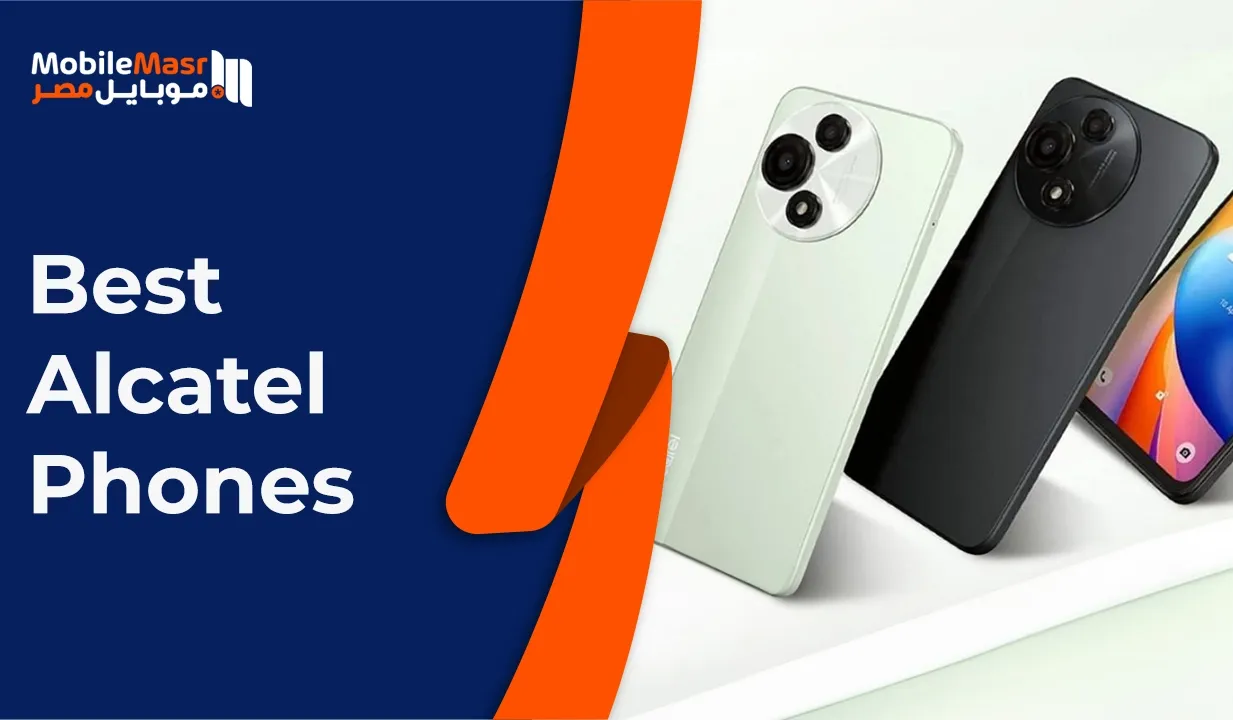
What Are the Best Alcatel Mobiles 2026 You Can Buy in Egypt?
What Is Alcatel and Why Should You Consider Their Mobiles in 2026?
Alcatel remains a relevant name in the budget‑friendly and mid‑range mobile phone market in 2026. Alcatel phones typically appeal for their affordability, straightforward user experience, and solid balance of features for the price — making them a sensible choice for users in Egypt (and globally) who want a dependable device without overspending. Because recent models from Alcatel combine acceptable hardware, battery life, and modern Android features, they remain attractive for everyday use: calls, browsing, social media, light apps, and basic photography. Considering the range from simple feature phones to capable smartphones, Alcatel continues to serve diverse needs — from first‑time phone buyers to budget‑conscious users wanting “just enough” performance.
What Is the History of Alcatel as a Mobile Brand?
How Did Alcatel Start Manufacturing Mobile Phones?
The origin of Alcatel mobile phones traces back to the late 1990s — a time when basic GSM phones dominated. For example, Alcatel One Touch 501 (released in 1999) was a classic feature phone with a monochrome display, no camera, and a simple interface — yet it delivered long battery life and basic connectivity, offering up to 320 hours standby and around 5 hours talk time.
With time, as smartphones emerged, Alcatel transitioned into touchscreen devices and Android smartphones. Over the years, they have released a mix of low‑end, mid-range, and occasional higher-end models catering to different market segments.
What Major Milestones Has Alcatel Achieved in the Mobile Industry?
Entering the smartphone era with touchscreen handsets, offering affordable smartphones that many users worldwide — particularly in emerging markets — adopted. For instance, Alcatel Idol 3 (2015) introduced a somewhat unique reversible design and offered Android at a lower cost than premium brands.
More recently, the brand continues to release new smartphone series. As of late 2025, the latest phone from Alcatel is Alcatel V3 Ultra 5G — launched in May 2025.
The brand keeps serving budget and mid‑range segments reliably, offering devices with essential modern features like 4G connectivity, capacious batteries, adequate cameras, and Android operating systems — making them accessible to price‑sensitive users while covering typical smartphone needs.
How Has Alcatel Evolved Over the Decades?
Alcatel’s evolution mirrors the general trajectory of the mobile industry: from basic monochrome GSM phones to touchscreen feature phones, then to budget and mid‑range Android smartphones. The brand gradually moved from simple “call-and-SMS” handsets to offering devices capable of media consumption, photography, web browsing, and more. Their more recent lineup introduces better hardware — larger screens, multi‑camera setups, higher RAM configurations, and modern Android versions — aiming to stay relevant in a competitive ecosystem.
In 2026, Alcatel continues this adaptation: while not competing directly with flagship phones from premium brands, they offer solid value‑for‑money options especially suited for cost-conscious buyers.
What Are the Best Alcatel Smartphones Available in 2026?
What Are the Top Alcatel Flagship Phones for 2026?
In 2025–2026, Alcatel’s most ambitious offering is the Alcatel V3 series, especially the V3 Ultra — which positions itself as the brand’s “flagship/mid‑high” model.
What Are the Key Specifications of Alcatel’s Premium Models?
One of the standout models is Alcatel V3 Ultra 5G: it features a large 6.78-inch touchscreen display (1080 × 2460 resolution) and comes with options like 6 GB or 8 GB RAM and 128 GB internal storage. Its rear camera setup is triple: 108 MP + 8 MP + 2 MP, with a 32 MP front camera — impressive on paper for a mid‑range/upper‑mid range device.
According to one recent review, the V3 Ultra offers “modern design and expansive display,” “good multitasking and everyday performance,” and “balanced camera and battery life,” which re‑establishes Alcatel as a competitive choice in its segment.
Another member of the series, Alcatel V3 Pro (2025), provides a mid‑range balance: reportedly with up to 8 GB RAM and 256 GB storage (per some listings), suitable as a “value flagship/mid‑ranger.”
How Do Alcatel Flagship Phones Perform in Gaming?
Given the spec sheet of V3 Ultra — with its multi‑core processor (reported as Dimensity‑series / MediaTek on some databases for 2025 phones) and relatively high RAM — it should handle casual games and moderate graphic-demanding games on medium settings without issue. For heavy 3D games, performance might not match high-end flagship brands, but for everyday gaming, social media, video playback and typical multitasking, an Alcatel flagship like V3 Ultra should perform satisfactorily, offering decent mobile performance and memory to avoid major slowdowns.
What Camera Features Do Alcatel Flagship Phones Offer?
The V3 Ultra’s 108 MP main camera is a standout among Alcatel models — offering high resolution photos, which helps in daylight photography and high‑detail shots. The triple‑lens array also suggests some versatility (wide/ultrawide or depth/macro depending on configuration). The 32 MP front camera suggests strong selfie performance. For the price point, this camera configuration gives Alcatel a competitive edge compared to many budget smartphones from rivals. However — as with many mid‑range phones — expect limitations in advanced features (e.g. possibly no advanced optical stabilization, limited night‑mode performance, but adequate daylight realism).
What Are the Best Alcatel Feature Phones in 2026?
Why Should You Consider an Alcatel Feature Phone?
Not all users need the bells and whistles of modern smartphones. For many, a simple, durable, long‑battery, easy‑to-use phone with call, SMS, maybe FM radio — is more than enough. Feature phones stand out for extreme battery efficiency, physical keypad convenience, simplicity, and often lower price. For users who prioritize battery and simplicity (e.g. elderly, first‑time phone owners, or just a backup phone), Alcatel’s feature phones remain valuable.
What Are the Main Benefits of Feature Phones Over Smartphones?
- Battery life & standby time: Without power‑hungry screens or demanding apps, feature phones like early Alcatel models offered days (sometimes up to a week) of standby or several days of light usage. For instance, the Alcatel One Touch 501 — a classic — offered up to 320 hours standby and around 5 hours talk time.
- Simplicity & ease of use: With physical keypad and minimal software — ideal for calls, SMS, or basic tasks — feature phones are intuitive even for less tech‑savvy users.
- Durability and low cost: Less fragile than glass‑slab smartphones and cheaper, making them ideal as secondary/back‑up devices or for users on tight budgets.
Who Are the Ideal Users for Alcatel Feature Phones?
- Users needing a basic phone only for calls and texts (e.g. elderly users, minimalists).
- People wanting high battery life and few interruptions (travelers, workers, emergency backup).
- Those on tight budgets or wanting a lightweight, durable phone with minimal maintenance.
What Are the Top Alcatel Feature Phones with Long Battery Life?
While modern Alcatel’s focus seems to be on smartphones, its heritage of feature phones — like One Touch series (e.g. 501) — remain notable for longevity and simplicity. These older models, though dated, represent the kind of long battery life and stand‑by duration that made Alcatel a household name in early mobile phone era.
Which Alcatel Feature Phone Has the Longest Standby Time?
From historical data: the Alcatel One Touch 501 achieved up to 320 hours of standby — making it one of the longer‑lasting feature phones of its time.
How Many Days Can Alcatel Feature Phone Batteries Last?
Depending on use, feature phones like the One Touch 501 could last multiple days — often up to 5–7 days on light usage (calls and standby), far surpassing most modern smartphones when battery usage is minimal.
Though modern “feature phones” are rarer under Alcatel’s current strategy, the legacy models highlight the appeal for anyone prioritizing longevity and simplicity over features.
What Are the Key Specifications to Look for in Alcatel Mobiles?
When assessing Alcatel mobiles (smartphones or otherwise), certain specs determine how well the phone will serve your needs.
What Processor Options Are Available in Alcatel Phones?
Which Alcatel Phones Use MediaTek Processors?
Many of the recent Alcatel smartphones — including the V3 series — reportedly use MediaTek chipsets (such as Dimensity 6300 on some models). This ensures decent power efficiency and acceptable performance for everyday tasks and moderate gaming.
Which Alcatel Phones Use Qualcomm Snapdragon Chips?
Historically, some older Alcatel smartphones (pre‑2020) employed Qualcomm Snapdragon platforms (for example in the Idol 3 / Idol 4 era), but in the latest models the focus appears more on MediaTek or budget‑tier chipsets to balance cost and performance.
How Do Alcatel Processors Compare to Competitors?
Compared to flagship‑level processors from premium brands (Qualcomm high‑end, high‑power MediaTek Dimensity, etc.), Alcatel’s processors — especially in mid‑range devices — are more modest. They are optimized for cost-effectiveness, efficiency, and everyday use, but may lag behind in heavy gaming or intensive multitasking. For typical users — social media, video, browsing, light apps — they’re usually “good enough.”
What Display Technologies Does Alcatel Use in Their Phones?
Which Alcatel Phones Have IPS LCD Displays?
Many Alcatel smartphones in the mid‑range segment use IPS LCD panels. For example, a recent model Alcatel 3 2025 reportedly sports a 6.52-inch IPS LCD with modest resolution.
Are There Any Alcatel Phones with AMOLED Screens?
As of late 2025, I found no credible source listing an Alcatel smartphone with AMOLED display — the brand seems to prioritize cost‑effective IPS LCD screens.
What Screen Sizes Are Available in Alcatel Smartphones?
Alcatel offers a variety of screen sizes depending on the model: from compact displays (in older or budget phones) to large 6.5–6.8 inch displays in newer mid‑range models like the V3 Ultra.
Do Alcatel Phones Support High Refresh Rate Displays?
Some of the newer models — according to spec‑sheets — may offer 120 Hz display options (for example in V3 Classic according to a spec‑list) which can improve fluidity for scrolling and casual gaming.
What Are the Prices of Alcatel Mobiles in Egypt for 2026?
What Is the Price Range for Alcatel Smartphones in Egypt?
While global prices vary, in Egypt the brand remains positioned toward the lower end of the price spectrum, appealing to budget‑ and value‑oriented buyers. For example, older/budget Alcatel models (entry or low‑end) are quite affordable. According to one 2025 listing, a phone like Alcatel 1 was listed at around EGP 2,080.
How Much Do Entry-Level Alcatel Phones Cost?
Entry-level devices like Alcatel 1 or similarly basic phones cost a few thousand Egyptian pounds (e.g. around EGP 2,000+).
What Are the Prices of Mid-Range Alcatel Smartphones?
Older mid-range or low‑mid-range devices — e.g. a model like Alcatel 3L 2021 — appeared in Egypt price lists around EGP 5,600. More advanced or newer mid‑range phones (with better cameras, larger displays, more RAM/storage) may trend higher, depending on local pricing, availability, and import costs.
How Expensive Are Alcatel’s Premium Phone Models?
Alcatel’s more premium or better‑equipped smartphones (like the V3 series) typically cost more — though still remaining budget‑to‑mid‑range compared with flagship phones from premium brands. Global listings suggest “flagship‑trim” Alcatel phones remain significantly cheaper than high‑end devices from top-tier brands.
What Is the Price Range for Alcatel Feature Phones in Egypt?
Feature phones — the simpler, non‑smartphone devices — tend to be very inexpensive. For example, very basic Alcatel phones (entry-level “dumb phones”) are priced from low thousands of Egyptian pounds, reflecting their simplicity and basic functionality.
What Is the Cheapest Alcatel Feature Phone Available?
Among the cheaper Alcatel phones listed in 2025 Egyptian price lists is the Alcatel 1 (or similar budget model) — at about EGP 2,080.
Are Alcatel Feature Phones More Affordable Than Nokia?
Generally, yes: Alcatel feature phones and entry-level phones tend to be priced competitively — often at or below similar Nokia-level budget devices — especially when focusing on price over brand prestige. This makes Alcatel a viable option for budget‑sensitive buyers in Egypt and similar markets.
How Do Alcatel Mobiles Compare to Other Brands in 2026?
How Does Alcatel Compare to Samsung in the Budget Segment?
When compared with budget offerings from a brand like Samsung, Alcatel often emphasizes affordability and simplicity. Samsung’s budget and entry-level phones may offer better brand recognition, wider software support, and perhaps more polished user experience. On the other hand, Alcatel tends to offer more aggressive pricing, simpler UIs, and acceptable hardware for less money. For buyers on tight budgets or those who prioritize cost over brand and features, Alcatel may offer better “value for money.”
Which Brand Offers Better Display Quality?
Samsung, given its display‑technology history and investment, tends to produce higher‑quality screens (colors, brightness, contrast) even in its budget lines. Alcatel — relying mostly on IPS LCD and cost-sensitive configurations — offers adequate but usually less “premium” display quality.
Which Brand Has Better Software Support?
Samsung generally offers longer-term software update support and broader ecosystem integration. Alcatel — more focused on cost-efficient production — may lag behind in long-term updates, but still delivers basic Android functionality for users not seeking frequent upgrades or advanced software features.
Which Brand Offers More Value for Money?
If your definition of “value” centers on “low cost + acceptable performance + basic features,” Alcatel often offers better value for money for budget‑conscious buyers. For those seeking long-term support, premium feel, or advanced hardware, Samsung or other stronger competitors may offer more.
What Are the Pros and Cons of Alcatel Mobiles in 2026?
What Are the Main Advantages of Buying Alcatel Phones?
Why Are Alcatel Phones Known for Affordability?
Alcatel’s business model emphasizes budget- and mid-range phones, allowing them to price devices significantly lower than flagship models. This makes them accessible to a wide audience, especially in emerging markets.
How Good Is the Build Quality of Alcatel Devices?
While not premium flagship quality, Alcatel phones — especially recent mid-range ones — tend to have acceptable build quality for their price. For everyday users, they provide a satisfactory balance of durability and cost. Their simpler design reduces fragility compared to ultra‑slim premium devices.
Why Do Users Praise Alcatel’s Simple User Interface?
Alcatel phones often ship with relatively unmodified (or lightly modified) Android — avoiding heavy custom skins. This results in a simple, clean user experience, which works well for people who prioritize ease of use over fancy UI features.
What Makes Alcatel Phones Easy to Use for Beginners?
Their affordability, simple UI, basic default apps, and lack of unnecessary bloat make Alcatel phones ideal for first-time smartphone users — such as students, older users, or those migrating from feature phones.
What Are the Main Disadvantages of Alcatel Phones in 2026?
- Performance ceiling: While adequate for everyday tasks, Alcatel phones may struggle with heavy games or demanding apps. Their processors and memory are optimized for cost, not high-end performance.
- Less premium hardware: Displays may lack high refresh rate or top‑tier brightness/contrast; cameras — while decent on flagship‑trim models — might lag premium brands under low light or demanding conditions. Advanced camera features like high‑end stabilization, low‑light optimization, or premium optics may be missing.
- Software support limitations: Compared to flagship brands, Alcatel may offer fewer OS upgrades and shorter update cycles. Over the long term, this may affect security or app compatibility.
- Brand perception & resale value: Because Alcatel targets budget segments, their resale value tends to be low. They may not hold up in second‑hand markets like premium-brand phones.
What Software and Operating System Do Alcatel Phones Use?
What Android Version Do Alcatel Phones Run in 2026?
Some recent Alcatel models (e.g. Alcatel 3 2025) reportedly ship with Android 15 (Go edition) — which suggests that, at least for basic or entry-level phones, Alcatel aims to stay up‑to‑date in software versioning.
Which Alcatel Phones Have Android 14 or Later?
High-end/mid‑range models like Alcatel V3 Ultra (2025) are listed with Android v14 on many spec sheets.
Do Alcatel Phones Use Stock Android or Custom Skin?
Alcatel generally uses a light or near‑stock version of Android (or “Android Go” on entry-level devices), which keeps the interface simple and avoids heavy bloatware, supporting ease of use and smoother performance on modest hardware. This simplicity is part of their appeal, especially for cost‑sensitive buyers.
How Often Does Alcatel Release Software Updates?
Alcatel’s pace of updates is slower compared to major manufacturers. Budget devices may see fewer updates, and mid‑range ones may get occasional updates — but long‑term support (multiple major Android versions) may not be guaranteed.
How Long Do Alcatel Phones Receive Security Updates?
Realistically, users should expect only a limited duration of security patches, likely a year or two after release — not long-term support as with premium brands. That said, for budget‑oriented phones used for essential functions, this may suffice.
Do Alcatel Phones Get Major Android Version Upgrades?
Rarely. Given the brand’s focus on cost-effective hardware and simplicity, major version upgrades are infrequent and not always assured — especially for entry‑level models.
How Good Is Alcatel’s Camera Performance in 2026?
What Are the Best Alcatel Phones for Photography?
If photography is a priority, mid‑range or “upper” Alcatel models — especially from the V3 series — offer the best balance of camera hardware and price. The flagship‑trim Alcatel V3 Ultra stands out in this regard, thanks to its triple rear camera (108 MP + 8 MP + 2 MP) and high‑resolution front camera (32 MP), giving users flexibility and decent image quality.
Which Alcatel Phone Has the Highest Resolution Camera?
V3 Ultra’s 108 MP rear camera is the highest-resolution camera among current Alcatel phones (as of 2025–2026), making it the best candidate for users seeking maximum detail in daylight photography.
Do Alcatel Phones Have Optical Image Stabilization?
I found no confirmed info for OIS (optical image stabilization) on Alcatel’s latest mid-range phones. Given the price positioning and nature of their hardware, it’s likely that OIS is absent — so expecting top-tier video stabilization (especially in low light) may not align with what these devices offer.
How Do Alcatel Cameras Perform in Low Light?
Like most mid‑range and budget phones without advanced stabilization or premium optics, Alcatel phones may struggle in low‑light conditions. While daytime shots — especially with high‑resolution sensors — might look acceptable, low-light performance (noise, grain, dynamic range) may lag behind flagship-class smartphones.
Do Alcatel Phones Have Night Mode?
No clear evidence suggests that Alcatel’s current mid‑range phones include advanced “Night Mode” photography features. Given the target market and hardware constraints, night photos are likely functional but not exceptional.
What Is the Low Light Performance Like on Budget Alcatel Phones?
Budget‑oriented Alcatel phones (or entry-level ones) usually have basic cameras (single lens, modest megapixel count). In low light, expect limited detail, higher noise, and limited dynamic range — fine for casual snapshots but not for serious photography.
How Is the Battery Performance of Alcatel Mobiles?
What Is the Average Battery Life of Alcatel Smartphones?
Generally, Alcatel phones — especially newer mid‑range models — come with moderately large batteries and offer decent endurance. For example, the Alcatel 3 (2025) features a 5010 mAh battery, which is quite generous for an entry/mid‑level phone.
How Many Hours of Screen-On Time Do Alcatel Phones Offer?
Actual screen-on time depends on usage — but with a 5000 mAh+ battery and a modest processor (on budget/mid-range devices), users can expect a full day of heavy use (social media, browsing, video) or multiple days of light-to-moderate use.
Which Alcatel Phone Has the Best Battery Life?
Among recent models, Alcatel 3 (2025) stands out for battery capacity relative to price: 5010 mAh. For users who prioritize battery life over performance, such a device offers a strong balance of longevity and affordability.
What Are the Best Alcatel Phones for Gaming in 2026?
Which Alcatel Phones Have the Best Gaming Performance?
If you’re interested in light to moderate gaming (casual games, 2D games, or simple 3D titles), mid-range Alcatel phones — especially those in the V3 series — are probably the best bet, because of decent RAM and processor performance. However, for heavy 3D titles or games requiring top-tier graphics and stable high FPS, Alcatel phones will likely struggle compared to high-end models from bigger brands.
What Graphics Capabilities Do Alcatel Gaming Phones Have?
Given their hardware — mid-range processors and integrated GPUs — Alcatel phones can handle graphics at medium settings, but not advanced shaders or high-detail high-refresh gaming. They are suitable for casual gaming sessions rather than competitive eSports or heavy 3D gaming.
How Much RAM Do You Need for Gaming on Alcatel Phones?
For smoother gaming on Alcatel phones, 6 GB or 8 GB RAM is recommended (as in models like V3 Ultra) — ensuring better multitasking and less lag when switching between apps, especially games.
What Security Features Do Alcatel Phones Offer?
Do Alcatel Phones Have Fingerprint Sensors?
Some modern Alcatel smartphones do offer fingerprint sensors. For example, the Alcatel 3 (2025) has a side-mounted fingerprint sensor.
Which Alcatel Phones Have Side-Mounted Fingerprint Sensors?
The Alcatel 3 (2025) — as per its spec sheet — uses a side-mounted fingerprint reader, which is convenient and common among mid-range phones.
Which Alcatel Phones Have Rear Fingerprint Sensors?
I found no clear, up-to-date source confirming new Alcatel models with rear-mounted fingerprint sensors (as of 2025–2026), though older or mid-range devices sometimes had rear sensors depending on variant and market.
Do Any Alcatel Phones Have In-Display Fingerprint Sensors?
Given Alcatel’s focus on cost‑effective hardware and IPS displays in current models, in-display fingerprint sensors are unlikely — no credible source indicates such a feature in the recent V3 series or other 2025–2026 devices.
What Accessories Are Available for Alcatel Phones?
What Cases and Covers Are Available for Alcatel Phones?
Because Alcatel phones — especially recent mid‑range and budget ones — follow common form factors (slim smartphones, plastic or glass builds), you can find generic silicone or hard-shell cases compatible with many of them. Some region-specific retailers (including online marketplaces in Egypt) may stock phone covers for popular Alcatel models (like V3, 3, 1 series).
Where Can You Buy Alcatel Phone Cases in Egypt?
Local electronics shops, online marketplaces (e.g. marketplaces serving Egypt), or mobile accessories vendors typically offer universal cases, so it’s generally possible to find covers without too much trouble. Checking around major mobile markets in Cairo or online classifieds may help.
What Screen Protectors Work with Alcatel Phones?
Tempered glass protectors or basic film protectors — depending on the screen size — usually work fine. For newer models with 6.5–6.8 inch screens (like V3 Ultra), it’s better to pick a tempered glass with appropriate dimensions and cutouts (camera, sensors) for full protection.
Should You Use Tempered Glass or Film Protectors?
Tempered glass is recommended for better drop protection and scratch resistance — especially if you carry your phone in bags or outdoors. Film protectors may be acceptable for light protection (scratches) and preserving screen sensitivity.
Are Alcatel Screen Protectors Easy to Find in Egypt?
Yes — given the commonality of 6–7‑inch smartphones globally, generic tempered glass or film screen protectors cover similar dimensions. With a bit of care (matching size), you should find suitable protectors in accessory shops or online marketplaces.
How to Choose the Right Alcatel Phone for Your Needs in 2026?
What Should You Consider Before Buying an Alcatel Phone?
Before buying, think about your priorities: budget, battery life, camera, display size, performance, and longevity. If you want a simple phone for basic tasks — a low‑cost entry-level device might suffice. If you need a phone for media, moderate photography, or everyday smartphone tasks — a mid‑range like V3 series is a better choice.
How Do You Determine Your Budget for an Alcatel Phone?
Decide first how much you’re willing to spend: budget under EGP 3,000–4,000 for basic phones; mid‑range perhaps EGP 4,000–7,000 (depending on local availability/prices); higher but still budget‑friendly mid-high range for V3‑series devices.
What Features Are Most Important for Your Usage?
- For simple: battery life, call/SMS, durable build.
- For everyday smartphone tasks: display size & quality, RAM/storage, acceptable camera, battery capacity, Android version.
- For flexibility: expandable storage, fingerprint sensor, decent battery life, display size.
Should You Buy the Latest Model or an Older One?
If you care about updates, battery, and longevity — newer models (2025/2026) make sense. For very basic needs, an older or simpler model may suffice — but risk outdated software or weaker hardware.
What Are Common Problems with Alcatel Phones and How to Fix Them?
Why Is My Alcatel Phone Running Slowly?
This could result from insufficient RAM, many background apps, or outdated OS version.
How Do You Clear Cache on Alcatel Phones?
Go to Settings → Storage → Cached Data → Clear cache (depending on Android version) — this helps free up memory and can improve performance.
What Apps Should You Uninstall to Speed Up Your Phone?
Remove unused apps, especially heavy apps running in background; avoid resource‑hungry social media or games if the phone has limited RAM.
Should You Factory Reset a Slow Alcatel Phone?
Yes — if slowdowns persist after cleaning cache and removing apps, a factory reset can bring the phone back to near‑fresh performance (but back up your data first).
Why Is My Alcatel Phone Battery Draining Fast?
Possible causes: high screen brightness, always‑on apps, poor network signal (causing repeated reconnections), or many background apps.
How Do You Check Battery Usage on Alcatel Phones?
In Android settings → Battery → Battery Usage (or similar) to see which apps consume the most power; close or restrict high‑usage apps.
When Should You Replace Your Alcatel Phone Battery?
If battery health declines — e.g. much shorter battery life than when new — and phone performance drops, consider battery replacement (if possible) or upgrade to a newer model.
What Is the Future of Alcatel Mobiles Beyond 2026?
What New Technologies Might Alcatel Adopt?
- Potential improvements in display technology — maybe higher refresh rates, better screens (IPS‑LCD or perhaps OLED if cost allows), to keep up with mid‑range competition.
- Continued adoption of efficient MediaTek chipsets to offer better performance per cost, ensuring value for money.
- Perhaps better camera hardware, more RAM/storage options, and updated Android versions (to appeal to budget‑conscious smartphone buyers).
Will Alcatel Release Foldable Phones?
Unlikely in near future — given Alcatel’s focus on budget/mid‑range and cost‑effectiveness, foldable phones (which tend to be expensive) do not seem aligned with their brand identity.
Will Alcatel Adopt 6G Technology When Available?
Given that even mid‑range phones from major brands typically take time to support new network generations, Alcatel may eventually support future networks — but for now, their focus remains on 4G/5G and ensuring affordability, not bleeding‑edge connectivity.
FAQs
CONTACT US
Download the app


CONTACT US


Payment Methods










Shipping with

©2026 MobiTech Integrated Solutions. . All Rights Reserved
©2026 MobiTech Integrated Solutions. . All Rights Reserved