
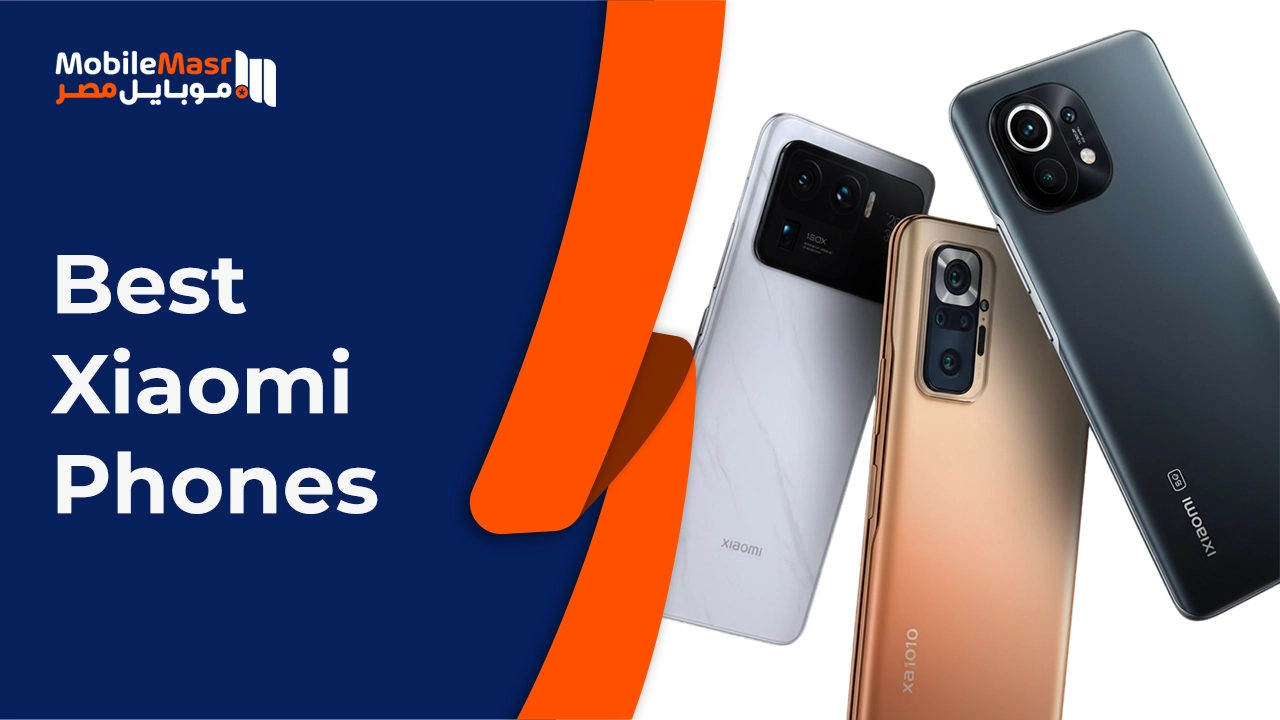
Best Xiaomi Phones 2026 – Discover the Most Powerful Xiaomi Phones in Egypt
What are the best Xiaomi phones 2026 in Egypt?
If you are searching for the best Xiaomi phones in Egypt for 2026, you are in the right place. In this guide, we cover everything you need to know about the latest Xiaomi models in terms of specifications, performance, and pricing, with a detailed comparison between the different tiers so that you can choose the phone that suits you best.
Why are Xiaomi phones among the best in 2026?
In 2026, Xiaomi continues to stand out because it still offers the highest possible specifications for the lowest possible price across most segments. You will find AMOLED or OLED displays with 120 Hz refresh rates, powerful Snapdragon and Dimensity processors, 5000–6000 mAh batteries, and ultra-fast charging, all at prices lower than most direct competitors.
The refined HyperOS (and previously MIUI) now runs more smoothly with fewer slowdowns, plus improved privacy features and extensive customization. With the wide spread of Redmi, POCO, and Xiaomi’s main flagship line, users can easily find a phone that matches their usage and budget without sacrificing performance, display quality, or battery life.
What makes Xiaomi phones stand out from the competition?
Xiaomi is considered one of the leading smartphone brands because of the value it offers for the price and the breadth of its portfolio across price brackets. When you search for the best Xiaomi phones, you will find genuine flagships, mid-range devices, and budget models, each designed for a different type of user.
In Egypt, Xiaomi prices have become highly competitive thanks to local distribution and the constant flow of offers and promotions. This combination makes the “best Xiaomi phones” extremely attractive in the local market.
Does Xiaomi still deliver the best value for money in 2026?
Yes. Thanks to lines like Redmi and POCO under the Xiaomi umbrella, you can buy a device with impressive capabilities on a modest budget compared with many other brands. In Egypt, Xiaomi prices often start around 4,000–5,000 EGP for the budget segment, while flagship devices can exceed 20,000 EGP.
This flexibility means the best Xiaomi phones can serve a very wide range of users, from students to power users, each paying an amount that matches their needs.
How has Xiaomi evolved in performance and design in recent years?
Xiaomi’s phones have evolved from offering “acceptable” mid-range performance to delivering true flagship-level processors, large sensors, and more premium materials.
Reviews on local tech sites show Xiaomi phones now use high-end chipsets, high-resolution cameras, and high-spec displays that would previously have been reserved for top-tier models. This evolution means today’s best Xiaomi phones can compete directly with flagships from other brands, not just on paper but in real-world use.
What is new in MIUI / HyperOS 2026?
Xiaomi’s software, formerly known as MIUI and now moving towards HyperOS, has received multiple refinements. In 2026 the focus is on smoother performance, fewer system ads, and enhanced privacy and usability.
These improvements have a direct impact on the overall Xiaomi experience, which feels more fluid and less cluttered than in previous generations.
How have Xiaomi’s updates affected the user experience?
Xiaomi provides regular system and app updates, which improves user confidence in its devices. The presence of official service centres and genuine spare parts in Egypt further strengthens the sense of value and reliability for Xiaomi phones.
What are the Xiaomi phone line-ups in 2026?
In 2026, Xiaomi’s ranges can broadly be divided as follows:
- Xiaomi Flagship: The main flagship line (such as Xiaomi 15 / 15 Pro / Ultra) with the best cameras, displays, and processors.
- Xiaomi T-Series: “Almost flagship” models that offer strong specifications at a lower price than the full flagships.
- Redmi Note: The core mid-range line, offering an excellent balance between performance and price.
- Standard / Budget Redmi: For users who need the basics at the lowest possible cost.
- POCO: Performance-oriented phones focused on gaming and high numbers in processor and display specifications.
This structure makes it easy to choose according to your needs and budget.
What is the difference between Redmi, Mi (Xiaomi), and POCO?
- Redmi Series: Represents Xiaomi mid-range and budget phones, with a heavy emphasis on value for money.
- Mi / Xiaomi Main Series: The flagship and high-end phones, focused on top performance, premium design, and leading specifications.
- POCO Series: Xiaomi’s performance and gaming-focused line, aimed at users who want maximum processing power and gaming experience for less than a typical flagship.
Which users are best suited to the Redmi series?
If you are looking for budget Xiaomi phones or mid-range Xiaomi phones on a tight budget, Redmi is your ideal choice. For example, some models start at under 5,000 EGP while still offering decent specifications and strong overall value.
Is the Mi / main Xiaomi series still targeted at the high-end segment?
Yes. The main Xiaomi series is built for users who do not want to compromise: they want top performance, the latest processors, the best cameras, and premium build quality. These devices sit among the best Xiaomi phones, but they also come with higher price tags.
What distinguishes POCO phones in 2026?
POCO models are defined by powerful processors, gaming-oriented optimisations, improved cooling solutions, and generous RAM and storage configurations. All of this makes POCO excellent for users who want strong gaming and heavy-duty performance at a lower price than traditional flagships.
Which series delivers the best gaming performance?
Typically POCO is the top choice, followed by the main Xiaomi flagship series. However, some Redmi Note models have also become capable gaming options with very respectable performance.
Which series is best for photography?
If photography is your priority, focus on the main Xiaomi flagship series or on upper mid-range Redmi and POCO devices that feature high-resolution Xiaomi cameras – 108 MP or even 200 MP , making them serious contenders for “best Xiaomi camera phone”.
What are the best Xiaomi phones 2026 in terms of specifications?
The best Xiaomi phones in pure specifications in 2026 are usually the flagships, such as the Xiaomi 15 / 15 Ultra or their equivalents. These devices combine:
- Top-tier processors
- AMOLED or QHD+ screens with 120 Hz refresh rates
- High resolution main cameras with advanced zoom lenses
- Large batteries with ultra-fast charging
- Full 5G support
Next in line are the T-Series and near-flagship models, which retain much of the flagship spirit but with small compromises in camera or display to reach a lower price. For gamers, some upper-tier POCO models also qualify among the “most powerful Xiaomi phones”.
What is the best Xiaomi phone for performance and processor?
In 2026, when looking at Xiaomi performance and chipsets, you are looking for phones running the latest flagship processors (for example the Snapdragon 8 series or equivalent) paired with large RAM capacities and ample storage. Reviews of Xiaomi specifications show clear performance gains compared with previous generations.
Which processors do Xiaomi’s 2026 flagships use?
The company uses the latest Qualcomm processors and competing alternatives, built on very with smaller nanometre processes with lower nanometre sizes. This improves both power efficiency and thermal performance.
What is the best Xiaomi camera phone?
The leading Xiaomi camera phones in 2026 are those with extremely high resolution sensors, going up to 200 MP, support for 8K video, and advanced computational photography features. These devices are clear candidates for “best Xiaomi phone for photography”.
Do Xiaomi cameras support 8K or 200 MP?
Yes. Several flagship models include these capabilities, which places them among the strongest camera phones in the Xiaomi line-up.
How does Xiaomi’s camera quality compare with Samsung and Apple?
In the flagship segment, Xiaomi offers a very serious challenge, especially when you factor in value for money. Samsung and Apple may still lead in certain details or in overall ecosystem integration, but Xiaomi delivers an excellent imaging experience at a significantly lower cost.
What is the best Xiaomi phone for battery and fast charging?
When searching for the best Xiaomi battery, you are looking for a large capacity and very high charging speeds. In 2026, many Xiaomi phones will ship with high-capacity batteries and support ultra-fast wired charging, often reaching 100 W or more.
What is Xiaomi’s fastest charging technology in 2026?
In some models, charging speeds reach 100 W or higher, putting Xiaomi among the fastest charging solutions in the market.
Are Xiaomi batteries safe and long-lasting?
Thanks to improved manufacturing technologies and smarter battery management, Xiaomi batteries have become more stable and durable, supporting the Xiaomi user experience reliably over a long period when used correctly with original chargers.
What is the best Xiaomi phone in terms of design and display?
When choosing the best Xiaomi phones, the display is crucial: high resolution, high refresh rate (120 Hz or above), and AMOLED or OLED panels make a huge difference to daily use.
Does Xiaomi use AMOLED displays in all its models?
From the mid-range upwards, most Xiaomi phones use AMOLED or OLED displays. In the budget segment, you may still find LCD panels to keep costs lower.
Is there a noticeable difference between Redmi and Xiaomi flagship displays?
Yes. The flagship Xiaomi series usually enjoys the highest-grade panels (OLED with HDR and very high brightness), while Redmi models may use slightly less advanced screens or lower brightness levels, depending on the price.
What are the best Xiaomi phones 2026 by price segment?
- Flagship: Xiaomi’s main flagship line (for example Xiaomi 15 or its Ultra/Pro siblings) for users who want top-tier camera, display, and performance.
- Upper mid-range: Some T-Series and POCO F/S models, which deliver powerful processors, 120 Hz screens, and fast charging at significantly lower prices than the flagships.
- Mid-range: Redmi Note Series, the natural choice for many users, offering strong performance, large batteries, and good cameras at reasonable prices.
- Budget: Entry-level Redmi models focused on big displays, 5000 mAh batteries, and a stable Android experience for students and light everyday use.
The exact “best” list changes constantly with promotions and market prices.
What are the best Xiaomi phones under 5,000 EGP?
If you want a budget Xiaomi, the under-5,000 EGP segment is your starting point. These will generally be entry-level Redmi or low-cost POCO devices. Some models may even fall below that in promotional periods. You can check current prices through updated comparison and pricing sources.
What are the best Xiaomi phones under 8,000 EGP?
At this budget, you can move into the Redmi mid-range or select POCO models with stronger processors, better cameras, and higher quality displays than basic devices.
What are the best Xiaomi phones under 10,000 EGP?
Here you step into the upper mid-range. You may be able to buy recent mid-range models with very strong specifications or older flagships that still offer excellent performance and cameras at much lower prices than they launched with.
What are the best Xiaomi flagship phones 2026?
If your budget is open and you want Xiaomi flagship performance, focus on the main Xiaomi series and top-tier POCO devices, such as Xiaomi 14 / 15 and their Pro or Ultra variants (depending on availability).
These phones target users who demand maximum performance, premium design standards, and advanced camera systems.
Is the Xiaomi 14 series worth buying in Egypt?
Yes, if you are aiming for top performance, a high-end display, and flagship camera capabilities, the Xiaomi 14 series is a strong candidate. It is designed for buyers who want a phone that is ready for several years of demanding use.
What is the difference between Xiaomi 14 and Xiaomi 14 Pro?
Usually the Pro version brings enhancements in camera hardware (additional lenses or larger sensors), materials and design, battery or charging capabilities, and sometimes a larger or higher-spec display and more advanced cooling features.
What is the ranking of the best Xiaomi phones 2026 in Egypt?
There is no single official ranking, but the hierarchy often looks like this:
- Xiaomi’s top flagship (such as Xiaomi 15 Ultra/Pro) for those who want the ultimate in imaging and performance.
- T-Series and upper POCO models for gamers and performance enthusiasts seeking high value.
- The latest Redmi Note series (such as Note 14) as the most widely adopted mid-range choice in Egypt.
- Some mid-range POCO models for strong performance at moderate prices.
- Budget Redmi devices widely used by students and entry-level users.
The “real” ranking in practice depends on current offers, user reviews, and availability at the moment you buy.
Which Xiaomi models receive the best user ratings?
Devices that combine high specifications with sensible pricing tend to get the most positive feedback, especially those that balance performance, camera quality, and battery life without being overly expensive.
Which Xiaomi phones will sell the most in Egypt in 2026?
The highest sales usually come from the mid-range, especially Redmi Note models. These are the “best Xiaomi phones” for ordinary users and therefore appear most frequently in shop listings, price comparisons, and promotional banners.
Which models have particularly satisfied Egyptian customers?
Phones that deliver stable performance, good cameras, strong battery life, and a fair price , alongside decent after-sales support , generally achieve the highest satisfaction and recommendations.
Which models faced performance or software issues?
Any newly launched device may encounter minor software bugs or early firmware issues with its user interface. These are commonly addressed through subsequent updates, so it is wise to check recent user reviews before buying.
Xiaomi versus competing brands in 2026
Compared with Samsung, OPPO, vivo, and realme, Xiaomi in 2026 continues to “attack on specifications”: powerful processors, 120 Hz displays, large batteries, and very fast charging at prices that undercut many rivals in the same tier.
Samsung often leads in updating longevity and One UI refinement, while OPPO and vivo focus heavily on design and “social-media-optimized cameras. Realme is very close to Xiaomi in pure value.
Xiaomi, however, strongly appeals to specification and performance enthusiasts, especially with Redmi Note and POCO lines, which makes it a primary competitor for anyone seeking the best numbers for the least money.
Does Xiaomi beat Samsung in the mid-range?
In many cases, yes , especially in value for money. Xiaomi often offers stronger specifications at the same price point or even at a lower price than comparable Samsung devices.
Are Xiaomi phones better than OPPO and realme in 2026?
Because Xiaomi has such a wide span of models across all price levels, it often leads on raw value. However, specific OPPO or realme models may exceed Xiaomi in particular aspects, such as long-term updates or certain camera features, depending on the device.
How does Xiaomi compare to iPhone in value?
Apple tends to lead in ecosystem, brand perception, and long-term service, but from a pure value perspective, Xiaomi phones deliver far more hardware and features per currency unit. For many users, this makes Xiaomi the more economical and flexible choice.
Who leads in camera and night photography?
The answer depends on the tier. In the flagship segment, Xiaomi provides very strong competition, but Samsung and Apple still hold an edge in some scenarios thanks to their long-refined software and ecosystem.
However, Xiaomi’s best camera phones deliver excellent night photography and HDR for their prices, making them very compelling options.
Who leads in performance and overall system experience?
Performance is multi-dimensional. Xiaomi delivers strong raw performance, but the overall system experience is influenced by personal preference, software polish, and update policies. Some users appreciate HyperOS’s rich features, while others prioritise cleaner interfaces or longer guaranteed updates.
Is Xiaomi still worth buying in 2026?
Yes, Xiaomi remains a very strong purchase in 2026, especially if your main priority is maximising performance and specifications for your budget. In the mid-range and upper mid-range segments you typically get excellent displays, large batteries, very fast charging, and processors capable of solid gaming performance.
In the flagship arena, Xiaomi approaches Samsung and Apple in display and camera quality at a noticeably lower price. The main point to watch is the pace and duration of software updates for each series, and the fact that the interface is rich and may require some personal tweaking , but overall, the value you get from Xiaomi remains high.
Does Xiaomi offer long-term update support?
Yes. Xiaomi has been improving its update policy, lengthening support windows for key models, which enhances confidence in the long-term Xiaomi experience.
Do Xiaomi phones still suffer from heat or built-in ads?
Some models may display system ads or pre-installed applications, and heavy usage can trigger higher temperatures in demanding games. However, the company has been working to reduce and better control both through newer interfaces and updates.
Can Xiaomi serve as a reliable primary phone in 2026?
Definitely, especially if you choose a suitable model for your needs , whether for gaming, photography, or everyday use. Many users rely on Xiaomi as their main device and are satisfied with the overall experience.
How do users perceive Xiaomi in 2026?
Overall impressions are positive. Many users praise the value for money, performance, and camera quality, while some still request improvements in software polish, update speed, and interface details. For most, the benefits outweigh these issues.
Tips before buying a Xiaomi phone in 2026
- Decide your category: Redmi for budget, Redmi Note for mid-range, POCO for gaming and performance, or Xiaomi flagship for the highest tier.
- Check the processor (especially if you care about games), RAM, and storage capacity.
- Confirm the display type (preferably AMOLED 120 Hz in mid-range and above).
- Look at battery size and real-world charging speed.
- Read user reviews in Egypt to identify any recurring issues (such as heat, network reception, or system ads).
- Buy from an authorised reseller with an official invoice and warranty, and avoid counterfeit or unclear import units.
What factors should you consider before buying?
- Confirm that the performance matches your usage (gaming, photography, or general everyday use).
- Examine battery capacity and fast charging.
- Assess camera quality if photography is a priority.
Is it better to buy from the official service network or online stores?
Each has advantages.
Authorised stores provide official warranty and straightforward after-sales service, while online shops may offer lower prices, exclusive discounts, or convenient instalment options.
What is the difference between global and Chinese versions?
Global versions usually support the full set of local network bands, include the appropriate software configuration, and come with local warranty. Chinese versions may lack some bands or software features and may not be covered by local warranty.
How can you be sure the phone is genuine and not counterfeit?
Buy from reputable stores, check the warranty seal, verify the model number, and compare it with details on Xiaomi’s official website. Always review the IMEI, box labels, and invoice details.
Are official warranties available for Xiaomi phones in Egypt?
Yes. Xiaomi has authorised sales channels and official warranty coverage through recognised distributors and service centres.
How do you activate your official Xiaomi warranty?
Purchase from an authorised reseller or an official Mi Store, keep your tax invoice, and follow any registration steps mentioned by the seller or on Xiaomi’s official channels, if required.
The future of Xiaomi phones in Egypt after 2026
The future of Xiaomi phones in Egypt after 2026 looks very promising. Xiaomi is already among the top brands in Africa, with a strong market share in Egypt and visible growth driven by expanded local channels and investment.
Egypt is increasingly becoming a regional hub for mobile assembly and manufacturing, with factories for Chinese brands including Xiaomi and others. This helps reduce import costs and encourages the launch of newer models at more aggressive prices.
If Xiaomi maintains its formula of aggressive pricing plus strong specifications (HyperOS, large batteries, fast charging) along with solid after-sales support, it will remain a key player and a direct rival to Samsung and other major brands in Egypt beyond 2026.
Is Xiaomi planning to introduce new technologies in 2027?
Yes. Xiaomi is expected to continue developing camera systems, fast charging technologies, and foldable devices, all of which will further strengthen its position in the premium and upper mid-range segments.
Will Xiaomi expand its foldable phones in Egypt?
It is very likely. As foldable phones become more common in Egypt from different brands, it is logical for Xiaomi to push more foldable models into the local market as availability and pricing align.
What are the expected price trends for upcoming Xiaomi devices?
Xiaomi is expected to stick to its value-for-money approach:
lower-cost lines will continue to start at accessible prices, while flagships will rise in price but with meaningful improvements in specifications and features to justify the cost.
If you want to find the best Xiaomi phones 2026 and need deeper comparisons or suggestions tailored to your budget, make sure you visit mobilemasr.com, where you will find constantly updated analyses and offers.
Feel free to follow upcoming articles, subscribe to the newsletter, and send in your questions so you can choose the perfect Xiaomi phone with confidence.
FAQs
CONTACT US
Download the app


CONTACT US


Payment Methods










Shipping with

©2026 MobiTech Integrated Solutions. . All Rights Reserved
©2026 MobiTech Integrated Solutions. . All Rights Reserved