
What Is the Xiaomi Redmi 15 2026 & Why Should You Care?
What Is the Xiaomi Redmi 15 2026 & Why Should You Care?
The Xiaomi Redmi 15 is exactly what Egypt's budget smartphone market has been asking for — a genuinely capable device that delivers real-world performance without demanding a salary's worth of investment. As part of Xiaomi's enduring Redmi series, this phone arrives in 2026 as one of the most complete affordable smartphone packages available at its price point, combining a substantial battery, a capable processor, and Xiaomi's refined HyperOS experience in a form factor that won't strain your pocket.
What makes the Xiaomi Redmi 15 worth your attention isn't any single jaw-dropping feature — it's the combination of everything working together. The 6.88-inch display gives you serious screen real estate for streaming and gaming. The Snapdragon 4s Gen 2 built on 4nm brings genuine efficiency gains over older budget chipsets. The 5000mAh battery handles heavy days with ease. And at 9,600 EGP in Egypt, it asks a very reasonable price for this whole package.
For Egyptian buyers who've been navigating a market crowded with mid-range options, the Xiaomi Redmi 15 represents Xiaomi's answer to a specific question: can a budget phone feel like it punches above its weight class? Based on everything this device offers, the answer leans firmly toward yes — with some honest caveats we'll cover throughout this review.
What Are the Official Xiaomi Redmi 15 2026 Full Specifications?
Before diving into real-world performance, here's a quick overview of what the Xiaomi Redmi 15 brings to the table:
- Display: 6.88-inch IPS LCD, HD+ (1640×720), 90Hz
- Processor: Snapdragon 4s Gen 2 (4nm)
- RAM: 4GB or 6GB
- Storage: 128GB (microSD expandable)
- Rear cameras: 50MP main + 2MP depth
- Front camera: 8MP
- Battery: 5000mAh, 18W fast charging
- OS: Android 14, HyperOS
- Connectivity: 4G LTE, Wi-Fi 5, Bluetooth 5.3, USB-C, 3.5mm jack
- Build: Polycarbonate, IP52 splash resistance
- Weight: ~193 grams
What Processor Powers the Xiaomi Redmi 15 2026?
The Xiaomi Redmi 15 runs on Qualcomm's Snapdragon 4s Gen 2 — a chipset manufactured on a 4nm process node, which is a significant step forward for a budget phone in this class. The 4nm fabrication translates directly into better power efficiency, meaning your phone stays cooler during everyday tasks and squeezes more life out of that 5000mAh battery compared to older devices running 8nm or 6nm chips.
The Snapdragon 4s Gen 2 features an octa-core CPU configuration pairing four Cortex-A78 performance cores running at 2.0GHz with four Cortex-A55 efficiency cores. The Adreno GPU handles graphics duties, and while it isn't built for demanding 3D games at ultra settings, it handles the reality of what most people actually play on their phones — and it handles it well.
For day-to-day tasks, the chip feels responsive. Scrolling through Instagram, switching between WhatsApp and Chrome, watching YouTube at 1080p — all of it runs smoothly without the hesitations that older Snapdragon 600-series chips sometimes produced. This is genuinely one of the more capable processors available in the sub-10,000 EGP range in Egypt right now, and it gives the Xiaomi Redmi 15 a meaningful performance advantage over many of its direct competitors.
How Does the Xiaomi Redmi 15 Chipset Compare to Previous Redmi Generations?
Compared to the Snapdragon 685 that powered previous budget Redmi devices, the Snapdragon 4s Gen 2 in the Xiaomi Redmi 15 is a substantial generational improvement. The jump from 6nm to 4nm manufacturing alone accounts for measurable gains in efficiency — the chip produces less heat per computation, extends battery life, and delivers smoother sustained performance under load. In AnTuTu benchmarks, the Snapdragon 4s Gen 2 scores in the 350,000-380,000 range, which puts it noticeably ahead of the Snapdragon 685 at around 280,000. For real-world use, that gap translates to faster app launches, smoother multitasking, and a generally snappier feel that users upgrading from older budget phones will immediately notice.
What Gaming Performance Can You Expect From the Redmi 15 Processor?
Gaming on the Xiaomi Redmi 15 is genuinely satisfying for the titles most Egyptian users actually play. Free Fire runs at high settings with consistently smooth frame rates. PUBG Mobile performs well at Smooth graphics with Balanced or High frame rates. Mobile Legends handles at maximum settings without trouble. The 90Hz display makes these games feel noticeably more responsive than on 60Hz budget phones. For Genshin Impact, medium settings are the sweet spot — it runs playably, though with occasional frame rate dips during combat-heavy scenes. The 4nm process helps manage thermal performance, so the phone doesn't throttle aggressively during 30-minute gaming sessions.
How Much RAM and Storage Does the Xiaomi Redmi 15 2026 Offer?
The Xiaomi Redmi 15 is available in two memory configurations: 4GB RAM with 128GB storage, and 6GB RAM with 128GB storage. Both configurations use the same UFS 2.2 internal storage standard, which provides respectable read/write speeds for a device at this price point.
The 4GB variant is perfectly serviceable for moderate users — people who run one or two apps at a time, don't multitask intensively, and aren't running memory-hungry games simultaneously with other apps. For users who like keeping 10+ apps running in the background, jump between social media and streaming frequently, or want gaming performance that doesn't involve constant app reloads, the 6GB configuration is the wiser investment. HyperOS also includes a Virtual RAM feature that can extend memory by borrowing from internal storage — adding up to 4GB virtually — which helps both variants punch slightly above their hardware specifications.
Is the Xiaomi Redmi 15 Storage Expandable via MicroSD?
Yes, and this is one of the Xiaomi Redmi 15's most practical advantages for Egyptian buyers. The phone includes a dedicated microSD card slot supporting cards up to 1TB — critically, it's a separate slot that doesn't force you to choose between a second SIM and extra storage. This means you can run a dual SIM setup AND expand your storage simultaneously. For users who take lots of photos and videos, download music for offline listening, or install multiple large games, this expandability makes the 128GB base storage much less of a concern over the long term.
Which RAM Variant Should You Choose for the Redmi 15?
For most users in Egypt, the 6GB RAM variant of the Xiaomi Redmi 15 is the recommended choice. The price difference between the two configurations is manageable, and the real-world difference in daily smoothness is noticeable — particularly for users who multitask heavily, use gaming apps frequently, or want the phone to remain responsive as the operating system accumulates background processes over months of use. If your primary use case is calls, messaging, and light social media browsing, the 4GB configuration is perfectly capable. But for anyone who sees a smartphone as a versatile tool rather than just a communication device, 6GB provides meaningful headroom that will serve you better over a 2-3 year ownership period.
What Display Technology Does the Xiaomi Redmi 15 2026 Feature?
The Xiaomi Redmi 15 uses a 6.88-inch IPS LCD panel with HD+ resolution (1640×720 pixels), running at a 90Hz refresh rate. The panel size is genuinely generous — this is one of the larger displays you'll find in the budget category, making it excellent for streaming, social media browsing, and gaming where screen real estate actually matters.
The IPS LCD technology delivers accurate colors and wide viewing angles characteristic of this panel type. It's not AMOLED — you won't get the deep blacks and vibrant saturation that AMOLED provides — but IPS LCD at this quality level offers its own advantages, including better sunlight readability compared to lower-grade AMOLED panels often found in budget devices. The high resolution screen at 6.88 inches gives a pixel density of around 260 PPI, which is adequate for comfortable reading and video watching at typical viewing distances, though fine text at small sizes isn't as crisp as Full HD+ displays.
What Is the Refresh Rate of the Xiaomi Redmi 15 Screen?
The 90Hz refresh rate on the Xiaomi Redmi 15 display makes a perceptible difference in daily use compared to the 60Hz panels found on many competing budget phone options. Scrolling through social media feeds, swiping between app pages, and navigating menus all feel noticeably smoother. The transition from 60Hz to 90Hz isn't as dramatic as 60Hz to 120Hz, but for typical smartphone interaction patterns — which involve a lot of scrolling and swiping — it represents a genuine quality-of-life improvement that becomes apparent within the first hour of use. The panel's adaptive behavior also helps conserve battery by dropping to 60Hz during static content display.
Is the Xiaomi Redmi 15 Display Good for Outdoor Use in Egypt's Sunlight?
Outdoor visibility is a practical concern for Egyptian users dealing with intense sunlight, and the Xiaomi Redmi 15 holds up reasonably well. The display reaches approximately 500 nits peak brightness in standard mode, which is adequate for most outdoor scenarios. In direct midday sunlight, you'll want to crank brightness to maximum and may still need to angle the phone slightly, but the IPS panel's anti-reflective properties help — it's not the struggle that low-quality budget LCD panels sometimes present. HyperOS includes a Sunlight Mode that boosts brightness and contrast specifically for outdoor conditions, which adds a useful layer of adaptability for everyday Egyptian use.
What Are the Full Dimensions and Weight of the Xiaomi Redmi 15?
The Xiaomi Redmi 15 measures approximately 169.5 × 76.3 × 8.27mm and weighs around 193 grams. For a phone with a 6.88-inch display and a 5000mAh battery, this is a relatively lean and balanced physical package — the weight is distributed well enough that extended use doesn't feel fatiguing.
Is the Xiaomi Redmi 15 Comfortable for One-Hand Use?
At 6.88 inches and 76.3mm wide, comfortable one-handed use of the Xiaomi Redmi 15 is possible for users with average or larger hands for basic operations, but reaching the top of the screen one-handed will require adjustments. HyperOS includes a one-handed mode that shrinks the interface to one corner of the screen, making navigation genuinely easier for smaller hands. Realistically, this is a two-hand phone for most tasks — which isn't unusual or problematic at this screen size. The phone's weight is manageable during extended use, and the polycarbonate back provides decent grip.
What Is the Xiaomi Redmi 15 2026 Price in Egypt?
How Much Does the Xiaomi Redmi 15 Cost in Egyptian Pounds?
The Xiaomi Redmi 15 is priced at 9,600 EGP for the base 4GB/128GB configuration in Egypt. This positions it as one of the most compelling affordable smartphone options in the Egyptian market — a phone with Snapdragon 4nm performance, a 90Hz large display, and a reliable 5000mAh battery at a price point that remains accessible to a broad range of buyers. The Xiaomi smartphone brand consistently delivers strong value propositions in the Egyptian market, and the Redmi 15's pricing reflects that commitment.
What Is the Official Xiaomi Redmi 15 Price at Authorized Dealers in Egypt?
At authorized Xiaomi dealers in Egypt, the Xiaomi Redmi 15 base model is available at 9,600 EGP. The 6GB/128GB variant carries a premium above this — current pricing for the higher-spec configuration should be verified directly through Mobile Masr at mobilemasr.com, which maintains up-to-date pricing for all Xiaomi configurations available in the Egyptian market. Authorized dealer pricing includes official Xiaomi Egypt warranty coverage, which is an important consideration when evaluating total purchase value.
Is the Xiaomi Redmi 15 Available on Installment Plans in Egypt?
Yes, installment plans for the Xiaomi Redmi 15 are available through multiple Egyptian banks and electronics financing programs. Typically, you can spread the 9,600 EGP purchase price across 6, 12, or 24 months depending on your bank and the retailer's financing partnerships. Monthly payments at 12 months (0% interest where available) would amount to approximately 800 EGP — a figure that makes this phone accessible to buyers who prefer not to pay the full amount upfront. Mobile Masr offers guidance on available installment options for Egyptian buyers.
How Does the Xiaomi Redmi 15 Price Compare to Other Xiaomi Budget Phones in Egypt?
Within Xiaomi's own Redmi series lineup in Egypt, the Xiaomi Redmi 15 at 9,600 EGP sits at the entry point of the current-generation lineup. It's priced below the Redmi Note 14 series and above the Redmi A-series, which makes it the sweet spot for buyers who want meaningful performance without committing to Note-series pricing.
Is the Xiaomi Redmi 15 Cheaper Than the Redmi Note 14 in Egypt?
Yes, the Xiaomi Redmi 15 is priced noticeably below the Redmi Note 14 in Egypt. The Note 14 justifies its premium through a Full HD+ AMOLED display, a more powerful processor, and a more capable camera system. For users whose priorities are battery life and basic performance, the Redmi 15 at 9,600 EGP represents better value — they're not paying for display and camera upgrades they may not fully utilize. For photography enthusiasts and display-conscious users, the Note 14's premium may be worth the additional investment.
How Does the Redmi 15 Price Compare to Samsung's Budget Lineup in Egypt?
At 9,600 EGP, the Xiaomi Redmi 15 competes directly with Samsung's budget offerings in Egypt. Samsung's equivalent budget options in this price range typically offer the Samsung One UI software experience and brand recognition, while the Redmi 15 counters with a demonstrably more powerful processor, a larger display, and better raw performance metrics. For buyers who prioritize software longevity and brand trust over raw hardware, Samsung remains a valid choice. For those who want the most processing power and features per Egyptian pound, the Xiaomi Redmi series consistently delivers greater hardware value at comparable prices.
Where Can You Buy the Xiaomi Redmi 15 in Egypt at the Best Price?
Which Online Platforms Offer the Xiaomi Redmi 15 in Egypt?
For the best combination of pricing, product authenticity, and purchase convenience, Mobile Masr at mobilemasr.com is the premier destination for buying the Xiaomi Redmi 15 in Egypt — whether you're looking for a brand-new unit or a certified pre-owned option at a lower price point. Mobile Masr specializes exclusively in smartphones and maintains current inventory, competitive pricing, and verified product authenticity that generic marketplace listings can't consistently guarantee.
Is It Better to Buy the Xiaomi Redmi 15 Online or From a Physical Store in Egypt?
Both options have their merits. Physical stores let you handle the device before purchasing — useful for assessing build quality and display in person. Online purchasing through trusted platforms like Mobile Masr typically offers competitive pricing, clear return policies, and the convenience of home delivery. For a device as well-documented as the Xiaomi Redmi 15, buying online from a reputable platform is generally the more practical choice, combining price transparency with purchase protection.
What Camera System Does the Xiaomi Redmi 15 2026 Have?
How Many Cameras Does the Xiaomi Redmi 15 Feature on Its Back?
The Xiaomi Redmi 15 has a dual rear camera system: a 50MP primary camera with f/1.8 aperture and a 2MP depth sensor. While this isn't a triple-camera system like some competitors offer, Xiaomi's approach here is pragmatic — the company focused resources on making the primary sensor as capable as possible rather than adding ultrawide and macro lenses primarily for spec-sheet appeal. The 2MP depth sensor genuinely contributes to portrait mode segmentation quality rather than serving as a placeholder.
What Is the Main Camera Resolution on the Xiaomi Redmi 15?
The 50MP primary camera uses pixel-binning technology to combine pixels for different scenarios. In standard shooting, it produces 12.5MP output with improved light gathering per pixel. When maximum detail is needed, the full 50MP resolution is available and captures impressive detail for a budget phone camera. The f/1.8 aperture is wider than many competing budget cameras, allowing more light collection — an advantage in challenging lighting conditions. Xiaomi's camera software processes images with their proprietary computational photography algorithms, typically producing well-balanced exposure and natural color science.
Does the Xiaomi Redmi 15 Have a Macro or Depth Sensor?
The Xiaomi Redmi 15 includes a 2MP depth sensor rather than a macro camera. This is worth noting for buyers who enjoy macro photography — they won't have a dedicated macro lens here. However, the depth sensor serves a genuinely useful function by improving portrait mode edge detection, creating more natural background blur in Live Photo/Portrait shots. For the vast majority of mobile performance in everyday photography, this trade-off is sensible — portrait mode is used far more frequently than macro photography by typical users.
How Good Is the Xiaomi Redmi 15 Camera in Low Light Conditions?
The Xiaomi Redmi 15 camera performs competently in low light for its price tier, with Night Mode providing meaningful improvement over auto mode in challenging lighting. The f/1.8 aperture is a genuine advantage here — it gathers more light than narrower f/2.0 or f/2.2 apertures common on competing budget phone cameras. This translates to brighter exposures and less noise in the 0-200 ISO range.
Does the Xiaomi Redmi 15 Support Night Mode Photography?
Yes, Night Mode is available on the Xiaomi Redmi 15 and works through multi-frame capture and computational stacking — the camera takes several exposures at different settings and merges them to produce a single, brighter, lower-noise image. Results in moderate low light (indoor lighting, evening outdoor scenes) are genuinely good by budget phone standards. In very dark conditions, the limitations of the sensor become more apparent, but Night Mode consistently produces better results than leaving the camera in auto mode. Night Mode processing takes approximately 2-3 seconds, during which keeping the phone steady improves results significantly.
How Does the Redmi 15 Night Camera Compare to the Redmi Note Series?
Compared to the Redmi Note 14's AMOLED-calibrated camera system and typically larger sensors, the Xiaomi Redmi 15 night camera produces slightly softer results in very dark conditions and shows more visible noise in shadow areas. In moderate low light, the gap is smaller than spec comparisons would suggest — both produce usable, social-media-quality images. For users who regularly photograph in dimly lit restaurants, evening events, or indoor environments, the Note 14's camera system is meaningfully better. For outdoor daytime and well-lit indoor photography, the Redmi 15 performs comparably to its pricier sibling.
What Is the Selfie Camera Quality on the Xiaomi Redmi 15?
The front camera on the Xiaomi Redmi 15 is an 8MP sensor with f/2.0 aperture, housed in a centered punch-hole cutout. For a phone at this price point, 8MP front cameras are standard, and Xiaomi's image processing does a solid job of producing appealing selfie results — skin tones are generally accurate, and the default beauty processing can be adjusted from aggressive to natural depending on preference.
Does the Xiaomi Redmi 15 Front Camera Support Portrait Mode?
Yes, the Xiaomi Redmi 15 front camera supports Portrait Mode using software-based depth simulation. Without a dedicated depth sensor on the front, edge detection relies entirely on AI segmentation — results are good for simple backgrounds and clear subject separation, but complex backgrounds like outdoor foliage can produce some edge artifacts. For social media portraits against plain or slightly blurred backgrounds, the results are consistently appealing and require minimal post-editing.
Can the Xiaomi Redmi 15 Record 4K Video With Its Front Camera?
No — the front camera on the Xiaomi Redmi 15 maxes out at 1080p/30fps video recording. This is entirely consistent with budget phone expectations and more than sufficient for video calls on WhatsApp, Zoom, and similar platforms, as well as casual vlogging and social media video content. The front camera footage is clean and well-exposed in good lighting conditions.
What Video Recording Capabilities Does the Xiaomi Redmi 15 Support?
What Is the Maximum Video Resolution on the Xiaomi Redmi 15?
The rear camera on the Xiaomi Redmi 15 records video up to 1080p/30fps — there is no 4K capability on this device. For the target audience of this phone, 1080p video is entirely appropriate and produces footage that looks excellent on mobile displays and social media platforms. 1080p/30fps represents the sweet spot for file size versus quality for everyday video capture, and Xiaomi's video processing produces smooth, well-exposed footage in daylight.
Does the Xiaomi Redmi 15 Have Any Video Stabilization Feature?
The Xiaomi Redmi 15 includes Electronic Image Stabilization (EIS) for video recording. EIS works by using gyroscope data to compensate for camera shake in post-capture processing — it effectively crops a small portion of the frame to create a stabilized output. The result is meaningfully smoother video when walking or moving with the phone, though it doesn't fully replicate the quality of optical stabilization. For handheld walking-and-talking videos or casually captured events, EIS makes a noticeable difference in watchability.
How Long Does the Xiaomi Redmi 15 2026 Battery Last?
What Is the Battery Capacity of the Xiaomi Redmi 15?
The Xiaomi Redmi 15 houses a 5000mAh battery — which has become the standard for serious long battery life in the mid-range and budget categories. Paired with the Snapdragon 4s Gen 2's 4nm efficiency, this combination produces genuine all-day endurance that extends comfortably into two-day territory for moderate users. The Redmi battery capacity here is one of the device's strongest practical selling points.
How Many Hours of Screen-On Time Does the Redmi 15 Battery Provide?
In real-world mixed use — social media browsing, messaging, some video streaming, occasional gaming, and calls — the Xiaomi Redmi 15 typically delivers 7-9 hours of screen-on time. Light users focused primarily on communication and basic browsing often achieve 10+ hours of screen time, potentially spanning two days between charges. Heavy users who game extensively and stream video continuously will land at the lower end of this range. For Egyptian users who spend long days away from charging access, this battery performance provides genuine peace of mind that few budget competitors can match.
Does the Xiaomi Redmi 15 Battery Degrade Fast Over Time?
All lithium batteries experience some capacity degradation over time, but the Xiaomi Redmi 15's battery management system is designed to minimize this. HyperOS includes battery health features that monitor charging patterns and implement optimized charging algorithms — for example, slowing charge speed when the battery reaches high temperatures and during overnight charging. Under normal usage conditions, most users report retaining 80-90% of original battery capacity after 18-24 months of daily use, which is consistent with industry norms for quality battery management.
Does the Xiaomi Redmi 15 Support Fast Charging?
Yes, the Xiaomi Redmi 15 supports 18W fast charging via USB-C. While 18W isn't the fastest charging available in 2026 — Xiaomi's own premium devices support 67W or higher — it represents a meaningful improvement over the 10W or even 5W charging that older budget phones used. At 18W, the 5000mAh battery charges from 0% to approximately 50% in around 45-50 minutes and reaches full charge in approximately 2 hours. For users who charge overnight, this isn't a practical limitation. For users who need a meaningful top-up during a lunch break, 18W delivers useful results.
What Is the Maximum Watt Charging Speed of the Xiaomi Redmi 15?
The maximum supported wired charging speed is 18W using the USB-C port with a compatible USB Power Delivery or Xiaomi proprietary charger. Using a charger rated below 18W will result in slower charging but will not damage the phone. The Xiaomi Redmi 15 does not support Xiaomi's faster proprietary charging protocols like HyperCharge, which are reserved for higher-tier devices in the lineup.
Does the Xiaomi Redmi 15 Come With a Fast Charger in the Box?
Yes — the Xiaomi Redmi 15 ships with an 18W charger in the retail box in most markets including Egypt. This is notably more consumer-friendly than practices from some competing manufacturers who have removed chargers from their budget phone packages. Xiaomi's inclusion of an 18W adapter means buyers are immediately set up for the fastest charging the phone supports without any additional purchase required.
Does the Xiaomi Redmi 15 Support Wireless Charging?
No — the Xiaomi Redmi 15 does not support wireless charging. This is consistent with the device's budget positioning and is not a surprise at this price point.
Is the Lack of Wireless Charging a Dealbreaker at This Price Point?
For buyers specifically shopping at the 9,600 EGP price range in Egypt, wireless charging is not a standard expectation, and its absence is not a meaningful dealbreaker. Wireless charging technology adds component cost that would either increase the phone's price or require cuts elsewhere — neither of which serves budget buyers. The 18W wired charging included is practical and sufficient. Buyers who specifically require wireless charging have clear options at higher price points, but for the Xiaomi Redmi 15's target audience, wired charging is the daily reality for virtually everyone.
What Software and OS Does the Xiaomi Redmi 15 2026 Run?
What Version of MIUI or HyperOS Does the Xiaomi Redmi 15 Use?
The Xiaomi Redmi 15 ships with Android 14 running Xiaomi's HyperOS — the evolved successor to MIUI that Xiaomi has progressively rolled out across its device lineup. HyperOS represents a meaningful refinement over MIUI in terms of performance optimization, visual consistency, and privacy controls. The MIUI interface legacy informs HyperOS's feature richness, but the newer system addresses many of the performance and bloat criticisms that MIUI accumulated over the years. HyperOS on the Redmi 15 is specifically optimized for the Snapdragon 4s Gen 2, taking advantage of the chip's efficiency features to maintain smooth performance across typical usage patterns.
What Are the Key HyperOS Features Available on the Xiaomi Redmi 15?
HyperOS on the Xiaomi Redmi 15 includes a range of practical features: Smart Display Management for efficient screen power use, Security App with built-in privacy controls and app permission management, Dual Apps for running two accounts of the same social media app simultaneously, Mi Share for wireless file transfer, and the Virtual RAM extension feature previously mentioned. The system also includes a customizable Always-On Display mode, comprehensive notification management, and Face Unlock alongside the side-mounted fingerprint sensor. The interface supports extensive home screen customization including icon pack replacement and widget arrangement.
Does the Xiaomi Redmi 15 Support Arabic Language and Egyptian Settings?
Yes — the Xiaomi Redmi 15 fully supports Arabic language throughout the interface, Arabic keyboard input, right-to-left text rendering, and Egyptian regional settings. This includes proper display of Arabic in apps, web browsing, and system menus. Egyptian users who prefer operating their phone in Arabic will find complete compatibility across the system interface and most pre-installed applications. Date formats, currency display, and keyboard layouts all adapt appropriately to Egyptian locale settings.
How Many Android Updates Will the Xiaomi Redmi 15 Receive?
Xiaomi's software update policy for the Redmi series at this price tier typically includes one major Android OS version upgrade and three years of security patches. For the Xiaomi Redmi 15 shipping with Android 14, this means a likely upgrade to Android 15, plus ongoing security updates through approximately 2027-2028.
Will the Xiaomi Redmi 15 Get Android 16?
Based on Xiaomi's current update policy trajectory for budget Redmi devices, Android 16 support for the Xiaomi Redmi 15 is not guaranteed. Xiaomi has historically provided one guaranteed major update for the budget Redmi lineup, with Android 15 being the most likely single upgrade. However, Xiaomi has been expanding software support commitments for newer devices — the situation may improve for the Redmi 15 specifically. Buyers who prioritize long-term software support should factor this into their decision and may want to consider higher-tier devices if multiple OS updates are important to them.
How Long Will Xiaomi Support the Redmi 15 With Security Patches?
Xiaomi commits to three years of monthly or quarterly security patch updates for devices in the Redmi series at this tier. For the Xiaomi Redmi 15, this means security support through approximately 2027-2028, keeping the device protected against known vulnerabilities for a reasonable portion of its practical lifespan. This security update window is competitive with similar devices from other manufacturers at comparable price points.
Does the Xiaomi Redmi 15 Come With Bloatware Pre-Installed?
The Xiaomi Redmi 15 ships with a moderate amount of pre-installed third-party apps beyond the standard Google services and Xiaomi system apps. The extent varies by regional configuration, but typically includes a selection of utility, entertainment, and finance apps. The Egyptian retail version may include locally relevant applications.
Can You Remove Pre-Installed Apps From the Xiaomi Redmi 15?
Many of the third-party pre-installed apps on the Xiaomi Redmi 15 can be uninstalled through the standard Android app management interface — simply long-press the app icon and select uninstall, or navigate to Settings > Apps. Some Xiaomi system apps can be disabled rather than removed. Google's core applications cannot be removed due to Android licensing requirements but can be disabled for users who prefer alternative services. Overall, the Redmi user experience in terms of bloatware management is reasonably flexible compared to some competitors.
What Design and Build Quality Does the Xiaomi Redmi 15 2026 Have?
What Materials Are Used in the Xiaomi Redmi 15 Body?
The Xiaomi Redmi 15 uses polycarbonate (plastic) for both the back panel and the frame — standard construction for a budget phone at this price point. Xiaomi's polycarbonate formulation and manufacturing precision result in a build quality that feels notably more substantial than budget phones of previous generations. The seams fit tightly, there's no flex or creaking under normal grip pressure, and the matte-finish back panel resists fingerprints effectively while providing confident grip.
Is the Xiaomi Redmi 15 Made of Plastic or Glass?
The Xiaomi Redmi 15 is made of polycarbonate — a durable, lightweight plastic that has practical advantages over glass at this price tier. Polycarbonate is less likely to shatter on drops, provides better thermal insulation keeping the phone cooler during intensive use, and allows wireless signals to pass through without interference. The trade-off is that glass feels more premium in hand. For a budget phone that will be used daily without the certainty of an added case, polycarbonate's durability characteristics are arguably more appropriate than glass aesthetics that come with fragility concerns.
Does the Xiaomi Redmi 15 Feel Premium Despite Its Budget Price?
At 9,600 EGP, the Xiaomi Redmi 15 doesn't attempt to pass itself off as a flagship — and that honesty actually serves it well. The phone feels solidly built, not cheap. The buttons have positive tactile click. The USB-C port and 3.5mm jack are well-constructed and don't feel flimsy. The camera module sits flush with minimal protrusion. It won't be mistaken for an ultra-premium device, but it avoids the creaky, imprecise construction that makes truly cheap phones feel like disappointments.
What Colors Is the Xiaomi Redmi 15 Available In?
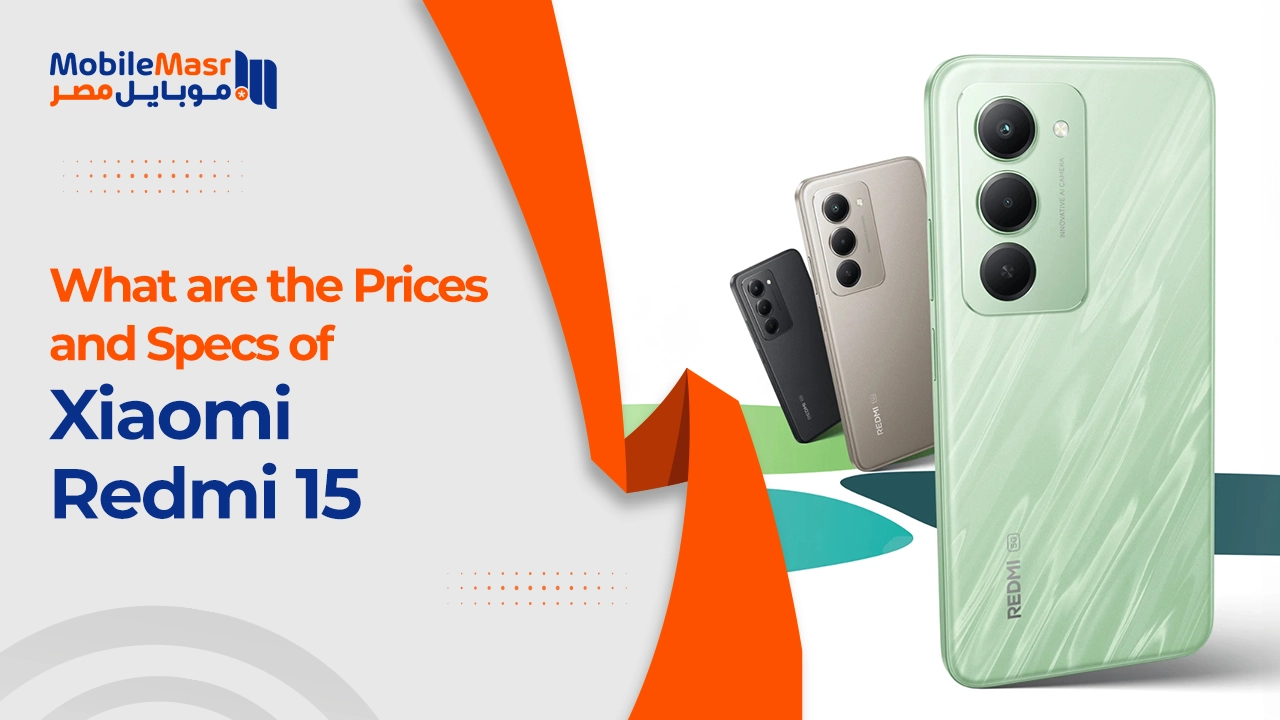
The Xiaomi Redmi 15 is available in three color options: Midnight Black, Ocean Green, and Star Blue. Each uses a gradient matte finish on the polycarbonate back that creates visual depth despite the material. The Ocean Green and Star Blue options show subtle color shifts in different lighting conditions that give them a slightly more dynamic appearance.
Which Xiaomi Redmi 15 Color Is Most Popular in Egypt?
Based on general market patterns for Xiaomi smartphone sales in Egypt, Midnight Black is consistently the most popular option — its neutral appearance works in both casual and professional contexts, and it shows fingerprints least prominently among the three choices. Ocean Green has been gaining popularity with younger buyers who prefer distinctive aesthetics. Star Blue appeals to users looking for a classic smartphone color option with some visual interest.
Is the Xiaomi Redmi 15 Water and Dust Resistant?
Does the Xiaomi Redmi 15 Have an Official IP Rating?
The Xiaomi Redmi 15 has an IP52 rating — a relatively modest certification that specifically covers protection against dust particles over 12.5mm in diameter and water spray from any direction. IP52 is not submersion protection and should not be confused with IP67 or IP68 ratings found on more expensive devices.
Can You Use the Xiaomi Redmi 15 Safely in Dusty Egyptian Environments?
The IP52 rating on the Xiaomi Redmi 15 provides reasonable practical protection for everyday Egyptian environments — sandy conditions during khamsin season, dusty workshops, and general outdoor use present challenges that IP52 addresses at a basic level. The phone is not suitable for use in sand storms or highly abrasive environments, and prolonged dust exposure should be avoided. For typical daily use — construction sites, markets, outdoor activities — the IP52 protection combined with commonsense handling provides adequate protection.
What Connectivity Features Does the Xiaomi Redmi 15 2026 Support?
Does the Xiaomi Redmi 15 Support 5G Connectivity?
The standard Xiaomi Redmi 15 available in Egypt supports 4G LTE connectivity — it is not a 5G smartphone. This is consistent with the device's budget positioning and reflects the current reality of Egyptian network infrastructure.
Is 5G Worth It on a Budget Phone Like the Xiaomi Redmi 15 in Egypt?
In Egypt's current telecommunications environment, 5G network coverage remains in early deployment phases, concentrated in limited urban areas. For the vast majority of Egyptian users in 2026, 4G LTE provides all the connectivity speed they need for streaming, social media, navigation, and communication. Paying a significant premium for a 5G-capable budget phone when 5G coverage isn't meaningfully available in your daily locations doesn't deliver practical value. The Xiaomi Redmi 15's 4G-only configuration is a pragmatic choice for the Egyptian market's current infrastructure reality.
Which Egyptian Networks Are Compatible With the Xiaomi Redmi 15?
The Xiaomi Redmi 15 is compatible with all major Egyptian mobile network operators — Vodafone Egypt, Orange Egypt, Etisalat Egypt, and WE Telecom. The device supports standard 4G LTE bands used across Egyptian networks and functions as a dual SIM phone allowing simultaneous connection to two different carriers. This dual-carrier capability is particularly useful for users who want separate plans for data and calls, or who travel between areas with different network coverage.
Does the Xiaomi Redmi 15 Have NFC?
No — the Xiaomi Redmi 15 does not include NFC hardware.
Can You Use NFC on the Xiaomi Redmi 15 for Payments in Egypt?
Since the Xiaomi Redmi 15 lacks NFC, contactless payment through Apple Pay, Google Pay, or similar tap-to-pay systems is not possible on this device. For the Egyptian market, where NFC-based mobile payments are not yet widely integrated into daily transaction infrastructure, this absence is a minor practical limitation rather than a significant obstacle for most users. As contactless payment adoption grows in Egypt, the lack of NFC will become a more meaningful consideration — buyers with a long-term view on their phone's utility may want to factor this in.
What Wi-Fi and Bluetooth Standards Does the Xiaomi Redmi 15 Support?
Does the Xiaomi Redmi 15 Support Dual-Band Wi-Fi?
Yes — the Xiaomi Redmi 15 supports dual-band Wi-Fi 5 (802.11 a/b/g/n/ac), operating on both 2.4GHz and 5GHz frequencies. The 5GHz band delivers faster throughput with lower interference in environments with many competing networks — useful for streaming high-quality video or downloading large files quickly at home or in offices with 5GHz router coverage. The 2.4GHz band provides better range and wall penetration for devices farther from the router.
What Bluetooth Version Does the Xiaomi Redmi 15 Feature?
The Xiaomi Redmi 15 includes Bluetooth 5.3 — a modern version that offers improved connection stability, lower power consumption during connected standby, and better handling of multiple simultaneous Bluetooth connections. Bluetooth 5.3 ensures compatible performance with current wireless earbuds, speakers, and accessories, including support for aptX and AAC audio codecs for quality wireless audio.
Does the Xiaomi Redmi 15 Have a 3.5mm Headphone Jack?
Yes — the Xiaomi Redmi 15 includes a 3.5mm headphone jack. This is a practical feature that has become increasingly rare in smartphones but remains highly valued by a significant portion of buyers.
Is the Headphone Jack Still Important for Budget Phone Buyers in Egypt?
For Egyptian buyers in the budget phone market, the 3.5mm jack is genuinely important. Wireless earbuds add cost on top of an already modest phone budget, and wired earphones remain the primary audio accessory for most users in this price segment. The headphone jack's inclusion on the Xiaomi Redmi 15 is a deliberate user-focused decision that makes the phone more immediately useful out of the box — no dongles, no pairing, no extra expense required.
How Many SIM Cards Does the Xiaomi Redmi 15 Support?
Does the Xiaomi Redmi 15 Support Dual SIM Dual Standby (DSDS)?
Yes — the Xiaomi Redmi 15 supports Dual SIM Dual Standby (DSDS), meaning both SIM cards are actively connected to their respective networks simultaneously. Calls can be received on either SIM without manual switching, and data can be designated to either card. This makes the dual SIM phone functionality genuinely useful for the common Egyptian scenario of maintaining separate personal and work numbers, or combining different carriers' data and call packages. Critically, the microSD slot is separate from both SIM slots — you can run Dual SIM AND use expanded storage simultaneously.
How Does the Xiaomi Redmi 15 2026 Compare to Its Competitors?
How Does the Xiaomi Redmi 15 Compare to the Redmi Note 14?
The Xiaomi Redmi 15 and Redmi Note 14 are natural comparison points for buyers deciding how much to spend in Xiaomi's lineup. The Note 14 justifies its higher price through a Full HD+ AMOLED display, a more powerful chipset, and a more capable camera setup. The Redmi 15 counters with its lower price of 9,600 EGP, a larger physical screen, similar battery capacity, and an adequate performance profile for typical use.
Which One Has a Better Camera — Redmi 15 or Redmi Note 14?
The Redmi Note 14's camera system is meaningfully more capable, featuring a higher-resolution main sensor with larger pixels and better low-light performance, plus a wider aperture that gathers more light. For photography-focused buyers, the Note 14 is the clearer choice. The Xiaomi Redmi 15 camera is competent for casual photography and social media use, but it doesn't reach the Note 14's output quality in demanding conditions like low light or action photography.
Which One Is a Better Value for Money in Egypt?
Value depends on what you prioritize. For users who primarily need a reliable daily communicator with good battery life and adequate performance — someone who texts, browses, streams, and plays moderate games — the Xiaomi Redmi 15 at 9,600 EGP delivers outstanding value. For users who specifically care about display quality for media consumption and photography, the Note 14's premium is justified. The Redmi 15 wins the pure value calculation for the more casual user.
How Does the Xiaomi Redmi 15 Compare to the Samsung Galaxy A16?
The Samsung Galaxy A16 and the Xiaomi Redmi 15 compete directly in the same price tier in Egypt. Samsung brings its established brand reputation and proven software longevity track record — the Galaxy A16 is likely to receive longer software update support than the Redmi 15. Xiaomi counters with the Snapdragon 4s Gen 2's superior benchmark performance over the chipsets typically found in equivalent Samsung budget offerings.
Which Phone Has a Better Display — Redmi 15 or Galaxy A16?
The Samsung Galaxy A16's Super AMOLED display technology delivers superior contrast, deeper blacks, and more vibrant color reproduction compared to the Xiaomi Redmi 15's IPS LCD panel. For users who watch a lot of video content or prioritize display quality above other factors, the Galaxy A16's display is genuinely better. The Redmi 15's display has its own advantages — better outdoor visibility in bright conditions and consistent color accuracy — but AMOLED's visual impact is hard to match with LCD technology.
Which One Has Longer Software Support?
Samsung generally has a stronger software support track record for its Galaxy A-series, promising multiple years of OS updates across more of its lineup. The Xiaomi Redmi 15 receives one guaranteed major Android update and three years of security patches. For buyers planning to use their phone for 3+ years and caring about receiving the latest Android versions, Samsung's commitment historically edges out Xiaomi's for budget devices.
How Does the Xiaomi Redmi 15 Compare to the Infinix Hot 50?
The Infinix Hot 50 competes in the same general segment as the Xiaomi Redmi 15, targeting Egyptian buyers with budget priorities.
Which Is More Popular Among Budget Buyers in Egypt — Redmi 15 or Infinix Hot 50?
The Redmi user experience built on HyperOS and Xiaomi's brand recognition gives the Xiaomi Redmi 15 stronger standing among tech-aware buyers who've researched their options. Infinix has carved out its own market segment in Egypt with competitive pricing and feature-packed specs. The Redmi 15's Snapdragon processor typically provides better sustained performance than MediaTek options at equivalent prices, which is a consistent advantage in direct comparisons.
How Does the Xiaomi Redmi 15 Compare to the POCO C75?
Is the POCO C75 Just a Rebranded Redmi 15?
There are significant hardware similarities between the POCO C75 and the Xiaomi Redmi 15 — both Xiaomi brands share platforms across their lineup. The POCO sub-brand typically targets performance-focused buyers with some marketing and software customization differences from the core Redmi lineup. The key differentiation lies in software tuning, POCO's more gaming-focused presentation, and specific hardware configurations that may vary by market.
Which One Should You Buy in Egypt — Redmi 15 or POCO C75?
If both are available at similar prices in Egypt, the choice comes down to software preference. POCO UI has some performance optimizations oriented toward gaming. The Xiaomi Redmi 15 with HyperOS offers a more polished, feature-rich daily use experience. For pure gamers, POCO may have a slight edge in gaming-specific features. For general users who want a well-rounded phone, the Redmi 15 is the stronger choice.
How Does the Xiaomi Redmi 15 Compare to the Realme C75?
Which Has Better Battery Life — Redmi 15 or Realme C75?
Both the Xiaomi Redmi 15 and Realme C75 use 5000mAh batteries. The decisive factor for actual battery duration is processor efficiency — the Snapdragon 4s Gen 2 in the Redmi 15's 4nm construction typically delivers better efficiency than competing MediaTek chips on older process nodes. In real-world use, the Redmi 15 generally matches or slightly exceeds the Realme C75's battery endurance while offering superior processing performance.
Who Is the Xiaomi Redmi 15 2026 Best Suited For?
Is the Xiaomi Redmi 15 a Good Choice for Students in Egypt?
Students represent one of the ideal audiences for the Xiaomi Redmi 15. At 9,600 EGP, it falls within a range that's accessible either as a direct purchase or through installment plans. The large 6.88-inch display is genuinely useful for reading academic content, watching educational videos, and note-taking. The robust battery ensures the phone lasts through a full day of classes, commuting, and studying without needing a mid-day charge.
Can the Redmi 15 Handle Online Learning and Study Apps Smoothly?
The Xiaomi Redmi 15 handles online learning platforms — Edmodo, Google Classroom, Microsoft Teams, Zoom, and similar applications — without any meaningful performance limitations. The Snapdragon 4s Gen 2 provides enough processing muscle to run these apps smoothly while simultaneously keeping a browser tab open for reference. Video quality in online lectures is good over both 4G and Wi-Fi. The phone's support for Arabic language and Egyptian educational platforms makes it a natural fit for the local student demographic.
Is the Xiaomi Redmi 15 Good for Gaming?
For casual to moderate gaming, the Xiaomi Redmi 15 is a solid performer. The 90Hz display enhances gaming feel significantly over 60Hz alternatives, and the Snapdragon 4s Gen 2 handles the games most popular in Egypt with comfortable settings.
Which Popular Mobile Games Run Well on the Xiaomi Redmi 15?
Games that run well on the Xiaomi Redmi 15 include: Free Fire (high-ultra settings, consistently smooth), PUBG Mobile (Smooth + Balanced to High frame rate), Mobile Legends (maximum settings without issues), Clash of Clans and strategy games (no limitations), Call of Duty Mobile (medium-high settings, playable frame rates), and most casual games and social platform games without any restrictions.
Does the Xiaomi Redmi 15 Overheat During Long Gaming Sessions?
The Xiaomi Redmi 15's thermal management handles moderate gaming sessions well. During 20-30 minutes of continuous gaming, the phone warms to a noticeable but comfortable temperature. During extended 60+ minute sessions, the temperature rises further and the processor may slightly throttle to maintain safe operating temperatures — this is a protective measure present in all smartphones and doesn't cause the phone to become painfully hot under normal conditions.
Is the Xiaomi Redmi 15 a Good First Smartphone?
For someone purchasing their first Android device, the Xiaomi Redmi 15 represents an excellent starting point.
How Easy Is It for New Users to Navigate HyperOS on the Redmi 15?
HyperOS on the Xiaomi Redmi 15 maintains Android's familiar core navigation patterns while adding Xiaomi's customizations. New smartphone users will find the basic functions — calling, messaging, camera, and app browsing — completely intuitive. The full Arabic language support makes navigation even more accessible for Egyptian users who prefer their native language. Xiaomi includes a Getting Started guide and the interface itself prompts helpful tips during initial setup. The learning curve is gentle, and most users become comfortable with the system within a few days of daily use.
Is the Xiaomi Redmi 15 Worth Buying as a Secondary Phone?
As a secondary dual SIM phone or backup device, the Xiaomi Redmi 15 offers compelling value. Its large battery means it can go days between charges when not serving as a primary device. The capable camera is better than most secondary phone users would expect. The 3.5mm headphone jack makes it convenient as a media player. And at 9,600 EGP, it's affordable enough that dedicating it to a specific purpose — work communications, international travel, or as a backup — makes financial sense.
What Are the Pros and Cons of the Xiaomi Redmi 15 2026?
What Are the Main Advantages of Buying the Xiaomi Redmi 15?
The Xiaomi Redmi 15 has a compelling set of genuine advantages:
- Snapdragon 4s Gen 2 (4nm): Best-in-class performance efficiency for this price tier
- 90Hz large display: Better visual experience than most budget competitors
- 5000mAh battery with 18W fast charging: Reliable all-day (and then some) endurance
- Dedicated microSD slot + Dual SIM: Full connectivity and storage flexibility simultaneously
- 3.5mm headphone jack: Practical value for budget-conscious buyers
- 45W wired fast charging included: No extra purchase needed
- HyperOS with Arabic support: Polished interface adapted for Egyptian users
- Competitive pricing at 9,600 EGP: Strong value proposition in its segment
Is the Xiaomi Redmi 15 the Best Budget Phone in Egypt Right Now?
The Xiaomi Redmi 15 is among the top contenders for the best budget phone in Egypt in 2026. Its Snapdragon 4s Gen 2 processor provides a performance advantage that competitors at similar prices struggle to match, and the overall package — display, battery, camera, and software — creates a well-rounded experience that avoids the obvious compromises some budget phones make. Whether it's definitively "the best" depends on individual priorities: for performance-focused users, it's hard to beat at this price point.
What Are the Known Drawbacks and Weaknesses of the Xiaomi Redmi 15?
Honest assessment of the Xiaomi Redmi 15 weaknesses:
- HD+ resolution (not Full HD+): Slightly lower display sharpness than some competitors
- No NFC: Limits contactless payment capability
- No 5G: Future-proofing limitation as networks expand
- No AMOLED: Less vibrant display compared to Samsung's AMOLED budget devices
- Limited major Android updates: One guaranteed OS upgrade
- No wireless charging: Wired only at this price tier
- No IP67/68: Basic IP52 splash resistance only
Are the Redmi 15 Weaknesses Dealbreakers for Egyptian Buyers?
For most Egyptian buyers seeking a capable daily budget phone at 9,600 EGP, none of the listed weaknesses are dealbreakers. The HD+ display is adequate for comfortable viewing at typical use distances. NFC payments aren't yet mainstream in Egypt. 5G infrastructure isn't broadly deployed. AMOLED display preference is a trade-off against stronger processing performance. For buyers who specifically prioritize any of these missing features, there are alternative options — but for the typical budget smartphone user, the Redmi 15's strengths more than compensate.
What Do Real Users Say About the Xiaomi Redmi 15 2026?
What Are the Most Common Positive Reviews of the Xiaomi Redmi 15?
User sentiment around the Xiaomi Redmi 15 in Egypt is consistently positive across the themes of battery life, performance for daily tasks, and value for money. Most users who purchase the phone within its intended use case — daily communication, social media, streaming, and moderate gaming — report satisfaction levels that exceed their expectations based on the price paid.
How Do Egyptian Users Rate the Xiaomi Redmi 15 Camera in Real Life?
Egyptian users consistently rate the Xiaomi Redmi 15 camera positively for daylight photography and social media use. The 50MP main camera produces well-exposed, color-accurate shots in good lighting that users say look noticeably better than previous budget phones they've owned. Night photography receives more mixed reviews — users who activate Night Mode consistently report good results, while those who use auto mode in dark conditions find the results less impressive. Selfie quality is rated as good but not exceptional — adequate for social sharing without representing a camera strength of the device.
What Do Users Say About the Xiaomi Redmi 15 Battery Life After Daily Use?
Battery life receives some of the most enthusiastic user feedback for the Xiaomi Redmi 15 in Egypt. Users consistently report making it through full days of heavy use — long commutes with music streaming, extended social media sessions, and evening gaming — with meaningful battery remaining. Multiple users describe the sensation of "forgetting to worry about battery" as a defining characteristic of the Redmi battery capacity, which is high praise from a practical standpoint.
What Are the Most Common Complaints About the Xiaomi Redmi 15?
Have Any Users Reported Hardware Issues With the Xiaomi Redmi 15?
Widespread hardware issues with the Xiaomi Redmi 15 have not emerged as significant patterns in user reviews. Individual units experiencing the normal variance of consumer electronics manufacturing occasionally appear in user forums, but no systematic defects have been identified. The polycarbonate construction is occasionally criticized for feeling less premium than users hoped, and the HD+ display limitation is frequently noted by users who've previously used Full HD+ phones.
What Is the Most Criticized Feature of the Xiaomi Redmi 15 Among Egyptian Buyers?
The display resolution is the most consistently criticized aspect — users coming from Full HD+ displays on older phones notice the difference in pixel density, particularly during text-heavy reading and when viewing detailed images closely. Some users also note that pre-installed apps feel excessive on initial setup, though this is manageable through the uninstall and disable options available in HyperOS.
Is the Xiaomi Redmi 15 2026 Worth Buying in Egypt?
Should You Buy the Xiaomi Redmi 15 Now or Wait for a Better Deal?
For buyers who need a phone now, the Xiaomi Redmi 15 at 9,600 EGP represents current best-in-class value for its specifications. Waiting for price reductions is always possible, but budget phones in this tier don't typically see dramatic price drops quickly — demand remains strong and supply is managed accordingly. If the phone meets your needs today, waiting for marginal savings while living with an inadequate device is rarely worth the trade-off.
Will the Xiaomi Redmi 15 Price Drop in Egypt in the Coming Months?
Budget phone prices in Egypt are influenced by currency fluctuations, import costs, and competitive market dynamics. The Xiaomi Redmi 15 may see modest price adjustments over time, particularly when successor devices are announced or when competition in the segment intensifies. Buyers who track prices through Mobile Masr can stay informed of any pricing movements and take advantage of promotional pricing when it appears.
Is the Xiaomi Redmi 15 the Best Phone Under Its Price Range in Egypt?
At and around 9,600 EGP, the Xiaomi Redmi 15 competes at the top of its class for performance-focused buyers. Its combination of Snapdragon 4s Gen 2 processing power, 90Hz display, large battery, included 18W charger, 3.5mm jack, and dedicated microSD slot creates a specification package that's difficult to match in the same price window.
What Are the Best Alternatives to the Xiaomi Redmi 15 at the Same Price in Egypt?
Buyers who should consider alternatives instead of the Xiaomi Redmi 15 at this price: those who prioritize AMOLED display quality should look at Samsung Galaxy A16; those who want longer software update commitments should consider Samsung; those whose specific use case demands NFC should look at higher-priced options. For the majority of Egyptian budget phone buyers without these specific requirements, the Redmi 15 represents the strongest overall package at the 9,600 EGP price point.
The Xiaomi Redmi 15 makes a compelling case as one of Egypt's most well-rounded budget smartphones in 2026. At 9,600 EGP, it delivers Snapdragon 4nm processing power, a large 90Hz display, reliable battery endurance, and a practical feature set — all backed by Xiaomi's established presence in the Egyptian market.
For the best prices, verified authenticity, and access to both new and certified pre-owned options, visit mobilemasr.com today. Mobile Masr is Egypt's trusted platform for buying and selling smartphones — whether you're picking up a brand-new Xiaomi Redmi 15 or exploring other options at different price points, the team at Mobile Masr can help you find exactly what you need. Don't wait — check current inventory and pricing now and make your purchase with confidence.
FAQs
CONTACT US
Download the app


CONTACT US


Payment Methods










Shipping with

©2026 MobiTech Integrated Solutions. . All Rights Reserved
©2026 MobiTech Integrated Solutions. . All Rights Reserved